Part Number: CC1120
Other Parts Discussed in Thread: CC1175, CC1125, CC1121, SIMPLICITI
Our design uses the CC1120 and the chip is marked with the following:
CC1120
TI 731
CGK1 G4
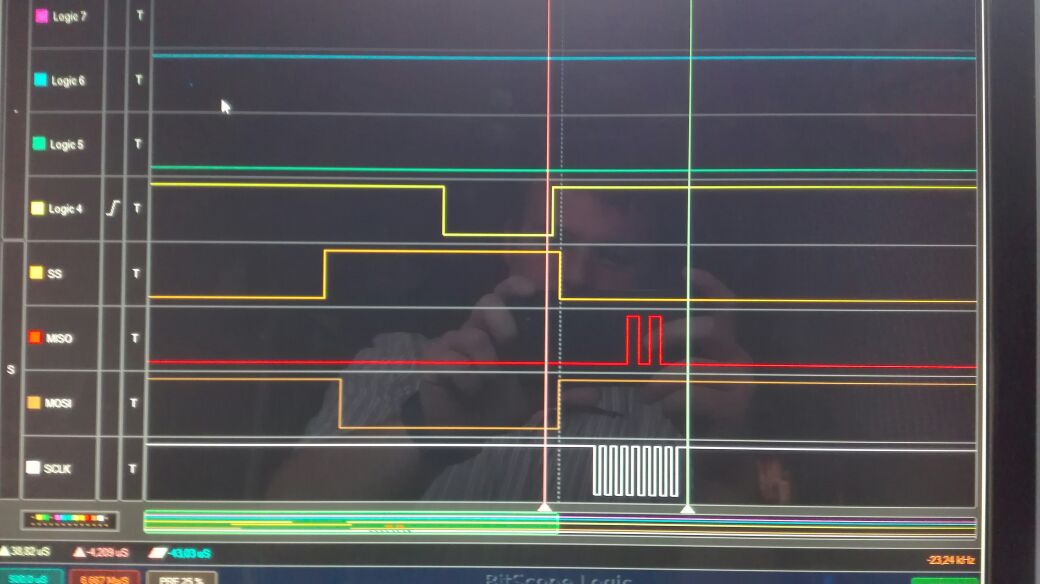
With reference to the CC1120 VCO issue mentioned in the CC1120 errata documents which I have copied below, I want to make sure we are using PARTVERSION 0x23 or higher of the chip. How can we identify this from the above markings? PS: Currently, we have an issue with our board were the MISO pin does not drop low after the chip is selected. So at the moment, we cannot communicate via SPI to read the part version.
1.1 VCO Calibration
1.1.1 Description
The RF frequency is set by the on-chip inductor, a capacitor array and a varactor. There is a finite
possibility that the calibration fails because a non-optimum index to the capacitor array is chosen during
the calibration. When the calibration fails the chip will always use a too low index for the capacitor array
(that is, too high capacitance).
1.2 Suggested Workaround
For the CC1120, CC1121, CC1125, and CC1175 devices with the PARTVERSION register equal to 0x21,
two manual calibrations must be performed as shown in the flow diagram Figure 1-1. The software
implementation is shown in Figure 1-2.
For CC1120, CC1121, CC1125, and CC1175 with the PARTVERSION register equal to 0x23, the VCO
calibration issue is corrected. These devices can be calibrated using one manual calibration option (using
SCAL), and the three automatic calibration options that are controlled by the
SETTLING_CFG.FS_AUTOCAL setting, which is explained in the CC112x/CC1175 User’s Guide
(SWRU295).
Applications using the workaround calibration procedure required for PARTVERSION 0x21 can safely
continue to use the workaround procedure with PARTVERSION 0x23 or higher.