This thread has been locked.

If you have a related question, please click the "Ask a related question" button in the top right corner. The newly created question will be automatically linked to this question.

ADS1292R: Application issues.

Expert 2250 points

Part Number: ADS1292R
Other Parts Discussed in Thread: ADS1292,

Tool/software:

Hi Team,

Design a 2-channel electrocardiograph device using ADS1292,
The simulator test signal is OK, but the signal quality is poor when using dry electrodes for human testing, mainly due to 0.3mV frequency interference. When trying to configure bit6 of config2 to 1, the waveform frequency is small, but it is not possible to identify lead disconnection at this time. Please help analyze the reason, thank you!

The following is the register configuration value for reading ADS1292R,

read 0x1 0x2
read 0x2 0xe0
read 0x3 0xb0
read 0x4 0x40
read 0x5 0x40
read 0x6 0x23
read 0x7 0xf
read 0x8 0x0
read 0x9 0x2
read 0xa 0x3
read 0xb 0xc
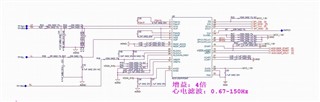
  • Hi Reed,

    Thank you for your post.

    I've reviewed the schematic and register configurations. I do have a couple suggestions on the schematic:

    • I believe R36 should also be 20kΩ such that the filtering is the same for all electrode inputs.
    • VCAP1 and VCAP2 should have 1µF bypass caps.

    Otherwise, there does not seem to be an issue with the circuit or the ADC itself. This is likely a system level issue pertaining to the electrode contact quality. Shielded cables with a driven shield common-mode and placing the PCB in an enclosure can help reduce noise coupling. The customer will have to experiment with the best electrode materials and placement that give them the best signal quality.

    Regards,

    Ryan