


Part Number: ADS1292R
Other Parts Discussed in Thread: ADS1292
Tool/software: TI C/C++ Compiler
Hi,
I've have question about data output. In datasheet section "RREG: Read From Register" on page 38 suggest that 2 op codes must be issued and then on 17'th SCLK reg data are shifted out. If I got it right, first 8 SCLK's are for RREG command, second 8 SCLK's are for number of register's i want to read - 1. Meaning, I want to read ID register on addres 0x00 -->
Write_SPI(0x20);//first 8 SCLK's
Write_SPI(0x00);//I want to read 1 register (second 8 SCLK's)
Write_SPI(0x00);//another 8 SCLK's for reg data
Thing I don't really understand is when I want to read multiple registers. If second opcode is Write_SPI(0x06) does that mean i want to read 5 registers? For propper read I should send another 40 SCLK's?
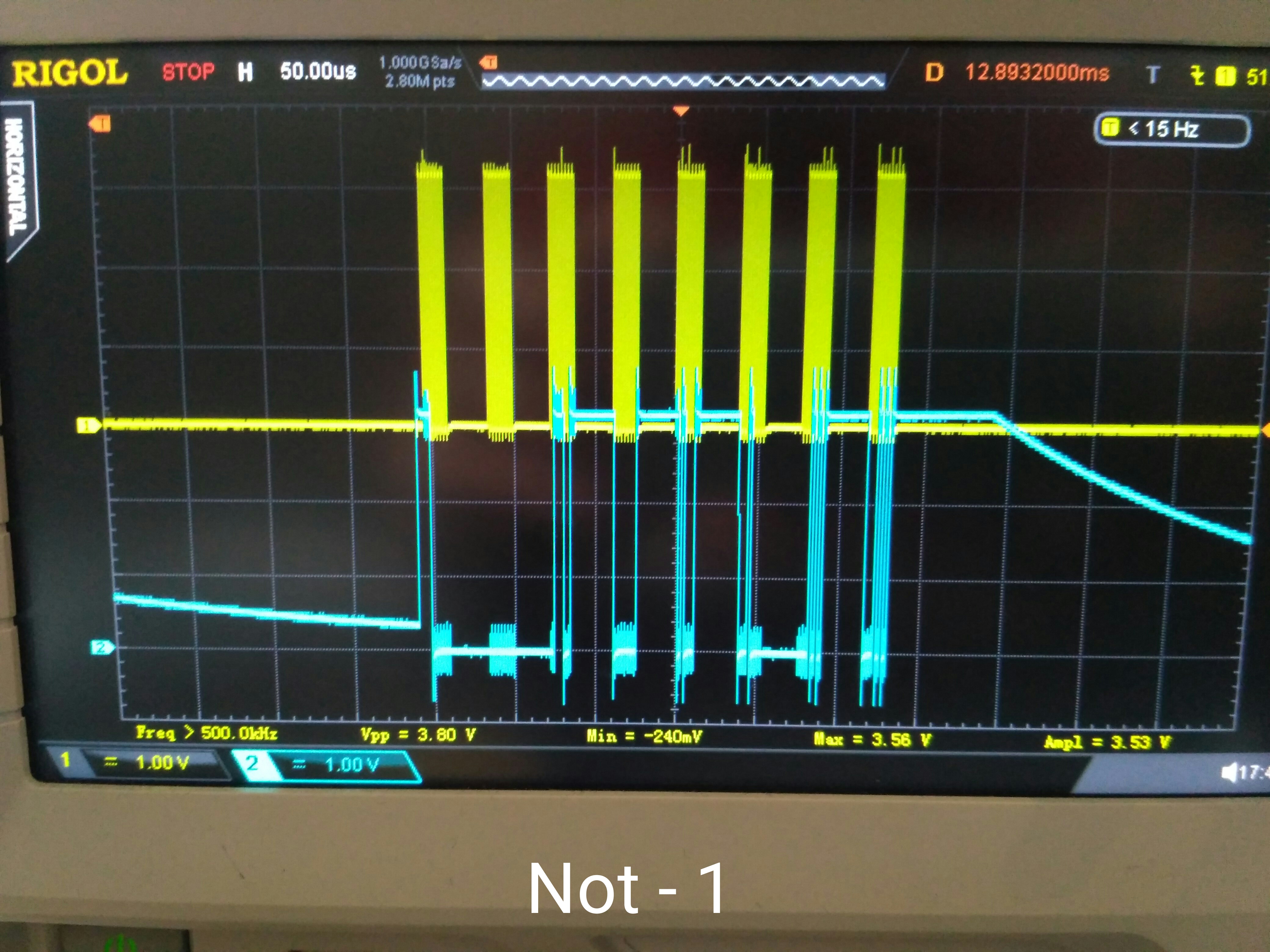
My read_byte function is in while loop so I'm reading constantly shown in below example pictures.
This is picture from oscilloscope when i send 48 SCLK's (8 clocks more than I actually shoud've sent)
And this one is when I send 7 SCLK's
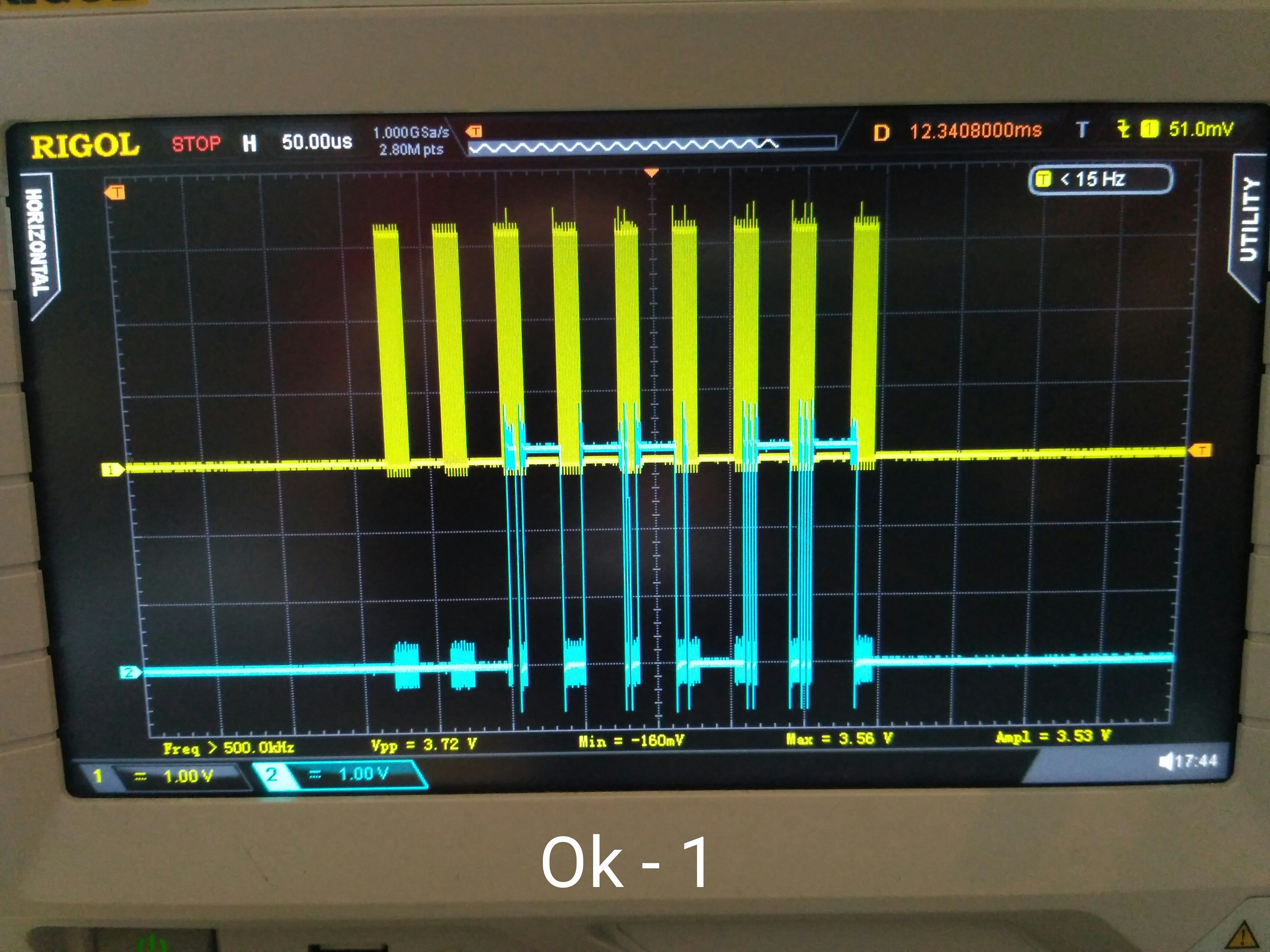
Why I have to send 7 byte clocks (after 2 byte opcode clocks) to get propper read?
And why on 6 byte clocks (after 2 byte opcode clocks) the last reg data is being read at first opcode from another read_byte function?
During RREG command no data should be sent via DIN but according to last picture it looks like ADS is acting like SPI full duplex protocol but it shouldn't, or?

