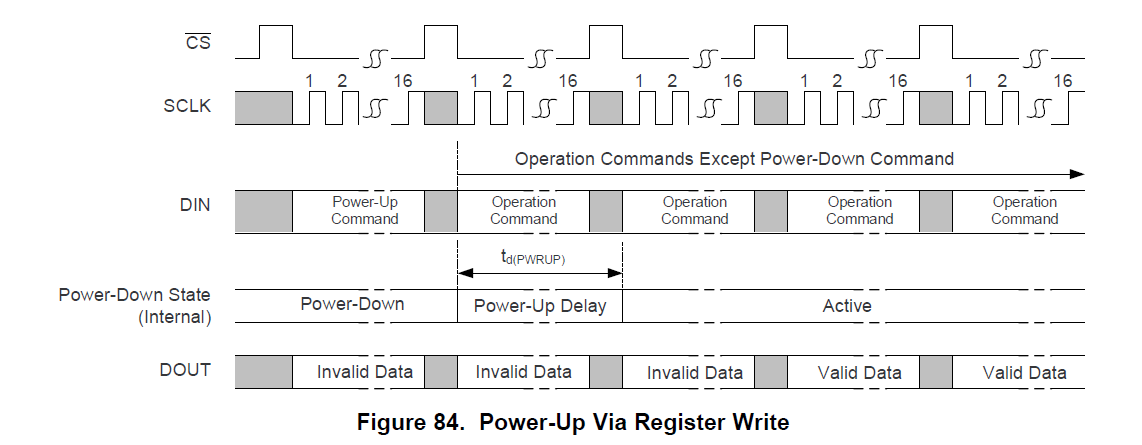
hi guys i am having issues with reading from this chip. something is missing. i am sharing my code below. would anyone be able to help and share his code with me. many thanks.
#define ADC_TI_CHANNELS 8 // total number of channels on each ADS8638 ADC
#define MAX_NUMBER_ADC_TI_CHIPS 5 // total number of ADS8638 ADCs

#define ADS8638_INTERNAL_VREF_ON 0xC
#define ADS8638_REG_AUX_CONFIG   0x06
#define ADS8638_REG_MANUAL       0x04
// Reset the corresponding chip select pin on an LTC DAC
// TiAdcChips will hold value and range for each of its channels
struct TiAdcInfo
{
	uint16_t ADC_TI_VALUE[ADC_TI_CHANNELS]; // this holds all DAC values
	uint16_t ADC_TI_RANGE[ADC_TI_CHANNELS]; // this hold all DAC ranges (voltage spans), range can only be changed on the DAC chip, on STM32F7 its always 0-2.5V

};

// initialize all DAC step sizes to zero
// create multiple LTC chips
struct TiAdcInfo TiAdcChips[MAX_NUMBER_ADC_TI_CHIPS];


// this set command can be used to form commands for all those in the cmdCodeDataList above except the commented ones.
char* adc_setCmdGeneric(uint8_t adcNumber, uint8_t channelNumber, uint16_t commandWord)
{
//	ADC_TI_VALUE[channelNumber % ADC_TI_CHANNELS] = value;
	if(adcNumber >= MAX_NUMBER_ADC_TI_CHIPS)return "BAD DAC NUMBER";


//	adc_SPI_Transmit(adcNumber, channelNumber, commandWord);

	return "Ok\n";
}

char* adc_setChannelandRange(uint8_t adcNumber,uint8_t channelNumber, uint8_t range, uint8_t tempretureSelector)
{
	// for the LSB of the command
	uint8_t cmdWord_LSB = 0;
	cmdWord_LSB = (channelNumber << 4) | (range << 1) | tempretureSelector;

	if(adcNumber >= MAX_NUMBER_ADC_TI_CHIPS)return "BAD DAC NUMBER";
	// code for this command
	uint8_t  cmdWord_MSB = ADS8638_REG_MANUAL;

	// form a command and send it
	adc_SPI_Transmit(adcNumber, channelNumber, ADS8638_INTERNAL_VREF_ON, ADS8638_REG_AUX_CONFIG);

	adc_SPI_Transmit(adcNumber, channelNumber, cmdWord_LSB, cmdWord_MSB);

//	adc_setCmdGeneric(adcNumber, commandWord);


    // update ADC range
	TiAdcChips[adcNumber].ADC_TI_RANGE[channelNumber % ADC_TI_CHANNELS] = range;

	return "Ok\n";
}

int adc_getChannel(uint8_t adcNumber,uint8_t channelNumber)
{
	return TiAdcChips[adcNumber].ADC_TI_VALUE[channelNumber % ADC_TI_CHANNELS];
}
// Set the corresponding chip select pin on an ADC
char* adc_nCs_set(uint8_t adcNumber, int value)
{

	GPIO_PinState PinState;

    if(adcNumber > MAX_NUMBER_ADC_TI_CHIPS)return "BAD INDEX";
	if(value != 0 && value != 1) return "Value Must Be Binary";

	switch(value)
	{
	case 0:PinState = GPIO_PIN_RESET;break;
	case 1:PinState = GPIO_PIN_SET;break;
	}
	// add more cases for as many DACS on the board
	switch(adcNumber)
	{
	case 0:HAL_GPIO_WritePin(GPIOG, nCS_ADC0_Pin, PinState);break;
	case 1:HAL_GPIO_WritePin(GPIOG, nCS_ADC1_Pin, PinState);break;
	case 2:HAL_GPIO_WritePin(GPIOG, nCS_ADC2_Pin, PinState);break;
	case 3:HAL_GPIO_WritePin(GPIOG, nCS_ADC3_Pin, PinState);break;
	case 4:HAL_GPIO_WritePin(GPIOG, nCS_ADC4_Pin, PinState);break;
	default:break;
	}

	return "Ok\n";
}

// power up and down an ADC chip
char* adc_powerUp(uint8_t adcNumber, int value)
{
	GPIO_PinState PinState;

    if(adcNumber > MAX_NUMBER_ADC_TI_CHIPS)return "BAD INDEX";
	if(value != 0 && value != 1) return "Value Must Be Binary";

	switch(value)
	{
	case 0:PinState = GPIO_PIN_RESET;break;
	case 1:PinState = GPIO_PIN_SET;break;
	}
	// add more cases for as many DACS on the board
	switch(adcNumber)
	{
	case 0:HAL_GPIO_WritePin(GPIOG, ADC_EN_Pin, PinState);break;
	case 1:HAL_GPIO_WritePin(GPIOG, ADC_EN_Pin, PinState);break;
	case 2:HAL_GPIO_WritePin(GPIOG, ADC_EN_Pin, PinState);break;
	case 3:HAL_GPIO_WritePin(GPIOG, ADC_EN_Pin, PinState);break;
	case 4:HAL_GPIO_WritePin(GPIOG, ADC_EN_Pin, PinState);break;
	default:break;
	}

	return "Ok\n";
}

// transmit on SPI to the selected chip
char* adc_SPI_Transmit(uint8_t adcNumber, uint8_t channelNumber, uint8_t cmdLSB, uint8_t cmdMSB)
{
	 // Four bytes Array the holds the 32 bit command for the DAC
      uint8_t data_array[2]={0};

  	if(adcNumber >= MAX_NUMBER_ADC_TI_CHIPS)return "BAD DAC NUMBER";

  	// power up the chip
  	adc_powerUp(adcNumber,1);


	// pull the corresponding chip select pin nCS to low to start transmission on the selected DAC
    // and then pull low to execute the command
  	// reset nCs on all chips
  	for(int ii = 0;ii<MAX_NUMBER_ADC_TI_CHIPS; ii++)adc_nCs_set(ii,1);
  	adc_nCs_set(adcNumber,0);


////
//		  data_array[0] = cmdMSB << 1;        // Only required for 32 byte readback transaction
//		  data_array[1] = cmdLSB;             // Build command / address byte
		  cmdMSB = cmdMSB << 1;

		  data_array[0] = cmdMSB;                    // MS Byte
		  data_array[1] = cmdLSB;

		// Send the bytes command to the ADC

//		HAL_SPI_Transmit_DMA(&hspi6,&data_array,2);
//			HAL_SPI_Transmit(&hspi6,&cmdMSB,1,1);
//			HAL_SPI_Transmit(&hspi6,&cmdLSB,1,1);
			HAL_SPI_Transmit(&hspi6,&data_array,2,50);
//			HAL_SPI_Transmit_DMA(&hspi6,&cmdLSB,1);
		// Use below for blocking transmission
		// HAL_SPI_Transmit(&hspi4,&data_array,4,10);

//HAL_Delay(10);
		// pull the corresponding chip select pin nCS to high to execute command on the selected DAC
		adc_nCs_set(adcNumber,1);
//		adc_nCs_set(adcNumber,0);
//		adc_nCs_set(adcNumber,1);
//		adc_nCs_set(adcNumber,0);

		// the chip waits 32 clock cycles before it responds back and echo the same command
		// TODO: add a delay here before we call the receive
		if(cmdMSB == 0x8)adc_SPI_receive(adcNumber,channelNumber);


      	return "Ok\n";
}

// transmit on SPI to the selected chip
char* adc_SPI_receive(uint8_t adcNumber, uint8_t channelNumber)
{
	 // Four bytes Array the holds the 32 bit command for the DAC
      uint8_t data_array[2]={0};
      volatile uint16_t adc_readValue = 0;
      uint8_t b0, b1;

  	if(adcNumber >= MAX_NUMBER_ADC_TI_CHIPS)return "BAD DAC NUMBER";

	    adc_nCs_set(adcNumber,0);
	   HAL_SPI_Receive(&hspi6,&b0,1,0);
	   HAL_SPI_Receive(&hspi6,&b1,1,0);
		adc_nCs_set(adcNumber,1);

	    adc_nCs_set(adcNumber,0);
	   HAL_SPI_Receive(&hspi6,&b0,1,0);
	   HAL_SPI_Receive(&hspi6,&b1,1,0);
		adc_nCs_set(adcNumber,1);

//	    adc_nCs_set(adcNumber,0);
//		HAL_SPI_Receive(&hspi6,&data_array,2,10);
//		adc_nCs_set(adcNumber,1);


	    // update ADC value
		adc_readValue = b0 & 0xF;
		adc_readValue = adc_readValue << 8;
		adc_readValue = adc_readValue | b1;

//		adc_readValue1 = data_array[1] & 0x0F;
//		adc_readValue = adc_readValue1 << 8 ;
//		adc_readValue = adc_readValue + data_array[0];

		TiAdcChips[adcNumber].ADC_TI_VALUE[channelNumber % ADC_TI_CHANNELS] = adc_readValue;

      	return "Ok\n";
}

//// if interrupt on reception complete is enabled, the HAL_UART_RxCpltCallback will be called example is shown below
//void HAL_SPI_RxCpltCallback(SPI_HandleTypeDef *hspi){
//
//	if (hspi->Instance == SPI6)
//	{
//
//	}
//}