This thread has been locked.

If you have a related question, please click the "Ask a related question" button in the top right corner. The newly created question will be automatically linked to this question.

ADS131A04: Internal reference outside spec (2.442V +/- 0.1%)

Part Number: ADS131A04

Hello


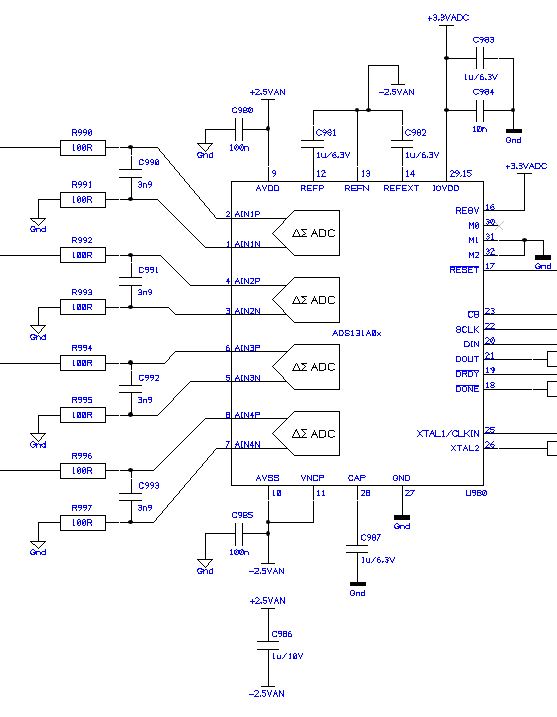
We have a design with an ADS131A04. This is supplied with +/- 2.5V. We use the internal reference of 2.442V. Look at the schematic below.

We have a lot of systems they are working fine, but now we have found a deviation in the reference voltage for a number of ADCs from batch code 83TG4 / AC56.

In the datasheet an accuracy of 0.1% is specified.

We measure a voltage between 2,450V and 2,460V between the RefP and Refn pins.

After replacing the ADC with a sample from another batch, it is good (measured 2,442V).

Not all ADCs in batch 83TG4 / AC56 have this problem, we also have ADCs with batch code 83TG4 / AC56 within specs.

We have not yet seen whether this deviation also occurs in other batches.

What could be the problem that the internal reference is far (up to 0.6%) outside spec?


Regards

Roy Geverink

  • Roy,


    I'm not aware of any past issues with the internal reference voltage and the schematic that you show seems to be in order (correct load capacitance, simple connections, etc). I wouldn't have expected any problems with the setup as shown.

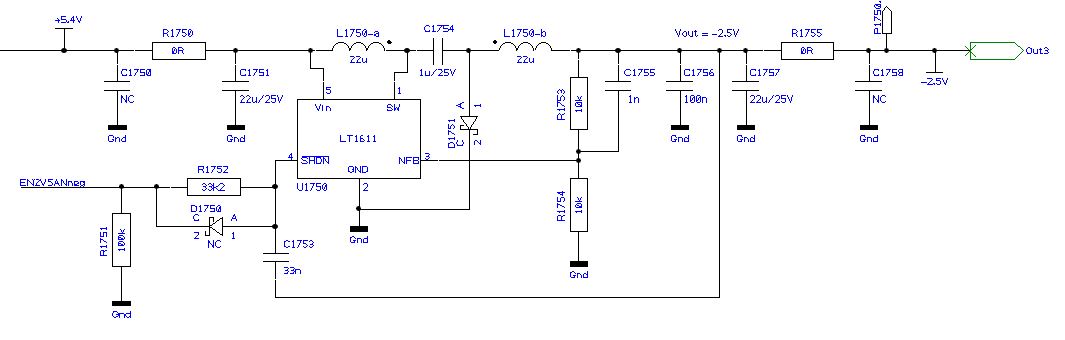
    However, for many references, you need to be careful with how it is grounded (or in your case, how it is connected to the negative supply). For some internal references with our ADCs, we say there should be a connection from VREFN of less that 10Ω of impedance to an AC ground node. Can you check to see if the reference output is oscillating? This might appear as a slight offset in the reference voltage. Also, what are you using to generate the -2.5V supply? If the supply doesn't have a sufficiently low output impedance over frequency, then this could be a problem.

    Beyond that, how many units are you seeing that have a reference outside the specification? What percentage of fallout is this? Can you give a sample of several bad units, and what the reference voltage is?

    Regardless, report back with a few answers and we'll try to figure out a way forward.


    Joseph Wu

  • Dear Joseph,

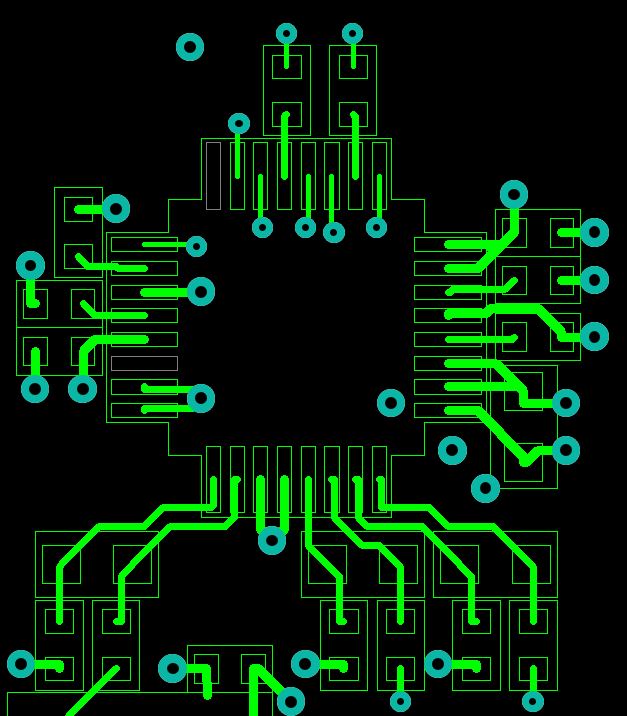
    The VRefn pin is close to the ADCs, in addition to the load capacitance connected to the -2.5V plane bij means of a via.
    This connection is less than 1Ω. See layout below.
    The reference output does not oscillate.

    We use the LT1611 from Linear to generate the -2.5V. See diagram below.

    Of the approximately 800 ADCs that we use, we have currently found 10ADCs with a Vref voltage outside spec. But the number could be larger because we do not check the Vref voltage from every ADC.
    The incorrect ADCs all come from the same 83TG4 / AC56 batch. The reference voltage of the incorrect ADCs is between 2.451V and 2.469V.

    I have removed an ADC with a faulty Vref from the PCB and replaced it with an ADC with a good Vref from another board, now this ADC works fine on the board with the faulty ADCs.
    I also placed the faulty ADC on the board where the good ADC came from, but on this board the faulty ADC is still faulty with a Vref outside spec.
    From the above, I would conclude that the design and the other components on a board are good, since we have only exchanged the ADC and the problem has moved with it.

    Roy

  • Roy,

    I just realized that the value given in the datasheet for the internal reference is not a min/max specification. The value of ±0.1% should be considered typical. Normally, I would treat this value as a standard deviation, but if you see values that are significantly higher, then it may be a little bit more than expected. I may be able to look up some test data for this device, and derive a histogram of expected internal reference results. However, if you are looking to have all internal reference values less than 0.1%, that may not be possible.

    Based on values you last mentioned, 2.450V might be something you see occasionally and 2.460V would be significantly less likely. Again, let me see if I can pull some test data to check.

    Joseph Wu


  • Dear Joseph

    Thanks for your comment.

    This is not what we expected but we will see the testresults.

    Roy

  • Roy,

    Just to let you know, I’m out of the office right now. I did pull a small amount of test data, and the distribution was much tighter that what your seeing.

    This lead me to think that you might be seeing some die stress that leads to more variation in the reference voltage. Does the voltage change when you either reflow the device or press on the device on the board?

    Joseph Wu

  • Joseph,

    When I reflow the device than the value changed a few milivolt. From 2.460V to 2.457V and from 2.453V to 2.451V (I reflowed two devices).

    When I press on the device on the board, the voltage does not change.

    Roy

  • Roy,


    Looking at the schematic, you have two different ground signals. How are these analog and digital grounds connected? Normally, we would recommend a single ground plane. Is it possible that you have some sort of ground loop in your layout? How do you measure the reference voltage? Is there a local ground near the device that you can measure the reference from? I would probably measure across C981 for the reference to minimize the ground loop. Looking at the layout, I don't see anything that would be unusual to me. Pin 1 seems to be the lower left corner of the device, and while I probably would have used direct connections for the digital connections, I don't think the vias would be much of a problem.


    Joseph Wu

    2.442165
    2.441864
    2.441841
    2.442155
    2.442698
    2.441883
    2.441821
    2.442356
    2.441638
    2.442170
    2.441811
    2.442017
    2.442196
    2.442018
    2.441371
    2.442367
    2.441772
    2.442199
    2.441638
    2.442129
    2.442221
    2.441649
    2.441771
    2.441955
    2.441749
    2.441810
    2.441734
    2.442414
    2.441701
    2.442158
    2.441756
    2.442381
    2.441953
    2.441647
    2.441742
    2.442199
    2.441978
    2.441647
    2.441890
    2.442442
    2.441580
    2.442049
    2.441944
    2.442548
    2.441911
    2.441512
    2.442008
    2.441922
    2.442172
    2.441792
    2.441793
    2.442495
    2.442284
    2.442139
    2.441552
    2.442174
    2.442189
    2.441733
    2.442047
    2.442431
    2.442025
    2.441832
    2.441851
    2.442308
    2.441846
    2.441696
    2.441695
    2.442066
    2.441953
    2.441686
    2.441977
    2.441889
    2.441732
    2.441810
    2.442015
    2.441989
    2.442234
    2.441718
    2.442514
    2.441995
    2.441913
    2.441748
    2.442410
    2.441801
    2.441502
    2.441961
    2.441810
    2.441550
    2.441893
    2.441636
    2.442643
    2.441784
    2.442348
    2.441993
    2.442506
    2.441740
    2.441729
    2.441402
    2.442272
    2.441735
    2.441979
    2.441806
    2.442185
    2.441954
    2.441270
    2.442192
    2.441620
    2.442036
    2.441304
    2.442260
    2.441732
    2.441831
    2.441611
    2.442058
    2.441712
    2.441860
    2.441983
    2.442137
    2.441435
    2.441763
    2.441671
    2.442855
    2.442227
    2.442180
    2.442204
    2.441862
    2.442041
    2.441506
    2.442189
    2.441966
    2.441973
    2.441926
    2.441626
    2.442155
    2.441895
    2.442100
    2.441365
    2.442251
    2.442041
    2.441545
    2.441736
    2.441886
    2.441568
    2.441767
    2.442309
    2.441827
    2.441969
    2.441608
    2.442444
    2.441814
    2.442228
    2.441568
    2.442358
    2.441939
    2.441724
    2.441537
    2.441793
    2.441432
    2.441648
    2.441956
    2.442387
    2.441643
    2.441780
    2.441526
    2.441894
    2.441801
    2.441782
    2.442286
    2.441506
    2.441535
    2.442297
    2.441870
    2.441695
    2.441589
    2.441568
    2.442108
    2.441965
    2.442123
    2.441792
    2.441996
    2.441534
    2.442279
    2.441694
    2.441762
    2.441550
    2.441772
    2.442419
    2.441821
    2.441809
    2.442397
    2.441701
    2.442137
    2.441683
    2.441756
    2.441488
    2.442267
    2.441931
    2.441868
    2.441807
    2.441627
    2.442208
    

  • Dear Joseph,

    The test values fall exactly between the limits that we expect, within 0.1%.

    We found again five incorrect ADCs. They still come from the same batch 83TG4/AC56. The reference values for these five are between 2,450V and 2,489V.

    Do you also have the test data from batch 83TG4/AC56?

    The analog and digital ground only have two different symbols in the schematic. In the layout we have a single ground.

    I measure the reference across C981 next to the ADC.

    We also have devices with ADCs from other batches that work fine, so the design seems ok to me.

    In our option we have received a batch with ADCs with a reference out of specification. Because at the moment we have 15 ADCs with a wrong reference only out of batch 83TG4/AC56. What is your option in this?

    At the moment the devices with these deviating reference values are rejected and we cannot deliver these devices without modification (replacement of ADC by a good one).

    Roy

  • Roy,


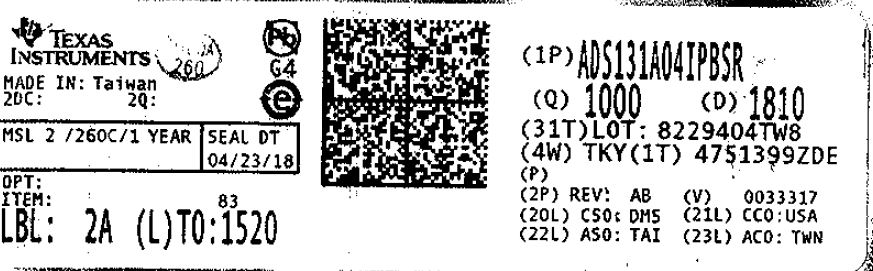
    I think some test data might be available, but I've never pulled it myself. I think that I would need the Lot Trace Code (LTC) instead of using the markings of the device. Assembly builds may not be put in the same test system, and might be tested at different times. You would usually use the LTC to track when the device was tested. You can find the LTC from the box that you received from buying the devices. It looks like this (from a different device):


    I'm not sure what could be the cause of such a large error. I noted the package stress earlier, but I'm not sure this could easily explain the change in the voltage. I would still note that the reference voltage as listed in the datasheet does not have a minimum/maximum specification. The typical value is listed as ±0.1% and again, I would expect some significant deviation in that, and it would extend several times that value.

    You said there are 5 units from 2.489V to 2.489V. What is the size of this build? I'd like to get a percentage of units. If you have a long set of data for this parameter, I'd like see the values you get. Again, I'll see if I can pull the test data for the reference if you can get me the LTC.


    Joseph Wu

  • Joseph,

    Hereby the LTC of the different batches.

    First is the ADC witch de incorrect reference with marking code 83TG4 on the device.


    The second is a batch that we have no problems with (so far). This has marking code 64TG4 on the device.


    We would like to receive the data from both batches.

    Roy

  • Roy,

    I'm checking about the data from the LTC. I'll see what they report back.

    In the last post, I did ask some questions on how often you see this problem and asked for data what you were getting back for the reference. For your builds, do you have specific data on the reference voltages (like a list of all the reference voltage, good and bad, values from your own tests).

    Again, I also want to emphasize that the reference voltage is not a min/max specification, and that 0.1% was listed as a typical specification.

    Joseph Wu

  • Joseph,

    As you can read from previous messages, we have now found 15 ADCs with a value outside the spec 2.442V +/- 0.1%. From a total number of around 800 ADC.
    We do not have a table with reference values because we do not measure this voltage as standard. Only when a certain measurement function fails, we checked the reference, and then see values outside the 2.422V +/- 0.1%. We have at values between 2.450V and 2.489V.

    We also measured a couple of ADCs without problems and then the reference values are between 2.442V +/-0.1%

    Roy

  • Joseph,

    Do you already have some test data from the different batches?

    Roy

  • Roy,


    I did get some data from the test lots based on the LTC that you sent me.

    From 6285626TW6 this lot was from an early build. All values are from 2.441 to 2.443.

    From 8229404TW8, This lot was built two years later, there is a little more variance. The distribution were similar to above, but  four were screened out for being high. In the end, those four were removed. This was a lot of 8100 units.

    As I mentioned in previous posts, this is not specification with a minimum or maximum. We list the typical reference accuracy as ±0.1%. This is not meant to be a representation of the maximum error that you would see. I would have considered this to be something near the standard deviation of the error. It seems that you've used this value as the maximum for the reference. Even though we trim the reference to the best possible value, the ±0.1% number is still only a typical value.

    Now, you see something that might be a bit higher than the 3 sigma number for the standard deviation. I still think there might be some package stress that may be affecting the reference value, and re-flowing the solder on the device has changed the reference also. Even on precision references, there may be some shifting in the final value due to package stresses.

    There may be other effects from using a switching regulator with the device. Can you try powering the device from a lab or external supply to check the effect on the reference voltage? At this point, I'm just checking different things that may affect the final reference value.


    Joseph Wu

  • Joseph,

    The test data shows the pattern that I see in our ADCs. Batch 6285626TW6 is tight around the 2,442V and batch 8229404TW8 has more spread and more deviating values upwards.

    Do you test all ADCs in the factory for the reference voltage, and is an ADC with a value outside the accuracy of 0.1% removed? Or do you do a sample on a batch?

    I have powered the ADCs with a lab power supply. And I have varied the supply between the min and max values of the voltage from the ADC. But nothing changes with the reference voltage.

    As I mentioned earlier, I soldered an ADC with a different reference voltage from a board and replaced it with another one from another batch, after which the new ADCs did have a correct reference voltage. The soldered ADC is soldered to another board but still has the different reference voltage.

    Roy

  • Roy,


    I'm sorry I didn't answer your last post earlier, I was out of the office for the holiday at the end of last week.

    While there are a few units that did show a slightly higher reference voltage, I would point out that only four out of over 8000 units had that behavior. Additionally, those four were outside the test limits and removed.

    For final test, these are not batch tested, and all units are tested for this parameter. Any units outside of the limits are removed.

    There were two other things that I thought of over the weekend. Have you tried taking a bad unit completely off, and then put the bad unit on a good board? That would check to see if there is any interaction between the board and the device. Second, have you tried looking at the reference voltage startup on an oscilloscope. Not only would that check for oscillation, it would check to see if there are any unusual startup issues that might cause problems. Third, do you use the configuration sequence as shown in Figure 106 if the datasheet?


    Joseph Wu

  • Joseph,

    Yes, I have taking a bad unit completely off, and then put the bad unit on a good board. The bad unit on the good board still have the wrong reference voltage. And I have placed a good unit on the board (where the bad unit is removed) and this unit holds his good reference voltage.


    I have looking at the reference voltage at startup and it is a nice looking e curve to the end voltage, without overshoot or oscillation.


    Yes, I used figure 106 in the datasheet.

    Roy

  • Roy,

    I realize this thread has been open for quite a while, but I thought I'd check on it and see if you've come to any solution to this reference problem. 

    We've been discussing this issue, and if you haven't come to a resolution, we think that you should gather a few units and return them to the distributor so that we can get a look at them. Even though they are off for a specification that has no min/max limits, these seem to be outside what we would have expected. 

    Once you return the units, we'll have the Quality team look at these and retest the units to see if there is anything that is abnormal or to see if they've been damaged. When the units are returned through the distributor, the product line responsible for this device should be contacted and I'm sure that I'll have some contact with this issue.

    I'll close this thread for now. If you have further questions or if you need someone to contact you via email, respond back to this post. 

    Joseph Wu