This thread has been locked.

If you have a related question, please click the "Ask a related question" button in the top right corner. The newly created question will be automatically linked to this question.

TMS320F28388D: LwIP Webserver example: Memory errors due to ethernet descriptors queue management

Part Number: TMS320F28388D
Other Parts Discussed in Thread: C2000WARE

Hello,

I mde an application for TMS320F28388D Connectivity Manager based on lwIP example provided in C2000 Ware 4.0.0. When I set the DEBUG symbol I encountered an error: "mem free: illegal memory: double free". The same issue is described here: https://e2e.ti.com/support/microcontrollers/c2000-microcontrollers-group/c2000/f/c2000-microcontrollers-forum/1011110/tms320f28388d-lwip-stack-crash. After some research I think I found what is the reason for this error. In file lwip2.1.2/portsC2000/netif/f2838x I changed the function which is called in EMAC_TX0 ISR: f2838xif_process_transmit. I've changed this fragment:

(...)

do
{
    pktDescPtrShadow = pktDescPtr->nextPacketDesc;
    memp_free(MEMP_ETH_PKT_DESC, pPacket);
    pktDescPtr = pktDescPtrShadow;
}
while(pktDescPtr != 0);

(...)

into this:

(...)

mem_free(pPacket);

(...)

It seems to me that this function should free only the pPacket (one packet fragment) because if it frees all packet fragments it violates the structure of descriptor queue defined in driverlib (ethernet.c). The loop in function Ethernet_removePacketsFromTxQueue (ethernet.c in driverlib) handles all created descriptors, by calling channeldescptr->deviceptr->initconfig.pfcbfreepacket function for each of them. When I ran lwip example again the error didn't occur.

Unfortunetaly there still was a problem. When I sent a lot of data (by rapidly refreashing the website) the program hung due to lwip heap overflow. I figured out that the heap overflows because not all of the ethernet descriptors are freed in f2838xif_process_transmit. After some research I've found the reason. The problem was in driverlib function Ethernet_removePacketsFromTxQueue (ethernet.c), line 2762:

(...)

//
//we now own the packet meaning its been transferred to the port
//
pktPtr = Ethernet_performPopOnPacketQueue(
             &channelDescPtr->descQueue);              <--- memory leak?
if(0U != pktPtr)
{
    pktPtr->flags |= ETHERNET_INTERRUPT_FLAG_TRANSMIT;
    if(ETHERNET_COMPLETION_EARLY == earlyFlag )
    {
        pktPtr->flags = ETHERNET_INTERRUPT_FLAG_EARLY;  <--- shouldn't be "|=" instead of "="?
    }
}

(...)

Firstly the flags were updated in such way that f2838xif_interrupt function (f2838xif.c) sometimes couldn't recognize packet as Tx packet. Secondly when queue is not empty, but we encounter ETHERNET_TX_DESC_LAST_DESC flag, we take from the queue descriptor which is won't be handled in f2838xif_process_transmit (because we exit do-while loop) and it causes memory leak. When I removed this error there were no memory leaks. I provided my modification of driverlib function  Ethernet_removePacketsFromTxQueue (ethernet.c):

void Ethernet_removePacketsFromTxQueue
    (Ethernet_DescCh *channelDescPtr,
    Ethernet_CompletionMode earlyFlag)
{
    Ethernet_Pkt_Desc *pktPtr = NULL;
    Ethernet_HW_descriptor *descRead, *newDescRead;

    //
    //we now own the packet meaning its been transferred to the port
    //

    while(0U != Ethernet_returnTopOfPacketQueue(&channelDescPtr->descQueue))
    {
        newDescRead = &channelDescPtr->descFirst[channelDescPtr->indexRead];
        //
        // Timestamp is not written back on context descriptors, so skip
        //until we have a non-context transmit descriptor
        //
        while((newDescRead->des3 & ETHERNET_PKT_EXTENDED_FLAG_CTXT) != 0)
        {
            channelDescPtr->indexRead = (channelDescPtr->indexRead + 1U) %
            channelDescPtr->descMax;
            newDescRead = &channelDescPtr->descFirst[channelDescPtr->indexRead];
        }

        do {
            descRead = newDescRead;
            //
            //we now own the packet meaning its been transferred to the port
            //
            pktPtr = Ethernet_performPopOnPacketQueue(&channelDescPtr->descQueue);
            if(0U != pktPtr)
            {
                pktPtr->flags |= ETHERNET_INTERRUPT_FLAG_TRANSMIT;
                if(ETHERNET_COMPLETION_EARLY == earlyFlag )
                {
                    pktPtr->flags |= ETHERNET_INTERRUPT_FLAG_EARLY;
                }
            }
            //
            // Capture the timestamp if "last descriptor" and "timestamp
            // captured" bit is set in the descriptor.
            //
            if((ETHERNET_TX_DESC_LAST_DESC ==
                (descRead->des3 & ETHERNET_TX_DESC_LAST_DESC)) &&
                (ETHERNET_TX_DESC_TTSS ==
                (descRead->des3 & ETHERNET_TX_DESC_TTSS)))
            {
                pktPtr->timeStampLow = descRead->des0;
                pktPtr->timeStampHigh = descRead->des1;
            }

            //
            // Save the descriptor which will be checked for condition
            // "whether this is the last sengment of the packet" at the
            // end of this do while loop.
            //
            (void)((channeldescptr->deviceptr->initconfig.pfcbfreepacket)
                (channelDescPtr->devicePtr->handleApplication[0U],
                pktPtr));
            channelDescPtr->descCount--;
            if(channelDescPtr->indexRead == channelDescPtr->indexLast)
            {
                channelDescPtr->indexRead = channelDescPtr->indexFirst;
            }
            else
            {
                channelDescPtr->indexRead = channelDescPtr->indexRead + 1U ;
            }

            //
            // Fetch the nest descriptor from the descriptor array
            //
            newDescRead = &channelDescPtr->descFirst[channelDescPtr->indexRead];
            //
            // Need to clear the desc array for all the packets until
            // the last packet segment is encountered, so repeat.
            //
            }while(ETHERNET_TX_DESC_LAST_DESC !=
                (descRead->des3 & ETHERNET_TX_DESC_LAST_DESC));
    }

    channelDescPtr->dmaInProgress = 0U;
    //
    //Try to post any waiting TX packets
    //
    if((0U != channelDescPtr->waitQueue.count) &&
        (channelDescPtr->dmaInProgress == 0U))
    {
        Ethernet_addPacketsIntoTxQueue(channelDescPtr);
    }
}

Please give me feedback if I fixed the bug or I misunderstood something.

Thanks,

JK

  • JK,

    I will try to reproduce the problem with the example included in C2000Ware  and keep you posted. 

    Were you able to reproduce the issue with the lwIP example included in C2000Ware just by setting/pre-defining the DEBUG symbol?  Is there any other change that you did?

    Also,  will also take a look at the fix that you have done.

    Best Regards

    Siddharth

  • I had the "double free" error with C2000 Ware enet_lwip example when I predefined DEBUG symbol. In my project (based on enet_lwip) I removed do-while loop in  lwip2.1.2/portsC2000/netif/f2838x.c - f2838xif_process_transmit to fix "double free" problem. I modified webserver a bit because I made it continuously send data (different data - small .json file) in 5s interval (instead of pressing button). I also removed "mem_free(file)" (file isn't dynamically allocated) in fs_close (fs.c) because it caused an error.  When I experimented with rapid refreshing, the site hung after some time. In debug watch I checked lwip_stats.mem (after enabling it in lwipopts.h) and I noticed that heap is overflowed. After setting debug variables to track number of ethernet descriptor allocs and number of ethernet descriptor frees I found the difference: nFree < nAlloc. I also replaced breakpoints ( __asm("   bkpt #0")) in lwip2.1.2/portsC2000/netif/f2838x.c with "return ERR_MEM" so it doesn't stop when out of memory. The change I made in driverlib solved this problem.

    Best Regards,

    JK

  • JK,

    Thanks for the additional details , will take a look at it and keep you posted.

    Best Regards

    Siddharth

  • JK, 

    I am unable to replicate the issue .  

    Is it possible for you to share your CCS project or the updated files ?

    Does this occur only when you predefine "DEBUG" symbol. 

    Best Regards

    Siddharth

  • Hello Siddharth,

    Yes it occurs with the DEBUG symbol. Our code is intended to work only on our hardware. I replicated the issue with enet_lwip example provided in C2000 Ware 4.0.0. I will describe it step by step.

    1. I assume that you have working example enet_lwip.

    2. I set DEBUG symbol in "Predefined Symbols" and after I load website I get an error:

    https://drive.google.com/file/d/18fcA7KTziBdUZ1I9W9ESfcX3FbvyY2gi/view?usp=sharing

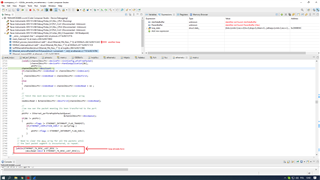
    I figured out that this error is due to redundant while loop in f2838xif_process_transmit:

    https://drive.google.com/file/d/1dEd5-ZDHZHsRrwENTAZw8TkxyldC-WXg/view?usp=sharing

    To fix it I commented lines 438-439 and 444-445 in f2838xif.c.

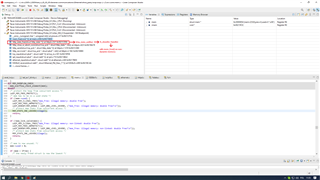
    3. When I loaded the website I got another error:

    https://drive.google.com/file/d/1xSSCqi2l5PBvr0HSx2SOJe19MdldfTW1/view?usp=sharing

    I figured out that the reason for error is mem_free() call in fs.c, line 145 so I commented it.

    4. When I loaded the website and clicked the button I got an error:

    https://drive.google.com/file/d/1jC-jLQLe88XCFQx-6s2NQeVlfFBjh9sI/view?usp=sharing (missing flag)

    To remove the error I added following line in fs.c after line 97:

    file->flags = FS_FILE_FLAGS_HEADER_INCLUDED | FS_FILE_FLAGS_HEADER_PERSISTENT;

    5. Now there should be no errors with DEBUG symbol.

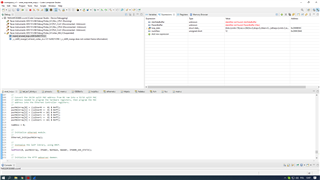
    6. To see memory leaks it is not neccessary to set lwip_stats. I defined global variable:

    volatile uint16_t numDesc = 0;

    The variable is incremented each time when valid mem_malloc() is called from f2838xif_transmit() (in f2838xif.c) and decremented each time mem_free() is called in f2838xif_process_transmit() (in f2838xif.c). I run the example, refreshed the site several times and waied a while and it turned out that numDesc != 0 which means there are memory leaks (described in my previous post):

    https://drive.google.com/file/d/1HW6GBDa0idjyJu06UaEu-SSZ_o7r_Cs-/view?usp=sharing

    I also provide f2838xif.c file with my modifications.

    https://drive.google.com/file/d/1-h58JlhTaQ39d8mrVmjlg13pw_eFoAgt/view?usp=sharing

    Best Regards,

    JK

  • JK, 

    Thanks for the detailed information.

    Request you to share the files as attachment to this post, look like Google drive access is blocked as per  TI's security policy.

    Best Regards

    Siddharth

  • Hello Siddharth,

    I will rewrite my post.

    Yes it occurs with the DEBUG symbol. Our code is intended to work only on our hardware. I replicated the issue with enet_lwip example provided in C2000 Ware 4.0.0. I will describe it step by step.

    1. I assume that you have working example enet_lwip.

    2. I set DEBUG symbol in "Predefined Symbols" and after I load website I get an error:

    I figured out that this error is due to redundant while loop in f2838xif_process_transmit:

    To fix it I commented lines 438-439 and 444-445 in f2838xif.c.

    3. When I loaded the website I got another error:

    I figured out that the reason for error is mem_free() call in fs.c, line 145 so I commented it.

    4. When I loaded the website and clicked the button I got an error:

      (missing flag)

    To remove the error I added following line in fs.c after line 97:

    file->flags = FS_FILE_FLAGS_HEADER_INCLUDED | FS_FILE_FLAGS_HEADER_PERSISTENT;

    5. Now there should be no errors with DEBUG symbol.

    6. To see memory leaks it is not neccessary to set lwip_stats. I defined global variable:

    volatile uint16_t numDesc = 0;

    The variable is incremented each time when valid mem_malloc() is called from f2838xif_transmit() (in f2838xif.c) and decremented each time mem_free() is called in f2838xif_process_transmit() (in f2838xif.c). I run the example, refreshed the site several times and waied a while and it turned out that numDesc != 0 which means there are memory leaks (described in my previous post):

    I also provide f2838xif.c file with my modifications.

    //###########################################################################
    //
    // FILE:   f2838xif.c
    //
    // TITLE:  F2838x interface port file.
    //
    //###########################################################################
    // $TI Release:   $
    // $Release Date:   $
    // $Copyright:
    // Copyright (C) 2021 Texas Instruments Incorporated - http://www.ti.co/
    //
    // Redistribution and use in source and binary forms, with or without 
    // modification, are permitted provided that the following conditions 
    // are met:
    // 
    //   Redistributions of source code must retain the above copyright 
    //   notice, this list of conditions and the following disclaimer.
    // 
    //   Redistributions in binary form must reproduce the above copyright
    //   notice, this list of conditions and the following disclaimer in the 
    //   documentation and/or other materials provided with the   
    //   distribution.
    // 
    //   Neither the name of Texas Instruments Incorporated nor the names of
    //   its contributors may be used to endorse or promote products derived
    //   from this software without specific prior written permission.
    // 
    // THIS SOFTWARE IS PROVIDED BY THE COPYRIGHT HOLDERS AND CONTRIBUTORS 
    // "AS IS" AND ANY EXPRESS OR IMPLIED WARRANTIES, INCLUDING, BUT NOT 
    // LIMITED TO, THE IMPLIED WARRANTIES OF MERCHANTABILITY AND FITNESS FOR
    // A PARTICULAR PURPOSE ARE DISCLAIMED. IN NO EVENT SHALL THE COPYRIGHT 
    // OWNER OR CONTRIBUTORS BE LIABLE FOR ANY DIRECT, INDIRECT, INCIDENTAL, 
    // SPECIAL, EXEMPLARY, OR CONSEQUENTIAL DAMAGES (INCLUDING, BUT NOT 
    // LIMITED TO, PROCUREMENT OF SUBSTITUTE GOODS OR SERVICES; LOSS OF USE,
    // DATA, OR PROFITS; OR BUSINESS INTERRUPTION) HOWEVER CAUSED AND ON ANY
    // THEORY OF LIABILITY, WHETHER IN CONTRACT, STRICT LIABILITY, OR TORT 
    // (INCLUDING NEGLIGENCE OR OTHERWISE) ARISING IN ANY WAY OUT OF THE USE 
    // OF THIS SOFTWARE, EVEN IF ADVISED OF THE POSSIBILITY OF SUCH DAMAGE.
    // $
    //###########################################################################
    
    /**
     * Copyright (c) 2001-2004 Swedish Institute of Computer Science.
     * All rights reserved.
     *
     * Redistribution and use in source and binary forms, with or without modification,
     * are permitted provided that the following conditions are met:
     *
     * 1. Redistributions of source code must retain the above copyright notice,
     *    this list of conditions and the following disclaimer.
     * 2. Redistributions in binary form must reproduce the above copyright notice,
     *    this list of conditions and the following disclaimer in the documentation
     *    and/or other materials provided with the distribution.
     * 3. The name of the author may not be used to endorse or promote products
     *    derived from this software without specific prior written permission.
     *
     * THIS SOFTWARE IS PROVIDED BY THE AUTHOR ``AS IS'' AND ANY EXPRESS OR IMPLIED
     * WARRANTIES, INCLUDING, BUT NOT LIMITED TO, THE IMPLIED WARRANTIES OF
     * MERCHANTABILITY AND FITNESS FOR A PARTICULAR PURPOSE ARE DISCLAIMED. IN NO EVENT
     * SHALL THE AUTHOR BE LIABLE FOR ANY DIRECT, INDIRECT, INCIDENTAL, SPECIAL,
     * EXEMPLARY, OR CONSEQUENTIAL DAMAGES (INCLUDING, BUT NOT LIMITED TO, PROCUREMENT
     * OF SUBSTITUTE GOODS OR SERVICES; LOSS OF USE, DATA, OR PROFITS; OR BUSINESS
     * INTERRUPTION) HOWEVER CAUSED AND ON ANY THEORY OF LIABILITY, WHETHER IN
     * CONTRACT, STRICT LIABILITY, OR TORT (INCLUDING NEGLIGENCE OR OTHERWISE) ARISING
     * IN ANY WAY OUT OF THE USE OF THIS SOFTWARE, EVEN IF ADVISED OF THE POSSIBILITY
     * OF SUCH DAMAGE.
     *
     * This file is part of the lwIP TCP/IP stack.
     *
     * Author: Adam Dunkels <adam@sics.se>
     *
     */
    
    /**
     * Copyright (c) 2018 Texas Instruments Incorporated
     *
     * This file is dervied from the ``ethernetif.c'' skeleton Ethernet network
     * interface driver for lwIP.
     *
     */
    
    #include <string.h>
    /**
     * lwIP specific header files
     */
    #include "lwip/opt.h"
    #include "lwip/def.h"
    #include "lwip/mem.h"
    #include "lwip/pbuf.h"
    #include "lwip/sys.h"
    #include <lwip/stats.h>
    #include <lwip/snmp.h>
    #include "netif/etharp.h"
    #include "netif/ppp/pppoe.h"
    #include "netif/f2838xif.h"
    
    /**
     * f2838x device specific header files
     */
    #include "inc/hw_emac.h"
    #include "inc/hw_ints.h"
    #include "inc/hw_memmap.h"
    #include "inc/hw_types.h"
    #include "driverlib_cm/ethernet.h"
    #include "driverlib_cm/interrupt.h"
    #include "driverlib_cm/sysctl.h"
    
    #include "utils/lwiplib.h"
    /**
     * Sanity Check:  This interface driver will NOT work if the following defines
     * are incorrect.
     *
     */
    #if (PBUF_LINK_HLEN != 16)
    #error "PBUF_LINK_HLEN must be 16 for this interface driver!"
    #endif
    #if (ETH_PAD_SIZE != 0)
    #error "ETH_PAD_SIZE must be 0 for this interface driver!"
    #endif
    #if (!SYS_LIGHTWEIGHT_PROT)
    #error "SYS_LIGHTWEIGHT_PROT must be enabled for this interface driver!"
    #endif
    
    /**
     * Number of pbufs supported in low-level tx/rx pbuf queue.
     *
     */
    #ifndef F2838X_NUM_PBUF_QUEUE
    #define F2838X_NUM_PBUF_QUEUE    20
    #endif
    
    #define EMAC_BASE                   0x400C0000U //EMAC
    #define EMAC_SS_BASE                0x400C2000U //EMACSS
    
    /* Define those to better describe your network interface. */
    #define IFNAME0 't'
    #define IFNAME1 'i'
    
    /* Helper struct to hold a queue of pbufs for transmit and receive. */
    struct pbufq
    {
        struct pbuf *pbuf[F2838X_NUM_PBUF_QUEUE];
        unsigned long qwrite;
        unsigned long qread;
        unsigned long overflow;
    };
    
    /* Helper macros for accessing pbuf queues. */
    #define PBUF_QUEUE_EMPTY(q) \
        (((q)->qwrite == (q)->qread) ? true : false)
    
    #define PBUF_QUEUE_FULL(q) \
        ((((((q)->qwrite + 1) % F2838X_NUM_PBUF_QUEUE)) == (q)->qread) ? \
        true : false )
    
    /**
     * Helper struct to hold private data used to operate your ethernet interface.
     * Keeping the ethernet address of the MAC in this struct is not necessary
     * as it is already kept in the struct netif.
     * But this is only an example, anyway...
     */
    struct f2838xif
    {
        struct eth_addr *ethaddr;
        /* Add whatever per-interface state that is needed here. */
        struct pbufq txq;
        Ethernet_Pkt_Desc *pktDesc;
    };
    
    /**
     * A structure used to keep track of driver state and error counts.
     */
    typedef struct {
        uint32_t ui32TXCount;
        uint32_t ui32TXCopyCount;
        uint32_t ui32TXCopyFailCount;
        uint32_t ui32TXNoDescCount;
        uint32_t ui32TXBufQueuedCount;
        uint32_t ui32TXBufFreedCount;
        uint32_t ui32RXBufReadCount;
        uint32_t ui32RXPacketReadCount;
        uint32_t ui32RXPacketErrCount;
        uint32_t ui32RXPacketCBErrCount;
        uint32_t ui32RXNoBufCount;
    }
    tDriverStats;
    
    tDriverStats g_sDriverStats = {0};
    
    volatile uint16_t numDesc = 0;
    
    #define DRIVER_STATS_INC(x) do{ g_sDriverStats.ui32##x++; } while(0)
    #define DRIVER_STATS_DEC(x) do{ g_sDriverStats.ui32##x--; } while(0)
    #define DRIVER_STATS_ADD(x, inc) do{ g_sDriverStats.ui32##x += inc; } while(0)
    #define DRIVER_STATS_SUB(x, dec) do{ g_sDriverStats.ui32##x -= dec; } while(0)
    
    /*
     * Creating a queue that maps an ethernet packet descriptor with
     * the corresponding pbuf. It is useful to free up the allocated pbuf memory
     * after the packet has been sent.
     */
    #ifndef F2838X_INTERFACE_NUM_PKT_DESC_QUEUE
    #define F2838X_INTERFACE_NUM_PKT_DESC_QUEUE    20
    #endif
    
    /**
     * Global variable for this interface's private data.  Needed to allow
     * the interrupt handlers access to this information outside of the
     * context of the lwIP netif.
     *
     */
    static struct f2838xif f2838xif_data;
    
    Ethernet_Handle emac_handle;
    
    /**
     * A macro which determines whether a pointer is within the SRAM address
     * space and, hence, points to a buffer that the Ethernet MAC can directly
     * DMA from.
     */
    #define PTR_SAFE_FOR_EMAC_DMA(ptr) (((uint32_t)(ptr) >= 0x2000800) &&   \
                                        ((uint32_t)(ptr) < 0x2000FFFF))
    
    /**
     * In this function, the hardware should be initialized.
     * Called from f2838xif_init().
     *
     * @param netif the already initialized lwip network interface structure
     *        for this ethernetif
     */
    static void
    f2838xif_hwinit(struct netif *netif)
    {
        uint32_t mac_low,mac_high;
        uint8_t *pucTemp;
    
        /* set MAC hardware address length */
        netif->hwaddr_len = ETHARP_HWADDR_LEN;
    
        /* set MAC address */
        Ethernet_getMACAddr(EMAC_BASE, 0, &mac_high, &mac_low);
    
        pucTemp = (uint8_t *)&mac_low;
        netif->hwaddr[0] = pucTemp[0];
        netif->hwaddr[1] = pucTemp[1];
        netif->hwaddr[2] = pucTemp[2];
        netif->hwaddr[3] = pucTemp[3];
    
        pucTemp = (uint8_t *)&mac_high;
        netif->hwaddr[4] = pucTemp[0];
        netif->hwaddr[5] = pucTemp[1];
    
        /* maximum transfer unit */
        netif->mtu = 1500;
    
        /* device capabilities */
        /* don't set NETIF_FLAG_ETHARP if this device is not an ethernet one */
        netif->flags = NETIF_FLAG_BROADCAST | NETIF_FLAG_ETHARP | NETIF_FLAG_LINK_UP | NETIF_FLAG_IGMP;
    }
    
    /**
     * This function should do the actual transmission of the packet. The packet is
     * contained in the pbuf that is passed to the function. This pbuf might be
     * chained.
     *
     * @param netif the lwip network interface structure for this ethernetif
     * @param p the MAC packet to send (e.g. IP packet including MAC addresses and type)
     * @return ERR_OK if the packet could be sent
     *         an err_t value if the packet couldn't be sent
     * @note This function MUST be called with interrupts disabled or with the
     *       F2838x Ethernet transmit fifo protected.
     */
    static err_t
    f2838xif_transmit(struct netif *netif, struct pbuf *p)
    {
        struct pbuf *q;
    
        /* No of pbufs (if chained)*/
        int n=0;
        int i=0;
        Ethernet_Pkt_Desc *pktDescOrigPtr, *pktDescPtr;
    
        /* ENTER CRITICAL SECTION
         * This is to protect the forming of packetc descriptor chain using pbufs
         * passed to the function.
         */
        Interrupt_disable(INT_EMAC_TX0);
        Interrupt_disable(INT_EMAC_RX0);
    
        /*
         * Make sure we still have a valid buffer (it may have been copied)
         */
        if(!p)
        {
            LINK_STATS_INC(link.memerr);
    
            /* EXIT CRITICAL SECTION */
            Interrupt_enable(INT_EMAC_TX0);
            Interrupt_enable(INT_EMAC_RX0);
    
            return(ERR_MEM);
        }
    
        /*
         * Count the number of the pbufs in the chain that we are passed with.
         */
        for(q = p; q != NULL; q = q->next)
                n++;
    
        /*
         * Get the head of the packet descriptor chain that will be passed to
         * the driver for sending.
         */
        pktDescOrigPtr = mem_malloc(sizeof(Ethernet_Pkt_Desc));
        if(pktDescOrigPtr == NULL)
        {
            __asm("   bkpt #0");
        }
        numDesc++;
    
        /*
         * Go over the pbufs present in the chain and allot a packet descriptor for
         * each pbuf. The descriptors will also be chained in the same order as
         * pbufs before passing the head of the chain to the driver.
         */
        for(q = p, pktDescPtr = pktDescOrigPtr; // Initialization
            q != NULL; // Condition evaluation
            q = q->next, pktDescPtr = pktDescPtr->nextPacketDesc) // Manipulation
        {
            /*
             * Initializing this data structure, otherwise garbage values will
             * result in rogue results while running.
             */
            memset(pktDescPtr,0,sizeof(Ethernet_Pkt_Desc));
    
            pktDescPtr->dataOffset = 0;
            pktDescPtr->dataBuffer = q->payload;
            pktDescPtr->pktChannel = ETHERNET_DMA_CHANNEL_NUM_0;
            pktDescPtr->pktLength = q->tot_len;
            pktDescPtr->bufferLength = q->len;
            pktDescPtr->validLength = q->len;
    
    
              if(i==0)
              {
                    if(n!=1)
                    {
                        /*
                         * Prepare the next ethernet packet descriptor holder if
                         * there is a pbuf next in the chain.
                         */
                        pktDescPtr->nextPacketDesc =
                                mem_malloc(sizeof(Ethernet_Pkt_Desc));
                        if(pktDescPtr->nextPacketDesc == NULL)
                            {
                                __asm("   bkpt #0");
                            }
                        numDesc++;
                        pktDescPtr->flags = ETHERNET_PKT_FLAG_SOP ;
                    }
                    else
                    {
                        pktDescPtr->nextPacketDesc = 0;
                        pktDescPtr->flags = ETHERNET_PKT_FLAG_SOP |
                                            ETHERNET_PKT_FLAG_EOP;
                    }
              }
              else
              {
                  if(q->next != NULL)
                  {
                      /*
                       * Prepare the next ethernet packet descriptor holder if
                       * there is a pbuf next in the chain.
                       */
                      pktDescPtr->nextPacketDesc =
                              mem_malloc(sizeof(Ethernet_Pkt_Desc));
                      if(pktDescPtr->nextPacketDesc == NULL)
                          {
                              __asm("   bkpt #0");
                          }
                      numDesc++;
                      pktDescPtr->flags = 0;
                  }
                  else
                  {
                      pktDescPtr->nextPacketDesc = 0;
                      pktDescPtr->flags = ETHERNET_PKT_FLAG_EOP;
                  }
              }
    
              i++;
        }
    
        /* EXIT CRITICAL SECTION */
        Interrupt_enable(INT_EMAC_TX0);
        Interrupt_enable(INT_EMAC_RX0);
    
        /*
         * Hand over the packet descriptor to the driver.
         */
        pktDescOrigPtr->numPktFrags = n;
        Ethernet_sendPacket(emac_handle,pktDescOrigPtr);
    
        LINK_STATS_INC(link.xmit);
    
        return(ERR_OK);
    }
    
    /**
     * This function will process all transmit descriptors and free pbufs attached
     * to any that have been transmitted since we last checked.
     *
     * This function is called only from the Ethernet interrupt handler.
     *
     * @param netif the lwip network interface structure for this ethernetif
     * @return None.
     */
    int descriptorFreeErr=0;
    static void
    f2838xif_process_transmit(struct netif *netif, Ethernet_Pkt_Desc *pPacket)
    {
        Ethernet_Pkt_Desc *pktDescPtr, *pktDescPtrShadow;
    
        /*
         * Free the packet descriptor memory.
         */
        if (pPacket == 0)
            return;
    
        pktDescPtr = pPacket;
    
        /* ENTER CRITICAL SECTION */
        Interrupt_disable(INT_EMAC_TX0);
        //Interrupt_disable(INT_EMAC_RX0);
    
    //    do
    //    {
            pktDescPtrShadow = pktDescPtr->nextPacketDesc;
            mem_free(pktDescPtr);
            pktDescPtr = pktDescPtrShadow;
    
    //    }
    //    while(pktDescPtr != 0);
          numDesc--;
    
        /* EXIT CRITICAL SECTION */
        Interrupt_enable(INT_EMAC_TX0);
        //Interrupt_enable(INT_EMAC_RX0);
    }
    
    /**
     * This function with either place the packet into the F2838x transmit fifo,
     * or will place the packet in the interface PBUF Queue for subsequent
     * transmission when the transmitter becomes idle.
     *
     * @param netif the lwip network interface structure for this ethernetif
     * @param p the MAC packet to send (e.g. IP packet including MAC addresses and type)
     * @return ERR_OK if the packet could be sent
     *         an err_t value if the packet couldn't be sent
     *
     */
    
    static err_t
    f2838xif_output(struct netif *netif, struct pbuf *p)
    {
        f2838xif_transmit(netif, p);
    
        return ERR_OK;
    }
    
    /**
     * This function will read a single packet from the F2838x ethernet
     * interface, if available, and return a pointer to a pbuf.  The timestamp
     * of the packet will be placed into the pbuf structure.
     *
     * @param netif the lwip network interface structure for this ethernetif
     * @return pointer to pbuf packet if available, NULL otherswise.
     */
    Ethernet_Pkt_Desc*
    f2838xif_receive( struct netif *netif, Ethernet_Pkt_Desc *pPacket )
    {
        struct pbuf *p;
    
    #if LWIP_PTPD
        u32_t time_s, time_ns;
        /* Get the current timestamp if PTPD is enabled */
        lwIPHostGetTime(&time_s, &time_ns);
    #endif
    
        p = pbuf_alloc(PBUF_RAW, sizeof(struct pbuf), PBUF_POOL);
        if(p)
        {
            p->payload = pPacket->dataBuffer;
    
            p->len = 1538U; //Max possible length of received packet.
            p->tot_len = p->len;
    
        #if LWIP_PTPD
            /* Place the timestamp in the PBUF */
            p->time_s = time_s;
            p->time_ns = time_ns;
        #endif
    
            if(ethernet_input(p, netif)!=ERR_OK)
            {
                /* drop the packet */
                LWIP_DEBUGF(NETIF_DEBUG, ("f2838xif_input: input error\n"));
                pbuf_free(p);
                p = NULL;
                /* Adjust the link statistics */
                LINK_STATS_INC(link.memerr);
                LINK_STATS_INC(link.drop);
            }
        }
    
        LINK_STATS_INC(link.recv);
    
        return(pPacket);
    }
    
    Ethernet_Pkt_Desc *f2838xif_newbuffcallback(void)
    {
        Ethernet_Pkt_Desc *newPacket = mem_calloc(1, sizeof(Ethernet_Pkt_Desc));
    
        if(newPacket)
        {
            newPacket->dataBuffer= memp_malloc(MEMP_PBUF_POOL);
        }
        return newPacket;
    }
    
    /**
     * Should be called at the beginning of the program to set up the
     * network interface. It calls the function f2838xif_hwinit() to do the
     * actual setup of the hardware.
     * This function should be passed as a parameter to netif_add().
     *
     * @param netif the lwip network interface structure for this ethernetif
     * @return ERR_OK if the loopif is initialized
     *         ERR_MEM if private data couldn't be allocated
     *         any other err_t on error
     */
    err_t
    f2838xif_init(struct netif *netif)
    {
        LWIP_ASSERT("netif != NULL", (netif != NULL));
    
    #if LWIP_NETIF_HOSTNAME
        /* Initialize interface hostname */
        netif->hostname = "lwip";
    #endif /* LWIP_NETIF_HOSTNAME */
    
        /*
         * Initialize the snmp variables and counters inside the struct netif.
         * The last argument should be replaced with your link speed, in units
         * of bits per second.
         */
        NETIF_INIT_SNMP(netif, snmp_ifType_ethernet_csmacd, 1000000);
    
        netif->state = &f2838xif_data;
        netif->name[0] = IFNAME0;
        netif->name[1] = IFNAME1;
    
        /* We directly use etharp_output() here to save a function call.
         * You can instead declare your own function an call etharp_output()
         * from it if you have to do some checks before sending (e.g. if link
         * is available...) */
        netif->output = etharp_output;
        netif->linkoutput = f2838xif_output;
    
        f2838xif_data.ethaddr = (struct eth_addr *)&(netif->hwaddr[0]);
        f2838xif_data.txq.qread = f2838xif_data.txq.qwrite = 0;
        f2838xif_data.txq.overflow = 0;
    
        /* initialize the hardware */
        f2838xif_hwinit(netif);
    
        return ERR_OK;
    }
    
    /**
     * Process tx and rx packets at the low-level interrupt.
     *
     * Should be called from the F2838x Ethernet Interrupt Handler.  This
     * function will read packets from the F2838x Ethernet fifo and place them
     * into a pbuf queue.  If the transmitter is idle and there is at least one packet
     * on the transmit queue, it will place it in the transmit fifo and start the
     * transmitter.
     *
     */
    
    Ethernet_Pkt_Desc*
    f2838xif_interrupt(struct netif *netif, Ethernet_Pkt_Desc *pPacket)
    {
        Ethernet_Pkt_Desc *sPacket = NULL;
    
        /**
         * Based on the flags we get from pPacket, we should decide whether
         * to trasnmit or receive. Currently, it works for only incoming
         * ICMP ping requests.
         */
    
        /* ENTER CRITICAL SECTION
         * This is to protect the forming of packetc descriptor chain using pbufs
         * passed to the function.
         */
        Interrupt_disable(INT_EMAC_TX0);
        Interrupt_disable(INT_EMAC_RX0);
    
        if(pPacket->flags & ETHERNET_INTERRUPT_FLAG_RECEIVE)
            sPacket = f2838xif_receive(netif, pPacket);
    
        if(pPacket->flags & ETHERNET_INTERRUPT_FLAG_TRANSMIT)
            f2838xif_process_transmit(netif, pPacket);
    
        /* EXIT CRITICAL SECTION */
        Interrupt_enable(INT_EMAC_TX0);
        Interrupt_enable(INT_EMAC_RX0);
    
        return (sPacket);
    }
    

    Best Regards,

    JK

  • JK,

    Thanks again for sharing the details. Will take a look and keep you posted.

    Best Regards

    Siddharth

  • Hello Siddharth,

    I did not hear back from you since 27 days. Are there any updates?

    Best Regards,

    JK

  • JK,

    Sorry for the delayed response.  

    Will get this fixed in the upcoming release of C2000Ware.

    Best Regards

    Siddharth