This thread has been locked.

If you have a related question, please click the "Ask a related question" button in the top right corner. The newly created question will be automatically linked to this question.

TMS320LF2407A: First download program failure of chip

Part Number: TMS320LF2407A

Hi TI

Problem description:

  1. 100 PCBs were welded, 10 PCBs reported errors when downloading the program for the first time, and 90 PCBs could be downloaded normally;
  2. Download the boards that report errors:

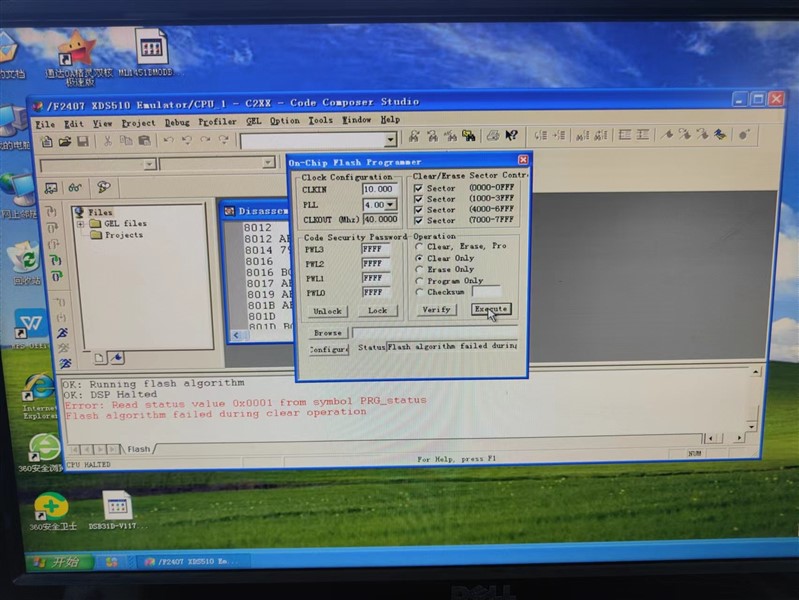
            7 boards report password errors (Figure 1), 3 boards appear to have programs (Figure 2), and 0X0001 errors are reported when executing Clear, as shown in Figure 3 and Figure 4.

Need help to confirm:

           From the above 10 abnormal boards downloaded, can it be determined that the internal program of the chip is caused?

Figure 1:
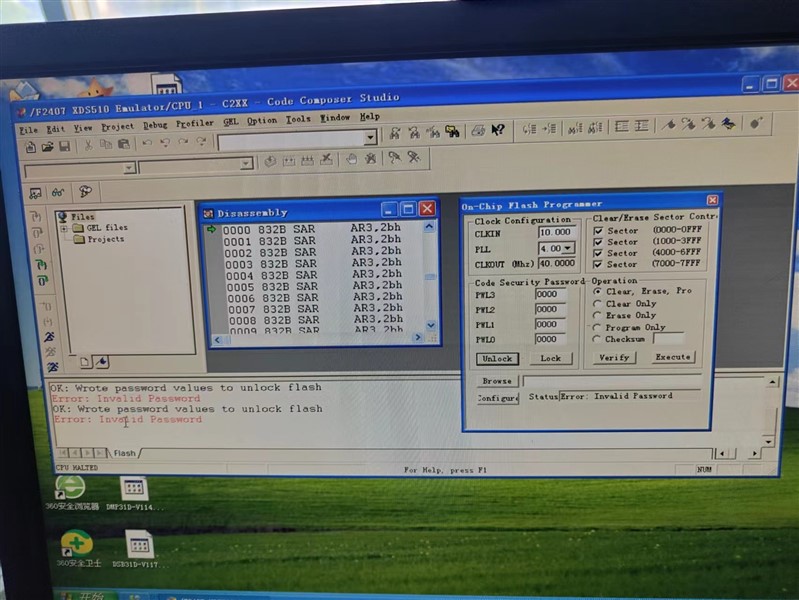
Figure 2:
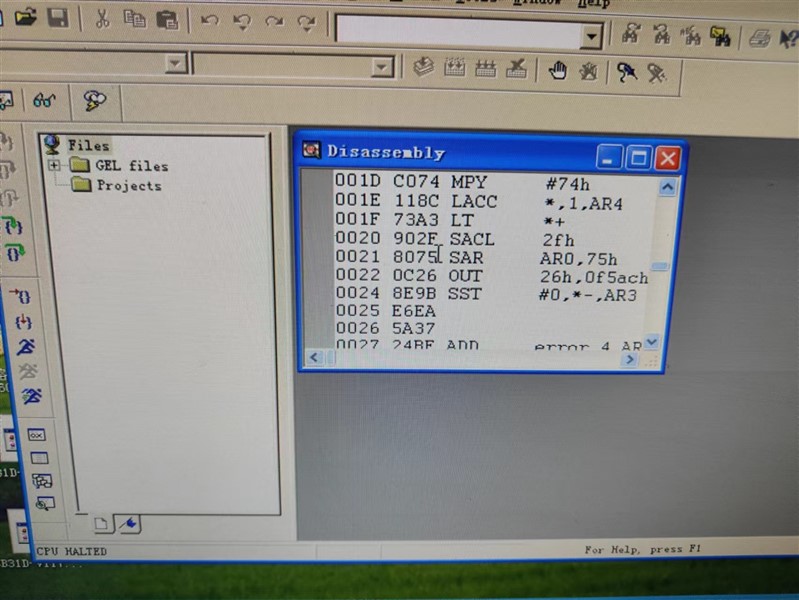
Figure 3:
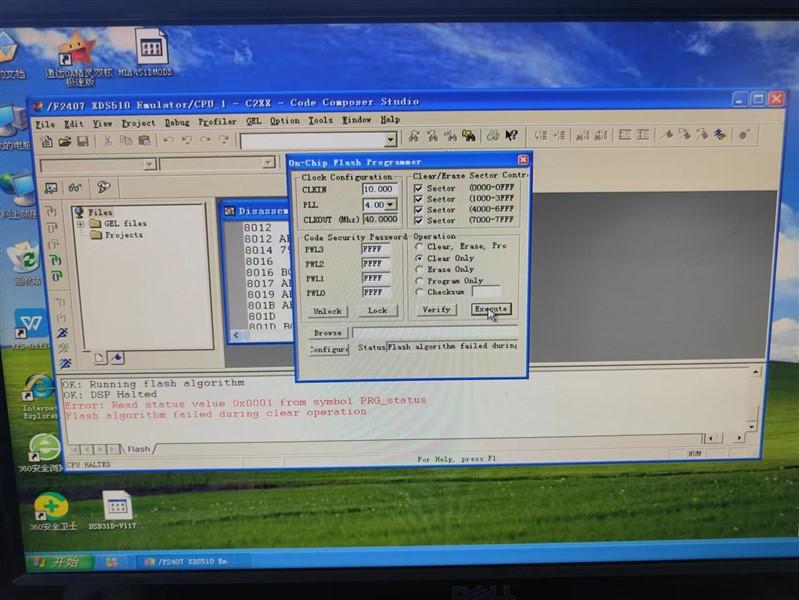
Figure 4:
  • No the cause cannot be determined based on the failure status provided. This can happen when the device is underpowered or if power or connection is lost during programming.

    Regards,
    Cody 

  • Hi  Cody

              Can you guide me how to operate to eliminate these possibilities?

  • If you recorded the power supply during programming, please review that data and see if the voltages dropped below the datasheet limits. I would go evaluate the size of your voltage regulation solution and verify that it meets the flash programming requirements.

    As for connection loss, this should be reported in by the programmer that you are using. 

    The 7 devices with unknown passwords are no longer useable because they appear to be locked. The other 3 devices I would attempt to reprogram.

    regards,
    Cody 

  • hi  Cody

           thanks for your support.

           1. I will push customer record the data of power supply during programming;

           2. "The 7 devices with unknown passwords are no longer useable because they appear to be locked", I want to know Why is it locked? The logic of locking what else is locked apart from the fact that there is program control in it?

          thanks?

  • 2. The entire flash memory will be unable to read/write/erase if the passwords are written. The password locations are 128 bits at the very end of flash memory.

    if you know the password you can unlock the device and attempt to program. It is very rare to see this issue, I am very surprised you have seen it 7/100 times.

    Regards,
    Cody

  • hi  Cody

             thanks for your support, But you seem to have ignored one key point, the customer encountered this problem when downloading the program for the first time. Theoretically, there should be no program in the chip when downloading the program for the first time, so there is no such situation as knowing the password. The customer replaced the chip and the problem disappeared, so it is suspected that the chip has been renovated.

    Now I want you to help me eliminate all the errors caused by technical problems.

  • Devices are shipped fully erased and unlocked. If the device was somehow locked the password should be all "F's". I know of no exceptions to this.

    If the password is not all "F's" then I believe it was programmed after leaving TI facilities. Where were these devices purchased?

    Regards,
    Cody 

  • Hi  Cody

           These chips are all from ARROW, but the customer will be welded by the OEM.

           What suggestions do you have for this case? Thank you.


  • Rain, 

    are you programming these devices with CCS3.3? I had assumed you were just showing the errors in that screen. Please note that in figure 1 which shows the password issues, the password is typed wrong. The password is written as all "0s" in the photo, when it should be all "Fs" as mentioned before. for the other two figures I would start by trying to run the full "clear,erase,program" steps if you do not know what state the flash is in. This can cause failures if you deplete the flash by running the wrong algorithm repeatedly.

  • Rain,

             The devices are fully tested and shipped from TI in an erased condition. On this device, the passwords are in 0x40, 0x41, 0x42 & 0x43 addresses in the program space. If these locations contain 0x0000 or 0xFFFF, the device is unsecure. When a device is unsecure, you don’t have to explicitly unsecure in CCS3.3 flash plugin. The mere act of displaying the password locations in CCS will “unsecure” the part. If a device is secure either intentionally by programming passwords (or) unintentionally due to corrupt password locations due to programming failure, the CCS window will display some random 16-bit value for all flash locations. 

    I presume this is a fairly old design that has been in production for a while. Can you confirm this? If that is the case, it is unlikely to be a case “current-starvation” during clear/erase/program. Does customer have any resistor between 5V and VCCP pin?

  • Fig 1 clearly shows that the device is secure. i.e. they contain “some” passwords. Unfortunately, we do not know what those passwords are because the password locations contain some random value due to programming error. Do you know if the application actually contains passwords?

    For Fig 2, is the flash content correct?

    Corruption of flash can happen if the C/E/P process is interrupted in some way or if the device experiences current starvation during C/E/P. The other possibility could be a bad device, but this is extremely unlikely on a device shipped from TI (since they go through extenssive testing before shipping.

  • hi  Hareesh

        The customer found these errors when programing for the first time, and there was no password set in their own program, so the customer suspected that there was a problem with the chip they got. I know that there must be no problem with the chip from TI factory, but now the problem is how to prove this.

  • Hi Rain, Hareesh is the best person to continue supporting this thread but unfortunately, he is out of the office for the next few days.  I'm sorry for the inconvenience but you should hear back from him by Thursday.

  • Rain,

         Did anything change in the programming setup? For example, (1) Any component on the board,(2) the PC used to program the device (3) the OS of the PC etc? If absolutely nothing changed over the years and this problem is suddenly seen, there is a possibility that the devices are indeed defective.

    You have not answered my question about the resistor on VCCP pin. Can you share the schematics with me privately?

  • Hi   Hareesh

         1)In the past three years, the environment for PCB and downloading programs has not changed.

         2)there is no resistor on VCCP pin.

  • OK, I will wait patiently

  • Rain,

              Here is what we know:

    10 out of 100 boards failed programming

    • 7 boards contain unknown passwords due to flash corruption and are hence locked inadvertently.
    • 3 boards appear to contain some code
      • Did customer verify if this is correct code?
      • What do the password locations (PWL) contain?
      • Are you able to Erase/Program these 3 devices? 

    If absolutely nothing changed over the last 3 years in terms of the design or programming setup and the code has no passwords, there are only two possibilities:

    1. The devices are defective. As explained before, the probability of this happening is low since all devices are tested thoroughly before they leave the factory. I presume the devices were bought from an authorized dealer and there is no reason to suspect the antecedents of the device.
    2. The C/E/P operation was somehow interrupted which led to the corruption of flash. Would it be possible to share the schematics of the board with me privately?
  • Hi  Hareesh

         Please provide your email address, and if the customer agrees, the schematic diagram will be sent to you,thanks.

  • Rain,

       We do not publish our email address on e2e. What we do is to initiate a "friendship request". Either one of us can do it and the other person needs to accept it. Once accepted, information can be shared privately without the need to know the email address. I'll initiate a friendship request to you. I will close the thread and we can continue the discussion offline.