This thread has been locked.

If you have a related question, please click the "Ask a related question" button in the top right corner. The newly created question will be automatically linked to this question.

How to determine the requirement of MCU crystal

For the selection of TMS320F28035PAGQ crystal, how can I check the performance of crystal (e.g. frequency tolerance, frequency stablility and aging) meet the requirement of MCU. Now, we are using 20MHz crystal (AA20000002 from TXC, specification is shown at below) and the system clock frequency of MCU is 60MHz.
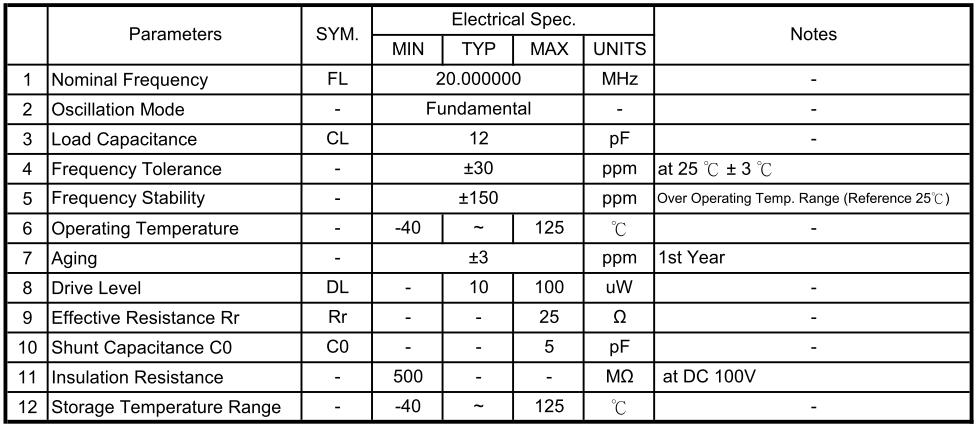
We have a CAN flash failure at low temperature from -20~0oC. What advice would you have for this kind of problem?

  • The primary concern when it comes to crystal selection is the reliable startup of the crystal-oscillator across temperature and over time. You want to select a crystal (and its load capacitors) to ensure that the startup will always be reliable over the lifetime of the end equipment. Parameters such as frequency tolerance/stability etc is a function of the end-application. Some applications may have more stringent requirements than others. A reliable way to ensure proper crystal operation is have the operation of your hardware with the crystal characterized by the crystal vendor. This is the NOTE you see in the datasheet: 

    TI recommends that customers have the resonator/crystal vendor characterize the operation of their device with the MCU chip. The resonator/crystal vendor has the equipment and expertise to tune the tank circuit. The vendor can also advise the customer regarding the proper tank component values that will produce proper start-up and stability over the entire operating range. 

    It does surprise me that you observed a "CAN flash failure" at low-temp. Is this a failure related to Flash memory or a failure related to CAN communication? At power-up, the default clock source is the 10 MHz on-chip zero-pin oscillator. This is the clock source that the CAN bootloader uses for a bit-rate of 100 kbps (unless you have a secondary bootloader that changes the clock to your 20 MHz crystal and switches to a higher bit-rate). If you are indeed using a higher bit-rate, this app.note may help you in choosing the correct bit-timing parameters: http://www.ti.com/lit/an/sprac35/sprac35.pdf