This thread has been locked.

If you have a related question, please click the "Ask a related question" button in the top right corner. The newly created question will be automatically linked to this question.

TPS27S100: Comparison with TPS1663

Part Number: TPS27S100
Other Parts Discussed in Thread: TPS1663,

I have used TPS1663 in the past and I am curious how TPS27S100 compares and contrasts with the eFuse family in general.  There seems to be a lot of overlap, but TI clearly separates them as "eFuse" vs "high-side switch", so I wonder if there is some fundamental difference between the two.

  • Hi David,

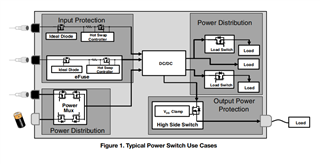
    For TI's devices, high-side switches are intended to drive loads while efuses are not. So high-side switches implemented features like inductive load driving, cap charging in-rush current period etc. while the efuses don't.

    https://www.ti.com/lit/eb/slyy168/slyy168.pdf

    This app notes gives a good overview of the differences between devices. 

    Regards,

    Yichi

  • The TPS1663 does have the ability to limit inrush and charge an unknown capacitive load, right?  I am taking advantage of that in my current application.  I am using the TPS1663 as a high-side switch.  When the switch is enabled there is an inrush current that the TPS1663 limits to a threshold until the inrush event is over.  It also has a thermal regulation loop that will reduce the current if the part starts to overheat.  It seems like the eFuse is doing a great job in this application.  Would the TPS27S100 be able to handle this?  Most important is the ability to limit the inrush current, but also maintain a limited current until the output capacitor is charged - in some devices the switch latches off when it hits the current limit and that would not work for this application.

  • Hi David,

    The TPS27S100 is able to clamp the current at the set value for the cap charging. After the cap charging, if the current limit needs to be set lower, you can adjust the external resistor by mosfet controlling circuitry to adjust the current limit.

    It's suitable for cap load driving.

    Please let me know if you have additional questions.

    Regards,

    Yichi