Other Parts Discussed in Thread: TINA-TI
Hello everybody,
Is it possible that it is not possible to set a Signal delay in for instance TINA Voltage Generator ?
I need a delay of a generated PWM voltage signal.
Kind regards,
Milan
This thread has been locked.
If you have a related question, please click the "Ask a related question" button in the top right corner. The newly created question will be automatically linked to this question.
Other Parts Discussed in Thread: TINA-TI
Hello everybody,
Is it possible that it is not possible to set a Signal delay in for instance TINA Voltage Generator ?
I need a delay of a generated PWM voltage signal.
Kind regards,
Milan
Milan,
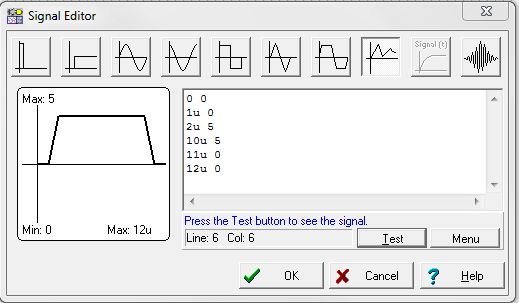
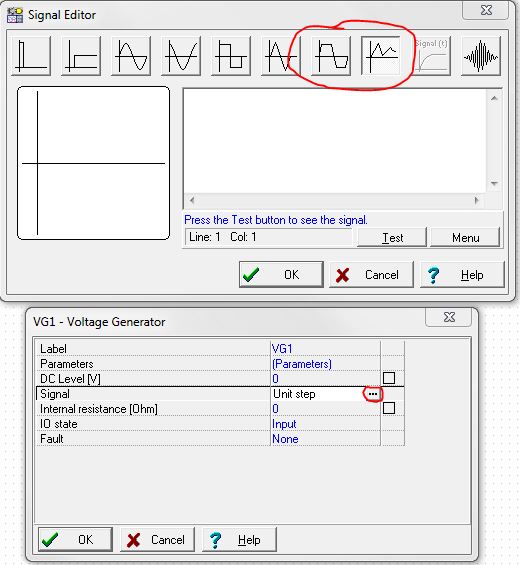
There are several ways to add a delay to a voltage generator in TINA-TI. You will need to use the General waveform or Piecewise Linear sources shown here. You click on the ellipsis and the Singal Editor appears. The General waveform has several time sections you can use and is periodic. The PWL source can use any set of Time/Value pairs.
The General waveform looks like this. You can customize it to the waveform you want to see.
The PWL waveform can look like this:
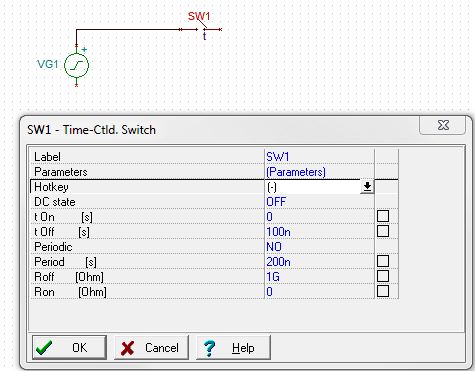
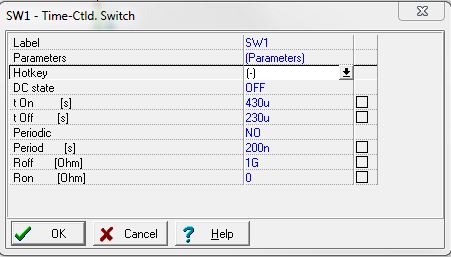
If these two solutions do not fit your needs, you may also simply add a time controlled switch between your source and circuit and configure it how you see fit:
Britt
Thanks Britt for the exhaustive answer and my apology for a delay of my reply.
I would like just to choose a delay of a Voltage source Sine Signal. In stead of staring from t=0s I would like to have it start at t1=200ns, for instance.
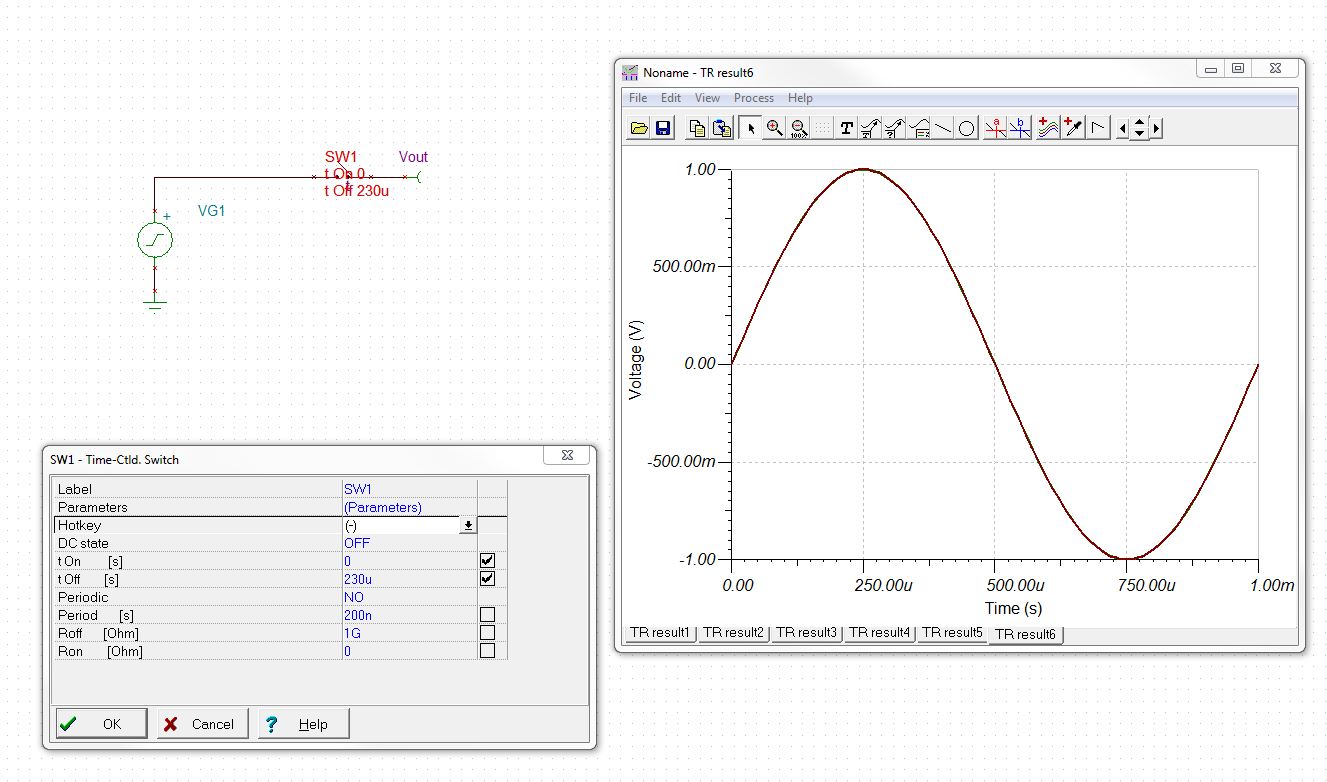
Your third suggestion seems the fastest so I tried it and I could not get it run. Simple test, I want the Sine to be interrupted from 500us to 750us but that does not happen:
or, only with a delay of 200u:
What am I doing wrong?
The other your suggestions are complicated if I want to have a delay of a Sine wave. Am I wrigth?
Sorry but, in my eyes setting a delay of a Input Sine Signal should be straightforward.
Kind regards,
Milan
Milan,
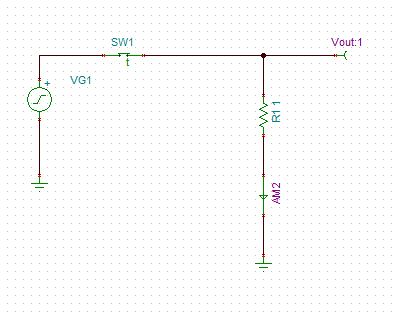
The voltage source will provide enouhg current to supply the 1V waveform regardless of the load. In this case, the switch is the only load, so it appears as if the switch is not present at all. If you add a resistive load to ground after the switch:
The resulting waveform is:
Alternatively, you can connect the switch in parallel with the source and add some source resistance and get the same result. You will have to change the switch configuration to being OFF at DC and turning on at the point you want to delay and turning off at the point you want to pass the waveform again.
Britt