This thread has been locked.

If you have a related question, please click the "Ask a related question" button in the top right corner. The newly created question will be automatically linked to this question.

CC2642R: How to add OAD reset service to an example project

Part Number: CC2642R
Other Parts Discussed in Thread: SYSCONFIG

Hi,

I am implementing On-Chip OAD to Simple Serial Socket Server project.

I got it in TI SimpleLink GitHub.

Image of simple_serial_socket_server is smaller than the simple_peripheral_oad_oncip.

So I think the On-Chip OAD can be implemented to this project.

But Adding OAD to Multi-role guide in SimpleLink Academy uses Off-Chip OAD. 

Can I get some guide about implementation of On-Chip OAD?

Should I implement the On-Chip OAD using the OAD Reset Service (0xFFD0)?

  • Hi SY,

    I'm passing this question to our OAD experts. In the meantime, can you tell us what SDK version you're using?

    Best,

    Nate

  • Hi,

    I'm using SDK and example below.

    1. simplelink_cc13x2_26x2_sdk_5_20_00_52

    2. ble_examples-simplelink_cc13x2_26x2_sdk-5.10\examples\rtos\CC26X2R1_LAUNCHXL\ble5apps\simple_serial_socket_server

  • Hey SY,

    Unfortunately, as you've pointed out, we don't have explicit documentation on how to add On-chip OAD to an example. With this, I see a few options:

    • Perform a diff of simple_peripheral_oad_offchip and simple_peripheral_oad_onchip to get clarity on adding the OAD reset service.
    • Re-start with a simple_peripheral_oad_onchip example and port in the simple_serial_socket_server core functionality.

    I hope this helps. In my opinion, the first option may be the easiest, but I could also see the second option being feasible as well. Please let me know if you need any help or run into any issues with implementing this.

  • Hi, Ammar

    I download the simple_serial_socket_server project to target and run.

    The target can be scanned in the TI SimpleLink Starter and works well but cannot be found in Btool. 

    I merged simple_peripheral_oad_onchip example in the simple_serial_socket_server.

    When I download and run this project in the CCS, I think it works well.

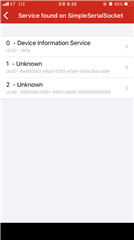
    I checked operations in the TI SimpleLink as below and TeraTerm.

    Only the Btool cannot scan and link estimation.

    Can you review a code? 

    /******************************************************************************
    
     @file  simple_serial_socket_server.c
    
     @brief This file contains the Simple Serial Socket server sample application
            for use  with the CC1352 / CC2652 Bluetooth Low Energy Protocol Stack.
    
     Group: CMCU, LPRF
     Target Device: CC1352, CC2652
    
     ******************************************************************************
    
     Copyright (c) 2019-2021, Texas Instruments Incorporated
     All rights reserved.
    
     Redistribution and use in source and binary forms, with or without
     modification, are permitted provided that the following conditions
     are met:
    
     *  Redistributions of source code must retain the above copyright
        notice, this list of conditions and the following disclaimer.
    
     *  Redistributions in binary form must reproduce the above copyright
        notice, this list of conditions and the following disclaimer in the
        documentation and/or other materials provided with the distribution.
    
     *  Neither the name of Texas Instruments Incorporated nor the names of
        its contributors may be used to endorse or promote products derived
        from this software without specific prior written permission.
    
     THIS SOFTWARE IS PROVIDED BY THE COPYRIGHT HOLDERS AND CONTRIBUTORS "AS IS"
     AND ANY EXPRESS OR IMPLIED WARRANTIES, INCLUDING, BUT NOT LIMITED TO,
     THE IMPLIED WARRANTIES OF MERCHANTABILITY AND FITNESS FOR A PARTICULAR
     PURPOSE ARE DISCLAIMED. IN NO EVENT SHALL THE COPYRIGHT OWNER OR
     CONTRIBUTORS BE LIABLE FOR ANY DIRECT, INDIRECT, INCIDENTAL, SPECIAL,
     EXEMPLARY, OR CONSEQUENTIAL DAMAGES (INCLUDING, BUT NOT LIMITED TO,
     PROCUREMENT OF SUBSTITUTE GOODS OR SERVICES; LOSS OF USE, DATA, OR PROFITS;
     OR BUSINESS INTERRUPTION) HOWEVER CAUSED AND ON ANY THEORY OF LIABILITY,
     WHETHER IN CONTRACT, STRICT LIABILITY, OR TORT (INCLUDING NEGLIGENCE OR
     OTHERWISE) ARISING IN ANY WAY OUT OF THE USE OF THIS SOFTWARE,
     EVEN IF ADVISED OF THE POSSIBILITY OF SUCH DAMAGE.
    
     *****************************************************************************/
    
    /*********************************************************************
     * INCLUDES
     */
    #include <string.h>
    
    #include <ti/sysbios/knl/Task.h>
    #include <ti/sysbios/knl/Clock.h>
    #include <ti/sysbios/knl/Event.h>
    #include <ti/sysbios/knl/Queue.h>
    
    #include <ti/drivers/UART.h>
    #include <ti/drivers/uart/UARTCC26XX.h>
    #include <ti/drivers/utils/List.h>
    
    //#include "board.h"
    
    #include <icall.h>
    /* This Header file contains all BLE API and icall structure definition */
    #include "icall_ble_api.h"
    #include "devinfoservice.h"
    #include "ll_common.h"
    #include "util.h"
    #include "onboard.h"
    
    #include <ti_drivers_config.h>
    #include "ti_ble_config.h"
    #include <ti/display/Display.h>
    #include <ti/drivers/apps/LED.h>
    
    #include "simple_serial_socket_server.h"
    #include "simple_stream_profile_server.h"
    
    #ifdef OAD_SUPPORT
    // Used for imgHdr_t structure
    #include <common/cc26xx/oad/oad_image_header.h>
    #include "oad.h"
    //#if defined(OAD_SUPPORT_ONCHIP)
    // Used for OAD Reset Service APIs
    #include "oad_reset_service.h"
    #include <common/cc26xx/flash_interface/flash_interface.h>
    #endif // OAD_SUPPORT
    /*********************************************************************
     * CONSTANTS
     */
    
    // General discoverable mode: advertise indefinitely
    #define DEFAULT_DISCOVERABLE_MODE             GAP_ADTYPE_FLAGS_GENERAL
    
    // Maximum connection interval (units of 1.25ms, 800=1000ms) for automatic
    // parameter update request
    #define DEFAULT_DESIRED_MAX_CONN_INTERVAL     800
    
    // Task configuration
    #define SSSS_TASK_PRIORITY                     1
    #ifndef SSSS_TASK_STACK_SIZE
    //#define SSSS_TASK_STACK_SIZE                   644
    #define SSSS_TASK_STACK_SIZE                   1024
    #endif
    
    // Application events
    #define SSSS_CONN_EVT                          0x0001
    #define SSSS_ADV_EVT                           0x0002
    #define SSSS_OUTGOING_DATA                     0x0020
    #define SSSS_OAD_RESET_EVT                       10
    
    #define SSSS_OAD_QUEUE_EVT                     OAD_QUEUE_EVT       // Event_Id_01
    #define SSSS_OAD_COMPLETE_EVT                  OAD_DL_COMPLETE_EVT // Event_Id_02
    #define SSSS_OAD_NO_MEM_EVT                    OAD_OUT_OF_MEM_EVT  // Event_Id_03
    
    // Internal Events for RTOS application
    #define SSSS_ICALL_EVT                         ICALL_MSG_EVENT_ID // Event_Id_31
    #define SSSS_QUEUE_EVT                         UTIL_QUEUE_EVENT_ID // Event_Id_30
    
    // Bitwise OR of all events to pend on
    #define SSSS_ALL_EVENTS                        (SSSS_ICALL_EVT             | \
                                                  SSSS_QUEUE_EVT             | \
                                                  SSSS_OAD_QUEUE_EVT         | \
                                                  SSSS_OAD_COMPLETE_EVT      | \
                                                  SSSS_OAD_NO_MEM_EVT)
    
    // Set the register cause to the registration bit-mask
    #define CONNECTION_EVENT_REGISTER_BIT_SET(RegisterCause) (connectionEventRegisterCauseBitMap |= RegisterCause )
    // Remove the register cause from the registration bit-mask
    #define CONNECTION_EVENT_REGISTER_BIT_REMOVE(RegisterCause) (connectionEventRegisterCauseBitMap &= (~RegisterCause) )
    // Gets whether the current App is registered to the receive connection events
    #define CONNECTION_EVENT_IS_REGISTERED (connectionEventRegisterCauseBitMap > 0)
    // Gets whether the RegisterCause was registered to recieve connection event
    #define CONNECTION_EVENT_REGISTRATION_CAUSE(RegisterCause) (connectionEventRegisterCauseBitMap & RegisterCause )
    
    //  UART read buffer size
    #define UART_MAX_READ_SIZE    (256)
    
    // Minimum heap headroom for BLE application
    #define MIN_HEAP_HEADROOM     (4000)
    
    // Spin if the expression is not true
    #define SimpleSerialSocketServer_ASSERT(expr) if (!(expr)) simple_serial_socket_spin();
    
    /*********************************************************************
     * TYPEDEFS
     */
    
    // App event passed from profiles.
    typedef struct
    {
      appEvtHdr_t hdr;    // event header.
      uint8_t    *pData;  // event data
      uint16_t   arg0;    // Generic argument
    } ssssEvt_t;
    
    // UART msg list element
    typedef struct
    {
      List_Elem elem;
      uint8_t len;
      uint8_t buffer[];
    } uartMsg_t;
    
    // The following typedef is used for registration to connection event
    typedef enum
    {
      NOT_REGISTER       = 0,
      FOR_ATT_RSP        = 1,
      FOR_STREAM         = 2
    }connectionEventRegisterCause_u;
    
    // Container to store advertising event data when passing from advertising
    // callback to app event. See the respective event in GapAdvScan_Event_IDs
    // in gap_advertiser.h for the type that pBuf should be cast to.
    typedef struct
    {
      uint32_t event;
      void *pBuf;
    } spGapAdvEventData_t;
    
    /*********************************************************************
     * GLOBAL VARIABLES
     */
    
    // Display Interface
    Display_Handle dispHandle = NULL;
    LED_Handle ledHandle[2];
    
    #ifdef OAD_SUPPORT
    //reset connection handle
    uint16_t resetConnHandle = LINKDB_CONNHANDLE_INVALID;
    #endif
    /*********************************************************************
     * LOCAL VARIABLES
     */
    
    // Handle the registration and un-registration for the connection event, since only one can be registered.
    static uint32_t       connectionEventRegisterCauseBitMap = NOT_REGISTER; //see connectionEventRegisterCause_u
    
    // Entity ID globally used to check for source and/or destination of messages
    static ICall_EntityID selfEntity;
    
    // Event globally used to post local events and pend on system and
    // local events.
    static ICall_SyncHandle syncEvent;
    
    // Queue object used for app messages
    static Queue_Struct appMsg;
    static Queue_Handle appMsgQueue;
    
    // Task configuration
    Task_Struct ssssTask;
    uint8_t ssssTaskStack[SSSS_TASK_STACK_SIZE];
    
    // Per-handle connection info
    //static spConnRec_t connList[MAX_NUM_BLE_CONNS];
    
    // Advertising handles
    static uint8 advHandleLegacy;
    static uint8 advHandleLongRange;
    
    // Globals used for ATT Response retransmission
    static gattMsgEvent_t *pAttRsp = NULL;
    static uint8_t rspTxRetry = 0;
    
    // Global connection handle
    static uint16_t connHandle = 0xFFFF;
    
    // UART Interface
    static UART_Handle uartHandle = NULL;
    
    // UART read buffer
    static uint8_t uartReadBuffer[UART_MAX_READ_SIZE] = {0};
    
    // UART write list
    static List_List  uartWriteList;
    static uartMsg_t* uartCurrentMsg;
    static uint8_t    uartWriteActive = 0;
    
    #ifdef OAD_SUPPORT
    // Variable used to store the number of messages pending once OAD completes
    // The application cannot reboot until all pending messages are sent
    static uint8_t numPendingMsgs = 0;
    static bool oadWaitReboot = false;
    
    // Flag to be stored in NV that tracks whether service changed
    // indications needs to be sent out
    static uint32_t  sendSvcChngdOnNextBoot = FALSE;
    #endif
    
    /*********************************************************************
     * LOCAL FUNCTIONS
     */
    static void uartReadCallback(UART_Handle handle, void *rxBuf, size_t size);
    static void uartWriteCallback(UART_Handle handle, void *rxBuf, size_t size);
    
    static void SimpleStreamServer_cccUpdateCB(uint16_t value);
    static void SimpleStreamServer_incomingDataCB(uint16_t connHandle,
                                  uint8_t paramID, uint16_t len,
                                  uint8_t *pValue);
    
    static void SimpleSerialSocketServer_init( void );
    static void SimpleSerialSocketServer_taskFxn(UArg a0, UArg a1);
    
    static uint8_t SimpleSerialSocketServer_processStackMsg(ICall_Hdr *pMsg);
    static uint8_t SimpleSerialSocketServer_processGATTMsg(gattMsgEvent_t *pMsg);
    static void SimpleSerialSocketServer_processGapMessage(gapEventHdr_t *pMsg);
    static void SimpleSerialSocketServer_processConnEvt(Gap_ConnEventRpt_t *pReport);
    static void SimpleSerialSocketServer_processAppMsg(ssssEvt_t *pMsg);
    
    static void SimpleSerialSocketServer_sendAttRsp(void);
    static void SimpleSerialSocketServer_freeAttRsp(uint8_t status);
    
    static uint8_t SimpleSerialSocketServer_enqueueMsg(uint8_t event, uint8_t state,
                                                  uint8_t *pData, uint16_t arg0);
    
    static void SimpleSerialSocketServer_connEvtCB(Gap_ConnEventRpt_t *pReport);
    static void SimpleSerialSocketServer_advCB(uint32_t event, void *pBuf, uintptr_t arg);
    
    #ifdef OAD_SUPPORT
    static uint8_t SimplePeripheral_processL2CAPMsg(l2capSignalEvent_t *pMsg);
    
    static void SimplePeripheral_processOadResetWriteCB(uint16_t connHandle, uint16_t bim_var);
    static void SimplePeripheral_processOadResetEvt(oadResetWrite_t *resetEvt);
    
    //static void OadApp_addService(void);
    static void OadApp_init(void);
    //static void OadApp_cancel(void);
    #endif
    
    /*********************************************************************
     * EXTERN FUNCTIONS
     */
    extern void AssertHandler(uint8 assertCause, uint8 assertSubcause);
    
    /*********************************************************************
     * PROFILE CALLBACKS
     */
    
    // SimpleStreamServer Profile Callbacks
    static SimpleStreamServerCBs_t SimpleStreamServer_SimpleStreamServerProfileCBs =
    {
      .pfnCccUpdateCb     = SimpleStreamServer_cccUpdateCB,    // Characteristic configuration update handler
      .pfnIncomingDataCb  = SimpleStreamServer_incomingDataCB, // Incoming data handler
    };
    
    #ifdef OAD_SUPPORT
    static oadResetWriteCB_t SimplePeripheral_oadResetCBs =
    {
      SimplePeripheral_processOadResetWriteCB // Write Callback.
    };
    #endif
    
    /*********************************************************************
     * PUBLIC FUNCTIONS
     */
    
    /*********************************************************************
     * @fn      simple_serial_socket_spin
     *
     * @brief   Spin forever
     *
     * @param   none
     */
    static void simple_serial_socket_spin(void)
    {
      volatile uint8_t x = 0;
    
      while(1)
      {
        x++;
      }
    }
    
    /*********************************************************************
     * @fn      SimpleSerialSocketServer_RegisterToAllConnectionEvent()
     *
     * @brief   register to receive connection events for all the connection
     *
     * @param connectionEventRegisterCause represents the reason for registration
     *
     * @return @ref SUCCESS
     *
     */
    bStatus_t SimpleSerialSocketServer_RegisterToAllConnectionEvent (connectionEventRegisterCause_u connectionEventRegisterCause)
    {
      bStatus_t status = SUCCESS;
    
      // in case  there is no registration for the connection event, make the registration
      if (!CONNECTION_EVENT_IS_REGISTERED)
      {
        status = Gap_RegisterConnEventCb(SimpleSerialSocketServer_connEvtCB, GAP_CB_REGISTER, LINKDB_CONNHANDLE_ALL);
      }
      if(status == SUCCESS)
      {
        //add the reason bit to the bitmap.
        CONNECTION_EVENT_REGISTER_BIT_SET(connectionEventRegisterCause);
      }
    
      return(status);
    }
    
    /*********************************************************************
     * @fn      SimpleSerialSocketServer_UnRegisterToAllConnectionEvent()
     *
     * @brief   Unregister connection events
     *
     * @param connectionEventRegisterCause represents the reason for registration
     *
     * @return @ref SUCCESS
     *
     */
    bStatus_t SimpleSerialSocketServer_UnRegisterToAllConnectionEvent (connectionEventRegisterCause_u connectionEventRegisterCause)
    {
      bStatus_t status = SUCCESS;
    
      CONNECTION_EVENT_REGISTER_BIT_REMOVE(connectionEventRegisterCause);
      // in case  there is no more registration for the connection event than unregister
      if (!CONNECTION_EVENT_IS_REGISTERED)
      {
        Gap_RegisterConnEventCb(SimpleSerialSocketServer_connEvtCB, GAP_CB_UNREGISTER, LINKDB_CONNHANDLE_ALL);
      }
    
      return(status);
    }
    
    
    /*********************************************************************
     * @fn      uartReadCallback
     *
     * @brief   UART read callback, notify the application it needs to handle the data
     *
     * @param   handle  - UART handle
     *          *rxBuf  - buffer containing the incoming data.
     *          size    - length of the data buffer.
     *
     * @return  None.
     */
    static void uartReadCallback(UART_Handle handle, void *rxBuf, size_t size)
    {
      // Pass the number of read bytes using the arg0 field
      SimpleSerialSocketServer_enqueueMsg(SSSS_OUTGOING_DATA, NULL, NULL, size);
    }
    
    /*********************************************************************
     * @fn      uartWriteCallback
     *
     * @brief   UART write callback, perform additional writes if the UART msg
     *          list is not empty
     *
     * @param   handle  - UART handle
     *          *txBuf  - buffer containing the written data.
     *          size    - length of the data buffer written.
     *
     * @return  None.
     */
    static void uartWriteCallback(UART_Handle handle, void *txBuf, size_t size)
    {
      // Free the last printed buffer
      if (NULL != uartCurrentMsg)
      {
        ICall_free(uartCurrentMsg);
        uartCurrentMsg = NULL;
      }
    
      // If the list is not empty, start another write
      if (!List_empty(&uartWriteList)) {
        uartCurrentMsg = (uartMsg_t *) List_get(&uartWriteList);
        UART_write(uartHandle, uartCurrentMsg->buffer, uartCurrentMsg->len);
      }
      else
      {
        uartWriteActive = 0;
      }
    }
    
    /*********************************************************************
     * @fn      SimpleStreamServer_cccUpdateCB
     *
     * @brief   Callback from SimpleStreamServer Profile indicating state change
     *
     * @param   connHandle - connection handle tied to the state change
     *          state      - New state
     *
     * @return  None.
     */
    static void SimpleStreamServer_cccUpdateCB(uint16_t value)
    {
      // Notifications is active
      if (value == 0x0001) {
        // Indicate that the stream is enabled
        LED_setOn(ledHandle[CONFIG_LED_1], 100);
      }
      else
      {
        // Indicate that the stream is disabled
        LED_setOff(ledHandle[CONFIG_LED_1]);
      }
    }
    
    /*********************************************************************
     * @fn      SimpleStreamServer_incomingDataCB
     *
     * @brief   Callback from SimpleStreamServer Profile indicating incoming data
     *
     * @param   paramId - parameter Id of the value that was changed.
     *          len     - length of the data buffer.
     *          *data - buffer containing the incoming data.
     *
     * @return  None.
     */
    static void SimpleStreamServer_incomingDataCB(uint16_t connHandle,
                                                uint8_t paramID, uint16_t len,
                                                uint8_t *data)
    {
      // Try to allocate and store the data to our UART write queue
      uartMsg_t *newMsg;
      newMsg = SimpleStreamServer_allocateWithHeadroom(sizeof(uartMsg_t) + len);
    
      if (newMsg)
      {
        newMsg->len = len;
        memcpy(newMsg->buffer, data, len);
    
        List_put(&uartWriteList, (List_Elem *) newMsg);
    
        // If no write is currently active, start a new one
        if (uartWriteActive == 0)
        {
          uartWriteActive = 1;
          uartCurrentMsg = (uartMsg_t *) List_get(&uartWriteList);
    
          UART_write(uartHandle, uartCurrentMsg->buffer, uartCurrentMsg->len);
        }
      }
    }
    
     /*********************************************************************
     * @fn      SimpleSerialSocketServer_createTask
     *
     * @brief   Task creation function for the Simple Peripheral.
     *
     * @param   None.
     *
     * @return  None.
     */
    void SimpleSerialSocketServer_createTask(void)
    {
      Task_Params taskParams;
    
      // Configure task
      Task_Params_init(&taskParams);
      taskParams.stack = ssssTaskStack;
      taskParams.stackSize = SSSS_TASK_STACK_SIZE;
      taskParams.priority = SSSS_TASK_PRIORITY;
    
      Task_construct(&ssssTask, SimpleSerialSocketServer_taskFxn, &taskParams, NULL);
    }
    
    /*********************************************************************
     * @fn      SimpleSerialSocketServer_init
     *
     * @brief   Called during initialization and contains application
     *          specific initialization (ie. hardware initialization/setup,
     *          table initialization, power up notification, etc), and
     *          profile initialization/setup.
     *
     * @param   None.
     *
     * @return  None.
     */
    static void SimpleSerialSocketServer_init(void)
    {
      // ******************************************************************
      // N0 STACK API CALLS CAN OCCUR BEFORE THIS CALL TO ICall_registerApp
      // ******************************************************************
      // Register the current thread as an ICall dispatcher application
      // so that the application can send and receive messages.
      ICall_registerApp(&selfEntity, &syncEvent);
    
      // Create an RTOS queue for message from profile to be sent to app.
      appMsgQueue = Util_constructQueue(&appMsg);
    
      LED_Params ledParams;
      LED_init();
      LED_Params_init(&ledParams);
      ledHandle[CONFIG_LED_0] = LED_open(CONFIG_LED_0, &ledParams);
      ledHandle[CONFIG_LED_1] = LED_open(CONFIG_LED_1, &ledParams);
    
      // Initialize UART
      UART_Params uartParams;
      UART_init();
    
      // Open UART in callback mode for both read and write
      UART_Params_init(&uartParams);
      uartParams.writeDataMode  = UART_DATA_BINARY;
      uartParams.readDataMode   = UART_DATA_BINARY;
      uartParams.readReturnMode = UART_RETURN_FULL;
      uartParams.readMode       = UART_MODE_CALLBACK;
      uartParams.writeMode      = UART_MODE_CALLBACK;
      uartParams.readCallback   = uartReadCallback;
      uartParams.writeCallback  = uartWriteCallback;
      uartParams.readEcho       = UART_ECHO_OFF;
      uartParams.baudRate       = 115200;
    
      uartHandle = UART_open(CONFIG_DISPLAY_UART, &uartParams);
    
      if (uartHandle == NULL) {
        // UART_open() failed
        while (1);
      }
    
      // Enable partial return
      UART_control(uartHandle, UARTCC26XX_CMD_RETURN_PARTIAL_ENABLE, NULL);
    
      // Setup an initial read
      UART_read(uartHandle, uartReadBuffer, UART_MAX_READ_SIZE);
    
      // Set the Device Name characteristic in the GAP GATT Service
      // For more information, see the section in the User's Guide:
      // http://software-dl.ti.com/lprf/sdg-latest/html
      GGS_SetParameter(GGS_DEVICE_NAME_ATT, GAP_DEVICE_NAME_LEN, attDeviceName);
    
      // Configure GAP
      {
        uint16_t paramUpdateDecision = GAP_UPDATE_REQ_ACCEPT_ALL;
    
        // Accept all parameter update requests
        GAP_SetParamValue(GAP_PARAM_LINK_UPDATE_DECISION, paramUpdateDecision);
      }
    
      // Initialize GATT attributes
      GGS_AddService(GATT_ALL_SERVICES);           // GAP GATT Service
      GATTServApp_AddService(GATT_ALL_SERVICES);   // GATT Service
      DevInfo_AddService();                        // Device Information Service
    
      // Initialize Simple data stream service
      SimpleStreamServer_AddService(GATT_ALL_SERVICES);
      SimpleStreamServer_RegisterAppCBs(&SimpleStreamServer_SimpleStreamServerProfileCBs);
    
      //OadApp_addService();
      Reset_addService((oadUsrAppCBs_t *)&SimplePeripheral_oadResetCBs);
    
      // Make sure to leave at least MIN_HEAP_HEADROOM of heap
      // for the BLE stack application to operate.
      SimpleStreamServer_setHeadroomLimit(MIN_HEAP_HEADROOM);
    
      // Register to connection events
      SimpleSerialSocketServer_RegisterToAllConnectionEvent(FOR_STREAM);
    
      // Register with GAP for HCI/Host messages. This is needed to receive HCI
      // events. For more information, see the section in the User's Guide:
      // http://software-dl.ti.com/lprf/sdg-latest/html
      GAP_RegisterForMsgs(selfEntity);
    
      // Register for GATT local events and ATT Responses pending for transmission
      GATT_RegisterForMsgs(selfEntity);
    
      // Set default values for Data Length Extension
      // Extended Data Length Feature is already enabled by default
      {
        // Set initial values to maximum, RX is set to max. by default(251 octets, 2120us)
        // Some brand smartphone is essentially needing 251/2120, so we set them here.
        #define APP_SUGGESTED_PDU_SIZE 251 //default is 27 octets(TX)
        #define APP_SUGGESTED_TX_TIME 2120 //default is 328us(TX)
    
        // This API is documented in hci.h
        // See the LE Data Length Extension section in the BLE5-Stack User's Guide for information on using this command:
        // http://software-dl.ti.com/lprf/ble5stack-latest/
        HCI_LE_WriteSuggestedDefaultDataLenCmd(APP_SUGGESTED_PDU_SIZE, APP_SUGGESTED_TX_TIME);
      }
    
      // Initialize GATT Client
      GATT_InitClient();
    
      //Initialize GAP layer for Peripheral role and register to receive GAP events
      GAP_DeviceInit(GAP_PROFILE_PERIPHERAL, selfEntity, ADDRMODE_RP_WITH_PUBLIC_ID, NULL);
    
      OadApp_init();
    }
    
    /*********************************************************************
     * @fn      SimpleSerialSocketServer_taskFxn
     *
     * @brief   Application task entry point for the Simple Peripheral.
     *
     * @param   a0, a1 - not used.
     *
     * @return  None.
     */
    static void SimpleSerialSocketServer_taskFxn(UArg a0, UArg a1)
    {
      // Initialize application
      SimpleSerialSocketServer_init();
    
      // Application main loop
      for (;;)
      {
        uint32_t events;
    
        // Waits for an event to be posted associated with the calling thread.
        // Note that an event associated with a thread is posted when a
        // message is queued to the message receive queue of the thread
        events = Event_pend(syncEvent, Event_Id_NONE, SSSS_ALL_EVENTS, ICALL_TIMEOUT_FOREVER);
    
        if (events)
        {
          ICall_EntityID dest;
          ICall_ServiceEnum src;
          ICall_HciExtEvt *pMsg = NULL;
    
          // Fetch any available messages that might have been sent from the stack
          if (ICall_fetchServiceMsg(&src, &dest,
                                    (void **)&pMsg) == ICALL_ERRNO_SUCCESS)
          {
            uint8 safeToDealloc = TRUE;
    
            if ((src == ICALL_SERVICE_CLASS_BLE) && (dest == selfEntity))
            {
              ICall_Stack_Event *pEvt = (ICall_Stack_Event *)pMsg;
    
              if (pEvt->signature != 0xffff)
              {
                // Process inter-task message
                safeToDealloc = SimpleSerialSocketServer_processStackMsg((ICall_Hdr *)pMsg);
              }
            }
    
            if (pMsg && safeToDealloc)
            {
              ICall_freeMsg(pMsg);
            }
          }
    
          // If RTOS queue is not empty, process app message.
          if (events & SSSS_QUEUE_EVT)
          {
            while (!Queue_empty(appMsgQueue))
            {
                ssssEvt_t *pMsg = (ssssEvt_t *)Util_dequeueMsg(appMsgQueue);
              if (pMsg)
              {
                // Process message.
                SimpleSerialSocketServer_processAppMsg(pMsg);
    
                // Free the space from the message.
                ICall_free(pMsg);
              }
            }
          }
    
    #ifdef OAD_SUPPORT
          // OAD events
          if(events & SSSS_OAD_NO_MEM_EVT)
          {
              // The OAD module is unable to allocate memory, print failure, cancel OAD
    //          Display_print0(dispHandle, SP_ROW_STATUS_1, 0,
    //                          "OAD malloc fail, cancelling OAD");
              UART_write(uartHandle, "OAD malloc fail, cancelling OAD\n\r", 33);
    
              OAD_cancel();
          }
    
          // OAD queue processing
          if(events & SSSS_OAD_QUEUE_EVT)
          {
              // Process the OAD Message Queue
              uint8_t status = OAD_processQueue();
    
              // If the OAD state machine encountered an error, print it
              // Return codes can be found in oad_constants.h
              if(status == OAD_DL_COMPLETE)
              {
    //            Display_print0(dispHandle, SP_ROW_STATUS_1, 0, "OAD DL Complete, wait for Enable");
                  UART_write(uartHandle, "OAD DL Complete, wait for Enable\n\r", 34);
              }
              else if(status == OAD_IMG_ID_TIMEOUT)
              {
    //            Display_print0(dispHandle, SP_ROW_STATUS_1, 0, "ImgID Timeout, disconnecting");
                  UART_write(uartHandle, "ImgID Timeout, disconnecting\n\r", 30);
    
                // This may be an attack, terminate the link,
                // Note HCI_DISCONNECT_REMOTE_USER_TERM seems to most closet reason for
                // termination at this state
                MAP_GAP_TerminateLinkReq(OAD_getactiveCxnHandle(), HCI_DISCONNECT_REMOTE_USER_TERM);
              }
              else if(status != OAD_SUCCESS)
              {
    //            Display_print1(dispHandle, SP_ROW_STATUS_1, 0, "OAD Error: %d", status);
                  UART_write(uartHandle, "OAD Error\n\r", 11);
              }
          }
    
          if(events & SSSS_OAD_COMPLETE_EVT)
          {
              // Register for L2CAP Flow Control Events
              L2CAP_RegisterFlowCtrlTask(selfEntity);
          }
    
    #endif
        }
      }
    }
    
    /*********************************************************************
     * @fn      SimpleSerialSocketServer_processStackMsg
     *
     * @brief   Process an incoming stack message.
     *
     * @param   pMsg - message to process
     *
     * @return  TRUE if safe to deallocate incoming message, FALSE otherwise.
     */
    static uint8_t SimpleSerialSocketServer_processStackMsg(ICall_Hdr *pMsg)
    {
      uint8_t safeToDealloc = TRUE;
    
      switch (pMsg->event)
      {
        case GAP_MSG_EVENT:
          SimpleSerialSocketServer_processGapMessage((gapEventHdr_t*) pMsg);
          break;
    
        case GATT_MSG_EVENT:
          // Process GATT message
          safeToDealloc = SimpleSerialSocketServer_processGATTMsg((gattMsgEvent_t *)pMsg);
          break;
    
        case HCI_GAP_EVENT_EVENT:
          {
    
            // Process HCI message
            switch(pMsg->status)
            {
              case HCI_COMMAND_COMPLETE_EVENT_CODE:
                // Process HCI Command Complete Event
                {
    
    #if !defined (USE_LL_CONN_PARAM_UPDATE)
                  // This code will disable the use of the LL_CONNECTION_PARAM_REQ
                  // control procedure (for connection parameter updates, the
                  // L2CAP Connection Parameter Update procedure will be used
                  // instead). To re-enable the LL_CONNECTION_PARAM_REQ control
                  // procedures, define the symbol USE_LL_CONN_PARAM_UPDATE
                  // The L2CAP Connection Parameter Update procedure is used to
                  // support a delta between the minimum and maximum connection
                  // intervals required by some iOS devices.
    
                  // Parse Command Complete Event for opcode and status
                  hciEvt_CmdComplete_t* command_complete = (hciEvt_CmdComplete_t*) pMsg;
                  uint8_t   pktStatus = command_complete->pReturnParam[0];
    
                  //find which command this command complete is for
                  switch (command_complete->cmdOpcode)
                  {
                    case HCI_LE_READ_LOCAL_SUPPORTED_FEATURES:
                      {
                        if (pktStatus == SUCCESS)
                        {
                          uint8_t featSet[8];
    
                          // Get current feature set from received event (bits 1-9
                          // of the returned data
                          memcpy( featSet, &command_complete->pReturnParam[1], 8 );
    
                          // Clear bit 1 of byte 0 of feature set to disable LL
                          // Connection Parameter Updates
                          CLR_FEATURE_FLAG( featSet[0], LL_FEATURE_CONN_PARAMS_REQ );
    
                          // Update controller with modified features
                          HCI_EXT_SetLocalSupportedFeaturesCmd( featSet );
                        }
                      }
                      break;
    
                    default:
                      //do nothing
                      break;
                  }
    #endif // !defined (USE_LL_CONN_PARAM_UPDATE)
    
                }
                break;
    
              case HCI_BLE_HARDWARE_ERROR_EVENT_CODE:
                AssertHandler(HAL_ASSERT_CAUSE_HARDWARE_ERROR,0);
                break;
    
              default:
                break;
            }
          }
          break;
    
          case L2CAP_SIGNAL_EVENT:
               // Process L2CAP signal
               safeToDealloc = SimplePeripheral_processL2CAPMsg((l2capSignalEvent_t *)pMsg);
               break;
    
    
          default:
            // do nothing
            break;
    
        }
    
      return (safeToDealloc);
    }
    
    /*********************************************************************
     * @fn      SimpleSerialSocketServer_processGATTMsg
     *
     * @brief   Process GATT messages and events.
     *
     * @return  TRUE if safe to deallocate incoming message, FALSE otherwise.
     */
    static uint8_t SimpleSerialSocketServer_processGATTMsg(gattMsgEvent_t *pMsg)
    {
      // See if GATT server was unable to transmit an ATT response
      if (pMsg->hdr.status == blePending)
      {
        // No HCI buffer was available. Let's try to retransmit the response
        // on the next connection event.
        if ( SimpleSerialSocketServer_RegisterToAllConnectionEvent(FOR_ATT_RSP) == SUCCESS)
        {
          // First free any pending response
          SimpleSerialSocketServer_freeAttRsp(FAILURE);
    
          // Hold on to the response message for retransmission
          pAttRsp = pMsg;
    
          // Don't free the response message yet
          return (FALSE);
        }
      }
    
    #ifdef OAD_SUPPORT
      if (pMsg->method == ATT_MTU_UPDATED_EVENT)
      {
        // MTU size updated
        OAD_setBlockSize(pMsg->msg.mtuEvt.MTU);
    //    Display_printf(dispHandle, SP_ROW_STATUS_1, 0, "MTU Size: %d", pMsg->msg.mtuEvt.MTU);
      }
    #endif
    
      // Free message payload. Needed only for ATT Protocol messages
      GATT_bm_free(&pMsg->msg, pMsg->method);
    
      // It's safe to free the incoming message
      return (TRUE);
    }
    
    /*********************************************************************
     * @fn      SimpleSerialSocketServer_processConnEvt
     *
     * @brief   Process connection event.
     *
     * @param pReport pointer to connection event report
     */
    static void SimpleSerialSocketServer_processConnEvt(Gap_ConnEventRpt_t *pReport)
    {
      if ( CONNECTION_EVENT_REGISTRATION_CAUSE(FOR_ATT_RSP))
      {
        // The GATT server might have returned a blePending as it was trying
        // to process an ATT Response. Now that we finished with this
        // connection event, let's try sending any remaining ATT Responses
        // on the next connection event.
        // Try to retransmit pending ATT Response (if any)
        SimpleSerialSocketServer_sendAttRsp();
      }
    
      if (CONNECTION_EVENT_REGISTRATION_CAUSE(FOR_STREAM))
      {
        // The stream is active, process the stream at every connection event.
        bStatus_t status = SimpleStreamServer_processStream();
    
        // If status is successful there is no data pending for processing
        if (status == SUCCESS)
        {
          SimpleSerialSocketServer_UnRegisterToAllConnectionEvent(FOR_STREAM);
        }
      }
    
    #ifdef OAD_SUPPORT
      /* If we are waiting for an OAD Reboot, process connection events to ensure
         * that we are not waiting to send data before restarting
         */
        if(oadWaitReboot)
        {
          // Wait until all pending messages are sent
          if(numPendingMsgs == 0)
          {
            // Store the flag to indicate that a service changed IND will
            // be sent at the next boot
            sendSvcChngdOnNextBoot = TRUE;
    
            uint8_t status = osal_snv_write(BLE_NVID_CUST_START,
                                            sizeof(sendSvcChngdOnNextBoot),
                                            (uint8 *)&sendSvcChngdOnNextBoot);
            if(status != SUCCESS)
            {
    //          Display_print1(dispHandle, 5, 0, "SNV WRITE FAIL: %d", status);
                UART_write(uartHandle, "SNV WRITE FAIL: %d\n\r", 20);
            }
    
            // Reset the system
            SystemReset();
          }
          else
          {
            numPendingMsgs--;
          }
        }
        else
        {
    
    #if SIMPLE_PERIPHERAL
          // Get index from handle
          uint8_t connIndex = SimplePeripheral_getConnIndex(pReport->handle);
    
          // If auto phy change is enabled
          if (connList[connIndex].isAutoPHYEnable == TRUE)
          {
            // Read the RSSI
            HCI_ReadRssiCmd(pReport->handle);
          }
    #endif
        }
    #endif
    }
    
    /*********************************************************************
     *
     * @brief   Send a pending ATT response message.
     *
     * @param   none
     *
     * @return  none
     */
    static void SimpleSerialSocketServer_sendAttRsp(void)
    {
      // See if there's a pending ATT Response to be transmitted
      if (pAttRsp != NULL)
      {
        uint8_t status;
    
        // Increment retransmission count
        rspTxRetry++;
    
        // Try to retransmit ATT response till either we're successful or
        // the ATT Client times out (after 30s) and drops the connection.
        status = GATT_SendRsp(pAttRsp->connHandle, pAttRsp->method, &(pAttRsp->msg));
        if ((status != blePending) && (status != MSG_BUFFER_NOT_AVAIL))
        {
          // Disable connection event end notice
          SimpleSerialSocketServer_UnRegisterToAllConnectionEvent (FOR_ATT_RSP);
          // We're done with the response message
          SimpleSerialSocketServer_freeAttRsp(status);
        }
      }
    }
    
    /*********************************************************************
     * @fn      SimpleSerialSocketServer_freeAttRsp
     *
     * @brief   Free ATT response message.
     *
     * @param   status - response transmit status
     *
     * @return  none
     */
    static void SimpleSerialSocketServer_freeAttRsp(uint8_t status)
    {
      // See if there's a pending ATT response message
      if (pAttRsp != NULL)
      {
        // See if the response was sent out successfully
        if (status != SUCCESS)
        {
          // Free response payload
          GATT_bm_free(&pAttRsp->msg, pAttRsp->method);
        }
    
        // Free response message
        ICall_freeMsg(pAttRsp);
    
        // Reset our globals
        pAttRsp = NULL;
        rspTxRetry = 0;
      }
    }
    
    /*********************************************************************
     * @fn      SimpleSerialSocketServer_processAppMsg
     *
     * @brief   Process an incoming callback from a profile.
     *
     * @param   pMsg - message to process
     *
     * @return  None.
     */
    static void SimpleSerialSocketServer_processAppMsg(ssssEvt_t *pMsg)
    {
      switch (pMsg->hdr.event)
      {
       // Outgoing data event
       case SSSS_OUTGOING_DATA:
         {
           // You could do processing of data here ...
    
           // For now, just Send the data read from UART over the air
           bStatus_t status = SimpleStreamServer_sendData(connHandle, &uartReadBuffer, pMsg->arg0);
    
           // If status is not successful, register for connection events for further processing
           if (status != SUCCESS) {
               SimpleSerialSocketServer_RegisterToAllConnectionEvent(FOR_STREAM);
           }
    
           // Start another read
           UART_read(uartHandle, uartReadBuffer, UART_MAX_READ_SIZE);
    
           break;
         }
    
       case SSSS_ADV_EVT:
         {
            // All events have associated memory to free except the insufficient memory
            // event
            if (((spGapAdvEventData_t *)(pMsg->pData))->event != GAP_EVT_INSUFFICIENT_MEMORY)
            {
              ICall_free(((spGapAdvEventData_t *)(pMsg->pData))->pBuf);
            }
            
            ICall_free(pMsg->pData);
            break;
        }
    
        // Connection event
        case SSSS_CONN_EVT:
          {
            SimpleSerialSocketServer_processConnEvt((Gap_ConnEventRpt_t *)(pMsg->pData));
    
            ICall_free(pMsg->pData);
            break;
          }
    
        case SSSS_OAD_RESET_EVT:
            SimplePeripheral_processOadResetEvt((oadResetWrite_t *)(pMsg->pData));
            break;
    
        default:
          // Do nothing.
          break;
      }
    }
    
    /*********************************************************************
     * @fn      SimpleSerialSocketServer_processGapMessage
     *
     * @brief   Process an incoming GAP event.
     *
     * @param   pMsg - message to process
     */
    static void SimpleSerialSocketServer_processGapMessage(gapEventHdr_t *pMsg)
    {
      switch(pMsg->opcode)
      {
        case GAP_DEVICE_INIT_DONE_EVENT:
        {
          bStatus_t status = FAILURE;
    
          gapDeviceInitDoneEvent_t *pPkt = (gapDeviceInitDoneEvent_t *)pMsg;
    
          if(pPkt->hdr.status == SUCCESS)
          {
            // Store the system ID
            uint8_t systemId[DEVINFO_SYSTEM_ID_LEN];
    
            // use 6 bytes of device address for 8 bytes of system ID value
            systemId[0] = pPkt->devAddr[0];
            systemId[1] = pPkt->devAddr[1];
            systemId[2] = pPkt->devAddr[2];
    
            // set middle bytes to zero
            systemId[4] = 0x00;
            systemId[3] = 0x00;
    
            // shift three bytes up
            systemId[7] = pPkt->devAddr[5];
            systemId[6] = pPkt->devAddr[4];
            systemId[5] = pPkt->devAddr[3];
    
            // Set Device Info Service Parameter
            DevInfo_SetParameter(DEVINFO_SYSTEM_ID, DEVINFO_SYSTEM_ID_LEN, systemId);
    
            // Setup and start Advertising
            // For more information, see the GAP section in the User's Guide:
            // http://software-dl.ti.com/lprf/ble5stack-latest/
    
    
            // Create Advertisement set #1 and assign handle
            status = GapAdv_create(&SimpleSerialSocketServer_advCB, &advParams1 ,
                                   &advHandleLegacy);
            SimpleSerialSocketServer_ASSERT(status == SUCCESS);
    
            // Load advertising data for set #1 that is statically allocated by the app
            status = GapAdv_loadByHandle(advHandleLegacy, GAP_ADV_DATA_TYPE_ADV,
                                         sizeof(advData1), advData1);
            SimpleSerialSocketServer_ASSERT(status == SUCCESS);
    
            // Load scan response data for set #1 that is statically allocated by the app
            status = GapAdv_loadByHandle(advHandleLegacy, GAP_ADV_DATA_TYPE_SCAN_RSP,
                                         sizeof(scanResData1), scanResData1);
            SimpleSerialSocketServer_ASSERT(status == SUCCESS);
    
            // Set event mask for set #1
            status = GapAdv_setEventMask(advHandleLegacy,
                                         GAP_ADV_EVT_MASK_START_AFTER_ENABLE |
                                         GAP_ADV_EVT_MASK_END_AFTER_DISABLE |
                                         GAP_ADV_EVT_MASK_SET_TERMINATED);
    
            // Enable legacy advertising for set #1
            status = GapAdv_enable(advHandleLegacy, GAP_ADV_ENABLE_OPTIONS_USE_MAX , 0);
            SimpleSerialSocketServer_ASSERT(status == SUCCESS);
    
            // Create Advertisement set #2 and assign handle
            status = GapAdv_create(&SimpleSerialSocketServer_advCB, &advParams2,
                                   &advHandleLongRange);
            SimpleSerialSocketServer_ASSERT(status == SUCCESS);
    
            // Load advertising data for set #2 that is statically allocated by the app
            status = GapAdv_loadByHandle(advHandleLongRange, GAP_ADV_DATA_TYPE_ADV,
                                         sizeof(advData2), advData2);
            SimpleSerialSocketServer_ASSERT(status == SUCCESS);
    
            // Set event mask for set #2
            status = GapAdv_setEventMask(advHandleLongRange,
                                         GAP_ADV_EVT_MASK_START_AFTER_ENABLE |
                                         GAP_ADV_EVT_MASK_END_AFTER_DISABLE |
                                         GAP_ADV_EVT_MASK_SET_TERMINATED);
    
            // Enable long range advertising for set #2
            status = GapAdv_enable(advHandleLongRange, GAP_ADV_ENABLE_OPTIONS_USE_MAX , 0);
            SimpleSerialSocketServer_ASSERT(status == SUCCESS);
            UART_write(uartHandle, "Info: Done Initializing\n\r", 25);
          }
    
          break;
        }
    
        case GAP_LINK_ESTABLISHED_EVENT:
        {
          uint8_t numActive = 0;
    
          numActive = linkDB_NumActive();
    
          // Use numActive to determine the connection handle of the last
          // connection and save it
          if (connHandle == 0xFFFF)
          {
            connHandle = numActive - 1;
          }
    
          // Red LED indicates connection
          LED_setOn(ledHandle[CONFIG_LED_0], 100);
    
          // Stop advertising since there is no room for more connections
          GapAdv_disable(advHandleLongRange);
          GapAdv_disable(advHandleLegacy);
    
          // Send a message to the client from the server
          UART_write(uartHandle, "Info: Server Connected. Start typing\n\r", 38);
          break;
        }
    
        case GAP_LINK_TERMINATED_EVENT:
        {
          // Clear connHandle
          connHandle = 0xFFFF;
    
          // "Disconnect" the stream as well
          SimpleStreamServer_disconnectStream();
    
          // Indicate disconnection by turning of the LEDs
          LED_setOff(ledHandle[CONFIG_LED_0]);
          LED_setOff(ledHandle[CONFIG_LED_1]);
          // Start advertising since there is room for more connections
          GapAdv_enable(advHandleLegacy, GAP_ADV_ENABLE_OPTIONS_USE_MAX , 0);
          GapAdv_enable(advHandleLongRange, GAP_ADV_ENABLE_OPTIONS_USE_MAX , 0);
    
          break;
        }
    
        case GAP_UPDATE_LINK_PARAM_REQ_EVENT:
        {
          // The application is setup to accept all params update request
          break;
        }
    
        case GAP_LINK_PARAM_UPDATE_EVENT:
        {
          // Here you could handle params update events
          break;
        }
    
        default:
          break;
      }
    }
    
    /*********************************************************************
     * @fn      SimpleSerialSocketServer_advCB
     *
     * @brief   GapAdv module callback
     *
     * @param   pMsg - message to process
     */
    static void SimpleSerialSocketServer_advCB(uint32_t event, void *pBuf, uintptr_t arg)
    {
      spGapAdvEventData_t *pData = ICall_malloc(sizeof(spGapAdvEventData_t));
    
      if (pData)
      {
        pData->event = event;
        pData->pBuf = pBuf;
    
        if(SimpleSerialSocketServer_enqueueMsg(SSSS_ADV_EVT, NULL, (uint8_t *) pData, NULL) != SUCCESS)
        {
          ICall_free(pData);
        }
      }
    }
    
    /*********************************************************************
     * @fn      SimpleSerialSocketServer_connEvtCB
     *
     * @brief   Connection event callback.
     *
     * @param pReport pointer to connection event report
     */
    static void SimpleSerialSocketServer_connEvtCB(Gap_ConnEventRpt_t *pReport)
    {
      // Enqueue the event for processing in the app context.
      if( SimpleSerialSocketServer_enqueueMsg(SSSS_CONN_EVT, 0 ,(uint8_t *) pReport, NULL) != SUCCESS)
      {
        ICall_free(pReport);
      }
    }
    
    /*********************************************************************
     *
     * @brief   Creates a message and puts the message in RTOS queue.
     *
     * @param   event - message event.
     * @param   state - message state.
     * @param   pData - message data pointer.
     * @param   arg0  - generic argument.
     *
     * @return  TRUE or FALSE
     */
    static uint8_t SimpleSerialSocketServer_enqueueMsg(uint8_t event, uint8_t state,
                                               uint8_t *pData, uint16_t arg0)
    {
      uint8_t success;
      ssssEvt_t *pMsg = ICall_malloc(sizeof(ssssEvt_t));
    
      // Create dynamic pointer to message.
      if (pMsg)
      {
        pMsg->hdr.event = event;
        pMsg->hdr.state = state;
        pMsg->pData = pData;
        pMsg->arg0  = arg0;
    
        // Enqueue the message.
        success = Util_enqueueMsg(appMsgQueue, syncEvent, (uint8_t *)pMsg);
        return (success) ? SUCCESS : FAILURE;
      }
    
      return FALSE;
    }
    
    #ifdef OAD_SUPPORT
    /*********************************************************************
     * @fn      OadApp_processOadResetEvt
     *
     * @brief   Process a write request to the OAD reset service
     *
     * @param   resetEvt - The oadResetWrite_t struct containing reset data
     *
     * @return  None.
     */
    static void SimplePeripheral_processOadResetEvt(oadResetWrite_t *resetEvt)
    {
      /* We cannot reboot the device immediately after receiving
       * the enable command, we must allow the stack enough time
       * to process and responsd to the OAD_EXT_CTRL_ENABLE_IMG
       * command. The current implementation will wait one cxn evt
       */
      // Register for L2CAP Flow Control Events
      L2CAP_RegisterFlowCtrlTask(selfEntity);
    
      resetConnHandle = resetEvt->connHandle;
    
      uint8_t status = FLASH_FAILURE;
      //read the image validation bytes and set it appropriately.
      imgHdr_t imgHdr = {0};
      if(flash_open())
      {
        status = readFlash(0x0, (uint8_t *)&imgHdr, OAD_IMG_HDR_LEN);
      }
    
      if ((FLASH_SUCCESS == status) && ( imgHdr.fixedHdr.imgVld != 0))
      {
        if ( OAD_evenBitCount(imgHdr.fixedHdr.imgVld) )
        {
          imgHdr.fixedHdr.imgVld = imgHdr.fixedHdr.imgVld << 1;
          writeFlash((uint32_t)FLASH_ADDRESS(0, IMG_VALIDATION_OFFSET),
                     (uint8_t *)&(imgHdr.fixedHdr.imgVld), sizeof(imgHdr.fixedHdr.imgVld));
        }
      }
    }
    
    /*********************************************************************
     * @fn      OadApp_processOadResetWriteCB
     *
     * @brief   Process a write request to the OAD reset service
     *
     * @param   connHandle - the connection Handle this request is from.
     * @param   bim_var    - bim_var to set before resetting.
     *
     * @return  None.
     */
    static void SimplePeripheral_processOadResetWriteCB(uint16_t connHandle, uint16_t bim_var)
    {
        // Allocate memory for OAD EVT payload, the app task must free this later
        oadResetWrite_t *oadResetWriteEvt = ICall_malloc(sizeof(oadResetWrite_t));
    
        oadResetWriteEvt->connHandle = connHandle;
        oadResetWriteEvt->bim_var = bim_var;
    
        SimpleSerialSocketServer_enqueueMsg(SSSS_OAD_RESET_EVT, NULL, (uint8_t *)oadResetWriteEvt, NULL);
    
    }
    
    
    /*********************************************************************
     * @fn      SimplePeripheral_processL2CAPMsg
     *
     * @brief   Process L2CAP messages and events.
     *
     * @return  TRUE if safe to deallocate incoming message, FALSE otherwise.
     */
    static uint8_t SimplePeripheral_processL2CAPMsg(l2capSignalEvent_t *pMsg)
    {
      uint8_t safeToDealloc = TRUE;
      static bool firstRun = TRUE;
    
      switch (pMsg->opcode)
      {
        case L2CAP_NUM_CTRL_DATA_PKT_EVT:
        {
          /*
          * We cannot reboot the device immediately after receiving
          * the enable command, we must allow the stack enough time
          * to process and respond to the OAD_EXT_CTRL_ENABLE_IMG
          * command. This command will determine the number of
          * packets currently queued up by the LE controller.
          * BIM var is already set via OadPersistApp_processOadWriteCB
          */
          if(firstRun)
          {
            firstRun = false;
    
            // We only want to set the numPendingMsgs once
            numPendingMsgs = MAX_NUM_PDU - pMsg->cmd.numCtrlDataPktEvt.numDataPkt;
    
            // Wait until all PDU have been sent on cxn events
            Gap_RegisterConnEventCb(SimpleSerialSocketServer_connEvtCB,
                                      GAP_CB_REGISTER,
                                      resetConnHandle);
                                      //OAD_getactiveCxnHandle());
                                      //pMsg->connHandle);
                                      //0);
    
            /* Set the flag so that the connection event callback will
             * be processed in the context of a pending OAD reboot
             */
            oadWaitReboot = true;
          }
    
          break;
        }
    
        default:
          // do nothing
          break;
      }
    
      return (safeToDealloc);
    }
    
    /*********************************************************************
     * @fn      SimplePeripheral_processOadWriteCB
     *
     * @brief   Process a write request to the OAD reset service
     *
     * @param   connHandle - the connection Handle this request is from.
     * @param   bim_var    - bim_var to set before resetting.
     *
     * @return  None.
     */
    //static void SimplePeripheral_processOadWriteCB(uint8_t event, uint16_t arg)
    //{
    //#ifdef ICALL_NO_APP_EVENTS
    //  uint8_t *pEventData = ICall_malloc(sizeof(uint8_t));
    //  pEventData[0] = event;
    //  bleApp_enqueueMsg(OADAPP_EVT_CALLBACK, pEventData);
    //#else
    //  Event_post(syncEvent, event);
    //#endif
    //}
    
    //static void OadApp_addService(void)
    //{
    //  Reset_addService((oadUsrAppCBs_t *)&SimplePeripheral_oadResetCBs);
    //}
    
    static void OadApp_init(void)
    {
      uint8_t versionStr[OAD_SW_VER_LEN + 1];
    
      // Read in the OAD Software version
      uint8_t swVer[OAD_SW_VER_LEN];
      OAD_getSWVersion(swVer, OAD_SW_VER_LEN);
    
      memcpy(versionStr, swVer, OAD_SW_VER_LEN);
    
      // Add in Null terminator
      versionStr[OAD_SW_VER_LEN] = 0;
    
      // Display Image version
      UART_write(uartHandle, "Info: OAD Initializing\n\r", 24);
    
    
      /*
       * When switching from persistent app back to the user application for the
       * for the first time after an OAD the device must send a service changed
       * indication. This will cause any peers to rediscover services.
       *
       * To prevent sending a service changed IND on every boot, a flag is stored
       * in NV to determine whether or not the service changed IND needs to be
       * sent
       */
      uint8_t status = osal_snv_read(BLE_NVID_CUST_START,
                                      sizeof(sendSvcChngdOnNextBoot),
                                      (uint8 *)&sendSvcChngdOnNextBoot);
      if(status != SUCCESS)
      {
        /*
         * On first boot the NV item will not have yet been initialzed, and the read
         * will fail. Do a write to set the initial value of the flash in NV
         */
         osal_snv_write(BLE_NVID_CUST_START, sizeof(sendSvcChngdOnNextBoot),
                        (uint8 *)&sendSvcChngdOnNextBoot);
      }
    
    }
    
    //static void OadApp_cancel(void)
    //{
    //#if defined(OAD_SUPPORT_OFFCHIP)
    //      OAD_cancel();
    //#elif defined(OAD_SUPPORT_ONCHIP)
    //      //OAD_cancel(); //ToDo: Remove: PK
    //#endif
    //}
    
    
    #endif
    /*********************************************************************
    *********************************************************************/
    

    I only changed simple_serial_socket_server.c and UUID inside the PROFILES/simple_stream_profile_server.c to enable Adafruit Bluefruit LE Connect "UART mode" support.

    Of course I changed project options such as include paths and pre-defines and .sysconfig file properly, but I only changed the code in simple_serial_socket_server.c and UUID inside the PROFILES/simple_stream_profile_server.c to enable Adafruit Bluefruit LE Connect "UART mode" support.

  • Hey SY,

    I didn't see anything stand out from your code. As you mention, if our mobile app works well I don't suspect any core issue with the code.

    I only changed simple_serial_socket_server.c and UUID inside the PROFILES/simple_stream_profile_server.c to enable Adafruit Bluefruit LE Connect "UART mode" support.

    If you revert the changes to the profile, are you able to discover the device with BTOOL? You mention you cannot find the device in BTOOL, have you tried to rescan a few times? Sometimes I notice an extra scan is required if BTOOL does not discover the advertisements from the peripheral. What is the advertisement interval set to? You can also try to make the advertisement interval shorter so that there are more advertisements for BTOOL to catch.

  • I have tried scanning many times. 

    Advertisement interval is default 100ms. 

    I tested the original example from GitHub.

    Unmodified simple_serial_socket_server project cannot be scanned in the BTool. But It was scanned in the mobile app.

  • Hey SY,

    I see you created a new thread for this topic. I will close this thread and continue addressing this issue there.

    https://e2e.ti.com/support/wireless-connectivity/bluetooth-group/bluetooth/f/bluetooth-forum/1053605/cc2642r-question-about-simple_serial_socket-example 

  • Hi,

    The On-Chip OAD test was successful.

    But there are still may questions.

    I used following images and project

    1. On-Chip BIM

    C:\ti\simplelink_cc13x2_26x2_sdk_5_20_00_52\examples\rtos\CC26X2R1_LAUNCHXL\ble5stack\hexfiles\bim_onchip\Debug_unsecure\cc26x2r1lp_bim_onchip.hex

    2. Persistent App

    C:\ti\simplelink_cc13x2_26x2_sdk_4_40_04_04\examples\rtos\CC26X2R1_LAUNCHXL\ble5stack\hexfiles\persistent_app\FlashROM_Release\sp_oad_onchip_cc26x2r1lp_persistent_app_FlashROM_Release.hex

    3. User App 

     simple_serial_socket_server with sdk_5_20_00_52

    My test procedure is as follows.

    1. Run user app

    2. Scan and connect user app in mobile phone

    3. Send the OAD Reset in the SimpleLink Starter, then the device boot and into persistent app.

    4. BTool can find the persistent app now.

    5. Start On-Chip OAD

    I plan to test with the latest sdk now.

    If I have additional questions in the future, I will post in a new thread.

    Thank you for your support.