This thread has been locked.

If you have a related question, please click the "Ask a related question" button in the top right corner. The newly created question will be automatically linked to this question.

CC2340R5: HFXT startup waveform

Part Number: CC2340R5
Other Parts Discussed in Thread: SYSCONFIG,

Hi, TI Team.

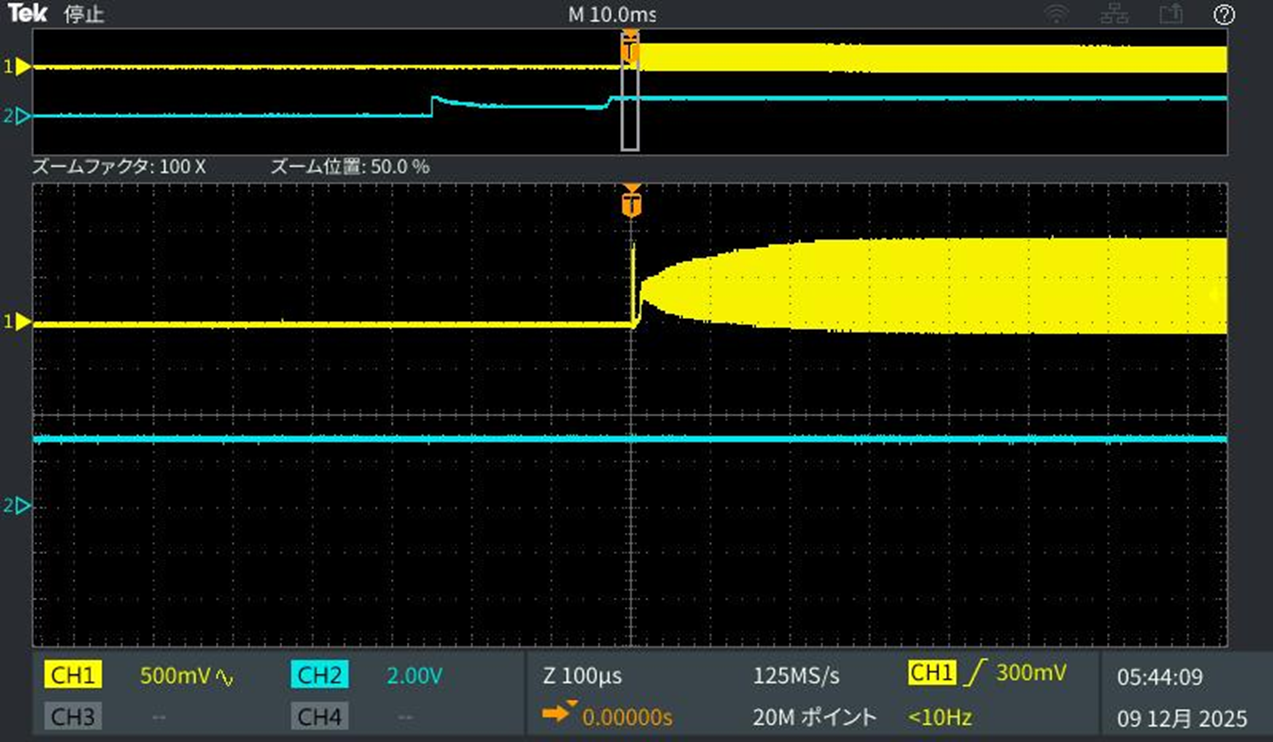
I observed the startup waveform of HFXT on the LP-EM-CC2340R5. After testing with SDK versions 7.20, 8.40, and 9.10, I found that there are differences in the startup waveform between SDK 7.20 and SDK 8.40 and later. Below is the probing of the X48N pin at power-on. I am using the sample code rfCarrierWave, with LF RCOSC selected in SysConfig and all other settings set to default.

In SDK 7.20, there is a change approximately 100µs after the XTAL startup begins, but this change is not present in SDK 8.40 and later.

Why is this waveform observed in SDK 7.20? What are the differences compared to SDK 8.40 and later?

SDK 7.20
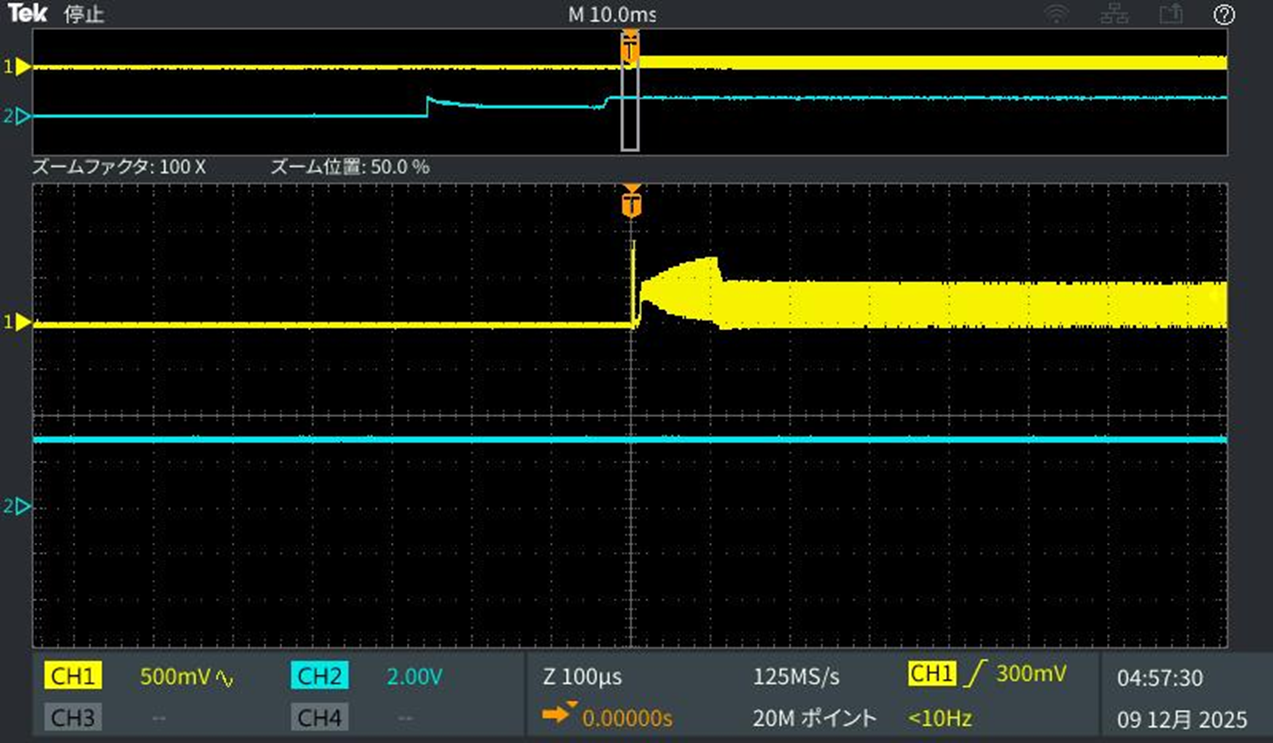
image.png

SDK 9.10

image.png

Best Regards.


  • Hi,

    The difference in the SDKs are most probably due to a difference in the initialization and configuration of the power policy of the device.

    A fix for a device erratum was implemented in SDK9.10 which might explain the differences between the two behaviours during startup - although the fix is not directly related to a startup issue, it probably requires a different sequence of events during this transient time. 

     CC2340R5: Inquiry about Importance of CKM_01 Erratum and Standby Handling in CC2340 with HFXT (simplelink_lowpower_f3_sdk_8.40.00.61) 

    Hope this helps,

    Rafael

  • Hi, Rafael,

    Thank you for your comment.
    It may have been a bit unclear, but the HFXT startup waveform is different between SDK 7.2 and 8.4 and later versions.
    Therefore, I believe that the CKM_01 implemented in SDK 9.10 is unrelated.
    Could you please clarify what control causes the waveform changes (steps?) observed in SDK 7.2? Additionally, how has it been modified in SDK 8.40 and later?

    Best regards.

  • Hi Sjmizuta,

    Please not that you cannot probe directly on the XTAL as this will load the node and you may get unexpected results. The 48MHz XTAL is related to the RF of the part. If you need to look at the timing, you can have an RF probe close to the XTAL to see it without touching it. 

    As the 48MHz is related to the RF you can also look at the current profiles with our XDS110ET (https://www.ti.com/tool/LP-XDS110ET). This will also give you an idea that the 48MHz has started. 

    As Rafael stated, there may be changes to the power profile needed as we update SDK versions is we resolve known bugs.