Part Number: CC2640R2F
Other Parts Discussed in Thread: CC2640
Hi champs,
The CC2640R2F in this application is supplied by a supercap when the main power is turned off. This supercap is dimensioned to supply the CC2640R2F in Standby mode when the main power is off.
The overall problem here is that the timing which is taken by the CC2640 SW to go into standby mode is not deterministic and sometimes takes too long - this implies an energy overconsumption which leads to the fact that the supercap is not able to provide enough energy when the main power is turned off.
The request here is to get a solution to make the “standby mode entering” process timing deterministic and minimal
PHENOMENA OBERVATION
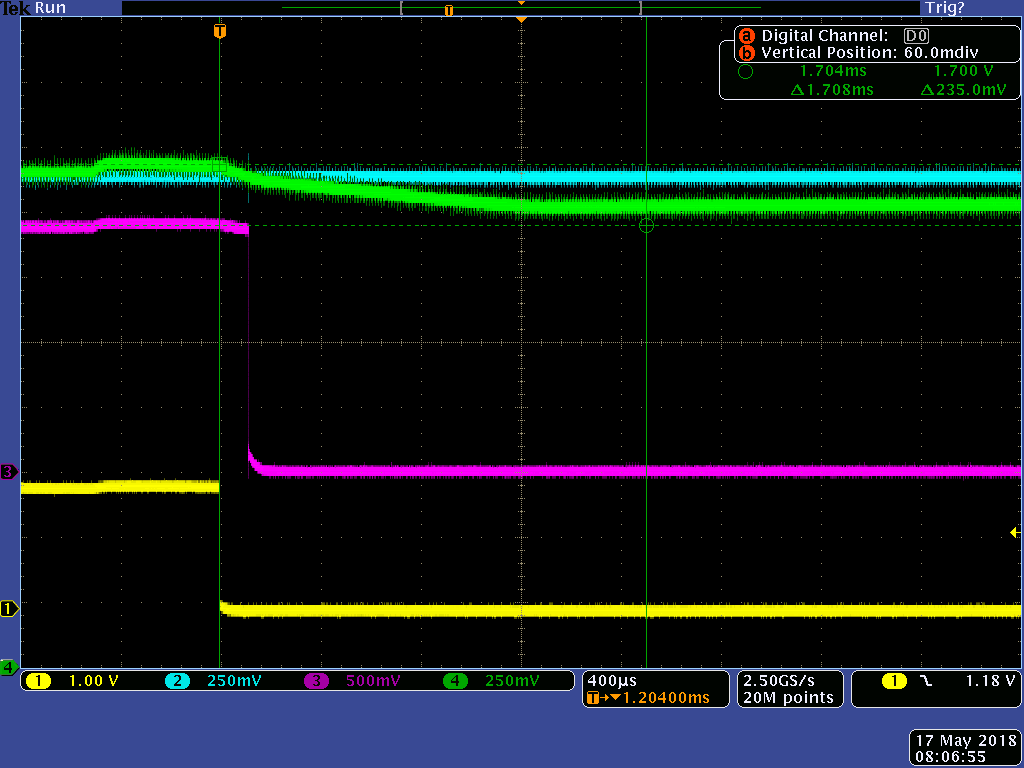
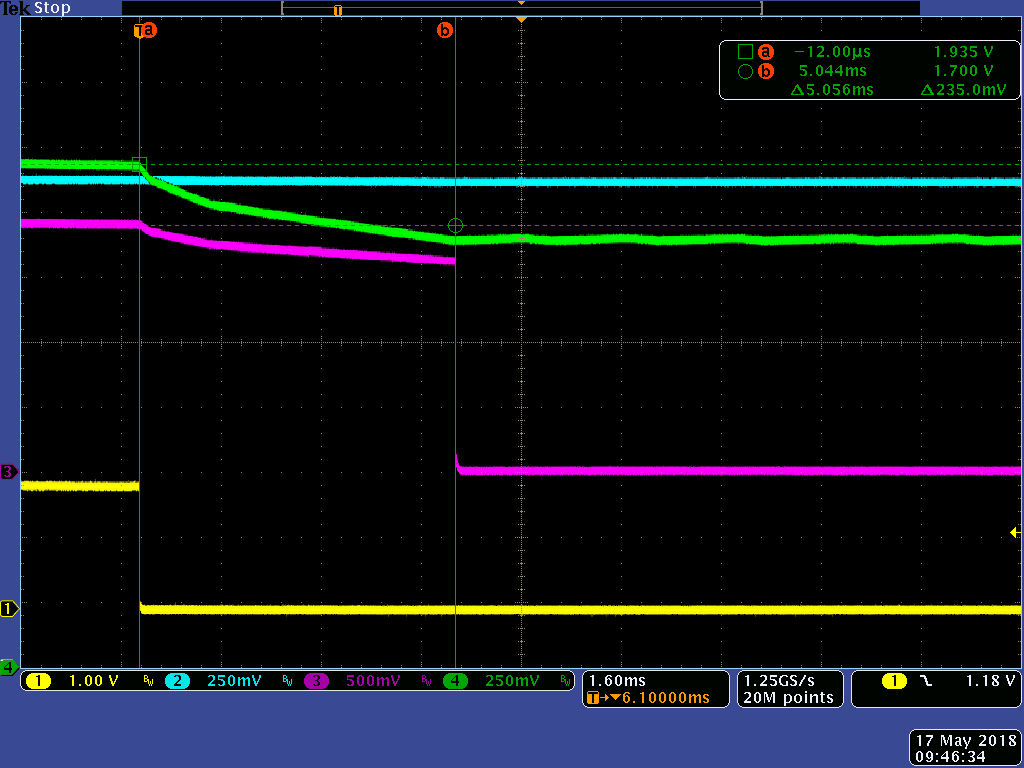
The PG signal (Power Good – in yellow in the oscilloscope snapshot) is connected to a CC2640R2F GPIO interrupt
The CC2640R2F standby mode entering process is the following :
Step1/ The PG signal falling edge triggers a CC2640 interrupt which calls “standby mode entering” procedure within TI RTOS CC2640 environment
Step 2/ The TI RTOS schedules “standby mode entering” using message queuing priorities
Step 3/ GPIO settings are modified before standby mode in CC2640 and particularly the GPIO connected to a LED driving PT25 (in Purple in the oscilloscope snapshot) is set to low
Conclusion : On pic1 we can see that the timing between PG falling edge and PT25 falling edge is 170us. On pic2 we can see that the timing between PG falling edge and PT25 falling edge is 5ms. This means that the “standby mode entering” process timing is not deterministic.
Looking at the BLE/TI RTOS firmware process, it sounds like the “standby mode entering” timing depends on TI RTOS scheduling and messages queuing
QUESTIONS
Q1 : How could the “standby mode entering” be made deterministic ?
We are thinking about 2 options :
Option 1 : Bypass OS scheduling to enter into “standby mode” by calling standby mode OS agnostic functions directly from the ISR triggered by the PT25 falling edge
Option 2 : Change “standby mode entering” message priority within TI RTOS environment to accelerate standby procedure execution
Q2 : Could you provide the OS agnostic functions to be called in order to implement option 1
Q3 : How could we change in the BLE code the “standby mode entering” message priority?
Thank you!
Best regards,
Guillaume