This thread has been locked.

If you have a related question, please click the "Ask a related question" button in the top right corner. The newly created question will be automatically linked to this question.

DAC3482: MRQFN package yield problems with DAC3482IRKD

Part Number: DAC3482

We have been having on-again, off-again yield problems with DAC3482IRKD.

The issue is that the MRQFN package has been very difficult for our board houses to solder successfully, time after time. When we have problems, we get short circuits between power and ground, and at other times open circuits on one or more differential inputs. Sometimes both short circuits and open circuits on the same part.

We originally followed the land pattern recommendation in the DAC3482 datasheet. Then we followed the recommendations in the SZZA059 report (http://www.ti.com/lit/an/szza059/szza059.pdf), which are different. Now we're not sure what to do, because no matter what, the open-circuit/short-circuit problems keep recurring.

For the DAC3482IRKD, what is the current recommendation for its MRQFN land pattern? How best do we solder that part to the PCB?

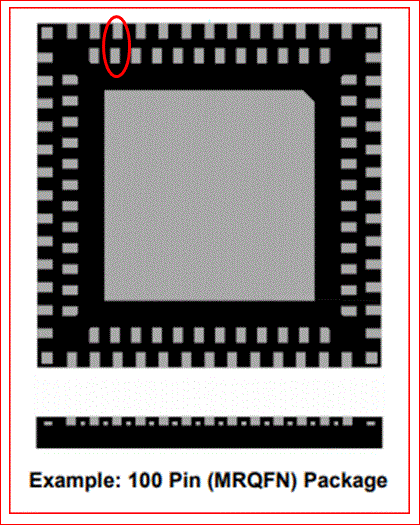
  • Hi Paul,

    I am looking into this further, and will be back with you soon. Just so I understand fully, you're having issues with pins being soldered together (shorted), example below.

    Best Regards,

    Dan

  • Yes, we're having issues with proximate pads being soldered together, creating short circuits between those pads, but also in some instances pads not being soldered properly, creating open circuits on some pads.
  • AppNote_DAC348xPCBGuidelines.pdfPaul:

    Yes, the mr-QFN package is a challenge for the assembly shop to master.  We had our share of growing pains with this package at first too.  Once the assembly shop  hones in on the proper technique the manufacturing has proven reliable.

    Enclosed is an un-official app note that describes some additional recommendations for working with the  mr-QFN package.  Some of the information is different than the  standard recommendations from the TI web (as you have already noticed some discrepancies).  The recommendations in the app note are based on our personal experience  with working with the  package on the TI EVMs.  Essentially the trick is to get just the right amount of solder: too much and the  device floats and either causes opens on the inner row or squishes about causing shorts., too little and pins are left unconnected.

    --RJH