


Part Number: THVD1424
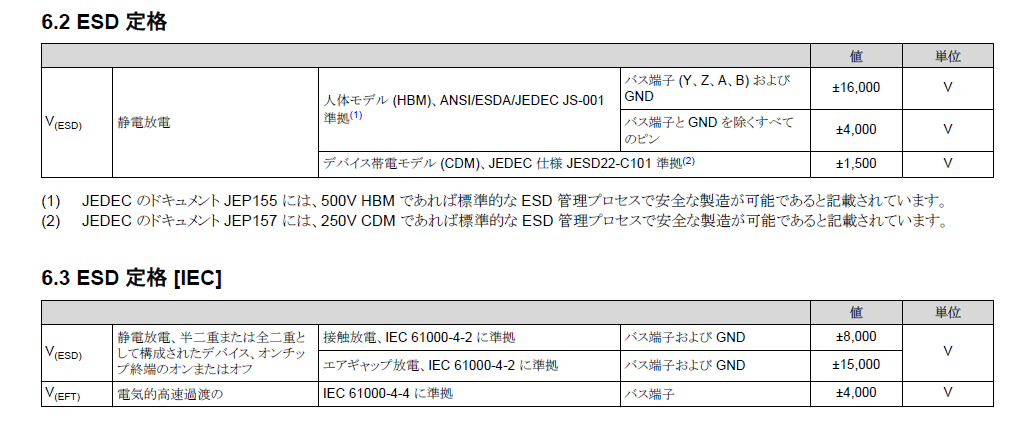
Regarding the THVD1424 datasheet, Section 6.3 "ESD Ratings [IEC]", the device is specified as:
IEC 61000-4-2 Contact Discharge: ±8 kV
IEC 61000-4-4 EFT: ±4 kV
Could you clarify what acceptance criterion was used to determine these ratings?
For example, are these ratings intended to indicate:
No permanent damage to the transceiver (device survives the test), or
Compliance with a specific IEC performance criterion (A, B, C, or D)?
In other words, during the IEC 61000-4-2 and IEC 61000-4-4 tests, was normal communication operation maintained, or was the criterion simply that the device remained functional after the test?
Thank you.
Quoted from "slva711.pdf" ↓
Results of the surge test should be classified according to the loss of function and degradation. From most protected systems to the least, the classes in the IEC 61000-4-5 are:
(A) Normal performance within the limits specified by the manufacturer, requester or purchaser.
(B) Temporary loss of function or temporary degradation of performance not requiring an operator.
(C) Temporary loss of function or degradation of performance, the correction of which requires operator intervention.
(D) Loss of function or degradation of performance which is not recoverable, owing to damage of the hardware or software, or loss of data. Class A is for the most reliable applications. Class D is usually not acceptable to the manufacturers.

