Other Parts Discussed in Thread: DS90C3201, DS90C387, DS90C387A, DS90C187, DS90CR485, DS90C387R, HD3SS213, TFP401A
I'm comparing the DS90C3201 with the DS90C387/A parts and have some questions.
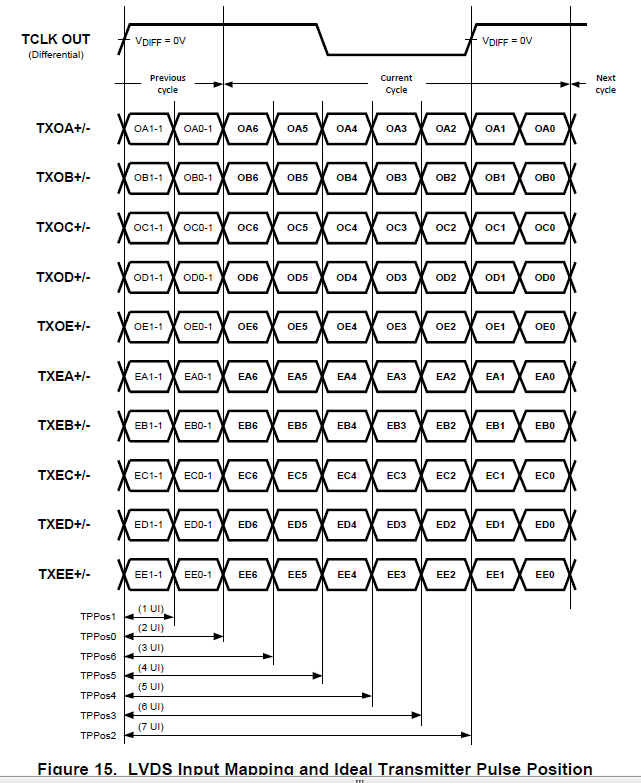
DS90C3201, 3.3V 8 MHz to 135 MHz Dual FPD-Link Transmitter, I’m confused why the inputs are in groups of 7, (i.e. TXOA [6:0]). The output is described as “LVDS 30-bit, 24-bit or 18-bit color data outputs” and it also says “The DS90C3201 transmitter serializes 2 channels of video data (10-bit each for RGB for each channel, totaling 60 bits) and control signals (HSYNC, VSYNC, DE and two user-defined signals) along with clock signal to 10 channels of LVDS signals and transmits them.”
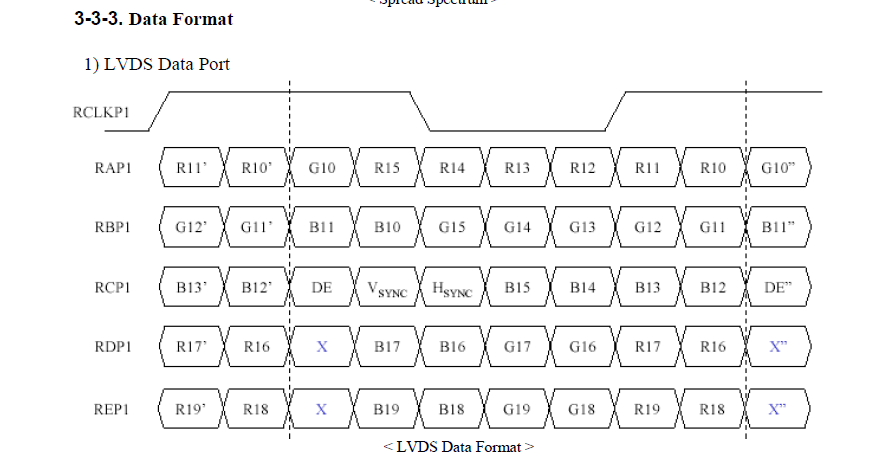
How do you get 10-bit output when your input is only 7-bit? 7-bit is odd too because I've seen 6-bit (18-bit total) or 8-bit (24-bit) or even 10-bit or 12-bit. The nice thing about this part is that the output has 5 pairs of LVDS (TXOA-TXOE/TXEA-TXEE) which is needed when you want to drive 10-bit panels.
DS90C387A, Dual Pixel LVDS Display Interface / FPD-Link, This seems OK but the input is limited to 8-bit per color so what do you do if your source is 36-bit? The input has a “dual channel” input so you've got a total of 48-bits but then it seems that you’re limited to a 24-bit output since you've only got a 4 pairs of LVDS.
The end goal is to be able to drive a few different LCD panels with different resolution and bit depth.
Thanks,
George