This thread has been locked.

If you have a related question, please click the "Ask a related question" button in the top right corner. The newly created question will be automatically linked to this question.

TUSB320EVM: Smart phone is not charging when connected as DFP

Part Number: TUSB320EVM
Other Parts Discussed in Thread: TUSB320, TPS25910

Hi,

I am using TUSB320EVM for testing purpose.  I am using it in DFP mode by setting the the switch position as follows.
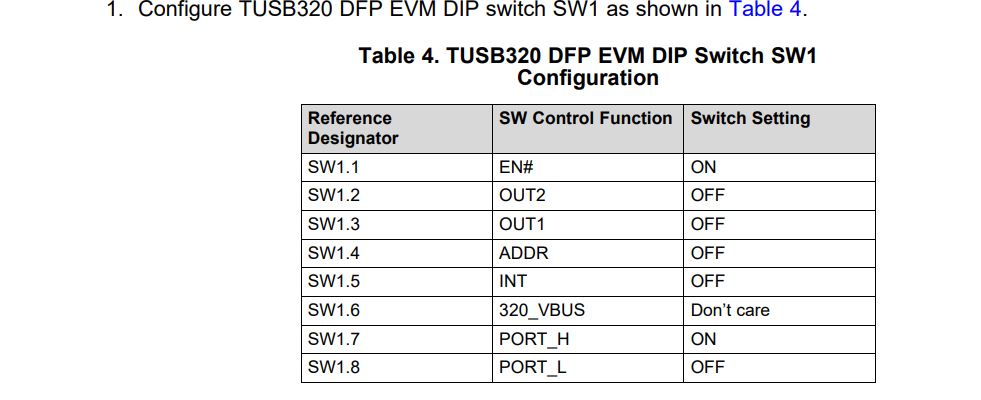
I am connecting a charger adapter of 5V/2A on microAB port J6 via USB-A to Micro-B cable. On the other side on USB port C I am connecting mobile phone via USB type-c to USB type-c cable. As soon as I am connecting the Phone the ID pin goes low and LED D4 glows. Which enables the switch U2.

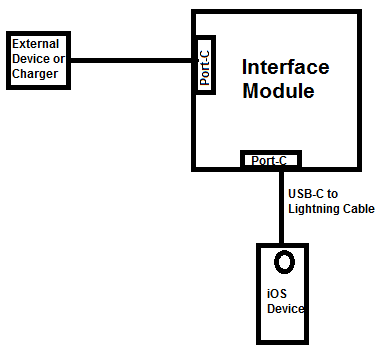
In my application I want mobile phone to get charged with the voltage on USB-C port. But it is not charging even though I am getting 4.5V on the USB-C VUBS line. Below is the block diagram.
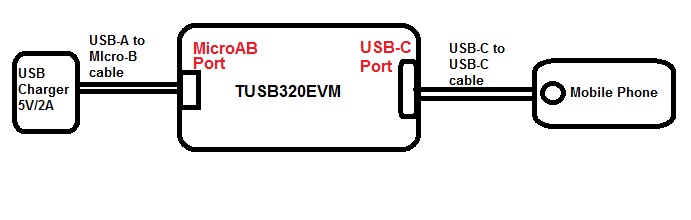
Please let me know if I have missed any setting in the EVM which let me charge the mobile phone.

Regards,

Rineet

  • Hello,

    Are you using the DC 5V jack on the EVM? Is the phone trying to pull 3A?
  • No, I am not USING 5V DC jack (J5) on the EVM. I am using Micro AB receptacle (J6) on the EVM to connect 5V/2A charger via USB A to micro USB-B cable. The phone is charging when it is connected to the charger (5V/2A) directly. Phone starts charging with any charger more than 1A rating.

    But as soon as I connect it with TUSB320EVM it does not charge.

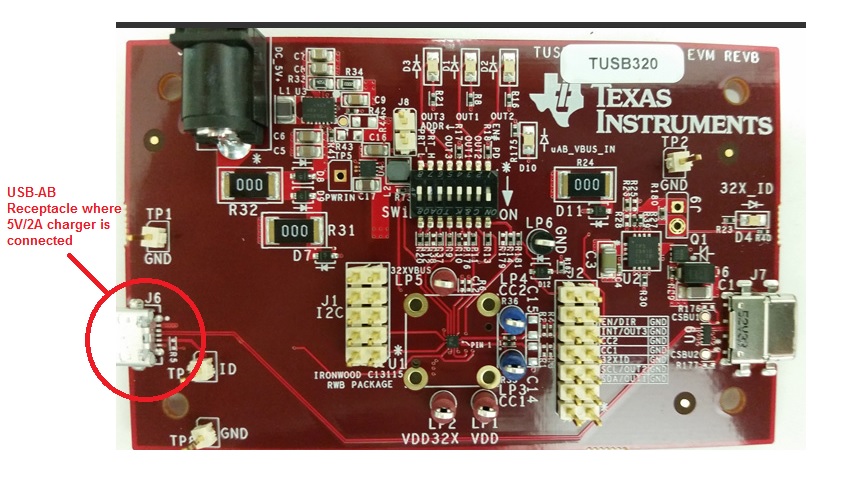
    I am attaching the USB port sanp where I am connecting the charger.

    Please let me know if further information is required.

    Regards,

    Rineet

  • Hi Michael,

    Today I tested with 5V/4A rating charger. Still the mobile phone is not charging. So i think the charger rating is not an issue here. Please let me know if further information is required.

    Regards,
    Rineet
  • Hi Michael,

    In addition to the above test I have measured the voltages on CC pins of the TUSB320 IC. The same is being summarized in below table.

    Condition CC1 CC2
    Nothing is connected of USB Port-C 4.22V 4.22V
    Mobile Phone connected on USB-C port 0.418V Floating
    Same Mobile Phone with Flipped cable Floating 0.416V

    From the above table, it seems that the CC controller is detecting the flipping of cable and the Mobile device. But it is still not charging. Please let me know any configuration through I2C will help in this case.

  • The issue does not seem to be an issue with the TUSB320 it seems to be an issue with the TPS25910 on the EVM. Can you try to power the EVM with the 5V jack and see if the phone charges? Can you read the voltages on EN# on the TPS25910? What smartphone are you trying to charge?
  • Hi Michael,

    Voltage on EN# on TPS25910 is 0.492V.

    I was using OnePlus 3T mobile phone and its default charger to power-up the EVM on Micro-AB port via USB type-A to USB micro-B cable. However when I changed the phone to OnePlus 5T the phone shows the charging indication with the same setup of charger and cables but the battery percentage was not increasing even after kept on charging for more than 15 mins. I tried with iPhone6 also with USB type-C to lightning cable. It is also showing the charging indication but battery charge % not increasing. However iPad does charge at all with any of the charger adapter (even with its dedicated charger).

    I tried with plugging 5V/4A adapter on the DC jack as well but the above issue remains the same :( .

    Regards,

    Rineet

  • What are your CSR registers set to?

  • CSR registers are set to their default values. I have not programmed anything through I2C.
  • Can you change the CURRENT_MODE_ADVERTISE register to Mid or high and see if it will charge then?
  • Hi Michael,

    I have ordered an I2C master to configure I2C registers. It is yet to receive. However a good thing is that I am able to charge all the mobile phones even the iPAD also by doing a small modification in the circuit. I am not sure whether it is mistake in the EVM schematics or it is kept purposefully.

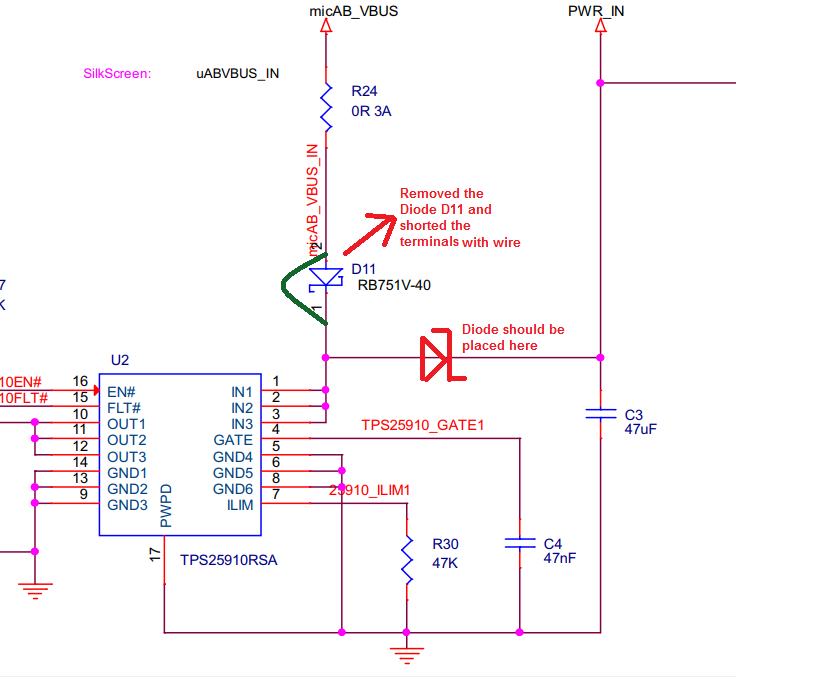
    I removed the diode D11 and shorted the PCB pads with wire. As i can see in the diode datasheet that it is rated to 30mA forward current and it in series path from where the charging current is flowing which is about 1A. The diode should be placed on the other net which is connected to PWR_IN as indicated in the diagram

    However still I am not able to charge the phones with the actual rated current of the charger. For e.g. if I am connecting 1A charger the phone is taking 0.96A to 1A if I am connecting a higher rated charger like 2A or 4A it is still taking close to 1A only. I think this is something related to the I2C register configuration for current advertisement. Once if I get the I2C master to program it, I will have more clarification.

    Please let me know your thoughts on the schematics change and issue in the charging current value.

    Regards,

    Rineet

  • Hi Michael,

    I have tried configuring the CSR registers through I2C master. I have changed the value of the Current advertisement bits to 1.5A and 3.0A mode. I was able to monitor the change in the voltage of the corresponding CC pin which verifies that it is writing to correct register.

    But I was not able to see any change in the value of current. It is still taking close to 1A in each mode.

    Please suggest how can I charge the Phone with higher current? I am attaching a block diagram of my application which will help you understand more in detail.

    In My application I have a interface module which is a self powered device having internal battery and it converts the data from external device connected on left USB-C port into iOS readable format and sends it to the iOS device connected on the bottom USB-C port. When we charge the module we have to charge the iOS device simultaneously. we are using the 3.0A charger in our design and we are limiting module current to 1A and remaining 2A current we are planning to charger the iOS device. So we are using TUSB320 for iOS device attachment detection, current advertisement and flipping detection. Please let me know if TUSB320 can support this application. Please suggest at the earliest since we need to close the design by this week.

    Regards,

    Rineet

  • Can you read all of the registers when the TUSB320EVM is charging a phone and post them?
  • That might be an incorrect diode on the EVM, but where you placed it it should not effect the performance in your application because you are using the micro AB port to power the EVM.

  • Hello,
    Are there any updates?
  • Hi Michael,

    I have removed the TUSB320 and directly connected the VBUS from microB connector to USB-C port and CC pin pulled up via external resistor. Still I am able to charge the smart Phone so I think for my application TUSB320 is not adding any value to the design. So now I am trying to design it without TUSB320.

    Thanks for your valuable time and support.