Part Number: SN65DSI84
Other Parts Discussed in Thread: DSI-TUNER
Hi, I'm trying to write linux driver for SN65DSI84. I use this files as example.
DSI:
lanes = 4,
format = RGB888,
clock = 280 MHz
display-timings (from device tree):
timing0: timing0 {
clock-frequency = <70000000>;
hactive = <1024>;
vactive = <768>;
hback-porch = <160>;
hfront-porch = <24>;
vback-porch = <29>;
vfront-porch = <3>;
hsync-len = <136>;
vsync-len = <6>;
hsync-active = <0>;
vsync-active = <0>;
de-active = <0>;
pixelclk-active = <0>;
};
I set DSI_CLK_DIVIDER to divide by 4 (LVDS clock = 70 MHz)
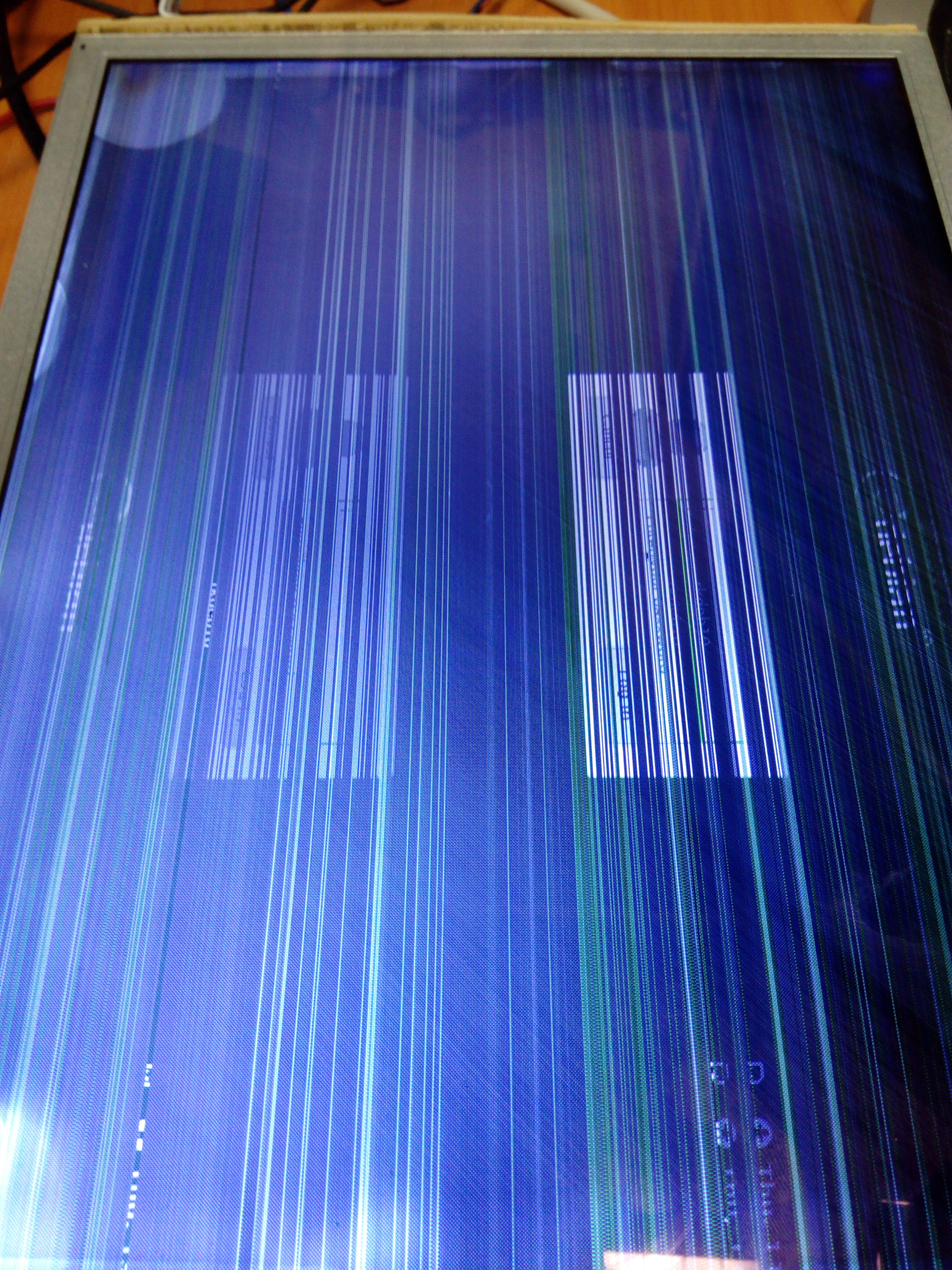
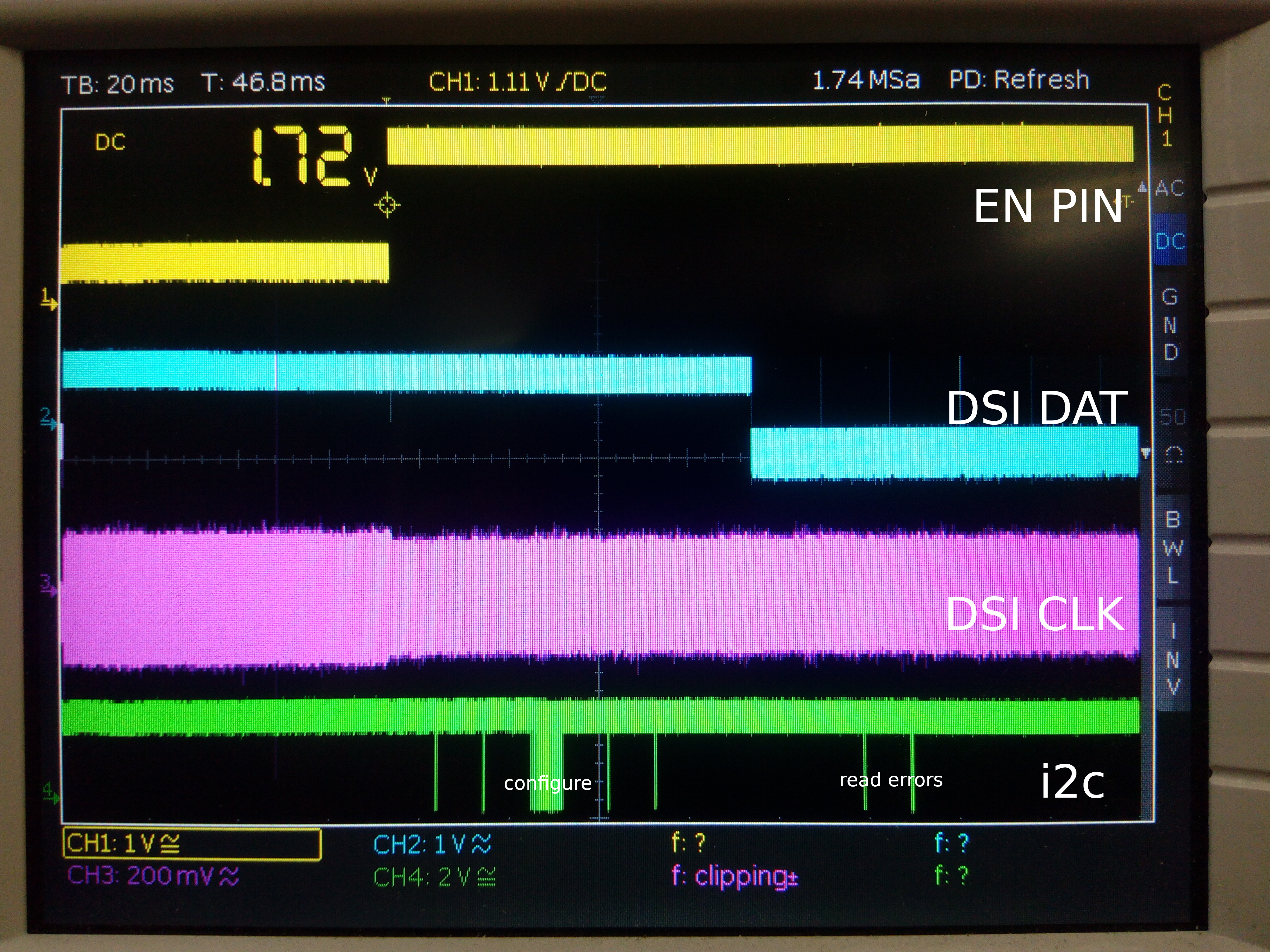
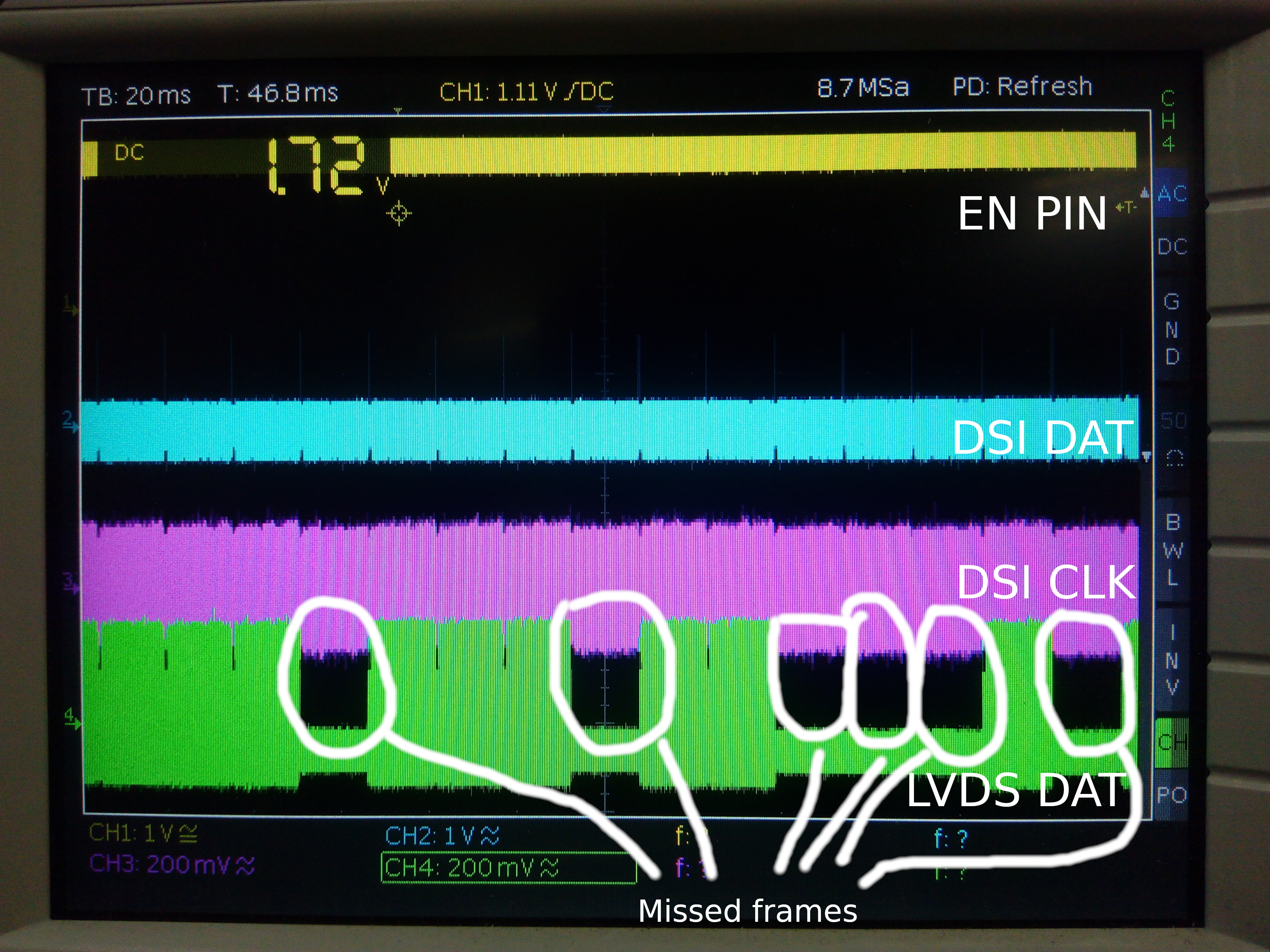
Test pattern work fine, but for real DSI signal I have an errors. Register 0xE5 bit2 and bit3 (CHA_SOT_BIT_ERR, CHA_LLP_ERR).
#include "sn65dsi84_i2c.h"

static int sn65dsi84_config(struct i2c_client *client)
{
    u8 val;
    const uint32_t mipi_dsi_freq = 280000; // KHz
    const uint8_t dsi_clock_div = 4;
    struct sn65dsi84_i2c_data *data = i2c_get_clientdata(client);
    s32 i2c_read;

    dev_dbg(&client->dev, "sn65dsi84_config()\n");
    if(data == NULL) {
        dev_dbg(&client->dev, "sn65dsi84_config() data=NULL\n");
        return -ENXIO;
    }

    // Soft reset and disable PLL (init seq 5)
    i2c_smbus_write_byte_data(client, DSI85_PLL_EN, 0x00);
    mdelay(10);
    i2c_smbus_write_byte_data(client, DSI85_SOFT_RESET, 0x01);
    mdelay(10);

    val = 0;
#if LVDS_CLK_FROM_DSI_CLK
    val = 0x1;
#endif

    // data->timings.pixel_clock = 70000

    // user external clock reference with no muliplier
    if (data->timings.pixel_clock <= 37500)
    {
        // Do nothing.
    }
    else if (data->timings.pixel_clock <= 62500) {
        val |= (0x01 << 1);
    }
    else if (data->timings.pixel_clock <= 87500)
    {
        val |= (0x02 << 1);
    }
    else if (data->timings.pixel_clock <= 112500)
    {
        val |= (0x03 << 1);
    }
    else if (data->timings.pixel_clock <= 137500)
    {
        val |= (0x04 << 1);
    }
    else
    {
        val |= (0x05 << 1);
    }
    i2c_smbus_write_byte_data(client, DSI85_CORE_PLL, val);
#if LVDS_CLK_FROM_DSI_CLK
    //i2c_smbus_write_byte_data(client, DSI85_PLL_DIV, 0x10);  // Divide DSI_CLK by 3.

    val = (dsi_clock_div - 1) << 3; // Divide DSI_CLK by 4.
    i2c_smbus_write_byte_data(client, DSI85_PLL_DIV, val);
#else
    i2c_smbus_write_byte_data(client, DSI85_PLL_DIV, 0x00);  // Multiply REFCLK by 1.
#endif

    // four DSI lanes with single channel
    i2c_smbus_write_byte_data(client, DSI85_DSI_CFG, 0x00);
    //i2c_smbus_write_byte_data(client, DSI85_DSI_CFG, 0x01); // no SoT bit errors are tolerated

    i2c_smbus_write_byte_data(client, DSI85_DSI_EQ, 0x00);

    // set DSI clock range
    //i2c_smbus_write_byte_data(client, DSI85_CHA_DSI_CLK_RNG, (data->timings.pixel_clock * 4 / 5000));
    i2c_smbus_write_byte_data(client, DSI85_CHA_DSI_CLK_RNG, (mipi_dsi_freq / 5000));

    // set LVDS for single channel, 24 bit mode, HS/VS low, DE high
    i2c_smbus_write_byte_data(client, DSI85_LVDS_MODE, 0x7A);

    // set LVDS 200 Ohm termination and max differential swing voltage
    i2c_smbus_write_byte_data(client, DSI85_LVDS_SIGN, 0x00);
    i2c_smbus_write_byte_data(client, DSI85_LVDS_TERM, 0x00);

    // x resolution high/low for channel A
    i2c_smbus_write_byte_data(client, DSI85_CHA_LINE_LEN_LO, ((data->timings.x_res) & 0x00FF));
    i2c_smbus_write_byte_data(client, DSI85_CHA_LINE_LEN_HI, ((data->timings.x_res) & 0x0F00)>>8); // 12 bit value

    // y resolution high/low for channel A
    i2c_smbus_write_byte_data(client, DSI85_CHA_VERT_LINES_LO, (data->timings.y_res & 0x00FF));
    i2c_smbus_write_byte_data(client, DSI85_CHA_VERT_LINES_HI, (data->timings.y_res & 0x0F00)>>8); // 12 bit value

    // SYNC delay high/low for channel A
    i2c_smbus_write_byte_data(client, DSI85_CHA_SYNC_DELAY_LO, 0x00);
    i2c_smbus_write_byte_data(client, DSI85_CHA_SYNC_DELAY_HI, 0x02);

    // HSYNC width high/low for channel A
    i2c_smbus_write_byte_data(client, DSI85_CHA_HSYNC_WIDTH_LO, (data->timings.hsw & 0x00FF));
    i2c_smbus_write_byte_data(client, DSI85_CHA_HSYNC_WIDTH_HI, (data->timings.hsw & 0x0300)>>8); // 10 bit value

    // VSYNC width high/low for channel A
    i2c_smbus_write_byte_data(client, DSI85_CHA_VSYNC_WIDTH_LO, (data->timings.vsw & 0x00FF));
    i2c_smbus_write_byte_data(client, DSI85_CHA_VSYNC_WIDTH_HI, (data->timings.vsw & 0x0300)>>8); // 10 bit value

    // Horizontal BackPorch for channel A
    i2c_smbus_write_byte_data(client, DSI85_CHA_HORZ_BACKPORCH, (data->timings.hbp & 0x00FF));

    // Vertical BackPorch for channel A
    i2c_smbus_write_byte_data(client, DSI85_CHA_VERT_BACKPORCH, (data->timings.vbp & 0x00FF));

    // Horizontal FrontPorch for channel A
    i2c_smbus_write_byte_data(client, DSI85_CHA_HORZ_FRONTPORCH, (data->timings.hfp & 0x00FF));

    // Vertical FrontPorch for channel A
    i2c_smbus_write_byte_data(client, DSI85_CHA_VERT_FRONTPORCH, (data->timings.vbp & 0x00FF));
    // debug
    //i2c_smbus_write_byte_data(client, DSI85_CHA_TEST_PATTERN, 0x10);

    // Soft reset and enable PLL
    //i2c_smbus_write_byte_data(client, DSI85_SOFT_RESET, 0x01);
    //i2c_smbus_write_byte_data(client, DSI85_PLL_EN, 0x01);
    i2c_smbus_write_byte_data(client, DSI85_PLL_EN, 0x01); // init seq 6
    mdelay(10);
    i2c_smbus_write_byte_data(client, DSI85_SOFT_RESET, 0x01); // init seq 7
    mdelay(10);

    // clear errors
    i2c_smbus_write_byte_data(client, DSI85_ERRORS, 0xFF); // init seq 10
    mdelay(10);

    i2c_read = i2c_smbus_read_byte_data(client, DSI85_ERRORS); // init seq 11
    if(i2c_read < 0) {
        dev_err(&client->dev, "sn65dsi84_config() fun i2c_smbus_read_byte_data return %d\n", i2c_read);
        return i2c_read;
    }
    dev_dbg(&client->dev, "sn65dsi84_config() errors = %d\n", i2c_read);

    return 0;
}