Part Number: SW-EK-TM4C1294XL
Other Parts Discussed in Thread: TM4C1294NCPDT
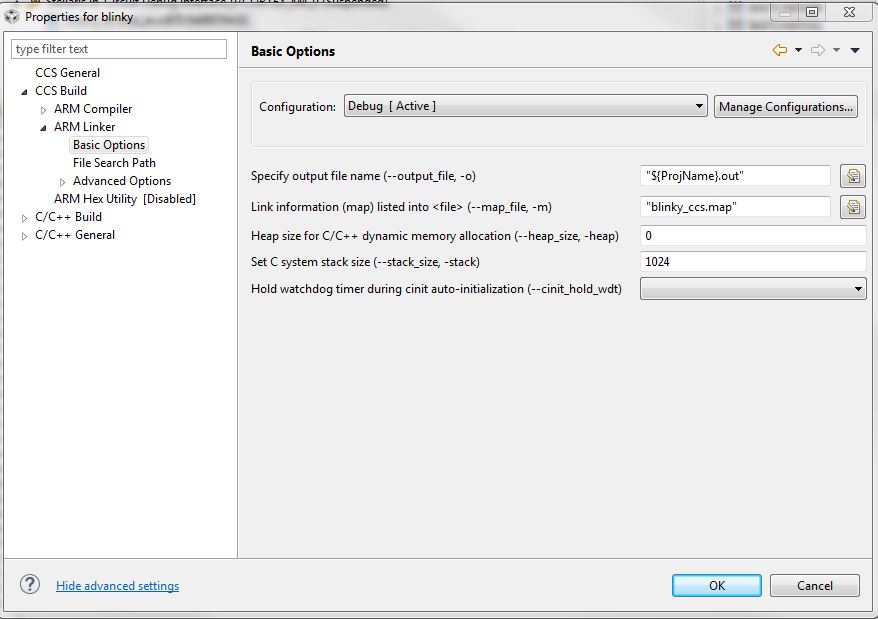
Hi, fellas! I'm having some problems while debugging a software with TM4C1294NCPDT(Using TM4C1294XL evaluation board), in few words my code is getting stuck in the function SysCtlClockFreqSet(It takes to faultISR) and after read my code lots of times I couldn't see any problem in it. So I decided to use the fault registers, specifically the one located at 0xD28. After look around the CCS debugger, I saw the value 0x00009200 in the NVIC_FAULT_STAT register and after look in the datasheet it was easy to conclude that the fallowing bits are set :
BFARV --> Bus fault adress register valid
BSTKE --> Stack Bus Fault
PRECISE --> Precise Data Bus Error
BSTKE bit is set and this is driving me crazy because on the contrary I could easily solve the problem using the Texas manual to solve Faults(there is a problem in this doc that would perfectly fit). So I'm here to ask you guys help.
The code that I'm trying to run is attached to this thread.
#include <stdint.h>
#include <stdbool.h>
#include "inc/hw_ints.h"
#include "inc/hw_memmap.h"
#include "inc/hw_types.h"
#include "driverlib/gpio.h"
#include "driverlib/adc.h"
#include "driverlib/interrupt.h"
#include "driverlib/pin_map.h"
#include "driverlib/sysctl.h"
#include "driverlib/timer.h"
#include "adc_utils.h"


void adc_init(void){

    /* Enabling the Peripheral ADC0 */
    SysCtlPeripheralEnable(SYSCTL_PERIPH_ADC0);

    /* Enabling Port E in order to read the values in ADC0 */
    SysCtlPeripheralEnable(SYSCTL_PERIPH_GPIOE);

	/* Selecting the pins to read ADC0 Values */
	GPIOPinTypeADC(GPIO_PORTE_BASE, GPIO_PIN_0);

	/* Configuring Sample Sequence 3 in ADC0 */
	ADCSequenceConfigure(ADC0_BASE, ADC_SAMPLE_SEQUENCE_NUMBER,
	                     ADC_TRIGGER_PROCESSOR, 0);

	/*Configure steps in ADC0*/
	ADCSequenceStepConfigure(ADC0_BASE, ADC_SAMPLE_SEQUENCE_NUMBER, 0,
	                         (ADC_CTL_CH3 |ADC_CTL_IE| ADC_CTL_END));

	/* Enable the sample sequence in ADC0 */
	ADCSequenceEnable(ADC0_BASE, ADC_SAMPLE_SEQUENCE_NUMBER);

	/*cleaning the interrupt flag */
	ADCIntClear(ADC0_BASE, ADC_SAMPLE_SEQUENCE_NUMBER);
}


void adc_getSamples(uint32_t* adc0){
	/* Cleaning after aquisition*/
	ADCIntClear(ADC0_BASE,ADC_SAMPLE_SEQUENCE_NUMBER);

	/* Taking the samples*/
	ADCSequenceDataGet(ADC0_BASE, ADC_SAMPLE_SEQUENCE_NUMBER ,adc0);

}

/**
 * return 0 when data is not ready
 * return 1 when data is ready
 */
uint32_t inline adc_dataReady(void){

	/* Waiting the conversion complete */
	return ADCIntStatus(ADC0_BASE,ADC_SAMPLE_SEQUENCE_NUMBER,false);

}


void adc_trigger(void){
	/* Triggering the ADC0 */
	ADCProcessorTrigger(ADC0_BASE, ADC_SAMPLE_SEQUENCE_NUMBER);

}
#include <stdint.h>
#include <stdbool.h>
#include "inc/hw_ints.h"
#include "inc/hw_memmap.h"
#include "inc/hw_types.h"
#include "driverlib/gpio.h"
#include "driverlib/interrupt.h"
#include "driverlib/pin_map.h"
#include "driverlib/sysctl.h"
#include "driverlib/timer.h"
#include "adc_utils.h"
#include "driverlib/uart.h"
#include "utils/uartstdio.h"

void myTimer0ISR(void);

void ConfigureTimer(void);

/*Global Variables */
uint32_t g_ui32SysClock;


/* implementing the FSM */
typedef enum my_states{
    SAMPLING,
    DISABLE_SAMPLING,
    PRINTING,
    IDLE
}State_t;

void
InitConsole(void)
{
    //
    // Enable GPIO port A which is used for UART0 pins.
    // TODO: change this to whichever GPIO port you are using.
    //
    SysCtlPeripheralEnable(SYSCTL_PERIPH_GPIOA);

    //
    // Configure the pin muxing for UART0 functions on port A0 and A1.
    // This step is not necessary if your part does not support pin muxing.
    // TODO: change this to select the port/pin you are using.
    //
    GPIOPinConfigure(GPIO_PA0_U0RX);
    GPIOPinConfigure(GPIO_PA1_U0TX);

    //
    // Enable UART0 so that we can configure the clock.
    //
    SysCtlPeripheralEnable(SYSCTL_PERIPH_UART0);

    //
    // Use the internal 16MHz oscillator as the UART clock source.
    //
    UARTClockSourceSet(UART0_BASE, UART_CLOCK_PIOSC);

    //
    // Select the alternate (UART) function for these pins.
    // TODO: change this to select the port/pin you are using.
    //
    GPIOPinTypeUART(GPIO_PORTA_BASE, GPIO_PIN_0 | GPIO_PIN_1);

    //
    // Initialize the UART for console I/O.
    //
    UARTStdioConfig(0, 9600, 16000000);
}


int main(void) {

    /* Set the clocking to run at 120MHz */
    g_ui32SysClock= SysCtlClockFreqSet((SYSCTL_XTAL_25MHZ |
                        SYSCTL_OSC_MAIN | SYSCTL_USE_PLL |
                        SYSCTL_CFG_VCO_480), 120000000);

    float adc_samples_voltage[NUMBER_OF_SAMPLES];
    uint32_t amostra_adc_0 = 1;

    /* control variables */
    //with 16bits we're able to get up to 65535
    uint16_t counter = 0;
    State_t current_state = SAMPLING;

    uint32_t loop= 0;
    adc_init();
    ConfigureTimer();

    /*starting the MCU's Job */
     while(1){
         switch(current_state){
             case SAMPLING:
                 while(!adc_dataReady());
                 adc_getSamples(&amostra_adc_0);
                 adc_samples_voltage[counter] = (amostra_adc_0);
                 counter++;

                if(counter == NUMBER_OF_SAMPLES){
                    current_state = DISABLE_SAMPLING;
                }
                else{
                    current_state = SAMPLING;

                }
                break;

            case DISABLE_SAMPLING:
                SysCtlPeripheralDisable(SYSCTL_PERIPH_TIMER0);
                current_state = PRINTING;
                break;

            case PRINTING:
                for(loop=0;loop<NUMBER_OF_SAMPLES;loop++){
                    UARTprintf("AIN0 = %4d\r", adc_samples_voltage[loop]);
                }
                break;

             case IDLE:
                /* do nothing */
                break;

            default:
                break;
         }
     }
    return 0;
}


void myTimer0ISR(void){
    /* cleaning the timer interruptions for timer 0 module in full-with mode */
    TimerIntClear(TIMER0_BASE, TIMER_TIMA_TIMEOUT);
    adc_trigger();

}

void ConfigureTimer(void){

    /* enabling the timer 0 peripheral */
    SysCtlPeripheralEnable(SYSCTL_PERIPH_TIMER0);

    /* configurating the TIMER to use a 32bit periodic timer */
    TimerConfigure(TIMER0_BASE, TIMER_CFG_PERIODIC);

    /* setting the timer load value */
    /* using only timer A cause we want a 32 bit timer */
    /* here we've 1Khz*/
    TimerLoadSet(TIMER0_BASE, TIMER_A,g_ui32SysClock/1000);


    /* Allow the use of the processor interrupts */
    IntMasterEnable();

    /* here we're setting the ISR to timer 0 */
    TimerIntRegister(TIMER0_BASE,TIMER_A,myTimer0ISR);

    /* enabling the interruptions for timer0 in full-with mode */
    /* It appears when timeout situation is got */
    /* again, using timer A because we're using full-with mode */
    TimerIntEnable(TIMER0_BASE, TIMER_TIMA_TIMEOUT);


    /* allowing interruptions for timer 0 */
    /* we use only timera because we're using full-with mode */
    IntEnable(INT_TIMER0A);


    /* Enabling Timer */
    TimerEnable(TIMER0_BASE, TIMER_A);
}