Part Number: EK-TM4C1294XL
Hi,
I am writing a uart driver code for TM4C1294XL using TI RTOS for TIVA C version 2.16.0.08. I have attached .c file.
The goal is to segregate the UART packet based on the packet header and store it in a particular variable.
As I am new to TI RTOS, I referred the 'uartecho.c' and made the changes accordingly.
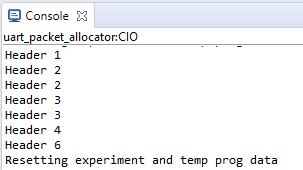
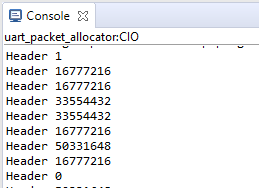
However, sometimes I see that the packets are corrupted.
Can anyone suggest any ideas on how to debug this issue?
Thank you
Shaunak
/*
 * Copyright (c) 2015, Texas Instruments Incorporated
 * All rights reserved.
 *
 * Redistribution and use in source and binary forms, with or without
 * modification, are permitted provided that the following conditions
 * are met:
 *
 * *  Redistributions of source code must retain the above copyright
 *    notice, this list of conditions and the following disclaimer.
 *
 * *  Redistributions in binary form must reproduce the above copyright
 *    notice, this list of conditions and the following disclaimer in the
 *    documentation and/or other materials provided with the distribution.
 *
 * *  Neither the name of Texas Instruments Incorporated nor the names of
 *    its contributors may be used to endorse or promote products derived
 *    from this software without specific prior written permission.
 *
 * THIS SOFTWARE IS PROVIDED BY THE COPYRIGHT HOLDERS AND CONTRIBUTORS "AS IS"
 * AND ANY EXPRESS OR IMPLIED WARRANTIES, INCLUDING, BUT NOT LIMITED TO,
 * THE IMPLIED WARRANTIES OF MERCHANTABILITY AND FITNESS FOR A PARTICULAR
 * PURPOSE ARE DISCLAIMED. IN NO EVENT SHALL THE COPYRIGHT OWNER OR
 * CONTRIBUTORS BE LIABLE FOR ANY DIRECT, INDIRECT, INCIDENTAL, SPECIAL,
 * EXEMPLARY, OR CONSEQUENTIAL DAMAGES (INCLUDING, BUT NOT LIMITED TO,
 * PROCUREMENT OF SUBSTITUTE GOODS OR SERVICES; LOSS OF USE, DATA, OR PROFITS;
 * OR BUSINESS INTERRUPTION) HOWEVER CAUSED AND ON ANY THEORY OF LIABILITY,
 * WHETHER IN CONTRACT, STRICT LIABILITY, OR TORT (INCLUDING NEGLIGENCE OR
 * OTHERWISE) ARISING IN ANY WAY OUT OF THE USE OF THIS SOFTWARE,
 * EVEN IF ADVISED OF THE POSSIBILITY OF SUCH DAMAGE.
 */

/*
 *  ======== uartecho.c ========
 */

/* XDCtools Header files */
#include <xdc/std.h>
#include <xdc/runtime/System.h>
#include <xdc/runtime/Error.h>

/* BIOS Header files */
#include <ti/sysbios/BIOS.h>
#include <ti/sysbios/knl/Task.h>

/* TI-RTOS Header files */
#include <ti/drivers/GPIO.h>
#include <ti/drivers/UART.h>

/* Example/Board Header files */
#include "Board.h"

#include "USBCDCD_LoggerIdle.h"

#include <stdint.h>

//#include "uc_pinmap.h"

#define TASKSTACKSIZE     8192

uint32_t g_data_array[10];
uint32_t g_setup[5];
uint32_t g_experiment_data[10][100];
uint32_t g_temp_prog_data[10][8];
uint32_t g_header;
uint8_t g_experiment_index;
uint8_t g_temp_prog_index;

Task_Struct task0Struct;
Char task0Stack[TASKSTACKSIZE];

/*
 *  ======== echoFxn ========
 *  Task for this function is created statically. See the project's .cfg file.
 */
Void echoFxn(UArg arg0, UArg arg1)
{

//    Log_info2("tsk1 Entering. arg0,1 = %d %d", arg0, arg1);

    int j;
    for (j = 0; j < 10; j++)
        g_data_array[0] = 0;

    uint32_t packet_header = 0;
    uint32_t packet_size = 0;
    uint32_t uart_rx_data = 0;
    int ret;

//    System_printf("Size of uart data array is %d\n", sizeof(uart_data));
//    System_flush();

    UART_Handle uart;
    UART_Params uartParams;
//    const char echoPrompt[] = "UART DATA:\r\n";

    /* Create a UART with data processing off. */
    UART_Params_init(&uartParams);
    uartParams.dataLength = UART_LEN_8;
    uartParams.parityType = UART_PAR_NONE;
    uartParams.stopBits = UART_STOP_ONE;
    uartParams.baudRate = 9600;
    uartParams.writeDataMode = UART_DATA_BINARY;
    uartParams.readDataMode = UART_DATA_BINARY;
    uartParams.readReturnMode = UART_RETURN_FULL;
    uartParams.readMode = UART_MODE_BLOCKING;
    uartParams.readEcho = UART_ECHO_OFF;

    uart = UART_open(Board_UART0, &uartParams);

    if (uart == NULL)
    {
        System_abort("Error opening the UART");
    }

//    UART_write(uart, echoPrompt, sizeof(echoPrompt));

//    uint32_t status = 0;

    while (1)
    {
        // Read packet header and process accordingly
        ret = UART_read(uart, &packet_header, sizeof(packet_header));
        g_data_array[0] = packet_header;
        g_header = packet_header;
        System_printf("%d\n", g_header);
        System_flush();

        if (ret > 0)
        {
            // Read size of incoming packet
            ret = UART_read(uart, &packet_size, sizeof(packet_size));
            g_data_array[1] = packet_size;

            switch (packet_header)
            {

            case (SETUP):
            {

                g_experiment_index = 0;
                g_temp_prog_index = 0;
                int i = 0;
                g_setup[0] = packet_header;

                // Read the data and store in appropriate variable
                for (i = 0; i < packet_size; i++)
                {
                    UART_read(uart, &uart_rx_data, sizeof(uart_rx_data));
                    g_data_array[i + 2] = uart_rx_data;
                    g_setup[i + 1] = uart_rx_data;
                }

                break;
            }
            case (TIME):
            {
                int i = 0;
                g_experiment_data[g_experiment_index][0] = packet_header;
                g_experiment_data[g_experiment_index][1] = packet_size;

                // Read the data and store in appropriate variable
                for (i = 0; i < packet_size; i++)
                {
                    UART_read(uart, &uart_rx_data, sizeof(uart_rx_data));
                    g_data_array[i + 2] = uart_rx_data;
                    g_experiment_data[g_experiment_index][i + 2] = uart_rx_data;
                }

                g_experiment_index++;
                System_printf("Experiment Index is %d\n", g_experiment_index);
                System_flush();
                break;
            }
            case (VALVE):
            {
                int i = 0;
                g_experiment_data[g_experiment_index][0] = packet_header;
                g_experiment_data[g_experiment_index][1] = packet_size;

                // Read the data and store in appropriate variable
                for (i = 0; i < packet_size; i++)
                {
                    UART_read(uart, &uart_rx_data, sizeof(uart_rx_data));
                    g_data_array[i + 2] = uart_rx_data;
                    g_experiment_data[g_experiment_index][i + 2] = uart_rx_data;
                }

                g_experiment_index++;
                System_printf("Experiment Index is %d\n", g_experiment_index);
                System_flush();
                break;
            }
            case (PUMP):
            {
                int i = 0;

                g_experiment_data[g_experiment_index][0] = packet_header;
                g_experiment_data[g_experiment_index][1] = packet_size;

                // Read the data and store in appropriate variable
                for (i = 0; i < packet_size; i++)
                {
                    UART_read(uart, &uart_rx_data, sizeof(uart_rx_data));
                    g_data_array[i + 2] = uart_rx_data;
                    g_experiment_data[g_experiment_index][i + 2] = uart_rx_data;
                }

                g_experiment_index++;
                System_printf("Experiment Index is %d\n", g_experiment_index);
                System_flush();
                break;
            }
            case (HEATER):
            {

                int i = 0;

                g_experiment_data[g_experiment_index][0] = packet_header;
                g_experiment_data[g_experiment_index][1] = packet_size;

                // Read the data and store in appropriate variable
                for (i = 0; i < packet_size; i++)
                {
                    UART_read(uart, &uart_rx_data, sizeof(uart_rx_data));
                    g_data_array[i + 2] = uart_rx_data;
                    g_experiment_data[g_experiment_index][i + 2] = uart_rx_data;
                }

                g_experiment_index++;
                System_printf("Experiment Index is %d\n", g_experiment_index);
                System_flush();
                break;
            }
            case (TEMP_PROG):
            {
                int i = 0;
                g_temp_prog_data[0][0] = packet_header;
                g_temp_prog_data[0][1] = packet_size;

                // Read the data and store in appropriate variable
                for (i = 0; i < packet_size; i++)
                {
                    UART_read(uart, &uart_rx_data, sizeof(uart_rx_data));
                    g_data_array[i + 2] = uart_rx_data;
                    g_temp_prog_data[g_temp_prog_index][i + 2] = uart_rx_data;
                }

                g_temp_prog_index++;
                break;
            }
            case (COMM_COMPLETE):
            {

                // Reset variable after COMM_COMPLETE is received
                g_temp_prog_index = 0;
                g_experiment_index = 0;

                System_printf("Resetting experiment and temp prog data\n");
                System_flush();
            }
            default:
            {
                break;
            }
            }
        }
    }
}

/*
 *  ======== main ========
 */
int main(void)
{
    /* Call board init functions */
    Board_initGeneral();
    Board_initGPIO();
    Board_initUART();

    Board_initUSB(Board_USBDEVICE);

    /* Construct BIOS objects */
    Task_Params taskParams;

    Task_Params_init(&taskParams);
    taskParams.stackSize = TASKSTACKSIZE;
    taskParams.stack = &task0Stack;
    taskParams.instance->name = "echo";
    taskParams.priority = 1;
    Task_construct(&task0Struct, (Task_FuncPtr) echoFxn, &taskParams, NULL);

    /* Turn on user LED */
    GPIO_write(Board_LED0, Board_LED_ON);

    USBCDCD_init();

    /* This example has logging and many other debug capabilities enabled */
    System_printf("Parse UART Packets using RTOS\n");
    System_flush();

    /* Start BIOS */
    BIOS_start();

    return (0);
}