Part Number: MSP430F5510
Tool/software:
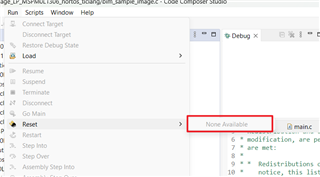
I've implemented I2C master based on I2C examples source code. It works OK except one thing: when I make reset via debugger during I2C operation (for ex., on breakpoint inside interrupt processing), SDA remains in low state and only power cycling helps to restore operation
Here's my code:
void init_i2c() {
  UCB1CTL1 |= UCSWRST;                      // Enable SW reset
  UCB1CTL0 = UCMST + UCMODE_3 + UCSYNC;     // I2C Master, synchronous mode
  UCB1CTL1 = UCSSEL_2 + UCSWRST;            // Use SMCLK, keep SW reset
  UCB1BR0 = 12;                             // fSCL = SMCLK/12 = ~100kHz
  UCB1BR1 = 0;
  UCB1I2CSA = RTC_ADDR >> 1;                // Set slave address
  UCB1IE |= UCNACKIE;                       // allow NACK interrupt
  UCB1CTL1 &= ~UCSWRST;                     // Clear SW reset, resume operation
}


void i2c_write(uint8_t offset, const uint8_t *data, uint8_t size) {
  i2cbuf = (volatile uint8_t*) data;
  i2clength = size;
  i2coffset = offset;

  UCB1IFG &= ~UCRXIFG;                    // Clear USCI_B1 TX int flag
  UCB1IE |= UCTXIE;                       // Enable TX interrupt
  UCB1CTL1 |= UCTR + UCTXSTT;             // I2C TX, start condition
  __bis_SR_register(LPM0_bits + GIE);     // Enter LPM0, enable interrupts
  __no_operation();                       // Remain in LPM0 until all data
                                          // is TX'd
  while (UCB1CTL1 & UCTXSTP);             // Ensure stop condition got sent
  UCB1IE &= ~UCTXIE;                      // Disable TX interrupt
}

// USCI B1 interrupt service routine
#pragma vector = USCI_B1_VECTOR
__interrupt void USCI_B1_ISR(void)
{
  switch(__even_in_range(UCB1IV,12))
  {
  case  0: break;                           // Vector  0: No interrupts
  case  2: break;                           // Vector  2: ALIFG
  case  4:
    UCB1IFG &= ~UCNACKIFG;                  // Clear USCI_B1 NACK int flag
    __bic_SR_register_on_exit(LPM0_bits);
    break;                                  // Vector  4: NACKIFG
  case  6: break;                           // Vector  6: STTIFG
  case  8: break;                           // Vector  8: STPIFG
  case 10: break;                           // Vector 10: RXIFG
  case 12:                                  // Vector 12: TXIFG
    if (i2clength)                          // Check TX byte counter
    {
      UCB1TXBUF = *i2cbuf++;                // Load TX buffer
      i2clength--;                          // Decrement TX byte counter
    }
    else
    {
      UCB1CTL1 |= UCTXSTP;                  // I2C stop condition if this is NOT intermediate byte and this is NOT read op
      UCB1IFG &= ~UCTXIFG;                  // Clear USCI_B1 TX int flag
      __bic_SR_register_on_exit(LPM0_bits); // Exit LPM0
    }
  default: break;
  }
}