Part Number: MSP430FR2433
Other Parts Discussed in Thread: TMP102, , TMP112
Tool/software: Code Composer Studio
Dear team,
My customer is using MSP430FR2433 with TMP102/TMP112.
The response is normal when temperature changes slowly.
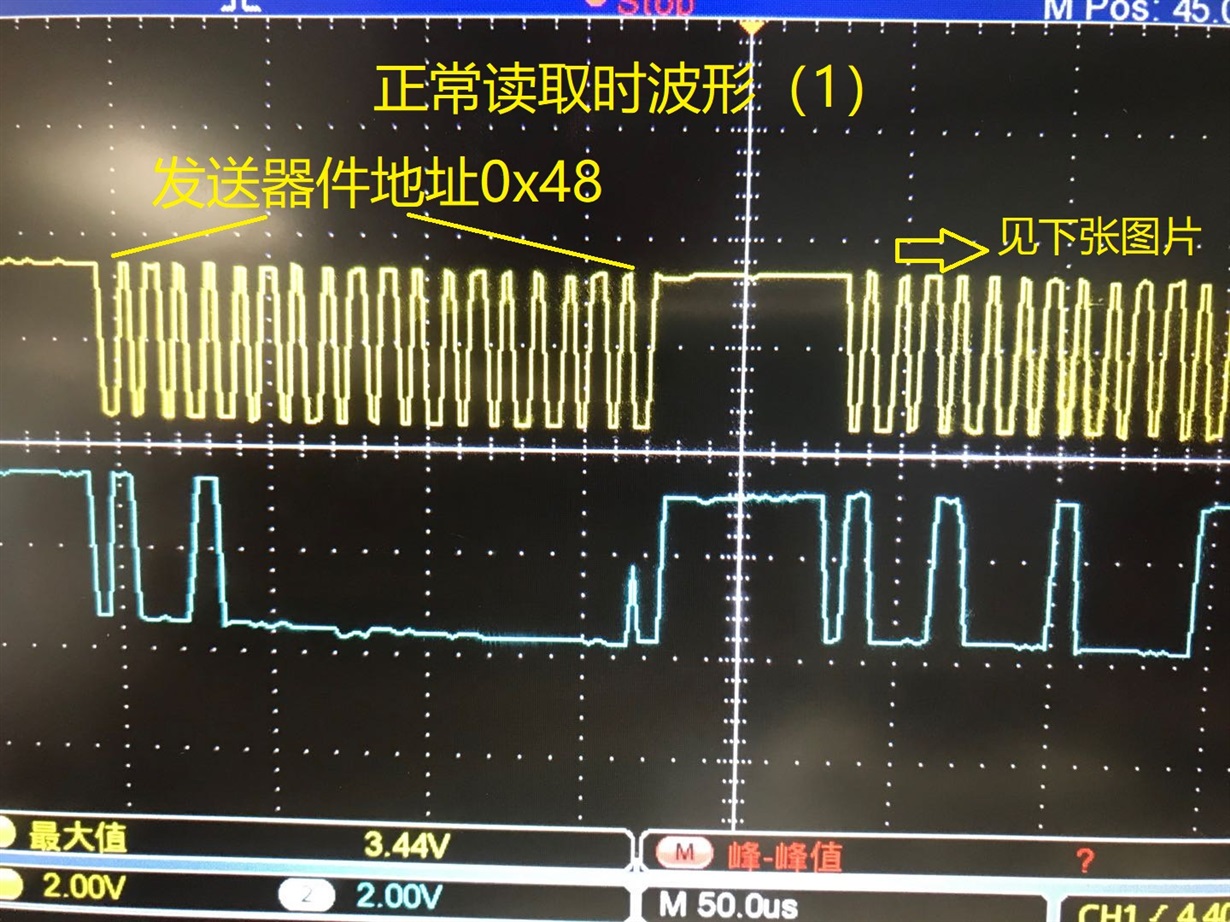
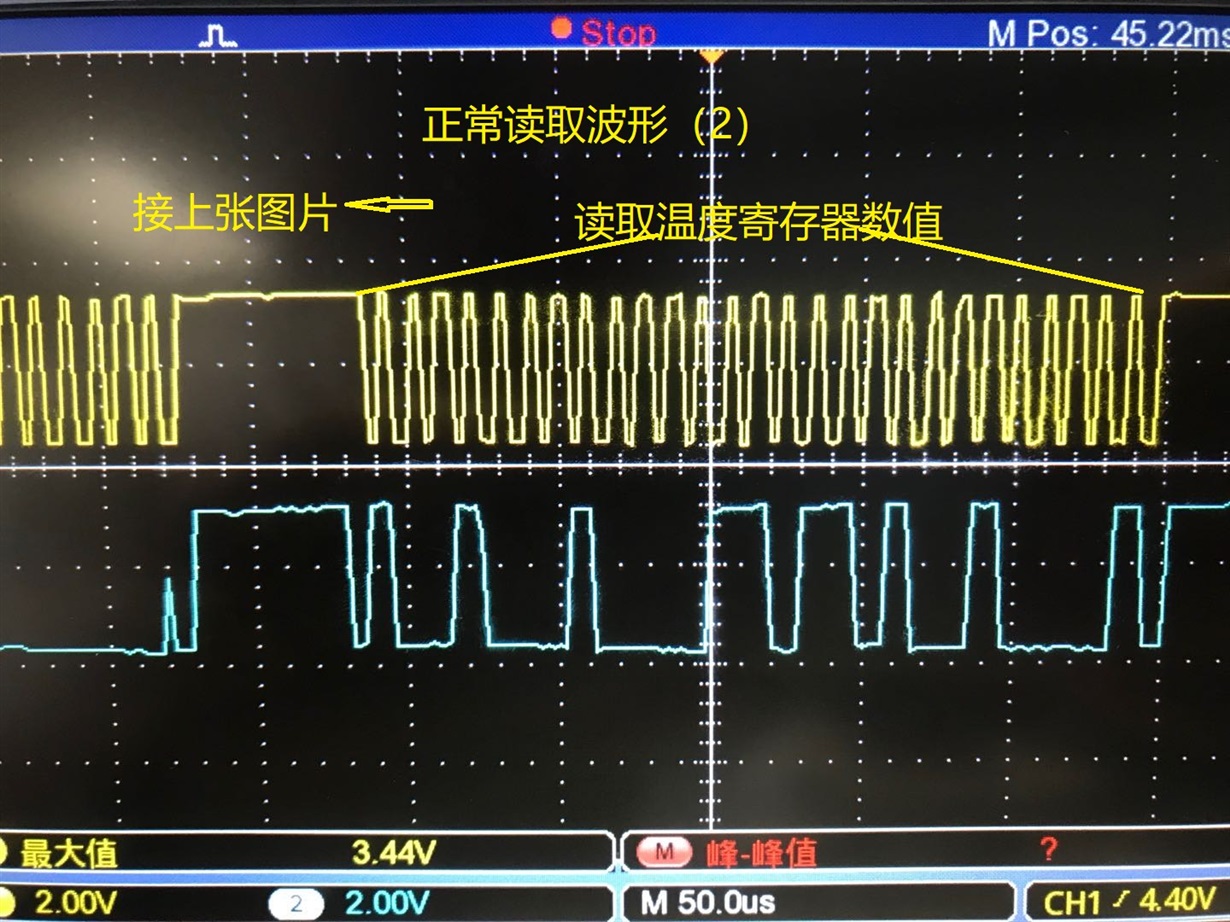
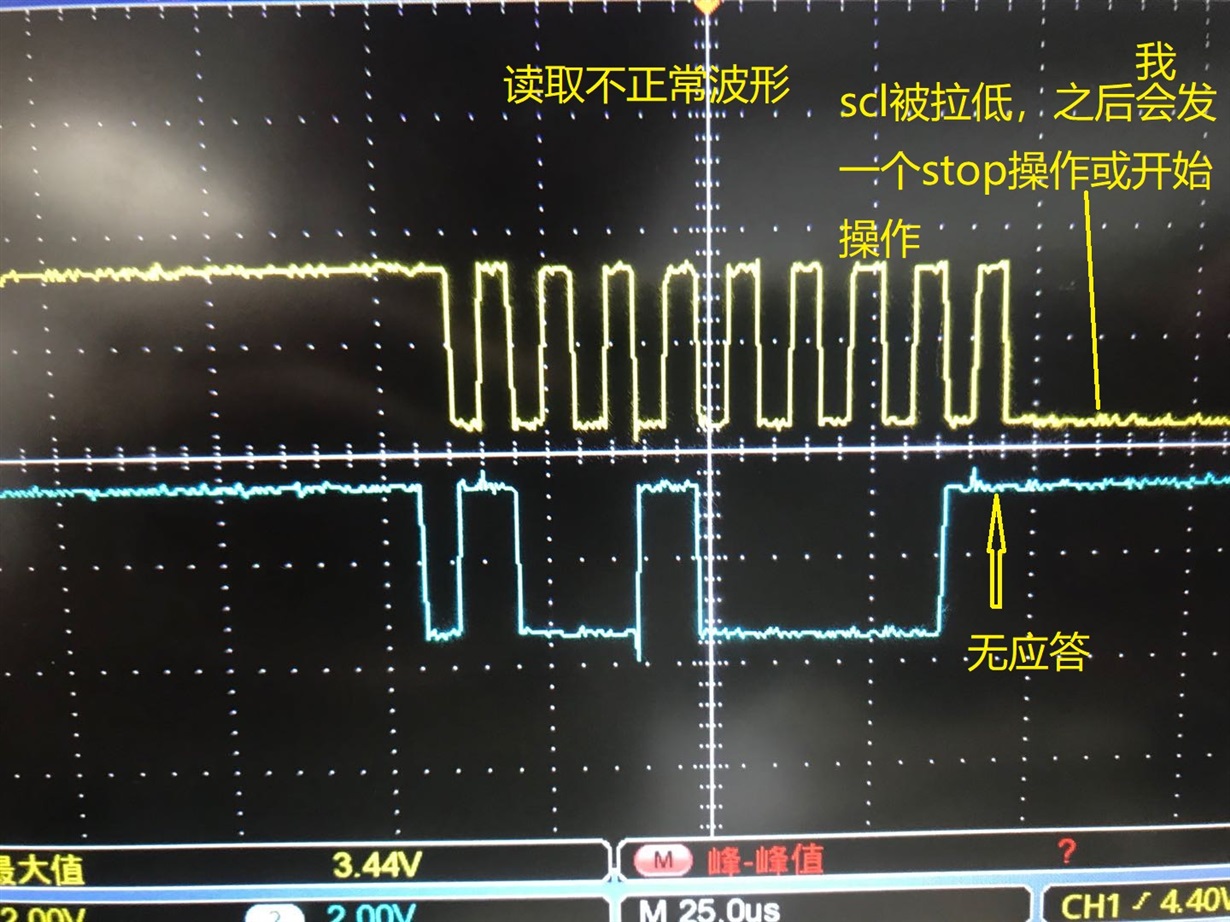
However,there will be no response when the temperature changes drastically for a certain period of time (such as when hot air is blown) and it will be better after a while.
Other MCU (AVR) without this phenomenon. The SDA\SCL pins are all pulled up through a 10K resistor, and the frequency is about 100K.
Please help.
#include <msp430.h>
#include <stdint.h>
#include <string.h>
#include <i2c.h>
#define TIMEOUT 60000

void i2c_init(void){
    static char init=0;
    if(!init){
        P1REN |= BIT2 | BIT3;
        P1OUT |= BIT2 | BIT3;

        // if the bus is stuck (SDA = low): clock until it recovers
        P1DIR |= BIT3;
        while(!(P1IN & BIT2)){
            P1OUT |= BIT3;
            __delay_cycles(8*80);
            P1OUT &= ~BIT3;
            __delay_cycles(8*80);
        }

        P1SEL0 |= BIT2 | BIT3;                  // I2C pins
        // Configure USCI_B0 for I2C mode
        UCB0CTLW0 |= UCSWRST;                   // Software reset enabled
        UCB0CTLW0 |= UCMODE_3 | UCMST | UCSYNC; // I2C mode, Master mode, sync
                                                // after UCB0TBCNT is reached
        UCB0BRW = 10;                       // baudrate = SMCLK / 10 = ~100K
        UCB0CTL1 &= ~UCSWRST;
        init = 1;
    }
}

int i2c_senddata(char *data, int len){
    unsigned int timeout=0;
    unsigned int i;
    static int dummy=0;
    /*if(dummy){
        UCB0TXBUF = 0;
        timeout = 0;
        while(!(UCB0IFG & UCTXIFG0))
            if(timeout++ > TIMEOUT)
                return -1;
    }
    if(dummy == 0) dummy = 1;
*/
     //__delay_cycles(5000);
    for(i=0;i<len;i++){
        UCB0TXBUF = data[i];
        timeout = 0;
        while(!(UCB0IFG & UCTXIFG0))
            if(timeout++ > TIMEOUT)
                return 3;
    }
    return 0;
}

int i2c_readdata(char *data, int len){
    unsigned int timeout=0;
    unsigned int i;

    memset(data, 0, len);
    for(i=0;i<len;i++){
        data[i] = 0;
        timeout=0;

        while(!(UCB0IFG & UCRXIFG0))
            if(timeout++ > TIMEOUT)
                return -1;


        data[i] = UCB0RXBUF;
        if(len > 1)
            if(i == len-2)
                UCB0CTLW0 |= UCTR | UCTXSTP;

    }
    //while(!(UCB0IFG & UCTXIFG0));
    return 0;
}

int i2c_start(char addr, int read){
    unsigned int timeout=0;
    UCB0I2CSA = addr;
    if(read)
        UCB0CTLW0 &= ~UCTR;
    else
        UCB0CTLW0 |= UCTR;
    while (UCB0CTL1 & UCTXSTP);
    UCB0CTLW0 |= UCTXSTT;            // I2C TX, start condition

    while(!(UCB0IFG & UCTXIFG0))
        if(timeout++ > TIMEOUT)
            return 1;

    if(UCB0IFG & UCNACKIFG)
    {
        UCB0CTL1 |= UCTXSTP;               // I2C start condition
        UCB0IFG = 0;                            // Clear All USCI_B0 flags
        return 2;      // check for NACK
    }

    if(!read){
        UCB0TXBUF = 0;
        while(!(UCB0IFG & UCTXIFG0));
    }

    return 0;
}

int i2c_start2(char addr, int read){
    unsigned int timeout=0;
    UCB0I2CSA = addr;
    if(read)
        UCB0CTLW0 &= ~UCTR;
    else
        UCB0CTLW0 |= UCTR;
    while (UCB0CTL1 & UCTXSTP);
    UCB0CTLW0 |= UCTXSTT;            // I2C TX, start condition

    while(!(UCB0IFG & UCTXIFG0))
    {
        if(timeout++ > TIMEOUT)
            return 5;
    }

    if(UCB0IFG & UCNACKIFG)
    {
        UCB0CTL1 |= UCTXSTP;               // I2C start condition
        UCB0IFG = 0;                            // Clear All USCI_B0 flags
        return 6;      // check for NACK
    }

    /*if(!read){
        UCB0TXBUF = d;
        while(!(UCB0IFG & UCTXIFG0));
    }*/

    return 0;
}

int i2c_stop(void){
    unsigned int timeout=0;
    UCB0CTLW0 |= UCTR | UCTXSTP;            // I2C TX, stop condition
    while(UCB0IFG & UCTXSTP)
        if(timeout++ > TIMEOUT)
            return 4;
    return 0;
}

int read_reg(int address, int reg){
    int err;
    char buf[2] = {reg};
    err = i2c_start2(address, 0);
    if(err != 0) return err;
    err = i2c_senddata(buf, 1);
    if(err != 0) return err;
    err = i2c_stop();
    if(err != 0) return err;
    __delay_cycles(10000);              //等待转换完成
    err = i2c_start2(address, 1);
    if(err != 0) return err;
    err = i2c_readdata(buf, 2);
    if(err != 0) return err;
    return buf[0]<<8|buf[1];

}

void write_reg(int address, int reg, int value){
    char buf[2] = {reg, value};
    i2c_start2(address, 0);
    i2c_senddata(buf, 2);
    i2c_stop();
}


void tmp117_init(void){
    i2c_init();
}

int tmp117_gettemp(void)
{
    unsigned int tmp117_raw = 0;
    float t = 0;
    tmp117_raw = read_reg(0x48, 0);
    tmp117_raw >>= 4;

    if(tmp117_raw <= 0x7ff){

        t= tmp117_raw * 6.25;

    }
    if(tmp117_raw>=0xc90) {
        tmp117_raw = ~tmp117_raw;
        tmp117_raw &=0x0fff;
        tmp117_raw +=1;
        t= tmp117_raw*6.25;
        t =-t;
    }
    return (int)t;
}