This thread has been locked.

If you have a related question, please click the "Ask a related question" button in the top right corner. The newly created question will be automatically linked to this question.

AM623: U-Boot crashes when RTI watchdog is enabled

Part Number: AM623
Other Parts Discussed in Thread: AM625

Tool/software:

Hi TI Support Team,

I am reopening an unresolved issue that I am currently encountering, as the original discussion thread has been locked:

https://e2e.ti.com/support/processors-group/processors/f/processors-forum/1333288/am625-u-boot-crash-when-rti-watchdog-is-enabled

The issue relates to a crash in U-Boot when the watchdog is enabled on a custom AM623 board. The crash details are as follows:

U-Boot SPL 2023.04-gd74d0993e2 (Oct 18 2023 - 17:49:46 +0000)
SYSFW ABI: 3.1 (firmware rev 0x0009 '9.1.1--v09.01.01 (Kool Koala)')
SPL initial stack usage: 1856 bytes
Trying to boot from MMC1
Authentication passed


U-Boot 2023.04-gd74d0993e2 (Oct 18 2023 - 17:49:46 +0000)

SoC:   AM62X SR1.0 HS-FS
Model: XXXXXXX
DRAM:  1 GiB
Core:  63 devices, 30 uclasses, devicetree: separate
WDT:   Started watchdog@e000000 with servicing every 1000ms (60s timeout)
WDT:   Started watchdog@e010000 with servicing every 1000ms (60s timeout)
"Synchronous Abort" handler, esr 0x96000010
elr: 0000000080852d48 lr : 0000000080852d44 (reloc)
elr: 00000000bff60d48 lr : 00000000bff60d44
x0 : 00000000bdef3810 x1 : 000000000e020000
x2 : 0000000000000000 x3 : 00000000bff60d30
x4 : 00000000bdedff38 x5 : 0000000000000010
x6 : 000000000000003c x7 : 000000000000000a
x8 : 00000000bdee0690 x9 : 0000000000000008
x10: 0000000000001f50 x11: 00000000bdedfcac
x12: 0000000000001f1c x13: 0000000000000000
x14: 00000000bdee0690 x15: 0000000000000002
x16: 00000000bff5cc58 x17: 0000000000000000
x18: 00000000bdeeed90 x19: 000000000000ea60
x20: 00000000bffb857e x21: 00000000bffb8566
x22: 00000000000003e8 x23: 00000000deadbeef
x24: 0000000000000009 x25: 0000000000000000
x26: 00000000800c25cc x27: 0000000000000000
x28: 0000000000000000 x29: 00000000bdedff20

This is with the following u-boot configuration options:

@@ -85,6 +85,7 @@ CONFIG_CMD_MMC=y
 CONFIG_CMD_REMOTEPROC=y
 CONFIG_CMD_USB=y
 CONFIG_CMD_USB_MASS_STORAGE=y
+CONFIG_CMD_WDT=y
 CONFIG_CMD_RTC=y
 CONFIG_CMD_TIME=y
 CONFIG_CMD_EXT4_WRITE=y
@@ -194,6 +195,9 @@ CONFIG_USB_GADGET=y
 CONFIG_USB_GADGET_MANUFACTURER="Texas Instruments"
 CONFIG_USB_GADGET_VENDOR_NUM=0x0451
 CONFIG_USB_GADGET_PRODUCT_NUM=0x6165
+CONFIG_WDT=y
+CONFIG_WDT_K3_RTI=y
+CONFIG_SPL_WDT=y
 CONFIG_FS_FAT_MAX_CLUSTSIZE=16384
 CONFIG_SPL_GZIP=y
 CONFIG_OF_LIBFDT_OVERLAY=y

The purpose of enabling the watchdog is to implement a fully supervised boot process, monitored from the early-stage bootloaders (tiboot3, SPL, U-Boot) through to Linux. From my understanding, the R5 boot ROM code initially enables the watchdog, which is serviced by SYSFS, but only applies to the R5 core. After the A53 hand-off, SPL and U-Boot should take over responsibility for enabling and servicing the RTI0 watchdog.

A related concern, which I am unable to test due to the current crash, is whether the hand-off of the watchdog servicing between U-Boot and Linux functions as expected. Ensuring a fully supervised boot process all the way to Linux is critical to the reliability of our board.

I would appreciate any assistance or guidance your team can provide to help resolve this issue.

Best regards,

Aaron

  • Hi Aaron,

    I will try reproducing the enabling of watchdog and get back with my findings in 1-2 working days.

    Regards,
    Aparna

  • Hi Aaron,

    Apologies for the delay!

    I was not able to test this in the past few days. I will work on this and post an update by EOD tomorrow. 

    Thank you for your patience.

    Regards,
    Aparna

  • Hi Aaron,

    This error is not reproducible on TI EVM. Could you provide a diff of the changes you have in the U-boot source code apart from whats provided in the default SDK release.

    Regards,
    Aparna

  • Hi Aparna,

    I'm Arnaud, working with Aaron. Aaron is in PTO at the moment and I took over this investigtation.

    I dive a little bit in the crash report and I'm able to sched a bit more light.

    First, our board is using an AM623x chip (AM6232 in my case, but we also have some AM6231 around).
    This is probably why you're not able to reproduce the crash with the EVM. Is your EVM running a AM625 ? Or do you have the ability to put a AM623 in them?

    The crash happens in:


    ```
    U-Boot 2023.04-gd74d0993e2 (Oct 18 2023 - 17:49:46 +0000)

    SoC: AM62X SR1.0 HS-FS
    Model: XXXXXXX
    DRAM: 1 GiB
    Core: 63 devices, 30 uclasses, devicetree: separate
    WDT: Started watchdog@e000000 without servicing (60s timeout)
    WDT: Started watchdog@e010000 without servicing (60s timeout)
    "Synchronous Abort" handler, esr 0x96000010
    elr: 0000000080852bbc lr : 0000000080852bb8 (reloc)
    elr: 00000000bff61bbc lr : 00000000bff61bb8
    x0 : 00000000bdef4520 x1 : 000000000e020000
    x2 : 0000000000000000 x3 : 00000000bff61ba4
    x4 : 00000000bdedff38 x5 : 0000000000000010
    x6 : 000000000000003c x7 : 000000000000000a
    x8 : 00000000bdee1190 x9 : 0000000000000008
    x10: 0000000000001f50 x11: 00000000bdedfcac
    x12: 0000000000001f1c x13: 0000000000000000
    x14: 00000000bdee1190 x15: 0000000000000002
    x16: 00000000bff5db68 x17: 0000000000000000
    x18: 00000000bdeefd90 x19: 000000000000ea60
    x20: 00000000bdef2c70 x21: 00000000bffb924e
    x22: 00000000000003e8 x23: 00000000deadbeef
    x24: 0000000000000009 x25: 0000000000000000
    x26: 00000000800c24ac x27: 0000000000000000
    x28: 0000000000000000 x29: 00000000bdedff20

    Code: f9000bf3 aa0103f3 97ff7f20 f9400001 (b9409021)
    Resetting CPU ...
    ```

    According to
    ```
    └─> cat ../build/xxxxxxxx_a53_defconfig/u-boot.sym | sort | grep 0000000080852
    ...
    0000000080852b40 l F .text_rest 0000000000000064 rti_wdt_reset
    0000000080852ba4 l F .text_rest 00000000000000c8 rti_wdt_start
    0000000080852c6c l F .text_rest 0000000000000084 rti_wdt_probe
    ...
    ```
    we're crashing in 0000000080852ba4+0x14 in rti_wdt_start().

    Adding a quick printf in this method.

    Looks like we're calling the method three times but we only have two cores in this chip, so only two watchdogs.

    A couple more printf are telling me we're crashing in `if (readl(priv->regs + RTIDWDCTRL) == WDENABLE_KEY)`, at the 3rd invocatoin (for `main_rti2` which is likely not present in our chip).

    I added the following line in our "custommachine.dts":

    ```
    &cbass_main {
    /delete-node/ watchdog@e010000;
    /delete-node/ watchdog@e020000;
    /delete-node/ watchdog@e030000;
    /delete-node/ watchdog@e0f0000;
    };
    ```

    and this is now avoiding the crash problem.

    Two questions:

    Q1:

    Our custommachine.dts is doing an `#include "k3-am625.dtsi` and is then trying to remove all the HW non-applicable to AM623.
    And this is tedious. We're discovering problems one after another, crash after crash.
    Is there a proper "dtsi" in u-boot-ti-staging that we should be using for an AM623x chip ?
    Is there some application notes regarding u-boot and kernel for an AM62x chip that is not 625 ?

    Q2:

    Now that it's not crashing. I still can't configure and trigger the watchdog with the `wdt` command.
    I need to dive in Aaron's notes. I believe he was successful with those commands on am62xx-evm (but I'm not sure).
    Do you have an idea of what's the problem could be?

    ```
    U-Boot 2023.04-gd74d0993e2 (Oct 18 2023 - 17:49:46 +0000)

    SoC: AM62X SR1.0 HS-FS
    Model: Custom
    DRAM: 1 GiB
    Core: 59 devices, 30 uclasses, devicetree: separate
    rti_wdt_start( dev=00000000bdef2b30 ), priv=00000000bdef4310
    WDT: Started watchdog@e000000 without servicing (60s timeout)
    MMC: mmc@fa10000: 0
    Loading Environment from FAT... OK
    Loading Environment from nowhere... OK
    In: serial@2800000
    Out: serial@2800000
    Err: serial@2800000
    Net: eth0: ethernet@8000000port@1
    Autoboot in 4 seconds

    => wdt list
    watchdog@e000000 (rti_wdt)

    => wdt dev watchdog@e000000

    => wdt start 30000
    rti_wdt_start( dev=00000000bdef2b30 ), priv=00000000bdef4310
    Starting watchdog timer failed (-16)

    => wdt expire
    rti_wdt_start( dev=00000000bdef2b30 ), priv=00000000bdef4310
    Expiring watchdog timer failed (-16)

    => wdt help
    wdt - Watchdog sub-system

    Usage:
    wdt list - list watchdog devices
    wdt dev [<name>] - get/set current watchdog device
    wdt start <timeout ms> [flags] - start watchdog timer
    wdt stop - stop watchdog timer
    wdt reset - reset watchdog timer
    wdt expire [flags] - expire watchdog timer immediately
    ```

    Looking for how to attach (upload) our custommachine.dts into this E2E forum.

  • I cannot find a way to upload a file. Is there one?
    Copying the whole DTS here. Loosing the indentation though :(.


    /*
    * Custom board
    *
    * Copyright (C) 2023 ...
    *
    * based on TI's AM625 SK:
    * Copyright (C) 2021-2022 Texas Instruments Incorporated - https://www.ti.com/
    *
    * This file has been created as a clone of `arch/arm/dts/k3-am625-sk.dts`.
    * We then started stripping the unnecessary node from the tree, such as:
    * - `ospi0` (the NOR flash)
    * - multimedia nodes were already removed
    * - `mmc1`, `sdhci1` nodes (as there's no SD card)
    * - `i2c1` and `i2c2` buses
    * - the `cpu2` and `cpu3`
    * ...
    */
    
    /dts-v1/;
    
    #include <dt-bindings/leds/common.h>
    #include <dt-bindings/gpio/gpio.h>
    #include <dt-bindings/net/ti-dp83867.h>
    #include "k3-am625.dtsi"
    
    / {
    compatible = "ti,am625-sk", "ti,am625";
    model = "CUSTOM";
    
    aliases {
    serial2 = &main_uart0;
    mmc0 = &sdhci0;
    mmc2 = &sdhci2;
    ethernet0 = &cpsw_port1;
    ethernet1 = &cpsw_port2;
    usb0 = &usb0;
    usb1 = &usb1;
    rtc0 = &mcp7940n;
    };
    
    // The k3-am625.dtsi is declaring 4 cores, the chip on custom board only has two
    // deleting cores/cpus 2 and 3
    cpus {
    cpu-map {
    cluster0 {
    /delete-node/ core2;
    /delete-node/ core3;
    };
    };
    /delete-node/ cpu@2;
    /delete-node/ cpu@3;
    };
    
    chosen {
    stdout-path = "serial2:115200n8";
    bootargs = "console=ttyS2,115200n8 earlycon=ns16550a,mmio32,0x02800000";
    };
    
    opp-table {
    /* Add 1.4GHz OPP for am625-sk board. Requires VDD_CORE to be at 0.85V */
    opp-1400000000 {
    opp-hz = /bits/ 64 <1400000000>;
    opp-supported-hw = <0x01 0x0004>;
    clock-latency-ns = <6000000>;
    };
    };
    
    memory@80000000 {
    device_type = "memory";
    /* 1G RAM */
    reg = <0x00000000 0x80000000 0x00000000 0x40000000>;
    
    };
    
    reserved-memory {
    #address-cells = <2>;
    #size-cells = <2>;
    ranges;
    
    ramoops@9ca00000 {
    compatible = "ramoops";
    reg = <0x00 0x9ca00000 0x00 0x00100000>;
    record-size = <0x8000>;
    console-size = <0x8000>;
    ftrace-size = <0x00>;
    pmsg-size = <0x8000>;
    };
    
    secure_tfa_ddr: tfa@9e780000 {
    reg = <0x00 0x9e780000 0x00 0x80000>;
    alignment = <0x1000>;
    no-map;
    };
    
    secure_ddr: optee@9e800000 {
    reg = <0x00 0x9e800000 0x00 0x01800000>; /* for OP-TEE */
    alignment = <0x1000>;
    no-map;
    };
    
    wkup_r5fss0_core0_dma_memory_region: r5f-dma-memory@9db00000 {
    compatible = "shared-dma-pool";
    reg = <0x00 0x9db00000 0x00 0xc00000>;
    no-map;
    };
    };
    
    vmain_pd: regulator-0 {
    /* TPS65988 PD CONTROLLER OUTPUT */
    compatible = "regulator-fixed";
    regulator-name = "vmain_pd";
    regulator-min-microvolt = <5000000>;
    regulator-max-microvolt = <5000000>;
    regulator-always-on;
    regulator-boot-on;
    };
    
    vcc_5v0: regulator-1 {
    /* Output of LM34936 */
    compatible = "regulator-fixed";
    regulator-name = "vcc_5v0";
    regulator-min-microvolt = <5000000>;
    regulator-max-microvolt = <5000000>;
    vin-supply = <&vmain_pd>;
    regulator-always-on;
    regulator-boot-on;
    };
    
    vcc_3v3_sys: regulator-2 {
    /* output of LM61460-Q1 */
    compatible = "regulator-fixed";
    regulator-name = "vcc_3v3_sys";
    regulator-min-microvolt = <3300000>;
    regulator-max-microvolt = <3300000>;
    vin-supply = <&vmain_pd>;
    regulator-always-on;
    regulator-boot-on;
    };
    
    // GPIO0.31 is controlling PMIC_VSEL_SD, allowing to switch between 1.8V and 3.3V
    vdd_sd_dv: regulator-4 {
    /* Output of TLV71033 */
    compatible = "regulator-gpio";
    regulator-name = "tlv71033";
    pinctrl-names = "default";
    pinctrl-0 = <&vdd_sd_dv_pins_default>;
    regulator-min-microvolt = <1800000>;
    regulator-max-microvolt = <3300000>;
    regulator-boot-on;
    vin-supply = <&vcc_5v0>;
    gpios = <&main_gpio0 31 GPIO_ACTIVE_HIGH>;
    states = <1800000 0x0>,
    <3300000 0x1>;
    };
    
    leds {
    compatible = "gpio-leds";
    pinctrl-names = "default";
    pinctrl-0 = <&usr_led_pins_default>;
    
    led-0 {
    label = "am62-sk:green:heartbeat";
    gpios = <&main_gpio1 49 GPIO_ACTIVE_HIGH>;
    linux,default-trigger = "heartbeat";
    function = LED_FUNCTION_HEARTBEAT;
    default-state = "off";
    };
    };
    };
    
    &main_pmx0 {
    main_uart0_pins_default: main-uart0-pins-default {
    pinctrl-single,pins = <
    AM62X_IOPAD(0x1c8, PIN_INPUT, 0) /* (D14) UART0_RXD */
    AM62X_IOPAD(0x1cc, PIN_OUTPUT, 0) /* (E14) UART0_TXD */
    AM62X_IOPAD(0x01d0, PIN_INPUT, 0) /* (A15) UART0_CTSn */
    AM62X_IOPAD(0x01d4, PIN_OUTPUT, 0) /* (B15) UART0_RTSn */
    >;
    };
    
    main_i2c0_pins_default: main-i2c0-pins-default {
    pinctrl-single,pins = <
    AM62X_IOPAD(0x1e0, PIN_INPUT_PULLUP, 0) /* (B16) I2C0_SCL */
    AM62X_IOPAD(0x1e4, PIN_INPUT_PULLUP, 0) /* (A16) I2C0_SDA */
    >;
    };
    
    main_mmc0_pins_default: main-mmc0-pins-default {
    pinctrl-single,pins = <
    AM62X_IOPAD(0x220, PIN_INPUT, 0) /* (Y3) MMC0_CMD */
    AM62X_IOPAD(0x218, PIN_INPUT, 0) /* (AB1) MMC0_CLK */
    AM62X_IOPAD(0x214, PIN_INPUT, 0) /* (AA2) MMC0_DAT0 */
    AM62X_IOPAD(0x210, PIN_INPUT, 0) /* (AA1) MMC0_DAT1 */
    AM62X_IOPAD(0x20c, PIN_INPUT, 0) /* (AA3) MMC0_DAT2 */
    AM62X_IOPAD(0x208, PIN_INPUT, 0) /* (Y4) MMC0_DAT3 */
    AM62X_IOPAD(0x204, PIN_INPUT, 0) /* (AB2) MMC0_DAT4 */
    AM62X_IOPAD(0x200, PIN_INPUT, 0) /* (AC1) MMC0_DAT5 */
    AM62X_IOPAD(0x1fc, PIN_INPUT, 0) /* (AD2) MMC0_DAT6 */
    AM62X_IOPAD(0x1f8, PIN_INPUT, 0) /* (AC2) MMC0_DAT7 */
    >;
    };
    
    main_mmc1_pins_default: main-mmc1-pins-default {
    pinctrl-single,pins = <
    AM62X_IOPAD(0x23c, PIN_INPUT, 0) /* (A21) MMC1_CMD */
    AM62X_IOPAD(0x234, PIN_INPUT, 0) /* (B22) MMC1_CLK */
    AM62X_IOPAD(0x230, PIN_INPUT, 0) /* (A22) MMC1_DAT0 */
    AM62X_IOPAD(0x22c, PIN_INPUT, 0) /* (B21) MMC1_DAT1 */
    AM62X_IOPAD(0x228, PIN_INPUT, 0) /* (C21) MMC1_DAT2 */
    AM62X_IOPAD(0x224, PIN_INPUT, 0) /* (D22) MMC1_DAT3 */
    AM62X_IOPAD(0x240, PIN_INPUT, 0) /* (D17) MMC1_SDCD */
    >;
    };
    
    usr_led_pins_default: usr-led-pins-default {
    pinctrl-single,pins = <
    AM62X_IOPAD(0x244, PIN_OUTPUT, 7) /* (C17) MMC1_SDWP.GPIO1_49 */
    >;
    };
    
    main_mdio1_pins_default: main-mdio1-pins-default {
    pinctrl-single,pins = <
    AM62X_IOPAD(0x160, PIN_OUTPUT, 0) /* (AD24) MDIO0_MDC */
    AM62X_IOPAD(0x15c, PIN_INPUT, 0) /* (AB22) MDIO0_MDIO */
    >;
    };
    
    main_rmii1_pins_default: main-rmii1-pins-default {
    status = "okay";
    pinctrl-single,pins = <
    AM62X_IOPAD(0x0130, PIN_INPUT, 1) /* (AE19) RGMII1_TXC.RMII1_CRS_DV */
    AM62X_IOPAD(0x0148, PIN_INPUT, 1) /* (AD17) RGMII1_RXC.RMII1_REF_CLK */
    AM62X_IOPAD(0x014c, PIN_INPUT, 1) /* (AB17) RGMII1_RD0.RMII1_RXD0 */
    AM62X_IOPAD(0x0150, PIN_INPUT, 1) /* (AC17) RGMII1_RD1.RMII1_RXD1 */
    AM62X_IOPAD(0x0144, PIN_INPUT, 1) /* (AE17) RGMII1_RX_CTL.RMII1_RX_ER */
    AM62X_IOPAD(0x0134, PIN_OUTPUT, 1) /* (AE20) RGMII1_TD0.RMII1_TXD0 */
    AM62X_IOPAD(0x0138, PIN_OUTPUT, 1) /* (AD20) RGMII1_TD1.RMII1_TXD1 */
    AM62X_IOPAD(0x012c, PIN_OUTPUT, 1) /* (AD19) RGMII1_TX_CTL.RMII1_TX_EN */
    AM62X_IOPAD(0x0154, PIN_INPUT_PULLUP, 7) /* (AB16) RGMII1_RD2.GPIO0_83 */
    >;
    };
    
    main_rmii2_pins_default: main-rmii2-pins-default {
    status = "okay";
    pinctrl-single,pins = <
    AM62X_IOPAD(0x0168, PIN_INPUT, 1) /* (AE21) RGMII2_TXC.RMII2_CRS_DV */
    AM62X_IOPAD(0x0180, PIN_INPUT, 1) /* (AD23) RGMII2_RXC.RMII2_REF_CLK */
    AM62X_IOPAD(0x0184, PIN_INPUT, 1) /* (AE23) RGMII2_RD0.RMII2_RXD0 */
    AM62X_IOPAD(0x0188, PIN_INPUT, 1) /* (AB20) RGMII2_RD1.RMII2_RXD1 */
    AM62X_IOPAD(0x017c, PIN_INPUT, 1) /* (AD22) RGMII2_RX_CTL.RMII2_RX_ER */
    AM62X_IOPAD(0x016c, PIN_OUTPUT, 1) /* (Y18) RGMII2_TD0.RMII2_TXD0 */
    AM62X_IOPAD(0x0170, PIN_OUTPUT, 1) /* (AA18) RGMII2_TD1.RMII2_TXD1 */
    AM62X_IOPAD(0x0164, PIN_OUTPUT, 1) /* (AA19) RGMII2_TX_CTL.RMII2_TX_EN */
    AM62X_IOPAD(0x0158, PIN_INPUT_PULLUP, 7) /* (AA15) RGMII1_RD3.GPIO0_84 */
    >;
    };
    
    vdd_sd_dv_pins_default: vdd-sd-dv-pins-default {
    pinctrl-single,pins = <
    AM62X_IOPAD(0x07c, PIN_OUTPUT, 7) /* (P25) GPMC0_CLK.GPIO0_31 */
    >;
    };
    
    main_usb1_pins_default: main-usb1-pins-default {
    pinctrl-single,pins = <
    AM62X_IOPAD(0x0258, PIN_OUTPUT, 0) /* (F18) USB1_DRVVBUS */
    >;
    };
    };
    
    &wkup_uart0 {
    /* WKUP UART0 is used by DM firmware */
    status = "reserved";
    };
    
    &main_uart0 {
    status = "okay";
    pinctrl-names = "default";
    pinctrl-0 = <&main_uart0_pins_default>;
    };
    
    &main_uart1 {
    /* Main UART1 is used by TIFS firmware */
    status = "reserved";
    };
    
    &main_i2c0 {
    status = "okay";
    pinctrl-names = "default";
    pinctrl-0 = <&main_i2c0_pins_default>;
    clock-frequency = <400000>;
    
    mcp7940n: mcp7940n@6f {
    compatible = "microchip,mcp7940x";
    reg = <0x6f>;
    };
    };
    
    &main_i2c1 {
    status = "disabled";
    };
    
    &cbass_main {
    /delete-node/ watchdog@e010000;
    /delete-node/ watchdog@e020000;
    /delete-node/ watchdog@e030000;
    /delete-node/ watchdog@e0f0000;
    };
    
    &sdhci0 {
    status = "okay";
    pinctrl-names = "default";
    pinctrl-0 = <&main_mmc0_pins_default>;
    ti,driver-strength-ohm = <50>;
    disable-wp;
    };
    
    &sdhci1 {
    /* SD/MMC */
    status = "disabled";
    };
    
    &cpsw3g {
    pinctrl-names = "default";
    pinctrl-0 = <&main_rmii1_pins_default
    &main_rmii2_pins_default>;
    };
    
    &cpsw_port1 {
    phy-mode = "rmii";
    phy-handle = <&cpsw3g_phy0>;
    };
    
    &cpsw_port2 {
    phy-mode = "rmii";
    phy-handle = <&cpsw3g_phy1>;
    };
    
    &cpsw3g_mdio {
    status = "okay";
    pinctrl-names = "default";
    pinctrl-0 = <&main_mdio1_pins_default>;
    
    cpsw3g_phy0: ethernet-phy@0 {
    reg = <0>;
    };
    
    cpsw3g_phy1: ethernet-phy@1 {
    reg = <1>;
    };
    };
    
    &mailbox0_cluster0 {
    mbox_m4_0: mbox-m4-0 {
    ti,mbox-rx = <0 0 0>;
    ti,mbox-tx = <1 0 0>;
    };
    };
    
    &usbss0 {
    status = "okay";
    ti,vbus-divider;
    };
    
    &usbss1 {
    status = "okay";
    };
    
    &usb0 {
    /* Using CONFIG_LPP_USB_RECOVERY to determine if the USB device should be host or
    peripheral mode. This U-Boot config should only be present in USBMSC defconfigs. */
    #ifdef CONFIG_LPP_USB_RECOVERY
    dr_mode = "host";
    #else
    dr_mode = "peripheral";
    #endif
    };
    
    &usb1 {
    dr_mode = "host";
    pinctrl-names = "default";
    pinctrl-0 = <&main_usb1_pins_default>;
    };
    
    ```

  • Hello,

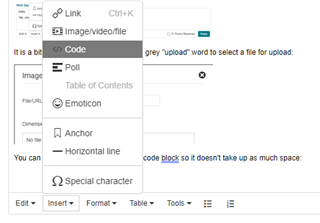
    Yes, you can upload a file like this:

    It is a bit tricky, you have to click on the grey "upload" word to select a file for upload:

    You can also put terminal output in the code block so it doesn't take up as much space:

    Regards,

    Nick

  • Hello Arnold,

    Apologies for the delayed responses, I have been on vacation and Aparna will also be out the rest of the week. Please keep in mind that I have NOT tried using watchdog during uboot, so take these responses with a grain of salt.

    Watchdog is already enabled in your boot log

    Taking a look at your uboot boot log, it looks like the watchdog is actually getting enabled before you reach the uboot command line:

    rti_wdt_start( dev=00000000bdef2b30 ), priv=00000000bdef4310
    WDT: Started watchdog@e000000 without servicing (60s timeout)

    This also makes sense when you look at the Linux error code 16 (EBUSY - device or resource busy). I would expect to see this error if you were trying to configure or start a watchdog that was already running:

    => wdt start 30000
    rti_wdt_start( dev=00000000bdef2b30 ), priv=00000000bdef4310
    Starting watchdog timer failed (-16)
    
    => wdt expire
    rti_wdt_start( dev=00000000bdef2b30 ), priv=00000000bdef4310
    Expiring watchdog timer failed (-16)

    I assume that "without servicing" means that there is not any software that is programmed to pet the watchdog. If that is true, then it should be very easy to check that the watchdog is actually running.

    wdt expire returning error 16 is interesting. It could be that specific command is not compatible with the TI watchdog, or maybe you need to use a specific flag to get it to work properly.

    Ok, so... How do I check that the watchdog is actually working? 

    I assume that "started watchdog without servicing" means that the watchdog is counting down from 60 seconds, but uboot has NOT started any code that would pet the watchdog before the watchdog expires.

    The quick test

    If that is true, it should be easy to test if the watchdog is working as expected. Just enter the uboot terminal and... wait for 60 seconds. Did the processor reset? Great, your watchdog is working as expected. If not, then you'll need to do some additional debug.

    A bit more granular - checking the watchdog registers 

    You can use the md command to read watchdog register values and see what is going on. For more information, try
    => help md

    CFG_WDSTATUS - watchdog status register
    More information here:
    https://e2e.ti.com/support/processors-group/processors/f/processors-forum/1370422/am62p-am62p/5253338#5253338

    CFG_DWDCNTR -  Digital Watchdog Down Counter

    You should see this number decreasing over time if the watchdog is actually running. You can get the number of seconds remaining by dividing the counter value by the frequency, 32,768 Hz.

    Regards,

    Nick