AM2732-Q1: Callback interrupt problem when using RCSS_SPIA as slave

Part Number: AM2732-Q1
Other Parts Discussed in Thread: AM2732

Hello,

I use the RCSS_SPIA interface as slave in the AM2732 device. The AM2732 device is connected through j1 connector with a FPGA device that sends SPI master frame on RCSS every 10 ms (a simulations of the data send is shown below).
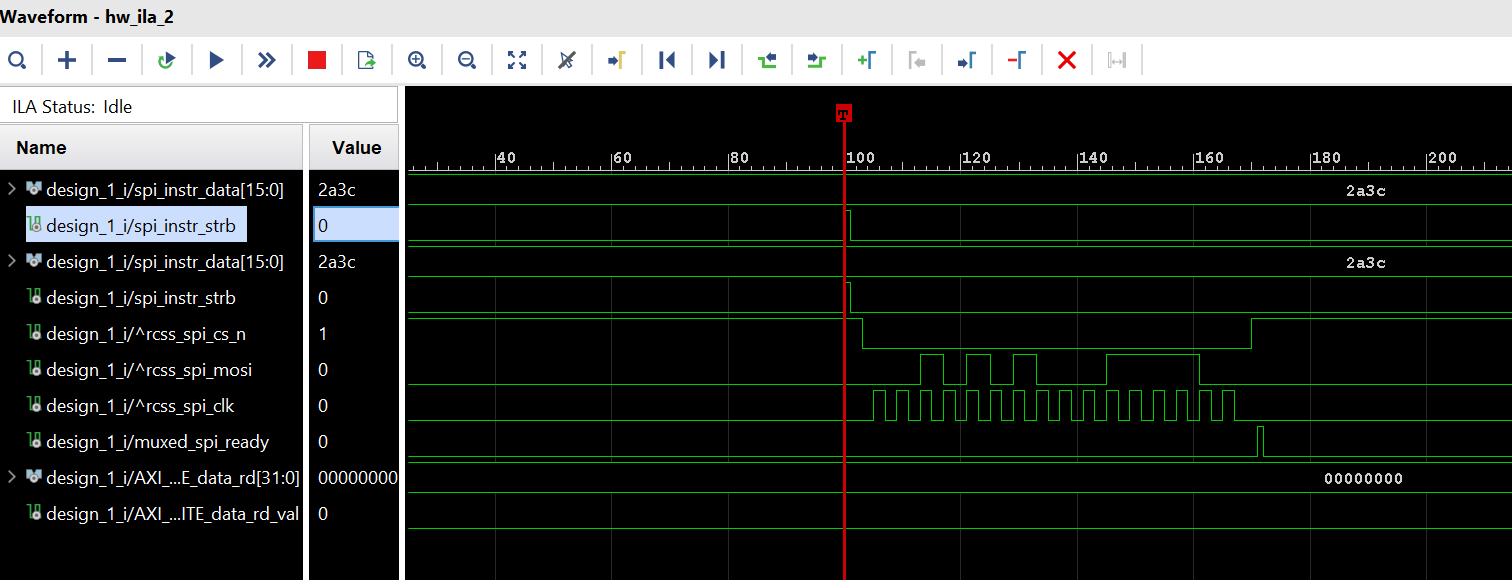
image.png

The problem is that in the AM2732 device I only get one interrupt in the beginning with the right data written in memory and then I do not get any more interrupts.
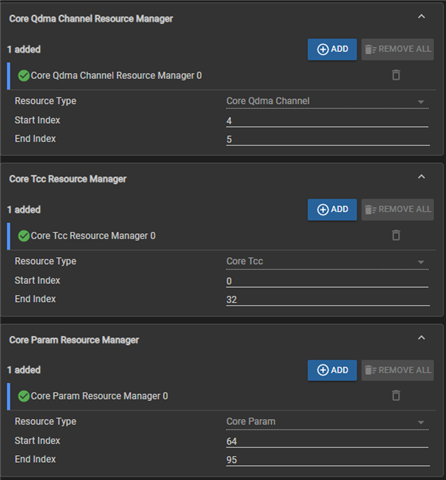
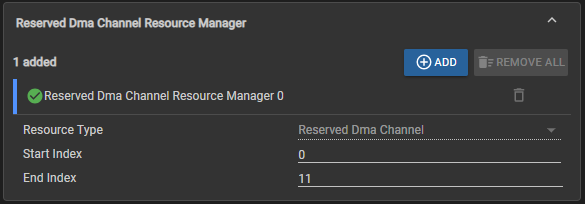
The syscfg and the code used is shown below.
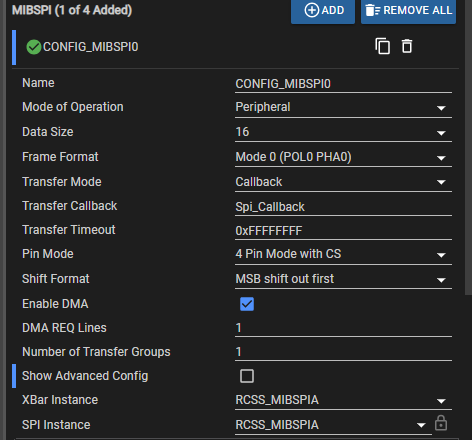
image.png

uint32_t intr_callback_cnt = 0;
uint16_t gMibspiRxBuffer[1];

void Spi_Callback(MIBSPI_Handle handle, MIBSPI_Transaction *transaction)
{
CacheP_wbInv(gMibspiRxBuffer, sizeof(gMibspiRxBuffer), CacheP_TYPE_ALLD);
intr_callback_cnt++;
if(intr_callback_cnt == 4){
     DebugP_log("4 spi transfers\r\n");
}
}

void spi_slave(void *args)
{
    //int32_t             status = SystemP_SUCCESS;
    uint32_t            i;
    int32_t             transferOK;
    MIBSPI_Transaction  spiTransaction;

    Drivers_open();
    Board_driversOpen();

    DebugP_log("[MIBSPI] Digital Loopback EDMA example started ...\r\n");

    /* Memfill buffers */
    for(i = 0U; i < sizeof(gMibspiRxBuffer); i++)
    {
        gMibspiRxBuffer[i] = 0U;
    }

    CacheP_wbInv(gMibspiRxBuffer, sizeof(gMibspiRxBuffer), CacheP_TYPE_ALLD);
    
    /* Initiate transfer */
    spiTransaction.count        = sizeof(gMibspiRxBuffer);
    spiTransaction.txBuf        = NULL;
    spiTransaction.rxBuf        = (void *)gMibspiRxBuffer;
    spiTransaction.peripheralIndex   = 0U;
    spiTransaction.arg          = NULL;
  

    transferOK = MIBSPI_transfer(gMibspiHandle[CONFIG_MIBSPI0], &spiTransaction);
    if((SystemP_SUCCESS != transferOK))
    {
        DebugP_assert(FALSE); /* MIBSPI transfer failed!! */
    }
    else
    {
        DebugP_log("All tests have passed!!\r\n");
    }


}

Can you tell me whats going wrong?

  • Hi Dimitra,

    Each MIBSPI_transfer() will correspond to one RX transaction (with spiTransaction.count data unit). In your code, you only do MIBSPI_transfer() once, so, there will be only one TX trancsaction and one TX callback.

    The MIBSPI_transfer() should be in a loop, so that the TX transactions will come in continuously.

    Best regards,

    Ming  

  • Hi Ming,

    I think this fixed my problem. I have one last question though.

    I changed the ending of my spi_slave() function to this:

        while(1){
        transferOK = MIBSPI_transfer(gMibspiHandle[CONFIG_MIBSPI0], &spiTransaction);
        if((SystemP_SUCCESS != transferOK))
        {
            DebugP_assert(FALSE); /* MIBSPI transfer failed!! */
        }
        else
        {
            //DebugP_log("All tests have passed!!\r\n");
        }
    
        ulEventsToProcess = ulTaskNotifyTake( pdFALSE, portMAX_DELAY );
        if (ulEventsToProcess > 1){
                ;
            }
        }
    And I also changed my Spi_callback function to this:
    // uint32_t startCycles;
    uint64_t curTime;
    float durationCallback[100];
    
    void Spi_Callback(MIBSPI_Handle handle, MIBSPI_Transaction *transaction)
    {
        if(intr_callback_cnt>0){
            durationCallback[(intr_callback_cnt-1)%100] = ClockP_getTimeUsec() - curTime;
            // durationCallback[(intr_callback_cnt-1)%100] = (CycleCounterP_getCount32() - startCycles - 15)*1000/400E6;
        }
    
        // startCycles = CycleCounterP_getCount32();
        curTime = ClockP_getTimeUsec();
    
        CacheP_wbInv(gMibspiRxBuffer, sizeof(gMibspiRxBuffer), CacheP_TYPE_ALLD);
        intr_callback_cnt++;
        BaseType_t TaskWoken = pdFALSE;
        vTaskNotifyGiveFromISR( gSPI_slave_Task, &TaskWoken );
        portYIELD_FROM_ISR( TaskWoken );
    }

    My problem now has to do with the time measurement.

    When I use ClockP_getTimeUsec(), I accurately measure the 10ms duration from one interrupt to another. When I use the CycleCounterP_getCount32() I always get around 78usec. Why is that huge difference between these 2 time measurement ways.

    Thank you in advance.

    Dimitra

  • Hi Dimitra,

    There is an know bug for the CycleCounterP_getCount32() on R5F core. The cycle count for R5F core is inaccurate. However, the CycleCounterP_getCount32 for C66x core is accurate. Please use other methods like GPIO pin toggle to measure the time between two interrupts. 

    Best regards,

    Ming

  • Hi Ming,

    Thank you for the information. I would like to ask for your help with another issue.

    I managed to get data from the FPGA. The FPGA sends a 16bit counter every 10us and what I do is modifying my code so that I get 256 packets of 16bit data and after the run I observe the content of the receiving buffer (gMibspiRxBuffer) in memory and I see that all the data is correct.

    The problem is that when the FPGA is sending 1024 packets every 10us , I get the data in the receiving buffer correctly but the first 5 packets are zero and the correct counter value starts from the 6th packet. 

    Do you know why that happens? I must also mention that in packet numbers over 1024, the same problem appears.

    Thank you in advance.

    Dimitra

  • Hi Dimitra,

    Since the AM273x is the SPI slave, I would think the issue is on the FPGA side which is the SPI master. 

    If you can connect the Saleae Logic Pro to the MIBSPI CS, CLK, MISO, MOSI, you should be able to get the log of the data sent by FPGA. If it matches with the RX buffer contents, then the issue is with the FPGA for sure.

    Best regards,

    Ming 

  • Hi Ming,

    I confirmed  that the data provided from the FPGA are correct. So the problem lies elsewhere.

    My receiving buffer is shown in the picture below when I receive 1024 packets every 10us. It is clearly shown that the first packets of the counter are not received with the right values, although the FPGA sends them correctly (that is verified). The rest of the packets (not the entire buffer is shown in this screenshot) are received correctly.

    Do you have an idea why that happens?

    Kind regards,

    Dimitra

  • Hi Dimitra,

    " although the FPGA sends them correctly (that is verified)"

    The verification you mentioned above is on the FPGA side or on the SPI bus connecting the FPGA and AM273x?

    From the screen capture of the gMibspiRxBuffer, it only says the AM273x received 6 empty packets, but what is the actual signal sending on the SPI bus is the key. The bottom line is AM273x is a SPI slave, it only gets what the SPI master (FPGA) sent. 

    If you can prove the SPI bus does have the first 6 packets with valid data, but AM273x get empty data, then the issue is on the AM273x side.

    If the first 6 packet are empty on the SPI bus, then the issue is on the FPGA.

    Please capture the SPI bus signals (CS, CLK, MOSI) using Saleae Logic Pro for the first 6 packets

    Best regards,

    Ming

  • Hello Ming,

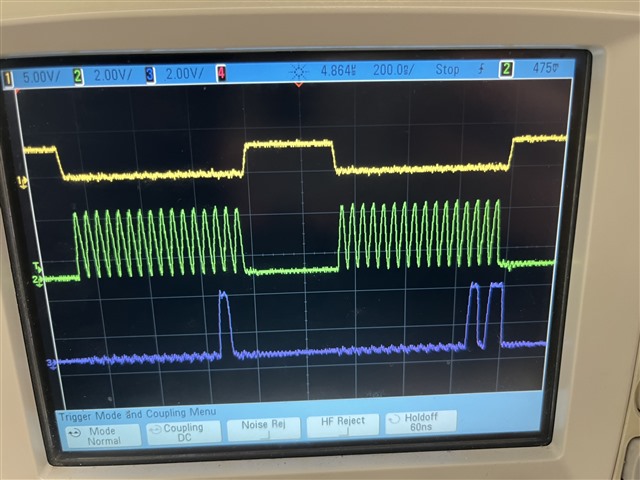
    I verified with an oscilloscope the SPI bus. As you can see in the captures below the first 6 packets are not empty. 

    The green signal is the clock and the blue one MOSI. I verified also the CS but I had a problem with the 3rd probe and could not have all three signals together (verified that it works fine).

    Does that mean the issue is in the AM273x? Is there maybe something wrong in the AM273x configuration?

    Best regards,

    Dimitra

  • Hello again,

    I managed to get all SPI bus signals in the oscilloscope. In the pictures below are shown CS(yellow), CLK(green) and MOSI(purple).

    The picture below shows one part of the first data that were received in the same run where the oscilloscope pictures have been taken.

    The problem insists. Why does that happen?

    Best regards,

    Dimitra

  • Hi Ming,

    Do you have any news regarding my issue?

    Best regards,

    Dimitra

  • Hi Dimitra,

    Can you try to change the "Frame Format" (Mode 0/1/2/3 etc.):

    Best regards,

    Ming