What is the difference between be32 and big option in Device Endianness in code composure studio?
This thread has been locked.
If you have a related question, please click the "Ask a related question" button in the top right corner. The newly created question will be automatically linked to this question.
What is the difference between be32 and big option in Device Endianness in code composure studio?
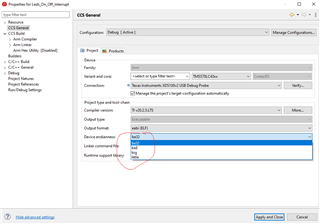
I can't seem to find it documented, so with CCS 11.2 created a project for a TMS570LC4357 using compiler ti-cgt-arm_20.2.6.LTS and tried the different options for the Device Endianness field in the CCS General project properties.
readelf -h was used to dump the header fields of the generated executables related to endianness. The results are:
| Device endianness | readelf -h output |
| be32 |
Data: 2's complement, big endian |
| be8 | Data: 2's complement, big endian Flags: 0x5800000, Version5 EABI, BE8 |
| big | Data: 2's complement, big endian Flags: 0x5800000, Version5 EABI, BE8 |
| little | Data: 2's complement, little endian Flags: 0x5000000, Version5 EABI |
Therefore, the big option in the Device Endianness in CCS appears equivalent to BE8.
See also CCS/TMS570LC4357: CCS 10 target status displays "BE8" for a TMS570LC4357, rather than "BE32" for a note about the target status shown by the CCS debugger for a TMS570LC4357.