A related question is a question created from another question. When the related question is created, it will be automatically linked to the original question.
If you have a related question, please click the "Ask a related question" button in the top right corner. The newly created question will be automatically linked to this question.
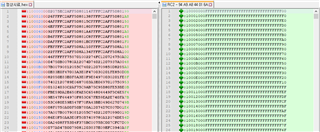
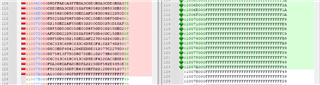
It is very difficult to pin-point a specific cause for why the BIM area may have been changed to 0xff. Can you describe the general environment and use-case of the product? This may provide us with some additional hints as to what may have caused a portion of flash to be erased.
As stated in the Developer’s Guide for Over Air Download for CC254x (Found in {SDK_INSTALL_DIR}/Documents/Over_the_Air_Download_for_CC254x.pdf) section 8.3.3 Images A and B, shown below, the BIM shouldn't be modifiable during standard OAD operation.
Some more information can be found in section 10 Producing an Image-A & Image-B, shown below, that clarifies that the BIM is only flashed once during the device's lifetime and to reflash it you would need to physical connect to the device:
During your application's execution, are you writing to flash or doing any flash writes?
Understood, can you provide a bit more information as to what was happening when the issue was discovered? Was an OAD update being performed or had been attempted prior to the issue arising? If so, then could you share the OAD image header contents of the image that was being used to update the device? I am trying to check if something could have gone wrong during the actual OAD update.
I am too experiencing rare page 0 (BIM) erased in the field when the end user tries to start OAD. The device becomes inoperable and can be put to life by reprogramming via cable only. The write protect was programmed via LP(0-7), but this did not help to mitigate the issue. I could not reproduce this issue in the lab, it happens randomly in the field. The write protect seems not be a reliable solution to this issue.
Thanks for sharing! How frequently do you see the issues? In other words, how many units are out in the field and how many have been reported to suffer from the issue you are describing?
There is a return rate of 1 to 2 %. However I cannot pin point exactly the page 0 issue since the devices are locked. When erasing and reprogramming the devices work normally. We started to deploy new devices without locking in order to verify the issue. The loop before those devices could come back is expected to be rather long (> 3 months).
Our OAD process uses always a fixed Image A, since we have an asymmetrical size of A and B. The dead devices do not start anymore.
When testing and exercising page erase-write cycles and simulating power failures we can see that sometimes page 0 gets accidentally erased. Write lock page 0 had no effect. As a measure against power failure we added 330 uF on the 3.3V supply (we use fixed 3.3V since we run from a big battery bank) and observe VCC with the ADC, allowing only page erase- write when the measured voltage is > 3V. This should buy us some time:
Voltage drop margin: 1V, write current 20mA
1V * 330 uF / 20 mA = 16.5 ms
So far we have no proven results if this lowers the field returns.
No worries for the late reply. I see, the test results you have provided seem to indicate there is possibly a HW factor that may be causing this issue. Have you submitted your design for a hardware design review at: https://www.ti.com/tool/SIMPLELINK-2-4GHZ-DESIGN-REVIEWS ?
Let me know if it provided any helpful information or not.
Kai,
My apologies to you as well for any confusion on your end. Feel free to open a new E2E thread related to the issue you are facing and we would be more than happy to support you on that thread.
Thank you for the information! I am glad the E2E thread was helpful. Does your code have any checks to verify if there is a proper image available to send via OAD before the transmission starts or does the transmission start right after the user activates OAD?
Understood. If there are checks to ensure no OAD occurs if there is no OAD image present, then I think there should be no reason for the BIM to update. However, if no checks are made, then it is possible that some unexpected behavior may happen.
No worries! I hope you had a good vacation! If no OAD occurred, then unless there are other sections of code that write to the flash, I am not sure what else could cause the BIM to change. Is it possible there are environmental factors here at play? Do we know what temperature the device is experiencing and what the physical conditions are like?