This thread has been locked.

If you have a related question, please click the "Ask a related question" button in the top right corner. The newly created question will be automatically linked to this question.

LM339A: LM339APWR 5V VCC 4.5VREF Error trigger Low Level Problem

Part Number: LM339A
Other Parts Discussed in Thread: TLV1704, TLV7044, TLV9024, TLV3404, LM339LV, LM339

Hi TI Experts

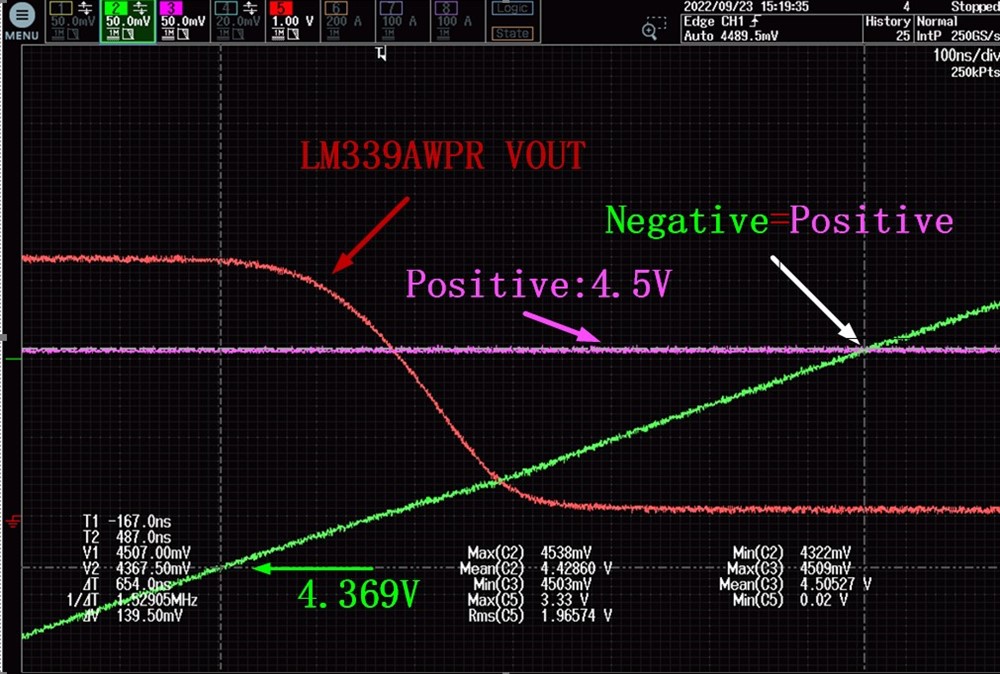
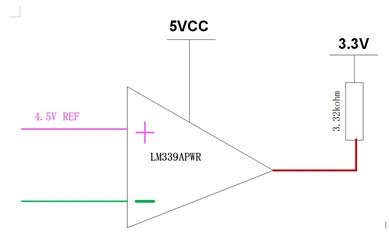
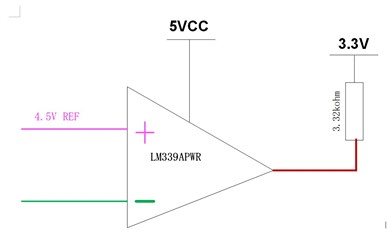
LM339APWR  VCC:5V ,Positive IN=Reference Voltage=4.5V as below shows.

When the Negative IN rise to about 4.369V then will be triggered in advance to low level  rather than the moment Negative IN =Positive IN .Please se the below figure ,and help me to make sure the problem.

THANK YOU!
  • Input voltages above 3 V violate the input voltage range (see VICR in section 7.7 of the datasheet.).

    Use a comparator with rail-to-rail inputs, such as the LM339LV, TLV7044, TLV9024, TLV1704, or TLV3404.

  • Hi  Thank you very much!

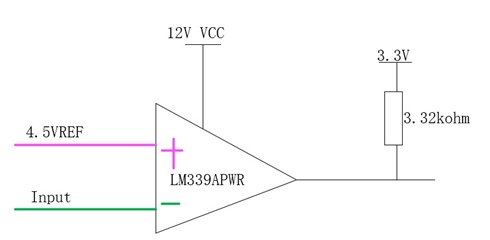
    If I change the comparator VCC  to 12V,then the same 4.5V REF in to the POSITIVE IN , then I can use the LM339AWPR?

  • Thanks, again!

    Please see the LM339 family application note, section 2.2:

     Application Design Guidelines for LM339, LM393, TL331 Family Comparators

    But beware that the TLV70x4 and TLV3404 have the "quad op-amp" pinout and cannot drop-in replace the LM339 socket.

    I second the LM339LV, or the TLV9024 if you want a little more accuracy.

  • Hi Paul Grohe

    Thank you again! Could you help me to make sure for LM339LV and TLV9024 these two sources which one is faster? I want to choose a faster comparator that VCC can be 5V or 12V, Thank  you!

  • How "fast" do you need it? How large is your input signal? Pulse width/frequency? Can you share the full circuit?

    Both are 5V devices, so they will not operate off of 12V directly. The response times of the LM and TLV will be close.

    Speed and supply voltage are generally inversely proportional due to the increasing output edge rates and slew rates (takes a lot of current to slew capacitive loads 12 Volts in nanoseconds). If you want speed (<200ns), I would recommend sticking with a 5V supply range for the most options.

  • Hi Paul Grohe

    Thank you for your great reply.

    (1)Use LM339APWR with 5V VCC,and REF voltage 4.5V that exceed the spec VICM that would be 3V,and that I  test the LM339APWR would response before the input voltage get to the 4.5V REF voltage.Is the failure of this comparator like this? That means the VICM exceed the spec 3V,that would lead to the failure response phenomenon that the comparator would response before the input voltage get to the 4.5V REF?Whether there are other faults, such as the comparator will not response to low when the input voltage get to the 4.5VREF?

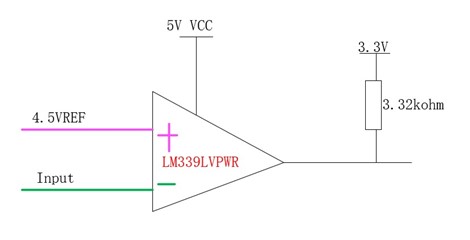
    (2) I change the comparator LM339AWPR VCC  to 12V,then the same 4.5V REF in to the POSITIVE IN , the output of LM339AWPR use 3.3V Pull up like below figures.how about the response time compared to the LM339LVPWR with 5V VCC 4.5V REF when they have the same input signal.like below figures.

    (3)If the overdrive exceed 100mV,but the overdrive voltage slew rate are diffrent, such as 200mV/us,100mV/us,50mV/us,and do the overdrive slew rate would influence the response time of LM339APWR and LM339LVPWR?

    (4)Do the ambient temperature influence the response time of LM339APWR and LM339LVPWR? Such as AM25℃ and 70℃。

  • Hi Sun,

    Thanks for the continued use of the forum. 

    1) I am not quite understanding your question but generally we can only warrantee behavior when operating within the specified limits of the datasheet such as the input common mode range. When operating outside the specified input voltage limits, performance deteriorates and will no longer meet the data sheet specifications. Critical specifications such as offset voltage, bias current and propagation delay will be adversely affected. This is explained in the app note that Paul linked. 

    2) LM339 datasheet states at a 5V supply, it has a 1.3 uS prop delay with a 5 mV overdrive. For the LM339LV, it has a 600 nS prop delay with a 5 mV overdrive at a 5V supply (fig 6-17 and 6-18). Therefore compared to the 12V supply on LM339, we would expect the LM339LV with 5V to be faster assuming you have the same overdrive. 

    3) Yes a slow moving input signal would have a slower response time compared to quickly changing input such as a step input since you are crossing the reference threshold at a much slower rate. 

    4) Yes temperature does influence the response time, as shown in fig 6-17 and 6-18 of the LM339LV datasheet. You can use a factor of 15-20% for process and temperature variation for the response time numbers.