This thread has been locked.

If you have a related question, please click the "Ask a related question" button in the top right corner. The newly created question will be automatically linked to this question.

XTR300: XTR300 output

Part Number: XTR300

Hi,


I want to use XTR300 to test and set it to the current output mode.  I set the Rset and Ros to 1K, the input is 2.027V and 1.014V. But the output is (3.207~3.232) and (-2.940~-2.950), which is not stable and not following the transfer function, I think it is strange and I want to know the reason. Thanks in advance.


Figure for the ouput, red is the voltage between a 300ohms resistor(load), blue is the input. image.png
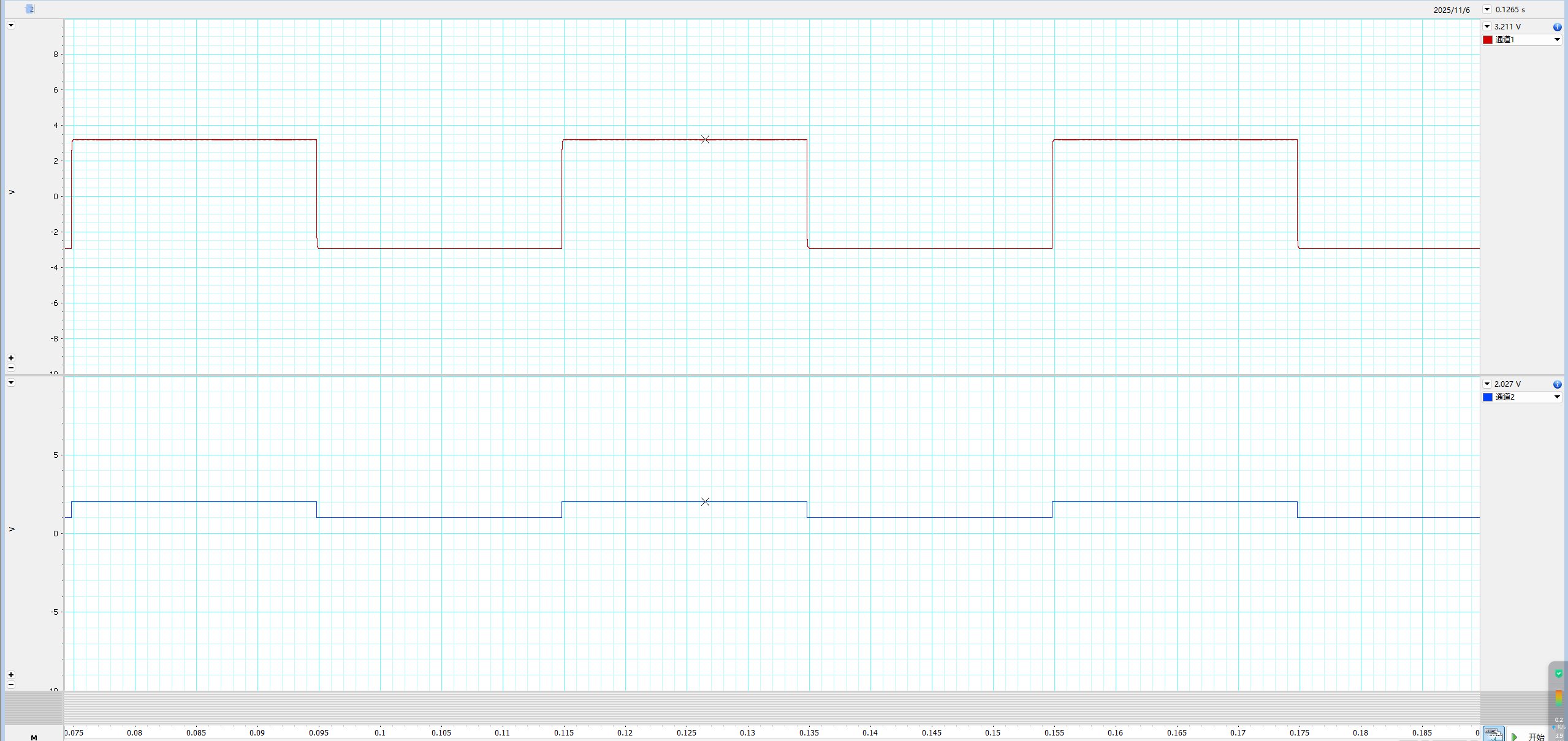
 

Best,

Sam

  • Regarding this diagram, could I connect J6 and connect the load between OUT+ and OUT-, then measure the load voltage to determine the current? This is my current approach.

  • Hi Junzhe, 

    Are you using the onboard Vref or externally supplying a Vref? And if you are not using an external Vref, is J7 shorted or open? 

    What outputs are you targeting? Are you using in bidirectional current mode or single ended output mode? 

    And yes, you can connect a load between OUT+ and OUT- and measure the load voltage to determine the current. 

    Regards,
    Ashley 

  • Hi Ashley,

    I use external Vref, the value of it is 3V. I removed J7. I want bidirectional current mode. I expected a current output of ±10mA. I've used the XTR300 before, and I think the results before is followed to the transfer function. I'm confused why this time there is an offset.

    Best,

    Sam

  • Hi Sam, 

    Are you using +/-15 V for the supply voltage? And did you verify that the Ros and Rset is 1k? What is the exact resistance of these resistors? 

    I will also verify this setup in the lab to see what output current I get on my side. 

    Thank you!
    Regards,
    Ashley

  • Hi Ashley,

    My supply is ±20V, I checked the value of Ros and Rset, I used precise resistor, their value are 1K for both. 

    I redo the test, the input is 2.011V and 1.004V, the output is (variation between 3.052 to 3.027) and  ((variation between -3.080 to -3.052) for 300ohm load.

    Best,

    Sam

  • Hi Sam, 

    Noted thanks for the information. Did you notice any of the error flag LEDs at the top light up during your testing? 

    Regards,
    Ashley

  • Hi Ashley,

    No, all LEDs are off.

    Best,

    Junzhe

  • Hello Junzhe,

    Your transfer function here will be Iout = 10*(Vin/Rset + (Vin-Vref)/Ros). 

    In your first case where Vin is 2.011V, Vref is 3V, Rset and Ros are 1k, your ideal current output will be 10*(2.011mA + -0.989mA), or 10.022mA. This through a 300Ohm resistor should give you 3.066V. Your low current should be 10*(1.004mA + -1.996mA), or -9.92mA, which would give a resulting output voltage of 2.976V 

    I redo the test, the input is 2.011V and 1.004V, the output is (variation between 3.052 to 3.027) and  ((variation between -3.080 to -3.052) for 300ohm load.

    Per your results above, this seems to align with the transfer function of the XTR300, is my understanding correct, and this is resolved?

    Best,
    Gerasimos

  • Hi Gerasimos,

    Thank you for your reply. I understand that the XTR300's transfer function accepts your calculation results. However, my results seem to have a relatively large error compared to the ideal results. Furthermore, my output is not stable and varies within a certain range. I would like to know the reasons for these two problems.

    Best,

    Junzhe

  • Junzhe,

    Are you able to precisely measure the resistance of your resistors, or provide the precision level of the resistors (0.1%, 1%, etc) This would be for Rset, Ros, and the 300 ohm resistor you are passing the current through.

    Additionally, what equipment are you using to measure the voltages? Is this a handheld DMM, or a benchtop DMM?

    What accuracy target are you expecting?

    Best,
    Gerasimos