This thread has been locked.

If you have a related question, please click the "Ask a related question" button in the top right corner. The newly created question will be automatically linked to this question.

INA200 Comparator Hysteresis

Other Parts Discussed in Thread: INA200

Regarding the INA200 and hysteresis, can the internal comparator be configured like any other stand-alone comparator? In other words, can I add hysteresis (resistor from comparator output to + terminal) or is it permanently internally set with a resistor? The data sheet lists a minimal amount of hysteresis but I may require more. I don't see any info on this in the data sheet or app note.

  • Greg,

    It is possible to increase the hysteresis of INA200 internal comparator above built in -8mV value by adding a resistor from the comparator's output to CMPin (+IN terminal) - see below.  The value of this resistor will depend on the amount of hysteresis you want to add as well as your choice of R1 and R2 resistors. 


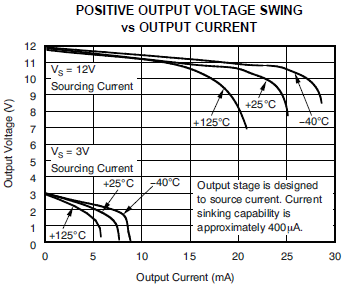
    You need to make sure that your resistor choice will not result in violation of other PDS specs; for example, even though the INA200 output stage (pin 2) can source at least 15mA current on Vs=12V, its sinking capability is limited to just 400uA (see graph below).


    Also, make sure in selecting the resistor values that you do not violate the comparator specified input voltage range, CMPin, of 0V to (V+)-1.5V - see below.

  • Greg,


    In addition to Marek's response, we could investigate using a standalone comparator to get you the hysteresis you need.  It would help us get you a good design strategy if we knew a little bit more about your application--could you share your schematic and use-case perhaps?  Any information would help; TI has 173 standalone comparators, we could certainly narrow that down to find the right one for your design.

    Also, if you would like to email me at bridgmon_jason@ti.com, we have at least one current shunt monitor with comparator on our roadmap with selectable built-in hysteresis that we could share with you.

    Thank you!

    Jason Bridgmon