This thread has been locked.

If you have a related question, please click the "Ask a related question" button in the top right corner. The newly created question will be automatically linked to this question.

TLV 3012 Input question

Supply Voltage + = +3.3 Volts

Supply Voltage - = 0 (Ground)

Utilizing the 1.24 Volts reference in my comparator application.

My customer is placing +5 Volts on the IN+ for 1.5 millisecond duration (pulse). They put the pulse on there every few minutes or so when they run a test. They've done this 50 times on several units.

The data sheet for this device specifically states that the common mode input voltage is Vs + 0.2.

The comparator was working fine with this type of input, then all of a sudden (after about the 50th time), my customer was getting a strange output on the UUT.

Question: What is the failure mechanism of this device when too much voltage is placed on the IN+ terminal in the comparator configuration?

  • Dan,

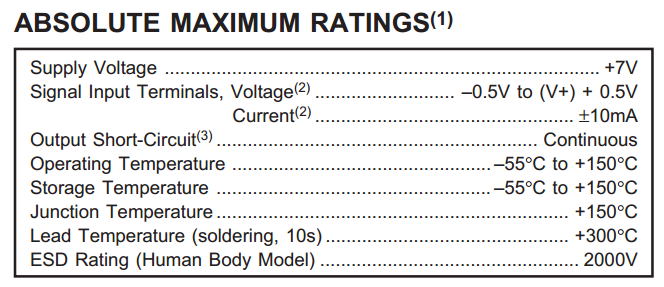
    This test has most likely damaged the internal ESD protection structures on the inputs of the comparator. The customer's test is exceeding the absolute maximum specifications for the part:

    The ESD structures can be thought of as diodes to the supply rails. Placing a resistor in series with the inputs of the comparator can limit the current which flows into the inputs of the part when the ESD diode has been forward biased, potentially preventing damage.  

  • John,

    If the comparator is damaged (meaning that it has been stressed beyond its limits), will the comparator output a 0 or a 3.3 volts if I continue to apply supply voltage of 3.3 volts?


  • It would depend on how that particular comparator has been damaged, which can be extremely variable from unit-to-unit even under the same conditions.