Other Parts Discussed in Thread: TLC2272
Dear all,
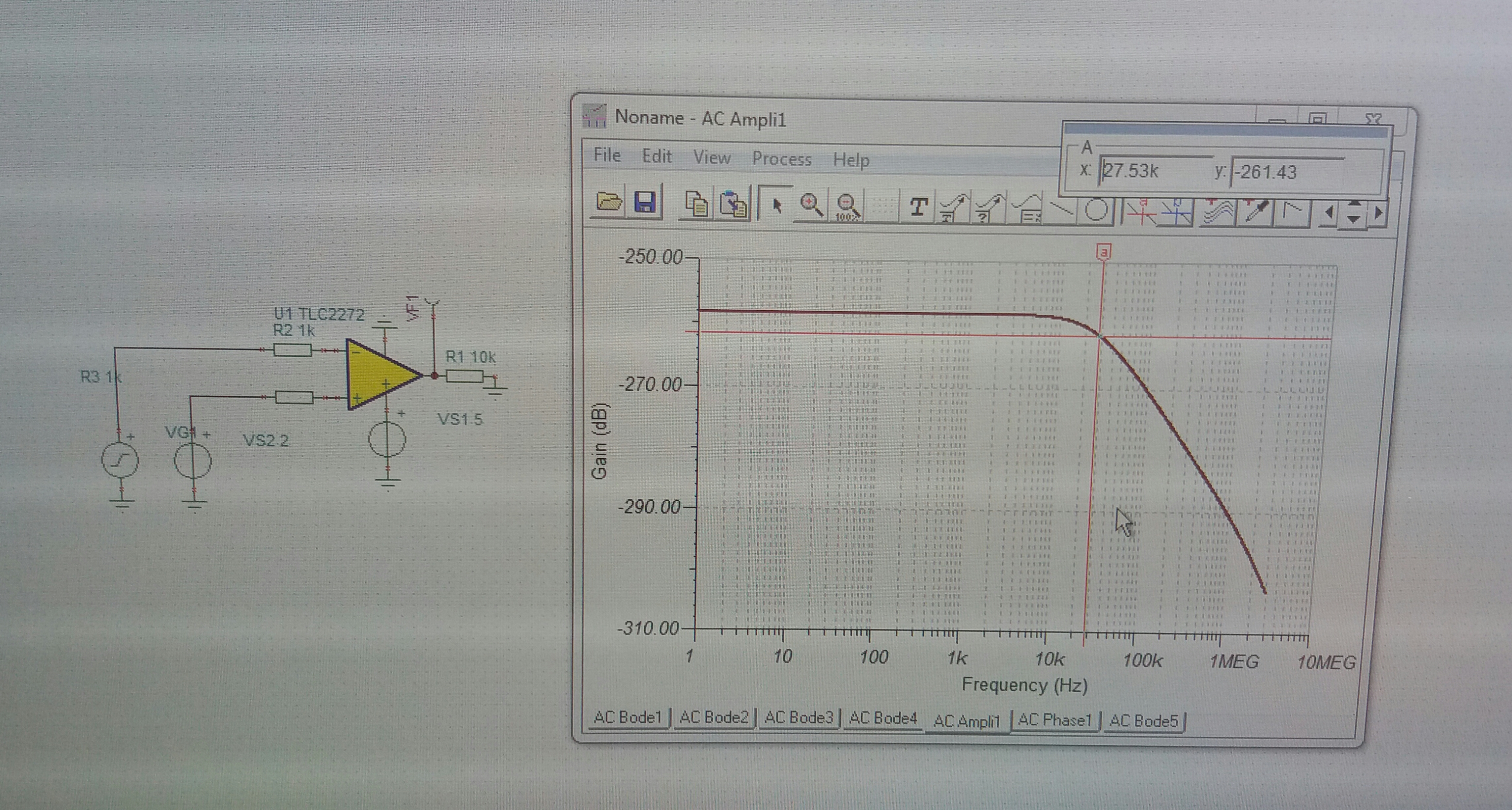
I'trying to model the frequency behavior of TLC2272 as a first order LPF. Would it be all right to consider the cut-of frequency 10KHz and Aol=35e3?
This thread has been locked.
If you have a related question, please click the "Ask a related question" button in the top right corner. The newly created question will be automatically linked to this question.
Other Parts Discussed in Thread: TLC2272
Dear all,
I'trying to model the frequency behavior of TLC2272 as a first order LPF. Would it be all right to consider the cut-of frequency 10KHz and Aol=35e3?
Hi Mircea,
I think you'll find the answers to many of your questions in the TI Precision Labs Videos on bandwidth, slew-rate, and stability. The bandwidth videos provide an in-depth explanation on op amp open-loop gain (Aol) including how to calculate the dominant pole from the DC Aol value and the UGBW.
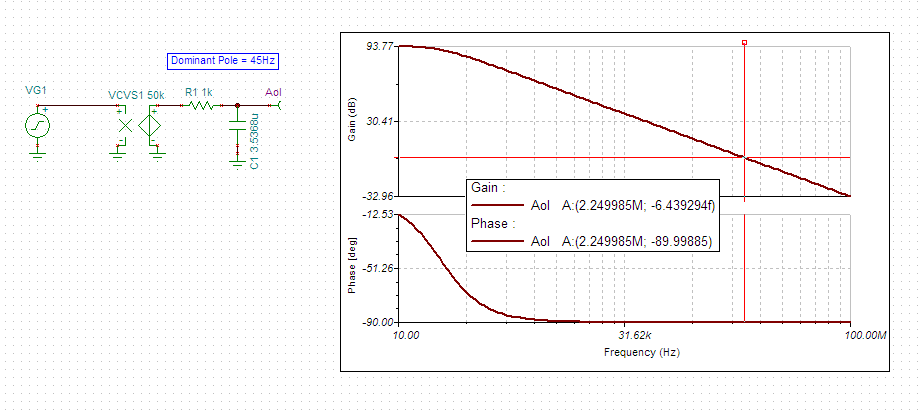
For the TLC2272 the DC Aol is between 35V/mV (90.88dB) and 50V/mV (93.98dB). The GBWP is 2.25MHz for the 50V/mV DC Aol so the dominant pole can be calculated as shown below:
Dominant Pole = UGBW / Aol = 2.25MHz / 50000 = 45Hz.
Hello,
This is not a valid circuit to test the open-loop gain of an op amp. Without feedback the output will saturate into one rail or the other which will collapse the open-loop gain. Please go through the TI Precision Labs videos on op amp bandwidth and stability to understand more about op amp open-loop gain and how to simulate it.