


Part Number: DP83867CS
Other Parts Discussed in Thread: DP83869
Hello, I am designing an embedded PoE switch and have selected DP83867CSRGZR for two ports which require 1GBase-T. I have two of the PHYs on the board, and two questions.
- For one of the links, I want to use Mirror Mode for routing purposes. In the datasheet, it notes that in Mirror Mode, the polarity of the signals is reversed. In my layout, the receiver PHY has the PN signals swapped relative to the DP83867.
In this case, Would the DP83867 support auto-polarity correction for the lanes? So in Mirror mode I will swap the pair orientation, but potentially keep the polarities the same?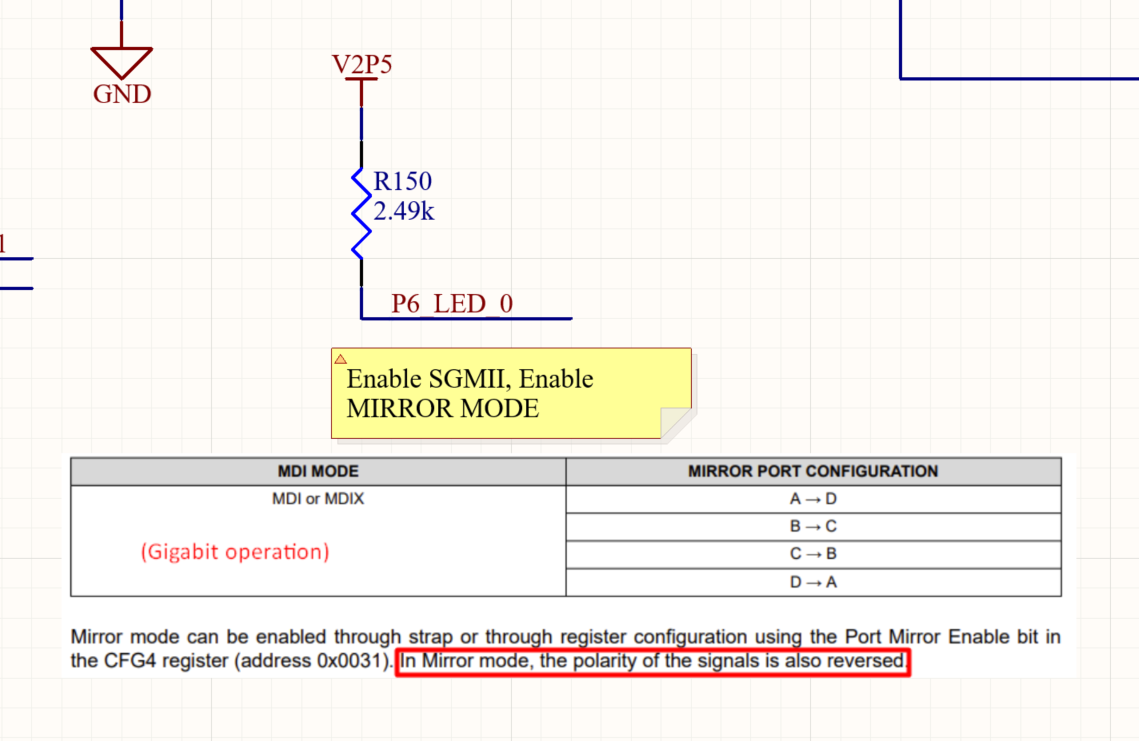
- I have seen a few forum posts related to this but I was wondering if there has been any updated testing or new guidance from TI. One of the ethernet links on my board necessitates having a PHY-to-PHY connection on the PCB traces (a few inch). I am wondering now about whether 1x 1:1 transformer is possible for this application, or whether you need two back-to-back, to simulate the cabled connection exactly. This is the current schematic:
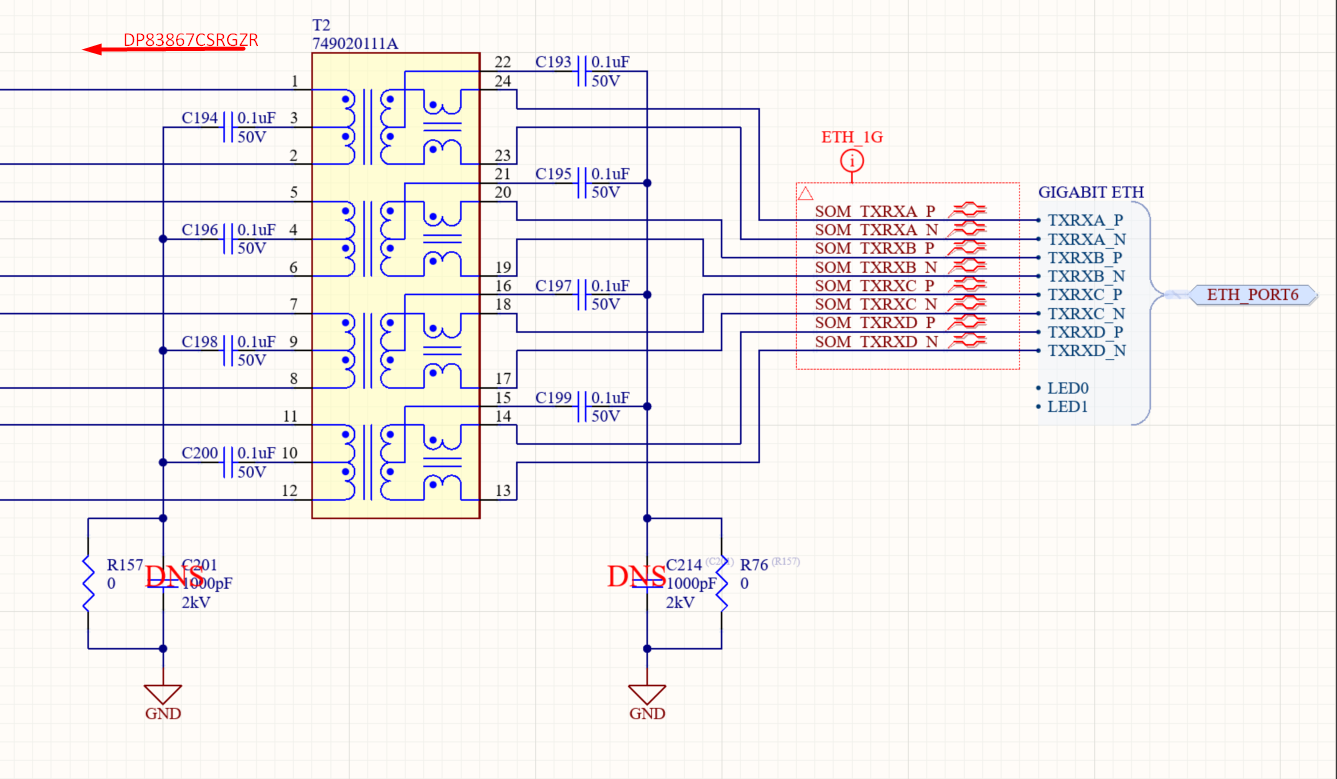
This thread states that this method should be ok, but I just wanted to see if there was any updated stance on this https://e2e.ti.com/support/interface-group/interface/f/interface-forum/956195/dp83867ir-connect-2-phy-togeter-on-the-same-pcb
One difference to the above is that my application will use a different PHY on the other end, instead of 2x DP83867 devices. It is a SOM with a built in Qualcomm AR8031-AL1A, which I cannot change at this time. Do you see any issues with using this connection scheme?
Thank you
