This thread has been locked.

If you have a related question, please click the "Ask a related question" button in the top right corner. The newly created question will be automatically linked to this question.

Tiva Cable Diagnostics

Other Parts Discussed in Thread: TM4C129ENCPDT, EK-TM4C1294XL, TM4C1294NCPDT, CCSTUDIO, SYSBIOS

Attempting to implement the Cable Diagnostic features of the Tiva PHY, MR30 - p. 1768 from datasheet 12/12/13, and it is obvious that the tests have timing conditions not explained in the datasheet.  The results are inconsistent.

Does anyone know where the proper use of this feature is documented?

  • Michael Klos said:
    The results are inconsistent.

     Which TIVA 129? 123 has no PHY

     Which PHY ETH or USB

     No link to datasheet you mention...

     No link to magic Sphere needed to evaluate your question too ;)

  • Michael Klos said:
    and it is obvious

    Always beware when the boss - or G'ovt - or poster proclaims, "It is obvious..." 

  • It is the Ethernet PHY - the USB does not have a 'Cable Diagnostic' feature.  Obvious.

    Since it is the Ethernet PHY, it is Obvious that it is the TM4C129x.

    The datasheet is TM4C129ENCPDT Datasheet.pdf.

    As for the timing.  Set the START bit, wait for the DONE bit, as fast as possible and it does not work correctly.  I added delays, that worked better, but not reliably.

  • Michael Klos said:
    Since it is the Ethernet PHY, it is Obvious that it is the TM4C129x.

    Perhaps not - some here have clients who seek Cortex M0, M3 thus any "in depth" familiarity w/a specific (and new) vendor model is not insured to be, "obvious."  (And - does not the overuse of such term usually link to arrogance - seems to ring, "dismissive" or at minimum, "unfriendly!")

    Your inclusion/identification of the device in question would have proven superior... 

  •  Internal <Or> External PHY??

     It is ovious clearly obvious too..

     USB has no cable diagnostic? Why not?

     So 50 devices it is still obvious that this one you selected and is obvious you are speaking about internal Ethernet phy...

     Please it is obvious you can, so  show us some lottery result of tomorrow we can enrich a lot? :D

  • Internal or external - if it were external I would be asking this of the PHY manufacturer, not TI.  And, if external, then I would not have referred to the page in the datasheet.

    USB has no Cable Diagnostic, why? - Ask TI, not me.

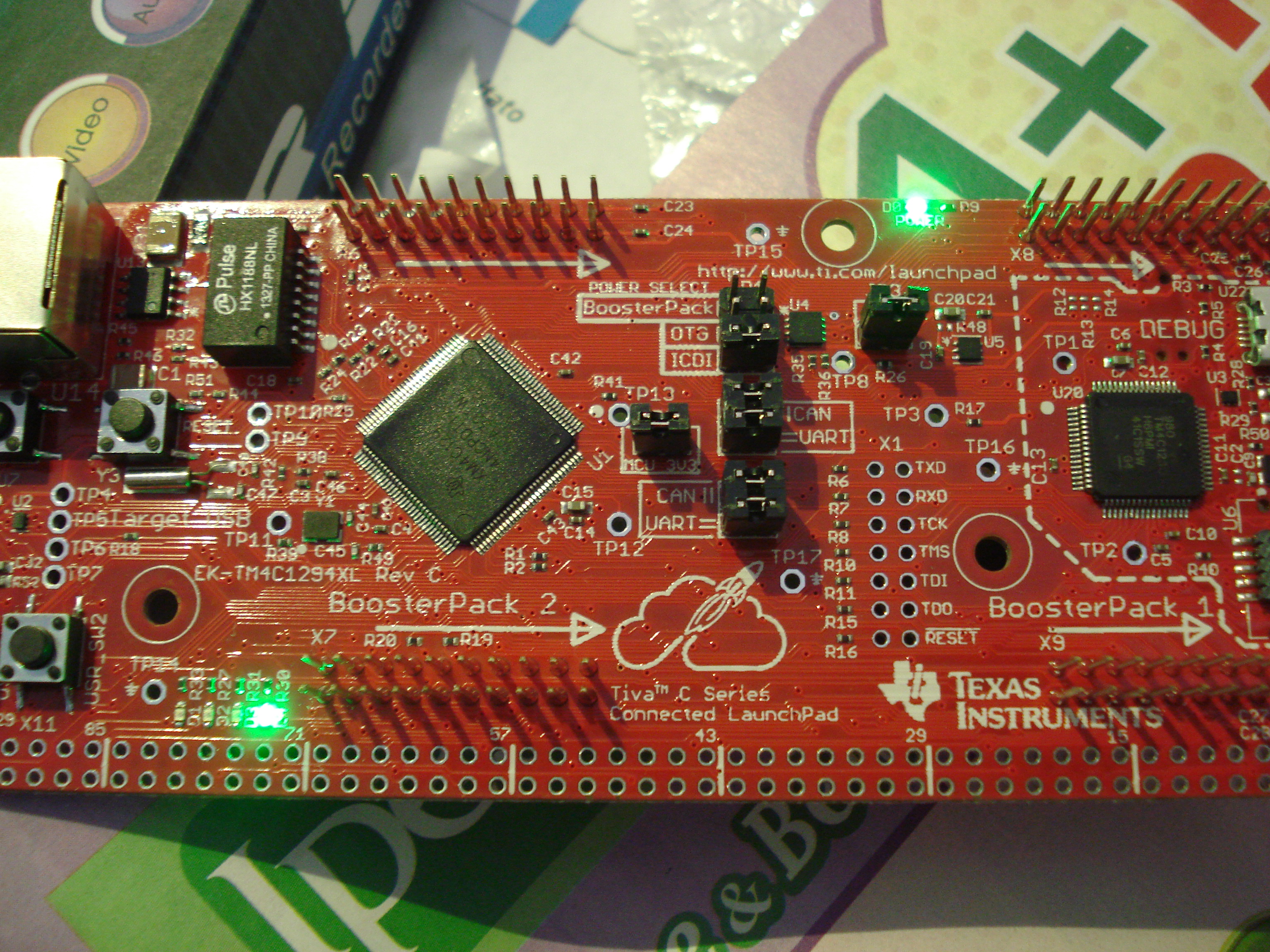
    Using the TI Tiva Launch Pad, EK-TM4C1294XL

    You're not helping.  

    If you're not familiar with the TI parts, please do not respond.

  • Michael Klos said:
    If you're not familiar with the TI parts, please do not respond

    If you had made the simple effort to "list" your part - rather than make us guess - I clearly would have had no need to respond!

  • Michael Klos said:
    if it were external I would be asking this of the PHY manufacturer, not TI.

     TI also manufacture external PHY of both ETH and USB, a lot of TIVA 129 series support external PHY of ETH and USB too... Also external PHY has cable diagnostic. Internal PHY has also precision timing so scream away other than not provide what is necessary to answer your OBVIOUSLY what is in your mind only.

     I don't know what is in your mind nor upon your desk and is of no importance to us, if you wish some help provide information!!!

    Michael Klos said:
    USB has no Cable Diagnostic, why? - Ask TI, not me.

     I don't do a so silly question, I know USB PHY is working so....

     USB has cable diagnostic too on both internal and external PHY, otherwise you cannot establish communication nor determine speed of connection, this is now of no importance you finally provided the information.


    Michael Klos said:
    Using the TI Tiva Launch Pad, EK-TM4C1294XL

     This MUST be on first request, so please read this you can forever see on top of this forum:

    http://e2e.ti.com/support/microcontrollers/tiva_arm/f/908/t/259930.aspx

     Are you following these rules or you forced us to ask what are you doing? Be honest please!

    Michael Klos said:
    You're not helping.

     Did you followed rule of sticky post and answered kindly to someone is in try to interpret your question? Again try be honest please! You are not helping us understand your problem!

    So if you insist on we simply don't care of, did you grasp this?

    Michael Klos said:
    If you're not familiar with the TI parts, please do not respond.

     If you are not able to treat people sharing time and knowledge please don't be so primitive otherwise you just receive a kick off like other got in the past.

     We are here to help and try to learn something can help us to improve knowledge and also avoid trouble from others experience.

     I designed my board, I got a look at all series of processors, I am using TI MSP from year 2000, C2000 OMAP and early Stellaris, I don't know TIVA thoroughly none can know in detail than designers, it is a pretty new device with over a thousand pages of manual.

     Please be more quiet and try to follow rule of good behaving here. I just responded to see if trouble can come from precision timing affecting cable length. I am no more using when I decided twin can bus can solve group delays measurements and TIVA 129 was not available too.

     Thank for understanding!

  • OK, my I was wrong, I assumed too much of the people here.

    0. If I were using an external PHY, Ethernet or USB, I would not be asking this question on the ARM forum.  The processor would not matter.

    1. I began with a problem with Cable Diagnostics.  I did not specify the family - I assumed that anyone answering would be knowledgeable about the function and so would know the function only applies to the Ethernet PHY since there is no such function for the USB.

    2. I did give a Datasheet reference - I should have given the full reference.  Again, my error, I'm sorry.  But I did provide a page number.  That too should have made it clear that I was looking at the internal PHY.

    3. And again, I assume the Ethernet MAC and PHY are identical on all of the TM4C129 series.  If you're telling me they differ then my error again.  

    I have learned.  I need to be extremely specific and provide lots of details.  I'm sorry I confused people.

  • @ Michael,

    No one here wants nor seeks any apology.  Some of us have been here dating to original firm LMI (since acquired by current vendor) - we believe this to be the best tech forum of its class - seek to preserve its form/function.

    You're clearly a smart/experienced guy.  (who else would note TDR or BER etc?)  

    I've successfully answered 100's of LMI/TI MCU questions - I truly know this vendor's (and predecessor's) parts.  But not all of them - and in that your statement was both inaccurate & unkind.

    My firm serves both medical & defense clients - it's (quite properly) said that the missile will "launch" only when the stack of specs/paperwork/clearances exceed the height of the missile!  I can assure you (and you likely know) that the missile ID and/or medical device ID is bold/front-center/and appears page 1!  And - so too should appear the MCU in question here - and it is unfair to suggest otherwise.

    Welcome here - wish I could help but we cannot know "all" parts - from (currently) five ARM MCU vendors.  But I do know (almost photographically) many/most here - perhaps one day in the future our choice of parts will overlap...

  •  Hi Michael, if you wish to get help we appreciate your Apologizes but again there where of no much help so if you need an answer provide full detail and how to reproduce issue.

     Your board is based on TM4C1294NCPDT (formerly XM) so I don't own your same data sheet version, the ENCDPT you mentioned on link is the new one revised march 28 2014 the same is for NCP. Internal revision date is April 22 2014 for both, so i fear TI forgot update external revision date.

    I own an old NDA data sheet dated October 2013 and on page you mentioned there is the USB PHY speed negotiation and cable end detection.

     On this new versions page you mentioned:

     - 129ENC eterphy register

     - 1294NCP Register 3: QEI Position (QEIPOS), offset 0x008

     So you mentioned ENCPT MR30

     - found at page 1773 on ENCP,

     - 1294 version owned by yr board 1294NCP @page 1649...

     At this point register internal PHY and structure are the same but still if you need help please allow us a try:

     How to setup your test bench:

    -  Ok set start bit and wait for done, I found no timing table on both data sheet

    - how is connected cable

    - what are you expecting from

    - what you get from

     - Why do you think is wrong?

     To diagnose a similar question a lot of work is necessary with a logic analyzer scope and protocol analyzer too, I don't have the time nor instrument there to inspect. I reach my lab site on next week but again no time till July.

     These day still both devices are not in production too after October 2013 announcement. I just own few samples from EBV, this time none has sample in stock and my board is ready to manufacture. I got request from possible customer, I bought two launchpad and one DK-LM129 to complete FPGA prototype before to design an ultra fine pitch expensive PCB and still we don't know release date.

      A lot of trouble setting up the compiler, now I am evaluating software example of network and I see someone got a crazy HTTP server on interrupt example.. Why not using classical unix like as from Dunkel code? This leave code very difficult to understand , to use as start point for an application and is impossible to add UDP or telnet....

     Your question need someone at TI address it but you must collaborate.

  • I'm sorry I've been a fool.  No excuses, just my apologies.  Now I will move on.

    Hardware: EK-TM4C1294XL - without modification

    Documentation: DS-TM4C129ENCPDT-15802.2729 SPMS394B April 22, 2014 NDA Version of the Datasheet

    Development Software: Code Composer Studio 6.0.0.00190, TivaWare 2.1.0.12573

    Ethernet PHY Cable Diagnostics - p. 1594, 1778 

    PHY Register MR30

    There are timing characteristics that I cannot find documented.  Documentation on what exactly it is doing would also be appreciated.

    Set the START bit, wait to see it set in the register.

    Wait for DONE bit, read register, decode results.

    Results inconsistent.  If I wait some time, and reread the register, the result may have changed.

    I've run this with good cables and with bad (shorted pair).  I've run it connected to another device and not connected.

    Does anyone have better documentation for this function?  For the timing issues?  For what it is actually doing?

    The manual also makes references to TDR functionality.  However, it only provides a couple of bits in registers with little explanation.  Does anyone know what this functionality does and how to use it?

  • Michael Klos said:

    0. If I were using an external PHY, Ethernet or USB, I would not be asking this question on the ARM forum.  The processor would not matter.

     Not true... Some has internal and external PHY interface, here I opt you don't know family in depth.

     You see the C series family but TIVA 129 has some obscure E series none know no more than few word and NDA. Support for these series are on compiler and full header are present from middle of last summer.

    Michael Klos said:
    I assumed too much of the people here.

     Wrong you posted too less information to give you help. Be guilty of, just we don't know what is in your mind, learn communicate full description otherwise data is like garbage.

     Latest post is really good, if you remain here you can see many post incomplete question like "it doesn't work".

  • Please, I am very familiar with the Product line. 

    If I were referring to an external PHY I would not be asking the question here. I would with the PHY manufacture. 

    If using an external PHY, referring to MR30 and the Tiva datasheet would be irrelevant. 

    Cable Diagnostics are not part of the IEEE standard and so  each manufacturer does their own implementation, if at all.

    i agree, I could have given more specific information, but if you really knew the parts you would have understood The question.  

  • Thank you. Obviously we need to be working from the same datasheet To make page references useful.  

    The testbed is really not necessary. The cable connection is to the standard RJ45. Nothing special. 

    You asked why I think it is not working properly - I believe there is a problem because if I run it many times it produces inconsistent answers. I tried it with known good cables and with known bad. I tried it with the cable connected to a known good Ethernet port and not connected. I run it many times in each configuration and get inconsistent results. 

    What is needed is for TI to provide an explanation of this function does And how they expect it to be used. 

  • Michael Klos said:

    You asked why I think it is not working properly - I believe there is a problem because if I run it many times it produces inconsistent answers. I tried it with known good cables and with known bad. I tried it with the cable connected to a known good Ethernet port and not connected. I run it many times in each configuration and get inconsistent results.

     Michael, I am quite new to this series and learning curve is far from knowing it in deep, Stellaris ETH was bugged but this is still experimental and not error free, I got some rumor it can start sell at end of 2Q, examples are far from user friendly and tools still are buggy.

     I was searching for a ready to run UDP sender/receiver and I found nothing usable, the one simple to understand was so buggy but I found this can be also the same cure to your vanishing register trouble too:

     http://e2e.ti.com/support/microcontrollers/tiva_arm/f/908/p/331006/1161463.aspx#1161463

     ETH register at my side seems stable after patching code accessing register...

     What do you think about this error message?

    Can't find a source file at "C:/DriverLib/build/DriverLib.test/driverlib/sysctl.c"
    Locate the file or edit the source lookup path to include its location.

    I am running CCstudio on Linux and C:/ has no sense...

  • Your link is interesting but I do not think that it applies.

    Here are the sysctrl.c and sysctrl.h from TivaWare 2.1.0.12573

    I simply went to the OS directory and searched it directly.

    //*****************************************************************************
    //
    // sysctl.h - Prototypes for the system control driver.
    //
    // Copyright (c) 2005-2014 Texas Instruments Incorporated. All rights reserved.
    // Software License Agreement
    //
    // Redistribution and use in source and binary forms, with or without
    // modification, are permitted provided that the following conditions
    // are met:
    //
    // Redistributions of source code must retain the above copyright
    // notice, this list of conditions and the following disclaimer.
    //
    // Redistributions in binary form must reproduce the above copyright
    // notice, this list of conditions and the following disclaimer in the
    // documentation and/or other materials provided with the
    // distribution.
    //
    // Neither the name of Texas Instruments Incorporated nor the names of
    // its contributors may be used to endorse or promote products derived
    // from this software without specific prior written permission.
    //
    // THIS SOFTWARE IS PROVIDED BY THE COPYRIGHT HOLDERS AND CONTRIBUTORS
    // "AS IS" AND ANY EXPRESS OR IMPLIED WARRANTIES, INCLUDING, BUT NOT
    // LIMITED TO, THE IMPLIED WARRANTIES OF MERCHANTABILITY AND FITNESS FOR
    // A PARTICULAR PURPOSE ARE DISCLAIMED. IN NO EVENT SHALL THE COPYRIGHT
    // OWNER OR CONTRIBUTORS BE LIABLE FOR ANY DIRECT, INDIRECT, INCIDENTAL,
    // SPECIAL, EXEMPLARY, OR CONSEQUENTIAL DAMAGES (INCLUDING, BUT NOT
    // LIMITED TO, PROCUREMENT OF SUBSTITUTE GOODS OR SERVICES; LOSS OF USE,
    // DATA, OR PROFITS; OR BUSINESS INTERRUPTION) HOWEVER CAUSED AND ON ANY
    // THEORY OF LIABILITY, WHETHER IN CONTRACT, STRICT LIABILITY, OR TORT
    // (INCLUDING NEGLIGENCE OR OTHERWISE) ARISING IN ANY WAY OUT OF THE USE
    // OF THIS SOFTWARE, EVEN IF ADVISED OF THE POSSIBILITY OF SUCH DAMAGE.
    //
    // This is part of revision 2.1.0.12573 of the Tiva Peripheral Driver Library.
    //
    //*****************************************************************************

    #ifndef __DRIVERLIB_SYSCTL_H__
    #define __DRIVERLIB_SYSCTL_H__

    //*****************************************************************************
    //
    // If building with a C++ compiler, make all of the definitions in this header
    // have a C binding.
    //
    //*****************************************************************************
    #ifdef __cplusplus
    extern "C"
    {
    #endif

    //*****************************************************************************
    //
    // The following are values that can be passed to the
    // SysCtlPeripheralPresent(), SysCtlPeripheralEnable(),
    // SysCtlPeripheralDisable(), and SysCtlPeripheralReset() APIs as the
    // ui32Peripheral parameter. The peripherals in the fourth group (upper nibble
    // is 3) can only be used with the SysCtlPeripheralPresent() API.
    //
    //*****************************************************************************
    #define SYSCTL_PERIPH_ADC0 0xf0003800 // ADC 0
    #define SYSCTL_PERIPH_ADC1 0xf0003801 // ADC 1
    #define SYSCTL_PERIPH_CAN0 0xf0003400 // CAN 0
    #define SYSCTL_PERIPH_CAN1 0xf0003401 // CAN 1
    #define SYSCTL_PERIPH_COMP0 0xf0003c00 // Analog Comparator Module 0
    #define SYSCTL_PERIPH_EMAC0 0xf0009c00 // Ethernet MAC0
    #define SYSCTL_PERIPH_EPHY0 0xf0003000 // Ethernet PHY0
    #define SYSCTL_PERIPH_EPI0 0xf0001000 // EPI0
    #define SYSCTL_PERIPH_GPIOA 0xf0000800 // GPIO A
    #define SYSCTL_PERIPH_GPIOB 0xf0000801 // GPIO B
    #define SYSCTL_PERIPH_GPIOC 0xf0000802 // GPIO C
    #define SYSCTL_PERIPH_GPIOD 0xf0000803 // GPIO D
    #define SYSCTL_PERIPH_GPIOE 0xf0000804 // GPIO E
    #define SYSCTL_PERIPH_GPIOF 0xf0000805 // GPIO F
    #define SYSCTL_PERIPH_GPIOG 0xf0000806 // GPIO G
    #define SYSCTL_PERIPH_GPIOH 0xf0000807 // GPIO H
    #define SYSCTL_PERIPH_GPIOJ 0xf0000808 // GPIO J
    #define SYSCTL_PERIPH_HIBERNATE 0xf0001400 // Hibernation module
    #define SYSCTL_PERIPH_CCM0 0xf0007400 // CCM 0
    #define SYSCTL_PERIPH_EEPROM0 0xf0005800 // EEPROM 0
    #define SYSCTL_PERIPH_FAN0 0xf0005400 // FAN 0
    #define SYSCTL_PERIPH_FAN1 0xf0005401 // FAN 1
    #define SYSCTL_PERIPH_GPIOK 0xf0000809 // GPIO K
    #define SYSCTL_PERIPH_GPIOL 0xf000080a // GPIO L
    #define SYSCTL_PERIPH_GPIOM 0xf000080b // GPIO M
    #define SYSCTL_PERIPH_GPION 0xf000080c // GPIO N
    #define SYSCTL_PERIPH_GPIOP 0xf000080d // GPIO P
    #define SYSCTL_PERIPH_GPIOQ 0xf000080e // GPIO Q
    #define SYSCTL_PERIPH_GPIOR 0xf000080f // GPIO R
    #define SYSCTL_PERIPH_GPIOS 0xf0000810 // GPIO S
    #define SYSCTL_PERIPH_GPIOT 0xf0000811 // GPIO T
    #define SYSCTL_PERIPH_I2C0 0xf0002000 // I2C 0
    #define SYSCTL_PERIPH_I2C1 0xf0002001 // I2C 1
    #define SYSCTL_PERIPH_I2C2 0xf0002002 // I2C 2
    #define SYSCTL_PERIPH_I2C3 0xf0002003 // I2C 3
    #define SYSCTL_PERIPH_I2C4 0xf0002004 // I2C 4
    #define SYSCTL_PERIPH_I2C5 0xf0002005 // I2C 5
    #define SYSCTL_PERIPH_I2C6 0xf0002006 // I2C 6
    #define SYSCTL_PERIPH_I2C7 0xf0002007 // I2C 7
    #define SYSCTL_PERIPH_I2C8 0xf0002008 // I2C 8
    #define SYSCTL_PERIPH_I2C9 0xf0002009 // I2C 9
    #define SYSCTL_PERIPH_LCD0 0xf0009000 // LCD 0
    #define SYSCTL_PERIPH_ONEWIRE0 0xf0009800 // One Wire 0
    #define SYSCTL_PERIPH_PWM0 0xf0004000 // PWM 0
    #define SYSCTL_PERIPH_PWM1 0xf0004001 // PWM 1
    #define SYSCTL_PERIPH_QEI0 0xf0004400 // QEI 0
    #define SYSCTL_PERIPH_QEI1 0xf0004401 // QEI 1
    #define SYSCTL_PERIPH_SSI0 0xf0001c00 // SSI 0
    #define SYSCTL_PERIPH_SSI1 0xf0001c01 // SSI 1
    #define SYSCTL_PERIPH_SSI2 0xf0001c02 // SSI 2
    #define SYSCTL_PERIPH_SSI3 0xf0001c03 // SSI 3
    #define SYSCTL_PERIPH_TIMER0 0xf0000400 // Timer 0
    #define SYSCTL_PERIPH_TIMER1 0xf0000401 // Timer 1
    #define SYSCTL_PERIPH_TIMER2 0xf0000402 // Timer 2
    #define SYSCTL_PERIPH_TIMER3 0xf0000403 // Timer 3
    #define SYSCTL_PERIPH_TIMER4 0xf0000404 // Timer 4
    #define SYSCTL_PERIPH_TIMER5 0xf0000405 // Timer 5
    #define SYSCTL_PERIPH_TIMER6 0xf0000406 // Timer 6
    #define SYSCTL_PERIPH_TIMER7 0xf0000407 // Timer 7
    #define SYSCTL_PERIPH_UART0 0xf0001800 // UART 0
    #define SYSCTL_PERIPH_UART1 0xf0001801 // UART 1
    #define SYSCTL_PERIPH_UART2 0xf0001802 // UART 2
    #define SYSCTL_PERIPH_UART3 0xf0001803 // UART 3
    #define SYSCTL_PERIPH_UART4 0xf0001804 // UART 4
    #define SYSCTL_PERIPH_UART5 0xf0001805 // UART 5
    #define SYSCTL_PERIPH_UART6 0xf0001806 // UART 6
    #define SYSCTL_PERIPH_UART7 0xf0001807 // UART 7
    #define SYSCTL_PERIPH_UDMA 0xf0000c00 // uDMA
    #define SYSCTL_PERIPH_USB0 0xf0002800 // USB 0
    #define SYSCTL_PERIPH_WDOG0 0xf0000000 // Watchdog 0
    #define SYSCTL_PERIPH_WDOG1 0xf0000001 // Watchdog 1
    #define SYSCTL_PERIPH_WTIMER0 0xf0005c00 // Wide Timer 0
    #define SYSCTL_PERIPH_WTIMER1 0xf0005c01 // Wide Timer 1
    #define SYSCTL_PERIPH_WTIMER2 0xf0005c02 // Wide Timer 2
    #define SYSCTL_PERIPH_WTIMER3 0xf0005c03 // Wide Timer 3
    #define SYSCTL_PERIPH_WTIMER4 0xf0005c04 // Wide Timer 4
    #define SYSCTL_PERIPH_WTIMER5 0xf0005c05 // Wide Timer 5

    //*****************************************************************************
    //
    // The following are values that can be passed to the SysCtlLDOSleepSet() and
    // SysCtlLDODeepSleepSet() APIs as the ui32Voltage value, or returned by the
    // SysCtlLDOSleepGet() and SysCtlLDODeepSleepGet() APIs.
    //
    //*****************************************************************************
    #define SYSCTL_LDO_0_90V 0x80000012 // LDO output of 0.90V
    #define SYSCTL_LDO_0_95V 0x80000013 // LDO output of 0.95V
    #define SYSCTL_LDO_1_00V 0x80000014 // LDO output of 1.00V
    #define SYSCTL_LDO_1_05V 0x80000015 // LDO output of 1.05V
    #define SYSCTL_LDO_1_10V 0x80000016 // LDO output of 1.10V
    #define SYSCTL_LDO_1_15V 0x80000017 // LDO output of 1.15V
    #define SYSCTL_LDO_1_20V 0x80000018 // LDO output of 1.20V

    //*****************************************************************************
    //
    // The following are values that can be passed to the SysCtlIntEnable(),
    // SysCtlIntDisable(), and SysCtlIntClear() APIs, or returned in the bit mask
    // by the SysCtlIntStatus() API.
    //
    //*****************************************************************************
    #define SYSCTL_INT_BOR0 0x00000800 // VDD under BOR0
    #define SYSCTL_INT_VDDA_OK 0x00000400 // VDDA Power OK
    #define SYSCTL_INT_MOSC_PUP 0x00000100 // MOSC power-up interrupt
    #define SYSCTL_INT_USBPLL_LOCK 0x00000080 // USB PLL lock interrupt
    #define SYSCTL_INT_PLL_LOCK 0x00000040 // PLL lock interrupt
    #define SYSCTL_INT_MOSC_FAIL 0x00000008 // Main oscillator failure int
    #define SYSCTL_INT_BOR1 0x00000002 // VDD under BOR1
    #define SYSCTL_INT_BOR 0x00000002 // Brown out interrupt

    //*****************************************************************************
    //
    // The following are values that can be passed to the SysCtlResetCauseClear()
    // API or returned by the SysCtlResetCauseGet() API.
    //
    //*****************************************************************************
    #define SYSCTL_CAUSE_HSRVREQ 0x00001000 // Hardware System Service Request
    #define SYSCTL_CAUSE_HIB 0x00000040 // Hibernate reset
    #define SYSCTL_CAUSE_WDOG1 0x00000020 // Watchdog 1 reset
    #define SYSCTL_CAUSE_SW 0x00000010 // Software reset
    #define SYSCTL_CAUSE_WDOG0 0x00000008 // Watchdog 0 reset
    #ifndef DEPRECATED
    #define SYSCTL_CAUSE_WDOG SYSCTL_CAUSE_WDOG0
    // Watchdog reset(Deprecated)
    #endif
    #define SYSCTL_CAUSE_BOR 0x00000004 // Brown-out reset
    #define SYSCTL_CAUSE_POR 0x00000002 // Power on reset
    #define SYSCTL_CAUSE_EXT 0x00000001 // External reset

    //*****************************************************************************
    //
    // The following are values that can be passed to the SysCtlBrownOutConfigSet()
    // API as the ui32Config parameter.
    //
    //*****************************************************************************
    #define SYSCTL_BOR_RESET 0x00000002 // Reset instead of interrupting
    #define SYSCTL_BOR_RESAMPLE 0x00000001 // Resample BOR before asserting

    //*****************************************************************************
    //
    // The following are values that can be passed to the SysCtlPWMClockSet() API
    // as the ui32Config parameter, and can be returned by the SysCtlPWMClockGet()
    // API.
    //
    //*****************************************************************************
    #define SYSCTL_PWMDIV_1 0x00000000 // PWM clock is processor clock /1
    #define SYSCTL_PWMDIV_2 0x00100000 // PWM clock is processor clock /2
    #define SYSCTL_PWMDIV_4 0x00120000 // PWM clock is processor clock /4
    #define SYSCTL_PWMDIV_8 0x00140000 // PWM clock is processor clock /8
    #define SYSCTL_PWMDIV_16 0x00160000 // PWM clock is processor clock /16
    #define SYSCTL_PWMDIV_32 0x00180000 // PWM clock is processor clock /32
    #define SYSCTL_PWMDIV_64 0x001A0000 // PWM clock is processor clock /64

    //*****************************************************************************
    //
    // The following are values that can be passed to the SysCtlClockSet() API as
    // the ui32Config parameter.
    //
    //*****************************************************************************
    #define SYSCTL_SYSDIV_1 0x07800000 // Processor clock is osc/pll /1
    #define SYSCTL_SYSDIV_2 0x00C00000 // Processor clock is osc/pll /2
    #define SYSCTL_SYSDIV_3 0x01400000 // Processor clock is osc/pll /3
    #define SYSCTL_SYSDIV_4 0x01C00000 // Processor clock is osc/pll /4
    #define SYSCTL_SYSDIV_5 0x02400000 // Processor clock is osc/pll /5
    #define SYSCTL_SYSDIV_6 0x02C00000 // Processor clock is osc/pll /6
    #define SYSCTL_SYSDIV_7 0x03400000 // Processor clock is osc/pll /7
    #define SYSCTL_SYSDIV_8 0x03C00000 // Processor clock is osc/pll /8
    #define SYSCTL_SYSDIV_9 0x04400000 // Processor clock is osc/pll /9
    #define SYSCTL_SYSDIV_10 0x04C00000 // Processor clock is osc/pll /10
    #define SYSCTL_SYSDIV_11 0x05400000 // Processor clock is osc/pll /11
    #define SYSCTL_SYSDIV_12 0x05C00000 // Processor clock is osc/pll /12
    #define SYSCTL_SYSDIV_13 0x06400000 // Processor clock is osc/pll /13
    #define SYSCTL_SYSDIV_14 0x06C00000 // Processor clock is osc/pll /14
    #define SYSCTL_SYSDIV_15 0x07400000 // Processor clock is osc/pll /15
    #define SYSCTL_SYSDIV_16 0x07C00000 // Processor clock is osc/pll /16
    #define SYSCTL_SYSDIV_17 0x88400000 // Processor clock is osc/pll /17
    #define SYSCTL_SYSDIV_18 0x88C00000 // Processor clock is osc/pll /18
    #define SYSCTL_SYSDIV_19 0x89400000 // Processor clock is osc/pll /19
    #define SYSCTL_SYSDIV_20 0x89C00000 // Processor clock is osc/pll /20
    #define SYSCTL_SYSDIV_21 0x8A400000 // Processor clock is osc/pll /21
    #define SYSCTL_SYSDIV_22 0x8AC00000 // Processor clock is osc/pll /22
    #define SYSCTL_SYSDIV_23 0x8B400000 // Processor clock is osc/pll /23
    #define SYSCTL_SYSDIV_24 0x8BC00000 // Processor clock is osc/pll /24
    #define SYSCTL_SYSDIV_25 0x8C400000 // Processor clock is osc/pll /25
    #define SYSCTL_SYSDIV_26 0x8CC00000 // Processor clock is osc/pll /26
    #define SYSCTL_SYSDIV_27 0x8D400000 // Processor clock is osc/pll /27
    #define SYSCTL_SYSDIV_28 0x8DC00000 // Processor clock is osc/pll /28
    #define SYSCTL_SYSDIV_29 0x8E400000 // Processor clock is osc/pll /29
    #define SYSCTL_SYSDIV_30 0x8EC00000 // Processor clock is osc/pll /30
    #define SYSCTL_SYSDIV_31 0x8F400000 // Processor clock is osc/pll /31
    #define SYSCTL_SYSDIV_32 0x8FC00000 // Processor clock is osc/pll /32
    #define SYSCTL_SYSDIV_33 0x90400000 // Processor clock is osc/pll /33
    #define SYSCTL_SYSDIV_34 0x90C00000 // Processor clock is osc/pll /34
    #define SYSCTL_SYSDIV_35 0x91400000 // Processor clock is osc/pll /35
    #define SYSCTL_SYSDIV_36 0x91C00000 // Processor clock is osc/pll /36
    #define SYSCTL_SYSDIV_37 0x92400000 // Processor clock is osc/pll /37
    #define SYSCTL_SYSDIV_38 0x92C00000 // Processor clock is osc/pll /38
    #define SYSCTL_SYSDIV_39 0x93400000 // Processor clock is osc/pll /39
    #define SYSCTL_SYSDIV_40 0x93C00000 // Processor clock is osc/pll /40
    #define SYSCTL_SYSDIV_41 0x94400000 // Processor clock is osc/pll /41
    #define SYSCTL_SYSDIV_42 0x94C00000 // Processor clock is osc/pll /42
    #define SYSCTL_SYSDIV_43 0x95400000 // Processor clock is osc/pll /43
    #define SYSCTL_SYSDIV_44 0x95C00000 // Processor clock is osc/pll /44
    #define SYSCTL_SYSDIV_45 0x96400000 // Processor clock is osc/pll /45
    #define SYSCTL_SYSDIV_46 0x96C00000 // Processor clock is osc/pll /46
    #define SYSCTL_SYSDIV_47 0x97400000 // Processor clock is osc/pll /47
    #define SYSCTL_SYSDIV_48 0x97C00000 // Processor clock is osc/pll /48
    #define SYSCTL_SYSDIV_49 0x98400000 // Processor clock is osc/pll /49
    #define SYSCTL_SYSDIV_50 0x98C00000 // Processor clock is osc/pll /50
    #define SYSCTL_SYSDIV_51 0x99400000 // Processor clock is osc/pll /51
    #define SYSCTL_SYSDIV_52 0x99C00000 // Processor clock is osc/pll /52
    #define SYSCTL_SYSDIV_53 0x9A400000 // Processor clock is osc/pll /53
    #define SYSCTL_SYSDIV_54 0x9AC00000 // Processor clock is osc/pll /54
    #define SYSCTL_SYSDIV_55 0x9B400000 // Processor clock is osc/pll /55
    #define SYSCTL_SYSDIV_56 0x9BC00000 // Processor clock is osc/pll /56
    #define SYSCTL_SYSDIV_57 0x9C400000 // Processor clock is osc/pll /57
    #define SYSCTL_SYSDIV_58 0x9CC00000 // Processor clock is osc/pll /58
    #define SYSCTL_SYSDIV_59 0x9D400000 // Processor clock is osc/pll /59
    #define SYSCTL_SYSDIV_60 0x9DC00000 // Processor clock is osc/pll /60
    #define SYSCTL_SYSDIV_61 0x9E400000 // Processor clock is osc/pll /61
    #define SYSCTL_SYSDIV_62 0x9EC00000 // Processor clock is osc/pll /62
    #define SYSCTL_SYSDIV_63 0x9F400000 // Processor clock is osc/pll /63
    #define SYSCTL_SYSDIV_64 0x9FC00000 // Processor clock is osc/pll /64
    #define SYSCTL_SYSDIV_2_5 0xC1000000 // Processor clock is pll / 2.5
    #define SYSCTL_SYSDIV_3_5 0xC1800000 // Processor clock is pll / 3.5
    #define SYSCTL_SYSDIV_4_5 0xC2000000 // Processor clock is pll / 4.5
    #define SYSCTL_SYSDIV_5_5 0xC2800000 // Processor clock is pll / 5.5
    #define SYSCTL_SYSDIV_6_5 0xC3000000 // Processor clock is pll / 6.5
    #define SYSCTL_SYSDIV_7_5 0xC3800000 // Processor clock is pll / 7.5
    #define SYSCTL_SYSDIV_8_5 0xC4000000 // Processor clock is pll / 8.5
    #define SYSCTL_SYSDIV_9_5 0xC4800000 // Processor clock is pll / 9.5
    #define SYSCTL_SYSDIV_10_5 0xC5000000 // Processor clock is pll / 10.5
    #define SYSCTL_SYSDIV_11_5 0xC5800000 // Processor clock is pll / 11.5
    #define SYSCTL_SYSDIV_12_5 0xC6000000 // Processor clock is pll / 12.5
    #define SYSCTL_SYSDIV_13_5 0xC6800000 // Processor clock is pll / 13.5
    #define SYSCTL_SYSDIV_14_5 0xC7000000 // Processor clock is pll / 14.5
    #define SYSCTL_SYSDIV_15_5 0xC7800000 // Processor clock is pll / 15.5
    #define SYSCTL_SYSDIV_16_5 0xC8000000 // Processor clock is pll / 16.5
    #define SYSCTL_SYSDIV_17_5 0xC8800000 // Processor clock is pll / 17.5
    #define SYSCTL_SYSDIV_18_5 0xC9000000 // Processor clock is pll / 18.5
    #define SYSCTL_SYSDIV_19_5 0xC9800000 // Processor clock is pll / 19.5
    #define SYSCTL_SYSDIV_20_5 0xCA000000 // Processor clock is pll / 20.5
    #define SYSCTL_SYSDIV_21_5 0xCA800000 // Processor clock is pll / 21.5
    #define SYSCTL_SYSDIV_22_5 0xCB000000 // Processor clock is pll / 22.5
    #define SYSCTL_SYSDIV_23_5 0xCB800000 // Processor clock is pll / 23.5
    #define SYSCTL_SYSDIV_24_5 0xCC000000 // Processor clock is pll / 24.5
    #define SYSCTL_SYSDIV_25_5 0xCC800000 // Processor clock is pll / 25.5
    #define SYSCTL_SYSDIV_26_5 0xCD000000 // Processor clock is pll / 26.5
    #define SYSCTL_SYSDIV_27_5 0xCD800000 // Processor clock is pll / 27.5
    #define SYSCTL_SYSDIV_28_5 0xCE000000 // Processor clock is pll / 28.5
    #define SYSCTL_SYSDIV_29_5 0xCE800000 // Processor clock is pll / 29.5
    #define SYSCTL_SYSDIV_30_5 0xCF000000 // Processor clock is pll / 30.5
    #define SYSCTL_SYSDIV_31_5 0xCF800000 // Processor clock is pll / 31.5
    #define SYSCTL_SYSDIV_32_5 0xD0000000 // Processor clock is pll / 32.5
    #define SYSCTL_SYSDIV_33_5 0xD0800000 // Processor clock is pll / 33.5
    #define SYSCTL_SYSDIV_34_5 0xD1000000 // Processor clock is pll / 34.5
    #define SYSCTL_SYSDIV_35_5 0xD1800000 // Processor clock is pll / 35.5
    #define SYSCTL_SYSDIV_36_5 0xD2000000 // Processor clock is pll / 36.5
    #define SYSCTL_SYSDIV_37_5 0xD2800000 // Processor clock is pll / 37.5
    #define SYSCTL_SYSDIV_38_5 0xD3000000 // Processor clock is pll / 38.5
    #define SYSCTL_SYSDIV_39_5 0xD3800000 // Processor clock is pll / 39.5
    #define SYSCTL_SYSDIV_40_5 0xD4000000 // Processor clock is pll / 40.5
    #define SYSCTL_SYSDIV_41_5 0xD4800000 // Processor clock is pll / 41.5
    #define SYSCTL_SYSDIV_42_5 0xD5000000 // Processor clock is pll / 42.5
    #define SYSCTL_SYSDIV_43_5 0xD5800000 // Processor clock is pll / 43.5
    #define SYSCTL_SYSDIV_44_5 0xD6000000 // Processor clock is pll / 44.5
    #define SYSCTL_SYSDIV_45_5 0xD6800000 // Processor clock is pll / 45.5
    #define SYSCTL_SYSDIV_46_5 0xD7000000 // Processor clock is pll / 46.5
    #define SYSCTL_SYSDIV_47_5 0xD7800000 // Processor clock is pll / 47.5
    #define SYSCTL_SYSDIV_48_5 0xD8000000 // Processor clock is pll / 48.5
    #define SYSCTL_SYSDIV_49_5 0xD8800000 // Processor clock is pll / 49.5
    #define SYSCTL_SYSDIV_50_5 0xD9000000 // Processor clock is pll / 50.5
    #define SYSCTL_SYSDIV_51_5 0xD9800000 // Processor clock is pll / 51.5
    #define SYSCTL_SYSDIV_52_5 0xDA000000 // Processor clock is pll / 52.5
    #define SYSCTL_SYSDIV_53_5 0xDA800000 // Processor clock is pll / 53.5
    #define SYSCTL_SYSDIV_54_5 0xDB000000 // Processor clock is pll / 54.5
    #define SYSCTL_SYSDIV_55_5 0xDB800000 // Processor clock is pll / 55.5
    #define SYSCTL_SYSDIV_56_5 0xDC000000 // Processor clock is pll / 56.5
    #define SYSCTL_SYSDIV_57_5 0xDC800000 // Processor clock is pll / 57.5
    #define SYSCTL_SYSDIV_58_5 0xDD000000 // Processor clock is pll / 58.5
    #define SYSCTL_SYSDIV_59_5 0xDD800000 // Processor clock is pll / 59.5
    #define SYSCTL_SYSDIV_60_5 0xDE000000 // Processor clock is pll / 60.5
    #define SYSCTL_SYSDIV_61_5 0xDE800000 // Processor clock is pll / 61.5
    #define SYSCTL_SYSDIV_62_5 0xDF000000 // Processor clock is pll / 62.5
    #define SYSCTL_SYSDIV_63_5 0xDF800000 // Processor clock is pll / 63.5
    #define SYSCTL_CFG_VCO_480 0xF1000000 // VCO is 480 MHz
    #define SYSCTL_CFG_VCO_320 0xF0000000 // VCO is 320 MHz
    #define SYSCTL_USE_PLL 0x00000000 // System clock is the PLL clock
    #define SYSCTL_USE_OSC 0x00003800 // System clock is the osc clock
    #define SYSCTL_XTAL_1MHZ 0x00000000 // External crystal is 1MHz
    #define SYSCTL_XTAL_1_84MHZ 0x00000040 // External crystal is 1.8432MHz
    #define SYSCTL_XTAL_2MHZ 0x00000080 // External crystal is 2MHz
    #define SYSCTL_XTAL_2_45MHZ 0x000000C0 // External crystal is 2.4576MHz
    #define SYSCTL_XTAL_3_57MHZ 0x00000100 // External crystal is 3.579545MHz
    #define SYSCTL_XTAL_3_68MHZ 0x00000140 // External crystal is 3.6864MHz
    #define SYSCTL_XTAL_4MHZ 0x00000180 // External crystal is 4MHz
    #define SYSCTL_XTAL_4_09MHZ 0x000001C0 // External crystal is 4.096MHz
    #define SYSCTL_XTAL_4_91MHZ 0x00000200 // External crystal is 4.9152MHz
    #define SYSCTL_XTAL_5MHZ 0x00000240 // External crystal is 5MHz
    #define SYSCTL_XTAL_5_12MHZ 0x00000280 // External crystal is 5.12MHz
    #define SYSCTL_XTAL_6MHZ 0x000002C0 // External crystal is 6MHz
    #define SYSCTL_XTAL_6_14MHZ 0x00000300 // External crystal is 6.144MHz
    #define SYSCTL_XTAL_7_37MHZ 0x00000340 // External crystal is 7.3728MHz
    #define SYSCTL_XTAL_8MHZ 0x00000380 // External crystal is 8MHz
    #define SYSCTL_XTAL_8_19MHZ 0x000003C0 // External crystal is 8.192MHz
    #define SYSCTL_XTAL_10MHZ 0x00000400 // External crystal is 10 MHz
    #define SYSCTL_XTAL_12MHZ 0x00000440 // External crystal is 12 MHz
    #define SYSCTL_XTAL_12_2MHZ 0x00000480 // External crystal is 12.288 MHz
    #define SYSCTL_XTAL_13_5MHZ 0x000004C0 // External crystal is 13.56 MHz
    #define SYSCTL_XTAL_14_3MHZ 0x00000500 // External crystal is 14.31818 MHz
    #define SYSCTL_XTAL_16MHZ 0x00000540 // External crystal is 16 MHz
    #define SYSCTL_XTAL_16_3MHZ 0x00000580 // External crystal is 16.384 MHz
    #define SYSCTL_XTAL_18MHZ 0x000005C0 // External crystal is 18.0 MHz
    #define SYSCTL_XTAL_20MHZ 0x00000600 // External crystal is 20.0 MHz
    #define SYSCTL_XTAL_24MHZ 0x00000640 // External crystal is 24.0 MHz
    #define SYSCTL_XTAL_25MHZ 0x00000680 // External crystal is 25.0 MHz
    #define SYSCTL_OSC_MAIN 0x00000000 // Osc source is main osc
    #define SYSCTL_OSC_INT 0x00000010 // Osc source is int. osc
    #define SYSCTL_OSC_INT4 0x00000020 // Osc source is int. osc /4
    #define SYSCTL_OSC_INT30 0x00000030 // Osc source is int. 30 KHz
    #define SYSCTL_OSC_EXT32 0x80000038 // Osc source is ext. 32 KHz
    #define SYSCTL_INT_OSC_DIS 0x00000002 // Disable internal oscillator
    #define SYSCTL_MAIN_OSC_DIS 0x00000001 // Disable main oscillator

    //*****************************************************************************
    //
    // The following are values that can be passed to the SysCtlDeepSleepClockSet()
    // API as the ui32Config parameter.
    //
    //*****************************************************************************
    #define SYSCTL_DSLP_DIV_1 0x00000000 // Deep-sleep clock is osc /1
    #define SYSCTL_DSLP_DIV_2 0x00800000 // Deep-sleep clock is osc /2
    #define SYSCTL_DSLP_DIV_3 0x01000000 // Deep-sleep clock is osc /3
    #define SYSCTL_DSLP_DIV_4 0x01800000 // Deep-sleep clock is osc /4
    #define SYSCTL_DSLP_DIV_5 0x02000000 // Deep-sleep clock is osc /5
    #define SYSCTL_DSLP_DIV_6 0x02800000 // Deep-sleep clock is osc /6
    #define SYSCTL_DSLP_DIV_7 0x03000000 // Deep-sleep clock is osc /7
    #define SYSCTL_DSLP_DIV_8 0x03800000 // Deep-sleep clock is osc /8
    #define SYSCTL_DSLP_DIV_9 0x04000000 // Deep-sleep clock is osc /9
    #define SYSCTL_DSLP_DIV_10 0x04800000 // Deep-sleep clock is osc /10
    #define SYSCTL_DSLP_DIV_11 0x05000000 // Deep-sleep clock is osc /11
    #define SYSCTL_DSLP_DIV_12 0x05800000 // Deep-sleep clock is osc /12
    #define SYSCTL_DSLP_DIV_13 0x06000000 // Deep-sleep clock is osc /13
    #define SYSCTL_DSLP_DIV_14 0x06800000 // Deep-sleep clock is osc /14
    #define SYSCTL_DSLP_DIV_15 0x07000000 // Deep-sleep clock is osc /15
    #define SYSCTL_DSLP_DIV_16 0x07800000 // Deep-sleep clock is osc /16
    #define SYSCTL_DSLP_DIV_17 0x08000000 // Deep-sleep clock is osc /17
    #define SYSCTL_DSLP_DIV_18 0x08800000 // Deep-sleep clock is osc /18
    #define SYSCTL_DSLP_DIV_19 0x09000000 // Deep-sleep clock is osc /19
    #define SYSCTL_DSLP_DIV_20 0x09800000 // Deep-sleep clock is osc /20
    #define SYSCTL_DSLP_DIV_21 0x0A000000 // Deep-sleep clock is osc /21
    #define SYSCTL_DSLP_DIV_22 0x0A800000 // Deep-sleep clock is osc /22
    #define SYSCTL_DSLP_DIV_23 0x0B000000 // Deep-sleep clock is osc /23
    #define SYSCTL_DSLP_DIV_24 0x0B800000 // Deep-sleep clock is osc /24
    #define SYSCTL_DSLP_DIV_25 0x0C000000 // Deep-sleep clock is osc /25
    #define SYSCTL_DSLP_DIV_26 0x0C800000 // Deep-sleep clock is osc /26
    #define SYSCTL_DSLP_DIV_27 0x0D000000 // Deep-sleep clock is osc /27
    #define SYSCTL_DSLP_DIV_28 0x0D800000 // Deep-sleep clock is osc /28
    #define SYSCTL_DSLP_DIV_29 0x0E000000 // Deep-sleep clock is osc /29
    #define SYSCTL_DSLP_DIV_30 0x0E800000 // Deep-sleep clock is osc /30
    #define SYSCTL_DSLP_DIV_31 0x0F000000 // Deep-sleep clock is osc /31
    #define SYSCTL_DSLP_DIV_32 0x0F800000 // Deep-sleep clock is osc /32
    #define SYSCTL_DSLP_DIV_33 0x10000000 // Deep-sleep clock is osc /33
    #define SYSCTL_DSLP_DIV_34 0x10800000 // Deep-sleep clock is osc /34
    #define SYSCTL_DSLP_DIV_35 0x11000000 // Deep-sleep clock is osc /35
    #define SYSCTL_DSLP_DIV_36 0x11800000 // Deep-sleep clock is osc /36
    #define SYSCTL_DSLP_DIV_37 0x12000000 // Deep-sleep clock is osc /37
    #define SYSCTL_DSLP_DIV_38 0x12800000 // Deep-sleep clock is osc /38
    #define SYSCTL_DSLP_DIV_39 0x13000000 // Deep-sleep clock is osc /39
    #define SYSCTL_DSLP_DIV_40 0x13800000 // Deep-sleep clock is osc /40
    #define SYSCTL_DSLP_DIV_41 0x14000000 // Deep-sleep clock is osc /41
    #define SYSCTL_DSLP_DIV_42 0x14800000 // Deep-sleep clock is osc /42
    #define SYSCTL_DSLP_DIV_43 0x15000000 // Deep-sleep clock is osc /43
    #define SYSCTL_DSLP_DIV_44 0x15800000 // Deep-sleep clock is osc /44
    #define SYSCTL_DSLP_DIV_45 0x16000000 // Deep-sleep clock is osc /45
    #define SYSCTL_DSLP_DIV_46 0x16800000 // Deep-sleep clock is osc /46
    #define SYSCTL_DSLP_DIV_47 0x17000000 // Deep-sleep clock is osc /47
    #define SYSCTL_DSLP_DIV_48 0x17800000 // Deep-sleep clock is osc /48
    #define SYSCTL_DSLP_DIV_49 0x18000000 // Deep-sleep clock is osc /49
    #define SYSCTL_DSLP_DIV_50 0x18800000 // Deep-sleep clock is osc /50
    #define SYSCTL_DSLP_DIV_51 0x19000000 // Deep-sleep clock is osc /51
    #define SYSCTL_DSLP_DIV_52 0x19800000 // Deep-sleep clock is osc /52
    #define SYSCTL_DSLP_DIV_53 0x1A000000 // Deep-sleep clock is osc /53
    #define SYSCTL_DSLP_DIV_54 0x1A800000 // Deep-sleep clock is osc /54
    #define SYSCTL_DSLP_DIV_55 0x1B000000 // Deep-sleep clock is osc /55
    #define SYSCTL_DSLP_DIV_56 0x1B800000 // Deep-sleep clock is osc /56
    #define SYSCTL_DSLP_DIV_57 0x1C000000 // Deep-sleep clock is osc /57
    #define SYSCTL_DSLP_DIV_58 0x1C800000 // Deep-sleep clock is osc /58
    #define SYSCTL_DSLP_DIV_59 0x1D000000 // Deep-sleep clock is osc /59
    #define SYSCTL_DSLP_DIV_60 0x1D800000 // Deep-sleep clock is osc /60
    #define SYSCTL_DSLP_DIV_61 0x1E000000 // Deep-sleep clock is osc /61
    #define SYSCTL_DSLP_DIV_62 0x1E800000 // Deep-sleep clock is osc /62
    #define SYSCTL_DSLP_DIV_63 0x1F000000 // Deep-sleep clock is osc /63
    #define SYSCTL_DSLP_DIV_64 0x1F800000 // Deep-sleep clock is osc /64
    #define SYSCTL_DSLP_OSC_MAIN 0x00000000 // Osc source is main osc
    #define SYSCTL_DSLP_OSC_INT 0x00000010 // Osc source is int. osc
    #define SYSCTL_DSLP_OSC_INT30 0x00000030 // Osc source is int. 30 KHz
    #define SYSCTL_DSLP_OSC_EXT32 0x00000070 // Osc source is ext. 32 KHz
    #define SYSCTL_DSLP_PIOSC_PD 0x00000002 // Power down PIOSC in deep-sleep
    #define SYSCTL_DSLP_MOSC_PD 0x40000000 // Power down MOSC in deep-sleep

    //*****************************************************************************
    //
    // The following are values that can be passed to the SysCtlPIOSCCalibrate()
    // API as the ui32Type parameter.
    //
    //*****************************************************************************
    #define SYSCTL_PIOSC_CAL_AUTO 0x00000200 // Automatic calibration
    #define SYSCTL_PIOSC_CAL_FACT 0x00000100 // Factory calibration
    #define SYSCTL_PIOSC_CAL_USER 0x80000100 // User-supplied calibration

    //*****************************************************************************
    //
    // The following are values that can be passed to the SysCtlMOSCConfigSet() API
    // as the ui32Config parameter.
    //
    //*****************************************************************************
    #define SYSCTL_MOSC_VALIDATE 0x00000001 // Enable MOSC validation
    #define SYSCTL_MOSC_INTERRUPT 0x00000002 // Generate interrupt on MOSC fail
    #define SYSCTL_MOSC_NO_XTAL 0x00000004 // No crystal is attached to MOSC
    #define SYSCTL_MOSC_PWR_DIS 0x00000008 // Power down the MOSC.
    #define SYSCTL_MOSC_LOWFREQ 0x00000000 // MOSC is less than 10MHz
    #define SYSCTL_MOSC_HIGHFREQ 0x00000010 // MOSC is greater than 10MHz
    #define SYSCTL_MOSC_SESRC 0x00000020 // Singled ended oscillator source.

    //*****************************************************************************
    //
    // The following are values that can be passed to the SysCtlSleepPowerSet() and
    // SysCtlDeepSleepPowerSet() APIs as the ui32Config parameter.
    //
    //*****************************************************************************
    #define SYSCTL_LDO_SLEEP 0x00000200 // LDO in sleep mode
    // (Deep Sleep Only)
    #define SYSCTL_TEMP_LOW_POWER 0x00000100 // Temp sensor in low power mode
    // (Deep Sleep Only)
    #define SYSCTL_FLASH_NORMAL 0x00000000 // Flash in normal mode
    #define SYSCTL_FLASH_LOW_POWER 0x00000020 // Flash in low power mode
    #define SYSCTL_SRAM_NORMAL 0x00000000 // SRAM in normal mode
    #define SYSCTL_SRAM_STANDBY 0x00000001 // SRAM in standby mode
    #define SYSCTL_SRAM_LOW_POWER 0x00000003 // SRAM in low power mode

    //*****************************************************************************
    //
    // Defines for the SysCtlResetBehaviorSet() and SysCtlResetBehaviorGet() APIs.
    //
    //*****************************************************************************
    #define SYSCTL_ONRST_WDOG0_POR 0x00000030
    #define SYSCTL_ONRST_WDOG0_SYS 0x00000020
    #define SYSCTL_ONRST_WDOG1_POR 0x000000C0
    #define SYSCTL_ONRST_WDOG1_SYS 0x00000080
    #define SYSCTL_ONRST_BOR_POR 0x0000000C
    #define SYSCTL_ONRST_BOR_SYS 0x00000008
    #define SYSCTL_ONRST_EXT_POR 0x00000003
    #define SYSCTL_ONRST_EXT_SYS 0x00000002

    //*****************************************************************************
    //
    // Values used with the SysCtlVoltageEventConfig() API.
    //
    //*****************************************************************************
    #define SYSCTL_VEVENT_VDDABO_NONE \
    0x00000000
    #define SYSCTL_VEVENT_VDDABO_INT \
    0x00000100
    #define SYSCTL_VEVENT_VDDABO_NMI \
    0x00000200
    #define SYSCTL_VEVENT_VDDABO_RST \
    0x00000300
    #define SYSCTL_VEVENT_VDDBO_NONE \
    0x00000000
    #define SYSCTL_VEVENT_VDDBO_INT 0x00000001
    #define SYSCTL_VEVENT_VDDBO_NMI 0x00000002
    #define SYSCTL_VEVENT_VDDBO_RST 0x00000003

    //*****************************************************************************
    //
    // Values used with the SysCtlVoltageEventStatus() and
    // SysCtlVoltageEventClear() APIs.
    //
    //*****************************************************************************
    #define SYSCTL_VESTAT_VDDBOR 0x00000040
    #define SYSCTL_VESTAT_VDDABOR 0x00000010

    //*****************************************************************************
    //
    // Values used with the SysCtlNMIStatus() API.
    //
    //*****************************************************************************
    #define SYSCTL_NMI_MOSCFAIL 0x00010000
    #define SYSCTL_NMI_TAMPER 0x00000200
    #define SYSCTL_NMI_WDT1 0x00000020
    #define SYSCTL_NMI_WDT0 0x00000008
    #define SYSCTL_NMI_POWER 0x00000004
    #define SYSCTL_NMI_EXTERNAL 0x00000001

    //*****************************************************************************
    //
    // The defines for the SysCtlClockOutConfig() API.
    //
    //*****************************************************************************
    #define SYSCTL_CLKOUT_EN 0x80000000
    #define SYSCTL_CLKOUT_DIS 0x00000000
    #define SYSCTL_CLKOUT_SYSCLK 0x00000000
    #define SYSCTL_CLKOUT_PIOSC 0x00010000
    #define SYSCTL_CLKOUT_MOSC 0x00020000

    //*****************************************************************************
    //
    // The following defines are used with the SysCtlAltClkConfig() function.
    //
    //*****************************************************************************
    #define SYSCTL_ALTCLK_PIOSC 0x00000000
    #define SYSCTL_ALTCLK_RTCOSC 0x00000003
    #define SYSCTL_ALTCLK_LFIOSC 0x00000004

    //*****************************************************************************
    //
    // Prototypes for the APIs.
    //
    //*****************************************************************************
    extern uint32_t SysCtlSRAMSizeGet(void);
    extern uint32_t SysCtlFlashSizeGet(void);
    extern uint32_t SysCtlFlashSectorSizeGet(void);
    extern bool SysCtlPeripheralPresent(uint32_t ui32Peripheral);
    extern bool SysCtlPeripheralReady(uint32_t ui32Peripheral);
    extern void SysCtlPeripheralPowerOn(uint32_t ui32Peripheral);
    extern void SysCtlPeripheralPowerOff(uint32_t ui32Peripheral);
    extern void SysCtlPeripheralReset(uint32_t ui32Peripheral);
    extern void SysCtlPeripheralEnable(uint32_t ui32Peripheral);
    extern void SysCtlPeripheralDisable(uint32_t ui32Peripheral);
    extern void SysCtlPeripheralSleepEnable(uint32_t ui32Peripheral);
    extern void SysCtlPeripheralSleepDisable(uint32_t ui32Peripheral);
    extern void SysCtlPeripheralDeepSleepEnable(uint32_t ui32Peripheral);
    extern void SysCtlPeripheralDeepSleepDisable(uint32_t ui32Peripheral);
    extern void SysCtlPeripheralClockGating(bool bEnable);
    extern void SysCtlIntRegister(void (*pfnHandler)(void));
    extern void SysCtlIntUnregister(void);
    extern void SysCtlIntEnable(uint32_t ui32Ints);
    extern void SysCtlIntDisable(uint32_t ui32Ints);
    extern void SysCtlIntClear(uint32_t ui32Ints);
    extern uint32_t SysCtlIntStatus(bool bMasked);
    extern void SysCtlLDOSleepSet(uint32_t ui32Voltage);
    extern uint32_t SysCtlLDOSleepGet(void);
    extern void SysCtlLDODeepSleepSet(uint32_t ui32Voltage);
    extern uint32_t SysCtlLDODeepSleepGet(void);
    extern void SysCtlSleepPowerSet(uint32_t ui32Config);
    extern void SysCtlDeepSleepPowerSet(uint32_t ui32Config);
    extern void SysCtlReset(void);
    extern void SysCtlSleep(void);
    extern void SysCtlDeepSleep(void);
    extern uint32_t SysCtlResetCauseGet(void);
    extern void SysCtlResetCauseClear(uint32_t ui32Causes);
    extern void SysCtlBrownOutConfigSet(uint32_t ui32Config,
    uint32_t ui32Delay);
    extern void SysCtlDelay(uint32_t ui32Count);
    extern void SysCtlMOSCConfigSet(uint32_t ui32Config);
    extern uint32_t SysCtlPIOSCCalibrate(uint32_t ui32Type);
    extern void SysCtlClockSet(uint32_t ui32Config);
    extern uint32_t SysCtlClockGet(void);
    extern void SysCtlDeepSleepClockSet(uint32_t ui32Config);
    extern void SysCtlDeepSleepClockConfigSet(uint32_t ui32Div,
    uint32_t ui32Config);
    extern void SysCtlPWMClockSet(uint32_t ui32Config);
    extern uint32_t SysCtlPWMClockGet(void);
    extern void SysCtlIOSCVerificationSet(bool bEnable);
    extern void SysCtlMOSCVerificationSet(bool bEnable);
    extern void SysCtlPLLVerificationSet(bool bEnable);
    extern void SysCtlClkVerificationClear(void);
    extern void SysCtlGPIOAHBEnable(uint32_t ui32GPIOPeripheral);
    extern void SysCtlGPIOAHBDisable(uint32_t ui32GPIOPeripheral);
    extern void SysCtlUSBPLLEnable(void);
    extern void SysCtlUSBPLLDisable(void);
    extern uint32_t SysCtlClockFreqSet(uint32_t ui32Config,
    uint32_t ui32SysClock);
    extern void SysCtlResetBehaviorSet(uint32_t ui32Behavior);
    extern uint32_t SysCtlResetBehaviorGet(void);
    extern void SysCtlClockOutConfig(uint32_t ui32Config, uint32_t ui32Div);
    extern void SysCtlAltClkConfig(uint32_t ui32Config);
    extern uint32_t SysCtlNMIStatus(void);
    extern void SysCtlNMIClear(uint32_t ui32Status);
    extern void SysCtlVoltageEventConfig(uint32_t ui32Config);
    extern uint32_t SysCtlVoltageEventStatus(void);
    extern void SysCtlVoltageEventClear(uint32_t ui32Status);

    //*****************************************************************************
    //
    // Mark the end of the C bindings section for C++ compilers.
    //
    //*****************************************************************************
    #ifdef __cplusplus
    }
    #endif

    #endif // __DRIVERLIB_SYSCTL_H__

    //*****************************************************************************
    //
    // sysctl.c - Driver for the system controller.
    //
    // Copyright (c) 2005-2014 Texas Instruments Incorporated. All rights reserved.
    // Software License Agreement
    //
    // Redistribution and use in source and binary forms, with or without
    // modification, are permitted provided that the following conditions
    // are met:
    //
    // Redistributions of source code must retain the above copyright
    // notice, this list of conditions and the following disclaimer.
    //
    // Redistributions in binary form must reproduce the above copyright
    // notice, this list of conditions and the following disclaimer in the
    // documentation and/or other materials provided with the
    // distribution.
    //
    // Neither the name of Texas Instruments Incorporated nor the names of
    // its contributors may be used to endorse or promote products derived
    // from this software without specific prior written permission.
    //
    // THIS SOFTWARE IS PROVIDED BY THE COPYRIGHT HOLDERS AND CONTRIBUTORS
    // "AS IS" AND ANY EXPRESS OR IMPLIED WARRANTIES, INCLUDING, BUT NOT
    // LIMITED TO, THE IMPLIED WARRANTIES OF MERCHANTABILITY AND FITNESS FOR
    // A PARTICULAR PURPOSE ARE DISCLAIMED. IN NO EVENT SHALL THE COPYRIGHT
    // OWNER OR CONTRIBUTORS BE LIABLE FOR ANY DIRECT, INDIRECT, INCIDENTAL,
    // SPECIAL, EXEMPLARY, OR CONSEQUENTIAL DAMAGES (INCLUDING, BUT NOT
    // LIMITED TO, PROCUREMENT OF SUBSTITUTE GOODS OR SERVICES; LOSS OF USE,
    // DATA, OR PROFITS; OR BUSINESS INTERRUPTION) HOWEVER CAUSED AND ON ANY
    // THEORY OF LIABILITY, WHETHER IN CONTRACT, STRICT LIABILITY, OR TORT
    // (INCLUDING NEGLIGENCE OR OTHERWISE) ARISING IN ANY WAY OUT OF THE USE
    // OF THIS SOFTWARE, EVEN IF ADVISED OF THE POSSIBILITY OF SUCH DAMAGE.
    //
    // This is part of revision 2.1.0.12573 of the Tiva Peripheral Driver Library.
    //
    //*****************************************************************************

    //*****************************************************************************
    //
    //! \addtogroup sysctl_api
    //! @{
    //
    //*****************************************************************************

    #include <stdbool.h>
    #include <stdint.h>
    #include "inc/hw_ints.h"
    #include "inc/hw_nvic.h"
    #include "inc/hw_sysctl.h"
    #include "inc/hw_types.h"
    #include "inc/hw_flash.h"
    #include "driverlib/cpu.h"
    #include "driverlib/debug.h"
    #include "driverlib/interrupt.h"
    #include "driverlib/sysctl.h"

    //*****************************************************************************
    //
    // The flash shift used in the math to calculate the flash sector size.
    //
    //*****************************************************************************
    #ifndef FLASH_PP_MAINSS_S
    #define FLASH_PP_MAINSS_S 16
    #endif

    //*****************************************************************************
    //
    // This macro converts the XTAL value provided in the ui32Config parameter to
    // an index to the g_pui32Xtals array.
    //
    //*****************************************************************************
    #define SysCtlXtalCfgToIndex(a) ((a & 0x7c0) >> 6)

    //*****************************************************************************
    //
    // An array that maps the crystal number in RCC to a frequency.
    //
    //*****************************************************************************
    static const uint32_t g_pui32Xtals[] =
    {
    1000000,
    1843200,
    2000000,
    2457600,
    3579545,
    3686400,
    4000000,
    4096000,
    4915200,
    5000000,
    5120000,
    6000000,
    6144000,
    7372800,
    8000000,
    8192000,
    10000000,
    12000000,
    12288000,
    13560000,
    14318180,
    16000000,
    16384000,
    18000000,
    20000000,
    24000000,
    25000000
    };

    //*****************************************************************************
    //
    // Maximum number of VCO entries in the g_pui32XTALtoVCO and
    // g_pui32VCOFrequencies structures for a device.
    //
    //*****************************************************************************
    #define MAX_VCO_ENTRIES 2
    #define MAX_XTAL_ENTRIES 18

    //*****************************************************************************
    //
    // These macros are used in the g_pui32XTALtoVCO table to make it more
    // readable.
    //
    //*****************************************************************************
    #define PLL_M_TO_REG(mi, mf) \
    ((uint32_t)mi | (uint32_t)(mf << SYSCTL_PLLFREQ0_MFRAC_S))
    #define PLL_N_TO_REG(n) \
    ((uint32_t)(n - 1) << SYSCTL_PLLFREQ1_N_S)

    //*****************************************************************************
    //
    // Look up of the values that go into the PLLFREQ0 and PLLFREQ1 registers.
    //
    //*****************************************************************************
    static const uint32_t g_pppui32XTALtoVCO[MAX_VCO_ENTRIES][MAX_XTAL_ENTRIES][2] =
    {
    {
    //
    // VCO 320 MHz
    //
    { PLL_M_TO_REG(64, 0), PLL_N_TO_REG(1) }, // 5 MHz
    { PLL_M_TO_REG(62, 512), PLL_N_TO_REG(1) }, // 5.12 MHz
    { PLL_M_TO_REG(160, 0), PLL_N_TO_REG(3) }, // 6 MHz
    { PLL_M_TO_REG(52, 85), PLL_N_TO_REG(1) }, // 6.144 MHz
    { PLL_M_TO_REG(43, 412), PLL_N_TO_REG(1) }, // 7.3728 MHz
    { PLL_M_TO_REG(40, 0), PLL_N_TO_REG(1) }, // 8 MHz
    { PLL_M_TO_REG(39, 64), PLL_N_TO_REG(1) }, // 8.192 MHz
    { PLL_M_TO_REG(32, 0), PLL_N_TO_REG(1) }, // 10 MHz
    { PLL_M_TO_REG(80, 0), PLL_N_TO_REG(3) }, // 12 MHz
    { PLL_M_TO_REG(26, 43), PLL_N_TO_REG(1) }, // 12.288 MHz
    { PLL_M_TO_REG(23, 613), PLL_N_TO_REG(1) }, // 13.56 MHz
    { PLL_M_TO_REG(22, 358), PLL_N_TO_REG(1) }, // 14.318180 MHz
    { PLL_M_TO_REG(20, 0), PLL_N_TO_REG(1) }, // 16 MHz
    { PLL_M_TO_REG(19, 544), PLL_N_TO_REG(1) }, // 16.384 MHz
    { PLL_M_TO_REG(160, 0), PLL_N_TO_REG(9) }, // 18 MHz
    { PLL_M_TO_REG(16, 0), PLL_N_TO_REG(1) }, // 20 MHz
    { PLL_M_TO_REG(40, 0), PLL_N_TO_REG(3) }, // 24 MHz
    { PLL_M_TO_REG(64, 0), PLL_N_TO_REG(5) }, // 25 MHz
    },
    {
    //
    // VCO 480 MHz
    //
    { PLL_M_TO_REG(96, 0), PLL_N_TO_REG(1) }, // 5 MHz
    { PLL_M_TO_REG(93, 768), PLL_N_TO_REG(1) }, // 5.12 MHz
    { PLL_M_TO_REG(80, 0), PLL_N_TO_REG(1) }, // 6 MHz
    { PLL_M_TO_REG(78, 128), PLL_N_TO_REG(1) }, // 6.144 MHz
    { PLL_M_TO_REG(65, 107), PLL_N_TO_REG(1) }, // 7.3728 MHz
    { PLL_M_TO_REG(60, 0), PLL_N_TO_REG(1) }, // 8 MHz
    { PLL_M_TO_REG(58, 608), PLL_N_TO_REG(1) }, // 8.192 MHz
    { PLL_M_TO_REG(48, 0), PLL_N_TO_REG(1) }, // 10 MHz
    { PLL_M_TO_REG(40, 0), PLL_N_TO_REG(1) }, // 12 MHz
    { PLL_M_TO_REG(39, 64), PLL_N_TO_REG(1) }, // 12.288 MHz
    { PLL_M_TO_REG(35, 408), PLL_N_TO_REG(1) }, // 13.56 MHz
    { PLL_M_TO_REG(33, 536), PLL_N_TO_REG(1) }, // 14.318180 MHz
    { PLL_M_TO_REG(30, 0), PLL_N_TO_REG(1) }, // 16 MHz
    { PLL_M_TO_REG(29, 304), PLL_N_TO_REG(1) }, // 16.384 MHz
    { PLL_M_TO_REG(80, 0), PLL_N_TO_REG(3) }, // 18 MHz
    { PLL_M_TO_REG(24, 0), PLL_N_TO_REG(1) }, // 20 MHz
    { PLL_M_TO_REG(20, 0), PLL_N_TO_REG(1) }, // 24 MHz
    { PLL_M_TO_REG(96, 0), PLL_N_TO_REG(5) }, // 25 MHz
    },
    };

    //*****************************************************************************
    //
    // The mapping of system clock frequency to flash memory timing parameters.
    //
    //*****************************************************************************
    static const struct
    {
    uint32_t ui32Frequency;
    uint32_t ui32MemTiming;
    }
    g_sXTALtoMEMTIM[] =
    {
    { 16000000, (SYSCTL_MEMTIM0_FBCHT_0_5 | SYSCTL_MEMTIM0_FBCE |
    (0 << SYSCTL_MEMTIM0_FWS_S) |
    SYSCTL_MEMTIM0_EBCHT_0_5 | SYSCTL_MEMTIM0_EBCE |
    (0 << SYSCTL_MEMTIM0_EWS_S) |
    SYSCTL_MEMTIM0_MB1) },
    { 40000000, (SYSCTL_MEMTIM0_FBCHT_1_5 | (1 << SYSCTL_MEMTIM0_FWS_S) |
    SYSCTL_MEMTIM0_FBCHT_1_5 | (1 << SYSCTL_MEMTIM0_EWS_S) |
    SYSCTL_MEMTIM0_MB1) },
    { 60000000, (SYSCTL_MEMTIM0_FBCHT_2 | (2 << SYSCTL_MEMTIM0_FWS_S) |
    SYSCTL_MEMTIM0_EBCHT_2 | (2 << SYSCTL_MEMTIM0_EWS_S) |
    SYSCTL_MEMTIM0_MB1) },
    { 80000000, (SYSCTL_MEMTIM0_FBCHT_2_5 | (3 << SYSCTL_MEMTIM0_FWS_S) |
    SYSCTL_MEMTIM0_EBCHT_2_5 | (3 << SYSCTL_MEMTIM0_EWS_S) |
    SYSCTL_MEMTIM0_MB1) },
    { 100000000, (SYSCTL_MEMTIM0_FBCHT_3 | (4 << SYSCTL_MEMTIM0_FWS_S) |
    SYSCTL_MEMTIM0_EBCHT_3 | (4 << SYSCTL_MEMTIM0_EWS_S) |
    SYSCTL_MEMTIM0_MB1) },
    { 120000000, (SYSCTL_MEMTIM0_FBCHT_3_5 | (5 << SYSCTL_MEMTIM0_FWS_S) |
    SYSCTL_MEMTIM0_EBCHT_3_5 | (5 << SYSCTL_MEMTIM0_EWS_S) |
    SYSCTL_MEMTIM0_MB1) },
    };

    //*****************************************************************************
    //
    // Get the correct memory timings for a given system clock value.
    //
    //*****************************************************************************
    static uint32_t
    _SysCtlMemTimingGet(uint32_t ui32SysClock)
    {
    uint_fast8_t ui8Idx;

    //
    // Loop through the flash memory timings.
    //
    for(ui8Idx = 0;
    ui8Idx < (sizeof(g_sXTALtoMEMTIM) / sizeof(g_sXTALtoMEMTIM[0]));
    ui8Idx++)
    {
    //
    // See if the system clock frequency is less than the maximum frequency
    // for this flash memory timing.
    //
    if(ui32SysClock <= g_sXTALtoMEMTIM[ui8Idx].ui32Frequency)
    {
    //
    // This flash memory timing is the best choice for the system clock
    // frequency, so return it now.
    //
    return(g_sXTALtoMEMTIM[ui8Idx].ui32MemTiming);
    }
    }

    //
    // An appropriate flash memory timing could not be found, so the device is
    // being clocked too fast. Return the default flash memory timing.
    //
    return(0);
    }

    //*****************************************************************************
    //
    // Calculate the system frequency from the register settings base on the
    // oscillator input.
    //
    //*****************************************************************************
    static uint32_t
    _SysCtlFrequencyGet(uint32_t ui32Xtal)
    {
    uint32_t ui32Result;
    uint_fast16_t ui16F1, ui16F2;
    uint_fast16_t ui16PInt, ui16PFract;
    uint_fast8_t ui8Q, ui8N;

    //
    // Extract all of the values from the hardware registers.
    //
    ui16PFract = ((HWREG(SYSCTL_PLLFREQ0) & SYSCTL_PLLFREQ0_MFRAC_M) >>
    SYSCTL_PLLFREQ0_MFRAC_S);
    ui16PInt = HWREG(SYSCTL_PLLFREQ0) & SYSCTL_PLLFREQ0_MINT_M;
    ui8Q = (((HWREG(SYSCTL_PLLFREQ1) & SYSCTL_PLLFREQ1_Q_M) >>
    SYSCTL_PLLFREQ1_Q_S) + 1);
    ui8N = (((HWREG(SYSCTL_PLLFREQ1) & SYSCTL_PLLFREQ1_N_M) >>
    SYSCTL_PLLFREQ1_N_S) + 1);

    //
    // Divide the crystal value by N.
    //
    ui32Xtal /= (uint32_t)ui8N;

    //
    // Calculate the multiplier for bits 9:5.
    //
    ui16F1 = ui16PFract / 32;

    //
    // Calculate the multiplier for bits 4:0.
    //
    ui16F2 = ui16PFract - (ui16F1 * 32);

    //
    // Get the integer portion.
    //
    ui32Result = ui32Xtal * (uint32_t)ui16PInt;

    //
    // Add first fractional bits portion(9:0).
    //
    ui32Result += (ui32Xtal * (uint32_t)ui16F1) / 32;

    //
    // Add the second fractional bits portion(4:0).
    //
    ui32Result += (ui32Xtal * (uint32_t)ui16F2) / 1024;

    //
    // Divide the result by Q.
    //
    ui32Result = ui32Result / (uint32_t)ui8Q;

    //
    // Return the resulting PLL frequency.
    //
    return(ui32Result);
    }

    //*****************************************************************************
    //
    // Look up of the possible VCO frequencies.
    //
    //*****************************************************************************
    static const uint32_t g_pui32VCOFrequencies[MAX_VCO_ENTRIES] =
    {
    320000000, // VCO 320
    480000000, // VCO 480
    };

    //*****************************************************************************
    //
    // The base addresses of the various peripheral control registers.
    //
    //*****************************************************************************
    #define SYSCTL_PPBASE 0x400fe300
    #define SYSCTL_SRBASE 0x400fe500
    #define SYSCTL_RCGCBASE 0x400fe600
    #define SYSCTL_SCGCBASE 0x400fe700
    #define SYSCTL_DCGCBASE 0x400fe800
    #define SYSCTL_PCBASE 0x400fe900
    #define SYSCTL_PRBASE 0x400fea00

    //*****************************************************************************
    //
    //! \internal
    //! Checks a peripheral identifier.
    //!
    //! \param ui32Peripheral is the peripheral identifier.
    //!
    //! This function determines if a peripheral identifier is valid.
    //!
    //! \return Returns \b true if the peripheral identifier is valid and \b false
    //! otherwise.
    //
    //*****************************************************************************
    #ifdef DEBUG
    static bool
    _SysCtlPeripheralValid(uint32_t ui32Peripheral)
    {
    return((ui32Peripheral == SYSCTL_PERIPH_ADC0) ||
    (ui32Peripheral == SYSCTL_PERIPH_ADC1) ||
    (ui32Peripheral == SYSCTL_PERIPH_CAN0) ||
    (ui32Peripheral == SYSCTL_PERIPH_CAN1) ||
    (ui32Peripheral == SYSCTL_PERIPH_COMP0) ||
    (ui32Peripheral == SYSCTL_PERIPH_CCM0) ||
    (ui32Peripheral == SYSCTL_PERIPH_EEPROM0) ||
    (ui32Peripheral == SYSCTL_PERIPH_EPHY0) ||
    (ui32Peripheral == SYSCTL_PERIPH_EMAC0) ||
    (ui32Peripheral == SYSCTL_PERIPH_EPI0) ||
    (ui32Peripheral == SYSCTL_PERIPH_FAN0) ||
    (ui32Peripheral == SYSCTL_PERIPH_GPIOA) ||
    (ui32Peripheral == SYSCTL_PERIPH_GPIOB) ||
    (ui32Peripheral == SYSCTL_PERIPH_GPIOC) ||
    (ui32Peripheral == SYSCTL_PERIPH_GPIOD) ||
    (ui32Peripheral == SYSCTL_PERIPH_GPIOE) ||
    (ui32Peripheral == SYSCTL_PERIPH_GPIOF) ||
    (ui32Peripheral == SYSCTL_PERIPH_GPIOG) ||
    (ui32Peripheral == SYSCTL_PERIPH_GPIOH) ||
    (ui32Peripheral == SYSCTL_PERIPH_GPIOJ) ||
    (ui32Peripheral == SYSCTL_PERIPH_GPIOK) ||
    (ui32Peripheral == SYSCTL_PERIPH_GPIOL) ||
    (ui32Peripheral == SYSCTL_PERIPH_GPIOM) ||
    (ui32Peripheral == SYSCTL_PERIPH_GPION) ||
    (ui32Peripheral == SYSCTL_PERIPH_GPIOP) ||
    (ui32Peripheral == SYSCTL_PERIPH_GPIOQ) ||
    (ui32Peripheral == SYSCTL_PERIPH_GPIOR) ||
    (ui32Peripheral == SYSCTL_PERIPH_GPIOS) ||
    (ui32Peripheral == SYSCTL_PERIPH_GPIOT) ||
    (ui32Peripheral == SYSCTL_PERIPH_HIBERNATE) ||
    (ui32Peripheral == SYSCTL_PERIPH_I2C0) ||
    (ui32Peripheral == SYSCTL_PERIPH_I2C1) ||
    (ui32Peripheral == SYSCTL_PERIPH_I2C2) ||
    (ui32Peripheral == SYSCTL_PERIPH_I2C3) ||
    (ui32Peripheral == SYSCTL_PERIPH_I2C4) ||
    (ui32Peripheral == SYSCTL_PERIPH_I2C5) ||
    (ui32Peripheral == SYSCTL_PERIPH_I2C6) ||
    (ui32Peripheral == SYSCTL_PERIPH_I2C7) ||
    (ui32Peripheral == SYSCTL_PERIPH_I2C8) ||
    (ui32Peripheral == SYSCTL_PERIPH_I2C9) ||
    (ui32Peripheral == SYSCTL_PERIPH_LCD0) ||
    (ui32Peripheral == SYSCTL_PERIPH_PWM0) ||
    (ui32Peripheral == SYSCTL_PERIPH_PWM1) ||
    (ui32Peripheral == SYSCTL_PERIPH_QEI0) ||
    (ui32Peripheral == SYSCTL_PERIPH_QEI1) ||
    (ui32Peripheral == SYSCTL_PERIPH_SSI0) ||
    (ui32Peripheral == SYSCTL_PERIPH_SSI1) ||
    (ui32Peripheral == SYSCTL_PERIPH_SSI2) ||
    (ui32Peripheral == SYSCTL_PERIPH_SSI3) ||
    (ui32Peripheral == SYSCTL_PERIPH_TIMER0) ||
    (ui32Peripheral == SYSCTL_PERIPH_TIMER1) ||
    (ui32Peripheral == SYSCTL_PERIPH_TIMER2) ||
    (ui32Peripheral == SYSCTL_PERIPH_TIMER3) ||
    (ui32Peripheral == SYSCTL_PERIPH_TIMER4) ||
    (ui32Peripheral == SYSCTL_PERIPH_TIMER5) ||
    (ui32Peripheral == SYSCTL_PERIPH_UART0) ||
    (ui32Peripheral == SYSCTL_PERIPH_UART1) ||
    (ui32Peripheral == SYSCTL_PERIPH_UART2) ||
    (ui32Peripheral == SYSCTL_PERIPH_UART3) ||
    (ui32Peripheral == SYSCTL_PERIPH_UART4) ||
    (ui32Peripheral == SYSCTL_PERIPH_UART5) ||
    (ui32Peripheral == SYSCTL_PERIPH_UART6) ||
    (ui32Peripheral == SYSCTL_PERIPH_UART7) ||
    (ui32Peripheral == SYSCTL_PERIPH_UDMA) ||
    (ui32Peripheral == SYSCTL_PERIPH_USB0) ||
    (ui32Peripheral == SYSCTL_PERIPH_WDOG0) ||
    (ui32Peripheral == SYSCTL_PERIPH_WDOG1) ||
    (ui32Peripheral == SYSCTL_PERIPH_WTIMER0) ||
    (ui32Peripheral == SYSCTL_PERIPH_WTIMER1) ||
    (ui32Peripheral == SYSCTL_PERIPH_WTIMER2) ||
    (ui32Peripheral == SYSCTL_PERIPH_WTIMER3) ||
    (ui32Peripheral == SYSCTL_PERIPH_WTIMER4) ||
    (ui32Peripheral == SYSCTL_PERIPH_WTIMER5));
    }
    #endif

    //*****************************************************************************
    //
    //! Gets the size of the SRAM.
    //!
    //! This function determines the size of the SRAM on the Tiva device.
    //!
    //! \return The total number of bytes of SRAM.
    //
    //*****************************************************************************
    uint32_t
    SysCtlSRAMSizeGet(void)
    {
    return((HWREG(FLASH_SSIZE) + 1) * 256);
    }

    //*****************************************************************************
    //
    //! Gets the size of the flash.
    //!
    //! This function determines the size of the flash on the Tiva device.
    //!
    //! \return The total number of bytes of flash.
    //
    //*****************************************************************************
    uint32_t
    SysCtlFlashSizeGet(void)
    {

    //
    // TM4C123 devices report the flash size in DC0.
    //
    if(CLASS_IS_TM4C123)
    {
    //
    // Compute the size of the flash.
    //
    return(((HWREG(SYSCTL_DC0) & SYSCTL_DC0_FLASHSZ_M) << 11) + 0x800);
    }
    else
    {
    //
    // Get the flash size from the FLASH_PP register.
    //
    return(2048 * ((HWREG(FLASH_PP) & FLASH_PP_SIZE_M) + 1));
    }
    }

    //*****************************************************************************
    //
    //! Gets the size of a single eraseable sector of flash.
    //!
    //! This function determines the flash sector size on the Tiva device.
    //! This size determines the erase granularity of the device flash.
    //!
    //! \return The number of bytes in a single flash sector.
    //
    //*****************************************************************************
    uint32_t
    SysCtlFlashSectorSizeGet(void)
    {
    //
    // TM4C129 devices store the value in a different register.
    //
    if(CLASS_IS_TM4C129)
    {
    //
    // Get the flash sector size from the FLASH_PP register.
    //
    return(1 << (10 +
    ((HWREG(FLASH_PP) &
    FLASH_PP_MAINSS_M) >> FLASH_PP_MAINSS_S)));
    }
    else
    {
    //
    // The sector size is fixed at 1KB.
    //
    return(1024);
    }
    }

    //*****************************************************************************
    //
    //! Determines if a peripheral is present.
    //!
    //! \param ui32Peripheral is the peripheral in question.
    //!
    //! This function determines if a particular peripheral is present in the
    //! device. Each member of the Tiva family has a different peripheral
    //! set; this function determines which peripherals are present on this device.
    //!
    //! The \e ui32Peripheral parameter must be only one of the following values:
    //! \b SYSCTL_PERIPH_ADC0, \b SYSCTL_PERIPH_ADC1, \b SYSCTL_PERIPH_CAN0,
    //! \b SYSCTL_PERIPH_CAN1, \b SYSCTL_PERIPH_CCM0,\b SYSCTL_PERIPH_COMP0,
    //! \b SYSCTL_PERIPH_EEPROM0, \b SYSCTL_PERIPH_EMAC, \b SYSCTL_PERIPH_EPHY,
    //! \b SYSCTL_PERIPH_EPI0,
    //! \b SYSCTL_PERIPH_GPIOA, \b SYSCTL_PERIPH_GPIOB, \b SYSCTL_PERIPH_GPIOC,
    //! \b SYSCTL_PERIPH_GPIOD, \b SYSCTL_PERIPH_GPIOE, \b SYSCTL_PERIPH_GPIOF,
    //! \b SYSCTL_PERIPH_GPIOG, \b SYSCTL_PERIPH_GPIOH, \b SYSCTL_PERIPH_GPIOJ,
    //! \b SYSCTL_PERIPH_GPIOK, \b SYSCTL_PERIPH_GPIOL, \b SYSCTL_PERIPH_GPIOM,
    //! \b SYSCTL_PERIPH_GPION, \b SYSCTL_PERIPH_GPIOP, \b SYSCTL_PERIPH_GPIOQ,
    //! \b SYSCTL_PERIPH_GPIOR, \b SYSCTL_PERIPH_GPIOS, \b SYSCTL_PERIPH_GPIOT,
    //! \b SYSCTL_PERIPH_HIBERNATE,
    //! \b SYSCTL_PERIPH_I2C0, \b SYSCTL_PERIPH_I2C1, \b SYSCTL_PERIPH_I2C2,
    //! \b SYSCTL_PERIPH_I2C3, \b SYSCTL_PERIPH_I2C4, \b SYSCTL_PERIPH_I2C5,
    //! \b SYSCTL_PERIPH_I2C6, \b SYSCTL_PERIPH_I2C7, \b SYSCTL_PERIPH_I2C8,
    //! \b SYSCTL_PERIPH_I2C9, \b SYSCTL_PERIPH_LCD0,
    //! \b SYSCTL_PERIPH_ONEWIRE0,
    //! \b SYSCTL_PERIPH_PWM0, \b SYSCTL_PERIPH_PWM1, \b SYSCTL_PERIPH_QEI0,
    //! \b SYSCTL_PERIPH_QEI1, \b SYSCTL_PERIPH_SSI0, \b SYSCTL_PERIPH_SSI1,
    //! \b SYSCTL_PERIPH_SSI2, \b SYSCTL_PERIPH_SSI3, \b SYSCTL_PERIPH_TIMER0,
    //! \b SYSCTL_PERIPH_TIMER1, \b SYSCTL_PERIPH_TIMER2, \b SYSCTL_PERIPH_TIMER3,
    //! \b SYSCTL_PERIPH_TIMER4, \b SYSCTL_PERIPH_TIMER5, \b SYSCTL_PERIPH_TIMER6,
    //! \b SYSCTL_PERIPH_TIMER7, \b SYSCTL_PERIPH_UART0, \b SYSCTL_PERIPH_UART1,
    //! \b SYSCTL_PERIPH_UART2, \b SYSCTL_PERIPH_UART3, \b SYSCTL_PERIPH_UART4,
    //! \b SYSCTL_PERIPH_UART5, \b SYSCTL_PERIPH_UART6, \b SYSCTL_PERIPH_UART7,
    //! \b SYSCTL_PERIPH_UDMA, \b SYSCTL_PERIPH_USB0, \b SYSCTL_PERIPH_WDOG0,
    //! \b SYSCTL_PERIPH_WDOG1, \b SYSCTL_PERIPH_WTIMER0, \b SYSCTL_PERIPH_WTIMER1,
    //! \b SYSCTL_PERIPH_WTIMER2, \b SYSCTL_PERIPH_WTIMER3,
    //! \b SYSCTL_PERIPH_WTIMER4, or \b SYSCTL_PERIPH_WTIMER5
    //!
    //! \return Returns \b true if the specified peripheral is present and \b false
    //! if it is not.
    //
    //*****************************************************************************
    bool
    SysCtlPeripheralPresent(uint32_t ui32Peripheral)
    {
    //
    // Check the arguments.
    //
    ASSERT(_SysCtlPeripheralValid(ui32Peripheral));

    //
    // See if this peripheral is present.
    //
    return(HWREGBITW(SYSCTL_PPBASE + ((ui32Peripheral & 0xff00) >> 8),
    ui32Peripheral & 0xff));
    }

    //*****************************************************************************
    //
    //! Determines if a peripheral is ready.
    //!
    //! \param ui32Peripheral is the peripheral in question.
    //!
    //! This function determines if a particular peripheral is ready to be
    //! accessed. The peripheral may be in a non-ready state if it is not enabled,
    //! is being held in reset, or is in the process of becoming ready after being
    //! enabled or taken out of reset.
    //!
    //! The \e ui32Peripheral parameter must be only one of the following values:
    //! \b SYSCTL_PERIPH_ADC0, \b SYSCTL_PERIPH_ADC1, \b SYSCTL_PERIPH_CAN0,
    //! \b SYSCTL_PERIPH_CAN1, \b SYSCTL_PERIPH_CCM0,\b SYSCTL_PERIPH_COMP0,
    //! \b SYSCTL_PERIPH_EEPROM0, \b SYSCTL_PERIPH_EMAC, \b SYSCTL_PERIPH_EPHY,
    //! \b SYSCTL_PERIPH_EPI0,
    //! \b SYSCTL_PERIPH_GPIOA, \b SYSCTL_PERIPH_GPIOB, \b SYSCTL_PERIPH_GPIOC,
    //! \b SYSCTL_PERIPH_GPIOD, \b SYSCTL_PERIPH_GPIOE, \b SYSCTL_PERIPH_GPIOF,
    //! \b SYSCTL_PERIPH_GPIOG, \b SYSCTL_PERIPH_GPIOH, \b SYSCTL_PERIPH_GPIOJ,
    //! \b SYSCTL_PERIPH_GPIOK, \b SYSCTL_PERIPH_GPIOL, \b SYSCTL_PERIPH_GPIOM,
    //! \b SYSCTL_PERIPH_GPION, \b SYSCTL_PERIPH_GPIOP, \b SYSCTL_PERIPH_GPIOQ,
    //! \b SYSCTL_PERIPH_GPIOR, \b SYSCTL_PERIPH_GPIOS, \b SYSCTL_PERIPH_GPIOT,
    //! \b SYSCTL_PERIPH_HIBERNATE,
    //! \b SYSCTL_PERIPH_I2C0, \b SYSCTL_PERIPH_I2C1, \b SYSCTL_PERIPH_I2C2,
    //! \b SYSCTL_PERIPH_I2C3, \b SYSCTL_PERIPH_I2C4, \b SYSCTL_PERIPH_I2C5,
    //! \b SYSCTL_PERIPH_I2C6, \b SYSCTL_PERIPH_I2C7, \b SYSCTL_PERIPH_I2C8,
    //! \b SYSCTL_PERIPH_I2C9, \b SYSCTL_PERIPH_LCD0,
    //! \b SYSCTL_PERIPH_ONEWIRE0,
    //! \b SYSCTL_PERIPH_PWM0, \b SYSCTL_PERIPH_PWM1, \b SYSCTL_PERIPH_QEI0,
    //! \b SYSCTL_PERIPH_QEI1, \b SYSCTL_PERIPH_SSI0, \b SYSCTL_PERIPH_SSI1,
    //! \b SYSCTL_PERIPH_SSI2, \b SYSCTL_PERIPH_SSI3, \b SYSCTL_PERIPH_TIMER0,
    //! \b SYSCTL_PERIPH_TIMER1, \b SYSCTL_PERIPH_TIMER2, \b SYSCTL_PERIPH_TIMER3,
    //! \b SYSCTL_PERIPH_TIMER4, \b SYSCTL_PERIPH_TIMER5, \b SYSCTL_PERIPH_TIMER6,
    //! \b SYSCTL_PERIPH_TIMER7, \b SYSCTL_PERIPH_UART0, \b SYSCTL_PERIPH_UART1,
    //! \b SYSCTL_PERIPH_UART2, \b SYSCTL_PERIPH_UART3, \b SYSCTL_PERIPH_UART4,
    //! \b SYSCTL_PERIPH_UART5, \b SYSCTL_PERIPH_UART6, \b SYSCTL_PERIPH_UART7,
    //! \b SYSCTL_PERIPH_UDMA, \b SYSCTL_PERIPH_USB0, \b SYSCTL_PERIPH_WDOG0,
    //! \b SYSCTL_PERIPH_WDOG1, \b SYSCTL_PERIPH_WTIMER0, \b SYSCTL_PERIPH_WTIMER1,
    //! \b SYSCTL_PERIPH_WTIMER2, \b SYSCTL_PERIPH_WTIMER3,
    //! \b SYSCTL_PERIPH_WTIMER4, or \b SYSCTL_PERIPH_WTIMER5
    //!
    //! \note The ability to check for a peripheral being ready varies based on the
    //! Tiva part in use. Please consult the data sheet for the part you are
    //! using to determine if this feature is available.
    //!
    //! \return Returns \b true if the specified peripheral is ready and \b false
    //! if it is not.
    //
    //*****************************************************************************
    bool
    SysCtlPeripheralReady(uint32_t ui32Peripheral)
    {
    //
    // Check the arguments.
    //
    ASSERT(_SysCtlPeripheralValid(ui32Peripheral));

    //
    // See if this peripheral is ready.
    //
    return(HWREGBITW(SYSCTL_PRBASE + ((ui32Peripheral & 0xff00) >> 8),
    ui32Peripheral & 0xff));
    }

    //*****************************************************************************
    //
    //! Powers on a peripheral.
    //!
    //! \param ui32Peripheral is the peripheral to be powered on.
    //!
    //! This function turns on the power to a peripheral. The peripheral continues
    //! to receive power even when its clock is not enabled.
    //!
    //! The \e ui32Peripheral parameter must be only one of the following values:
    //! \b SYSCTL_PERIPH_CAN0,\b SYSCTL_PERIPH_CAN1, \b SYSCTL_PERIPH_EMAC,
    //! \b SYSCTL_PERIPH_EPHY, \b SYSCTL_PERIPH_LCD0, \b SYSCTL_PERIPH_USB0
    //!
    //! \note The ability to power off a peripheral varies based on the Tiva
    //! part in use. Please consult the data sheet for the part you are using to
    //! determine if this feature is available.
    //!
    //! \return None.
    //
    //*****************************************************************************
    void
    SysCtlPeripheralPowerOn(uint32_t ui32Peripheral)
    {
    //
    // Check the arguments.
    //
    ASSERT(_SysCtlPeripheralValid(ui32Peripheral));

    //
    // Power on this peripheral.
    //
    HWREGBITW(SYSCTL_PCBASE + ((ui32Peripheral & 0xff00) >> 8),
    ui32Peripheral & 0xff) = 1;
    }

    //*****************************************************************************
    //
    //! Powers off a peripheral.
    //!
    //! \param ui32Peripheral is the peripheral to be powered off.
    //!
    //! This function allows the power to a peripheral to be turned off. The
    //! peripheral continues to receive power when its clock is enabled, but
    //! the power is removed when its clock is disabled.
    //!
    //! The \e ui32Peripheral parameter must be only one of the following values:
    //! \b SYSCTL_PERIPH_CAN0,\b SYSCTL_PERIPH_CAN1, \b SYSCTL_PERIPH_EMAC,
    //! \b SYSCTL_PERIPH_EPHY, \b SYSCTL_PERIPH_LCD0, \b SYSCTL_PERIPH_USB0
    //!
    //! \note The ability to power off a peripheral varies based on the Tiva
    //! part in use. Please consult the data sheet for the part you are using to
    //! determine if this feature is available.
    //!
    //! \return None.
    //
    //*****************************************************************************
    void
    SysCtlPeripheralPowerOff(uint32_t ui32Peripheral)
    {
    //
    // Check the arguments.
    //
    ASSERT(_SysCtlPeripheralValid(ui32Peripheral));

    //
    // Power off this peripheral.
    //
    HWREGBITW(SYSCTL_PCBASE + ((ui32Peripheral & 0xff00) >> 8),
    ui32Peripheral & 0xff) = 0;
    }

    //*****************************************************************************
    //
    //! Performs a software reset of a peripheral.
    //!
    //! \param ui32Peripheral is the peripheral to reset.
    //!
    //! This function performs a software reset of the specified peripheral. An
    //! individual peripheral reset signal is asserted for a brief period and then
    //! de-asserted, returning the internal state of the peripheral to its reset
    //! condition.
    //!
    //! The \e ui32Peripheral parameter must be only one of the following values:
    //! \b SYSCTL_PERIPH_ADC0, \b SYSCTL_PERIPH_ADC1, \b SYSCTL_PERIPH_CAN0,
    //! \b SYSCTL_PERIPH_CAN1, \b SYSCTL_PERIPH_CCM0,\b SYSCTL_PERIPH_COMP0,
    //! \b SYSCTL_PERIPH_EEPROM0, \b SYSCTL_PERIPH_EMAC, \b SYSCTL_PERIPH_EPHY,
    //! \b SYSCTL_PERIPH_EPI0,
    //! \b SYSCTL_PERIPH_GPIOA, \b SYSCTL_PERIPH_GPIOB, \b SYSCTL_PERIPH_GPIOC,
    //! \b SYSCTL_PERIPH_GPIOD, \b SYSCTL_PERIPH_GPIOE, \b SYSCTL_PERIPH_GPIOF,
    //! \b SYSCTL_PERIPH_GPIOG, \b SYSCTL_PERIPH_GPIOH, \b SYSCTL_PERIPH_GPIOJ,
    //! \b SYSCTL_PERIPH_GPIOK, \b SYSCTL_PERIPH_GPIOL, \b SYSCTL_PERIPH_GPIOM,
    //! \b SYSCTL_PERIPH_GPION, \b SYSCTL_PERIPH_GPIOP, \b SYSCTL_PERIPH_GPIOQ,
    //! \b SYSCTL_PERIPH_GPIOR, \b SYSCTL_PERIPH_GPIOS, \b SYSCTL_PERIPH_GPIOT,
    //! \b SYSCTL_PERIPH_HIBERNATE,
    //! \b SYSCTL_PERIPH_I2C0, \b SYSCTL_PERIPH_I2C1, \b SYSCTL_PERIPH_I2C2,
    //! \b SYSCTL_PERIPH_I2C3, \b SYSCTL_PERIPH_I2C4, \b SYSCTL_PERIPH_I2C5,
    //! \b SYSCTL_PERIPH_I2C6, \b SYSCTL_PERIPH_I2C7, \b SYSCTL_PERIPH_I2C8,
    //! \b SYSCTL_PERIPH_I2C9, \b SYSCTL_PERIPH_LCD0,
    //! \b SYSCTL_PERIPH_ONEWIRE0,
    //! \b SYSCTL_PERIPH_PWM0, \b SYSCTL_PERIPH_PWM1, \b SYSCTL_PERIPH_QEI0,
    //! \b SYSCTL_PERIPH_QEI1, \b SYSCTL_PERIPH_SSI0, \b SYSCTL_PERIPH_SSI1,
    //! \b SYSCTL_PERIPH_SSI2, \b SYSCTL_PERIPH_SSI3, \b SYSCTL_PERIPH_TIMER0,
    //! \b SYSCTL_PERIPH_TIMER1, \b SYSCTL_PERIPH_TIMER2, \b SYSCTL_PERIPH_TIMER3,
    //! \b SYSCTL_PERIPH_TIMER4, \b SYSCTL_PERIPH_TIMER5, \b SYSCTL_PERIPH_TIMER6,
    //! \b SYSCTL_PERIPH_TIMER7, \b SYSCTL_PERIPH_UART0, \b SYSCTL_PERIPH_UART1,
    //! \b SYSCTL_PERIPH_UART2, \b SYSCTL_PERIPH_UART3, \b SYSCTL_PERIPH_UART4,
    //! \b SYSCTL_PERIPH_UART5, \b SYSCTL_PERIPH_UART6, \b SYSCTL_PERIPH_UART7,
    //! \b SYSCTL_PERIPH_UDMA, \b SYSCTL_PERIPH_USB0, \b SYSCTL_PERIPH_WDOG0,
    //! \b SYSCTL_PERIPH_WDOG1, \b SYSCTL_PERIPH_WTIMER0, \b SYSCTL_PERIPH_WTIMER1,
    //! \b SYSCTL_PERIPH_WTIMER2, \b SYSCTL_PERIPH_WTIMER3,
    //! \b SYSCTL_PERIPH_WTIMER4, or \b SYSCTL_PERIPH_WTIMER5
    //!
    //! \return None.
    //
    //*****************************************************************************
    void
    SysCtlPeripheralReset(uint32_t ui32Peripheral)
    {
    volatile uint_fast8_t ui8Delay;

    //
    // Check the arguments.
    //
    ASSERT(_SysCtlPeripheralValid(ui32Peripheral));

    //
    // Put the peripheral into the reset state.
    //
    HWREGBITW(SYSCTL_SRBASE + ((ui32Peripheral & 0xff00) >> 8),
    ui32Peripheral & 0xff) = 1;

    //
    // Delay for a little bit.
    //
    for(ui8Delay = 0; ui8Delay < 16; ui8Delay++)
    {
    }

    //
    // Take the peripheral out of the reset state.
    //
    HWREGBITW(SYSCTL_SRBASE + ((ui32Peripheral & 0xff00) >> 8),
    ui32Peripheral & 0xff) = 0;
    }

    //*****************************************************************************
    //
    //! Enables a peripheral.
    //!
    //! \param ui32Peripheral is the peripheral to enable.
    //!
    //! This function enables a peripheral. At power-up, all peripherals are
    //! disabled; they must be enabled in order to operate or respond to register
    //! reads/writes.
    //!
    //! The \e ui32Peripheral parameter must be only one of the following values:
    //! \b SYSCTL_PERIPH_ADC0, \b SYSCTL_PERIPH_ADC1, \b SYSCTL_PERIPH_CAN0,
    //! \b SYSCTL_PERIPH_CAN1, \b SYSCTL_PERIPH_CCM0,\b SYSCTL_PERIPH_COMP0,
    //! \b SYSCTL_PERIPH_EEPROM0, \b SYSCTL_PERIPH_EMAC, \b SYSCTL_PERIPH_EPHY,
    //! \b SYSCTL_PERIPH_EPI0,
    //! \b SYSCTL_PERIPH_GPIOA, \b SYSCTL_PERIPH_GPIOB, \b SYSCTL_PERIPH_GPIOC,
    //! \b SYSCTL_PERIPH_GPIOD, \b SYSCTL_PERIPH_GPIOE, \b SYSCTL_PERIPH_GPIOF,
    //! \b SYSCTL_PERIPH_GPIOG, \b SYSCTL_PERIPH_GPIOH, \b SYSCTL_PERIPH_GPIOJ,
    //! \b SYSCTL_PERIPH_GPIOK, \b SYSCTL_PERIPH_GPIOL, \b SYSCTL_PERIPH_GPIOM,
    //! \b SYSCTL_PERIPH_GPION, \b SYSCTL_PERIPH_GPIOP, \b SYSCTL_PERIPH_GPIOQ,
    //! \b SYSCTL_PERIPH_GPIOR, \b SYSCTL_PERIPH_GPIOS, \b SYSCTL_PERIPH_GPIOT,
    //! \b SYSCTL_PERIPH_HIBERNATE,
    //! \b SYSCTL_PERIPH_I2C0, \b SYSCTL_PERIPH_I2C1, \b SYSCTL_PERIPH_I2C2,
    //! \b SYSCTL_PERIPH_I2C3, \b SYSCTL_PERIPH_I2C4, \b SYSCTL_PERIPH_I2C5,
    //! \b SYSCTL_PERIPH_I2C6, \b SYSCTL_PERIPH_I2C7, \b SYSCTL_PERIPH_I2C8,
    //! \b SYSCTL_PERIPH_I2C9, \b SYSCTL_PERIPH_LCD0,
    //! \b SYSCTL_PERIPH_ONEWIRE0,
    //! \b SYSCTL_PERIPH_PWM0, \b SYSCTL_PERIPH_PWM1, \b SYSCTL_PERIPH_QEI0,
    //! \b SYSCTL_PERIPH_QEI1, \b SYSCTL_PERIPH_SSI0, \b SYSCTL_PERIPH_SSI1,
    //! \b SYSCTL_PERIPH_SSI2, \b SYSCTL_PERIPH_SSI3, \b SYSCTL_PERIPH_TIMER0,
    //! \b SYSCTL_PERIPH_TIMER1, \b SYSCTL_PERIPH_TIMER2, \b SYSCTL_PERIPH_TIMER3,
    //! \b SYSCTL_PERIPH_TIMER4, \b SYSCTL_PERIPH_TIMER5, \b SYSCTL_PERIPH_TIMER6,
    //! \b SYSCTL_PERIPH_TIMER7, \b SYSCTL_PERIPH_UART0, \b SYSCTL_PERIPH_UART1,
    //! \b SYSCTL_PERIPH_UART2, \b SYSCTL_PERIPH_UART3, \b SYSCTL_PERIPH_UART4,
    //! \b SYSCTL_PERIPH_UART5, \b SYSCTL_PERIPH_UART6, \b SYSCTL_PERIPH_UART7,
    //! \b SYSCTL_PERIPH_UDMA, \b SYSCTL_PERIPH_USB0, \b SYSCTL_PERIPH_WDOG0,
    //! \b SYSCTL_PERIPH_WDOG1, \b SYSCTL_PERIPH_WTIMER0, \b SYSCTL_PERIPH_WTIMER1,
    //! \b SYSCTL_PERIPH_WTIMER2, \b SYSCTL_PERIPH_WTIMER3,
    //! \b SYSCTL_PERIPH_WTIMER4, or \b SYSCTL_PERIPH_WTIMER5
    //!
    //! \note It takes five clock cycles after the write to enable a peripheral
    //! before the the peripheral is actually enabled. During this time, attempts
    //! to access the peripheral result in a bus fault. Care should be taken
    //! to ensure that the peripheral is not accessed during this brief time
    //! period.
    //!
    //! \return None.
    //
    //*****************************************************************************
    void
    SysCtlPeripheralEnable(uint32_t ui32Peripheral)
    {
    //
    // Check the arguments.
    //
    ASSERT(_SysCtlPeripheralValid(ui32Peripheral));

    //
    // Enable this peripheral.
    //
    HWREGBITW(SYSCTL_RCGCBASE + ((ui32Peripheral & 0xff00) >> 8),
    ui32Peripheral & 0xff) = 1;
    }

    //*****************************************************************************
    //
    //! Disables a peripheral.
    //!
    //! \param ui32Peripheral is the peripheral to disable.
    //!
    //! This function disables a peripheral. Once disabled, they do not operate or
    //! respond to register reads/writes.
    //!
    //! The \e ui32Peripheral parameter must be only one of the following values:
    //! \b SYSCTL_PERIPH_ADC0, \b SYSCTL_PERIPH_ADC1, \b SYSCTL_PERIPH_CAN0,
    //! \b SYSCTL_PERIPH_CAN1, \b SYSCTL_PERIPH_CCM0,\b SYSCTL_PERIPH_COMP0,
    //! \b SYSCTL_PERIPH_EEPROM0, \b SYSCTL_PERIPH_EMAC, \b SYSCTL_PERIPH_EPHY,
    //! \b SYSCTL_PERIPH_EPI0,
    //! \b SYSCTL_PERIPH_GPIOA, \b SYSCTL_PERIPH_GPIOB, \b SYSCTL_PERIPH_GPIOC,
    //! \b SYSCTL_PERIPH_GPIOD, \b SYSCTL_PERIPH_GPIOE, \b SYSCTL_PERIPH_GPIOF,
    //! \b SYSCTL_PERIPH_GPIOG, \b SYSCTL_PERIPH_GPIOH, \b SYSCTL_PERIPH_GPIOJ,
    //! \b SYSCTL_PERIPH_GPIOK, \b SYSCTL_PERIPH_GPIOL, \b SYSCTL_PERIPH_GPIOM,
    //! \b SYSCTL_PERIPH_GPION, \b SYSCTL_PERIPH_GPIOP, \b SYSCTL_PERIPH_GPIOQ,
    //! \b SYSCTL_PERIPH_GPIOR, \b SYSCTL_PERIPH_GPIOS, \b SYSCTL_PERIPH_GPIOT,
    //! \b SYSCTL_PERIPH_HIBERNATE,
    //! \b SYSCTL_PERIPH_I2C0, \b SYSCTL_PERIPH_I2C1, \b SYSCTL_PERIPH_I2C2,
    //! \b SYSCTL_PERIPH_I2C3, \b SYSCTL_PERIPH_I2C4, \b SYSCTL_PERIPH_I2C5,
    //! \b SYSCTL_PERIPH_I2C6, \b SYSCTL_PERIPH_I2C7, \b SYSCTL_PERIPH_I2C8,
    //! \b SYSCTL_PERIPH_I2C9, \b SYSCTL_PERIPH_LCD0,
    //! \b SYSCTL_PERIPH_ONEWIRE0,
    //! \b SYSCTL_PERIPH_PWM0, \b SYSCTL_PERIPH_PWM1, \b SYSCTL_PERIPH_QEI0,
    //! \b SYSCTL_PERIPH_QEI1, \b SYSCTL_PERIPH_SSI0, \b SYSCTL_PERIPH_SSI1,
    //! \b SYSCTL_PERIPH_SSI2, \b SYSCTL_PERIPH_SSI3, \b SYSCTL_PERIPH_TIMER0,
    //! \b SYSCTL_PERIPH_TIMER1, \b SYSCTL_PERIPH_TIMER2, \b SYSCTL_PERIPH_TIMER3,
    //! \b SYSCTL_PERIPH_TIMER4, \b SYSCTL_PERIPH_TIMER5, \b SYSCTL_PERIPH_TIMER6,
    //! \b SYSCTL_PERIPH_TIMER7, \b SYSCTL_PERIPH_UART0, \b SYSCTL_PERIPH_UART1,
    //! \b SYSCTL_PERIPH_UART2, \b SYSCTL_PERIPH_UART3, \b SYSCTL_PERIPH_UART4,
    //! \b SYSCTL_PERIPH_UART5, \b SYSCTL_PERIPH_UART6, \b SYSCTL_PERIPH_UART7,
    //! \b SYSCTL_PERIPH_UDMA, \b SYSCTL_PERIPH_USB0, \b SYSCTL_PERIPH_WDOG0,
    //! \b SYSCTL_PERIPH_WDOG1, \b SYSCTL_PERIPH_WTIMER0, \b SYSCTL_PERIPH_WTIMER1,
    //! \b SYSCTL_PERIPH_WTIMER2, \b SYSCTL_PERIPH_WTIMER3,
    //! \b SYSCTL_PERIPH_WTIMER4, or \b SYSCTL_PERIPH_WTIMER5
    //!
    //! \return None.
    //
    //*****************************************************************************
    void
    SysCtlPeripheralDisable(uint32_t ui32Peripheral)
    {
    //
    // Check the arguments.
    //
    ASSERT(_SysCtlPeripheralValid(ui32Peripheral));

    //
    // Disable this peripheral.
    //
    HWREGBITW(SYSCTL_RCGCBASE + ((ui32Peripheral & 0xff00) >> 8),
    ui32Peripheral & 0xff) = 0;
    }

    //*****************************************************************************
    //
    //! Enables a peripheral in sleep mode.
    //!
    //! \param ui32Peripheral is the peripheral to enable in sleep mode.
    //!
    //! This function allows a peripheral to continue operating when the processor
    //! goes into sleep mode. Because the clocking configuration of the device
    //! does not change, any peripheral can safely continue operating while the
    //! processor is in sleep mode and can therefore wake the processor from sleep
    //! mode.
    //!
    //! Sleep mode clocking of peripherals must be enabled via
    //! SysCtlPeripheralClockGating(); if disabled, the peripheral sleep mode
    //! configuration is maintained but has no effect when sleep mode is entered.
    //!
    //! The \e ui32Peripheral parameter must be only one of the following values:
    //! \b SYSCTL_PERIPH_ADC0, \b SYSCTL_PERIPH_ADC1, \b SYSCTL_PERIPH_CAN0,
    //! \b SYSCTL_PERIPH_CAN1, \b SYSCTL_PERIPH_CCM0,\b SYSCTL_PERIPH_COMP0,
    //! \b SYSCTL_PERIPH_EEPROM0, \b SYSCTL_PERIPH_EMAC, \b SYSCTL_PERIPH_EPHY,
    //! \b SYSCTL_PERIPH_EPI0,
    //! \b SYSCTL_PERIPH_GPIOA, \b SYSCTL_PERIPH_GPIOB, \b SYSCTL_PERIPH_GPIOC,
    //! \b SYSCTL_PERIPH_GPIOD, \b SYSCTL_PERIPH_GPIOE, \b SYSCTL_PERIPH_GPIOF,
    //! \b SYSCTL_PERIPH_GPIOG, \b SYSCTL_PERIPH_GPIOH, \b SYSCTL_PERIPH_GPIOJ,
    //! \b SYSCTL_PERIPH_GPIOK, \b SYSCTL_PERIPH_GPIOL, \b SYSCTL_PERIPH_GPIOM,
    //! \b SYSCTL_PERIPH_GPION, \b SYSCTL_PERIPH_GPIOP, \b SYSCTL_PERIPH_GPIOQ,
    //! \b SYSCTL_PERIPH_GPIOR, \b SYSCTL_PERIPH_GPIOS, \b SYSCTL_PERIPH_GPIOT,
    //! \b SYSCTL_PERIPH_HIBERNATE,
    //! \b SYSCTL_PERIPH_I2C0, \b SYSCTL_PERIPH_I2C1, \b SYSCTL_PERIPH_I2C2,
    //! \b SYSCTL_PERIPH_I2C3, \b SYSCTL_PERIPH_I2C4, \b SYSCTL_PERIPH_I2C5,
    //! \b SYSCTL_PERIPH_I2C6, \b SYSCTL_PERIPH_I2C7, \b SYSCTL_PERIPH_I2C8,
    //! \b SYSCTL_PERIPH_I2C9, \b SYSCTL_PERIPH_LCD0,
    //! \b SYSCTL_PERIPH_ONEWIRE0,
    //! \b SYSCTL_PERIPH_PWM0, \b SYSCTL_PERIPH_PWM1, \b SYSCTL_PERIPH_QEI0,
    //! \b SYSCTL_PERIPH_QEI1, \b SYSCTL_PERIPH_SSI0, \b SYSCTL_PERIPH_SSI1,
    //! \b SYSCTL_PERIPH_SSI2, \b SYSCTL_PERIPH_SSI3, \b SYSCTL_PERIPH_TIMER0,
    //! \b SYSCTL_PERIPH_TIMER1, \b SYSCTL_PERIPH_TIMER2, \b SYSCTL_PERIPH_TIMER3,
    //! \b SYSCTL_PERIPH_TIMER4, \b SYSCTL_PERIPH_TIMER5, \b SYSCTL_PERIPH_TIMER6,
    //! \b SYSCTL_PERIPH_TIMER7, \b SYSCTL_PERIPH_UART0, \b SYSCTL_PERIPH_UART1,
    //! \b SYSCTL_PERIPH_UART2, \b SYSCTL_PERIPH_UART3, \b SYSCTL_PERIPH_UART4,
    //! \b SYSCTL_PERIPH_UART5, \b SYSCTL_PERIPH_UART6, \b SYSCTL_PERIPH_UART7,
    //! \b SYSCTL_PERIPH_UDMA, \b SYSCTL_PERIPH_USB0, \b SYSCTL_PERIPH_WDOG0,
    //! \b SYSCTL_PERIPH_WDOG1, \b SYSCTL_PERIPH_WTIMER0, \b SYSCTL_PERIPH_WTIMER1,
    //! \b SYSCTL_PERIPH_WTIMER2, \b SYSCTL_PERIPH_WTIMER3,
    //! \b SYSCTL_PERIPH_WTIMER4, or \b SYSCTL_PERIPH_WTIMER5
    //!
    //! \return None.
    //
    //*****************************************************************************
    void
    SysCtlPeripheralSleepEnable(uint32_t ui32Peripheral)
    {
    //
    // Check the arguments.
    //
    ASSERT(_SysCtlPeripheralValid(ui32Peripheral));

    //
    // Enable this peripheral in sleep mode.
    //
    HWREGBITW(SYSCTL_SCGCBASE + ((ui32Peripheral & 0xff00) >> 8),
    ui32Peripheral & 0xff) = 1;
    }

    //*****************************************************************************
    //
    //! Disables a peripheral in sleep mode.
    //!
    //! \param ui32Peripheral is the peripheral to disable in sleep mode.
    //!
    //! This function causes a peripheral to stop operating when the processor goes
    //! into sleep mode. Disabling peripherals while in sleep mode helps to lower
    //! the current draw of the device. If enabled (via SysCtlPeripheralEnable()),
    //! the peripheral automatically resumes operation when the processor
    //! leaves sleep mode, maintaining its entire state from before sleep mode was
    //! entered.
    //!
    //! Sleep mode clocking of peripherals must be enabled via
    //! SysCtlPeripheralClockGating(); if disabled, the peripheral sleep mode
    //! configuration is maintained but has no effect when sleep mode is entered.
    //!
    //! The \e ui32Peripheral parameter must be only one of the following values:
    //! \b SYSCTL_PERIPH_ADC0, \b SYSCTL_PERIPH_ADC1, \b SYSCTL_PERIPH_CAN0,
    //! \b SYSCTL_PERIPH_CAN1, \b SYSCTL_PERIPH_CCM0,\b SYSCTL_PERIPH_COMP0,
    //! \b SYSCTL_PERIPH_EEPROM0, \b SYSCTL_PERIPH_EMAC, \b SYSCTL_PERIPH_EPHY,
    //! \b SYSCTL_PERIPH_EPI0,
    //! \b SYSCTL_PERIPH_GPIOA, \b SYSCTL_PERIPH_GPIOB, \b SYSCTL_PERIPH_GPIOC,
    //! \b SYSCTL_PERIPH_GPIOD, \b SYSCTL_PERIPH_GPIOE, \b SYSCTL_PERIPH_GPIOF,
    //! \b SYSCTL_PERIPH_GPIOG, \b SYSCTL_PERIPH_GPIOH, \b SYSCTL_PERIPH_GPIOJ,
    //! \b SYSCTL_PERIPH_GPIOK, \b SYSCTL_PERIPH_GPIOL, \b SYSCTL_PERIPH_GPIOM,
    //! \b SYSCTL_PERIPH_GPION, \b SYSCTL_PERIPH_GPIOP, \b SYSCTL_PERIPH_GPIOQ,
    //! \b SYSCTL_PERIPH_GPIOR, \b SYSCTL_PERIPH_GPIOS, \b SYSCTL_PERIPH_GPIOT,
    //! \b SYSCTL_PERIPH_HIBERNATE,
    //! \b SYSCTL_PERIPH_I2C0, \b SYSCTL_PERIPH_I2C1, \b SYSCTL_PERIPH_I2C2,
    //! \b SYSCTL_PERIPH_I2C3, \b SYSCTL_PERIPH_I2C4, \b SYSCTL_PERIPH_I2C5,
    //! \b SYSCTL_PERIPH_I2C6, \b SYSCTL_PERIPH_I2C7, \b SYSCTL_PERIPH_I2C8,
    //! \b SYSCTL_PERIPH_I2C9, \b SYSCTL_PERIPH_LCD0,
    //! \b SYSCTL_PERIPH_ONEWIRE0,
    //! \b SYSCTL_PERIPH_PWM0, \b SYSCTL_PERIPH_PWM1, \b SYSCTL_PERIPH_QEI0,
    //! \b SYSCTL_PERIPH_QEI1, \b SYSCTL_PERIPH_SSI0, \b SYSCTL_PERIPH_SSI1,
    //! \b SYSCTL_PERIPH_SSI2, \b SYSCTL_PERIPH_SSI3, \b SYSCTL_PERIPH_TIMER0,
    //! \b SYSCTL_PERIPH_TIMER1, \b SYSCTL_PERIPH_TIMER2, \b SYSCTL_PERIPH_TIMER3,
    //! \b SYSCTL_PERIPH_TIMER4, \b SYSCTL_PERIPH_TIMER5, \b SYSCTL_PERIPH_TIMER6,
    //! \b SYSCTL_PERIPH_TIMER7, \b SYSCTL_PERIPH_UART0, \b SYSCTL_PERIPH_UART1,
    //! \b SYSCTL_PERIPH_UART2, \b SYSCTL_PERIPH_UART3, \b SYSCTL_PERIPH_UART4,
    //! \b SYSCTL_PERIPH_UART5, \b SYSCTL_PERIPH_UART6, \b SYSCTL_PERIPH_UART7,
    //! \b SYSCTL_PERIPH_UDMA, \b SYSCTL_PERIPH_USB0, \b SYSCTL_PERIPH_WDOG0,
    //! \b SYSCTL_PERIPH_WDOG1, \b SYSCTL_PERIPH_WTIMER0, \b SYSCTL_PERIPH_WTIMER1,
    //! \b SYSCTL_PERIPH_WTIMER2, \b SYSCTL_PERIPH_WTIMER3,
    //! \b SYSCTL_PERIPH_WTIMER4, or \b SYSCTL_PERIPH_WTIMER5
    //!
    //! \return None.
    //
    //*****************************************************************************
    void
    SysCtlPeripheralSleepDisable(uint32_t ui32Peripheral)
    {
    //
    // Check the arguments.
    //
    ASSERT(_SysCtlPeripheralValid(ui32Peripheral));

    //
    // Disable this peripheral in sleep mode.
    //
    HWREGBITW(SYSCTL_SCGCBASE + ((ui32Peripheral & 0xff00) >> 8),
    ui32Peripheral & 0xff) = 0;
    }

    //*****************************************************************************
    //
    //! Enables a peripheral in deep-sleep mode.
    //!
    //! \param ui32Peripheral is the peripheral to enable in deep-sleep mode.
    //!
    //! This function allows a peripheral to continue operating when the processor
    //! goes into deep-sleep mode. Because the clocking configuration of the
    //! device may change, not all peripherals can safely continue operating while
    //! the processor is in deep-sleep mode. Those that must run at a particular
    //! frequency (such as a UART) do not work as expected if the clock changes.
    //! It is the responsibility of the caller to make sensible choices.
    //!
    //! Deep-sleep mode clocking of peripherals must be enabled via
    //! SysCtlPeripheralClockGating(); if disabled, the peripheral deep-sleep mode
    //! configuration is maintained but has no effect when deep-sleep mode is
    //! entered.
    //!
    //! The \e ui32Peripheral parameter must be only one of the following values:
    //! \b SYSCTL_PERIPH_ADC0, \b SYSCTL_PERIPH_ADC1, \b SYSCTL_PERIPH_CAN0,
    //! \b SYSCTL_PERIPH_CAN1, \b SYSCTL_PERIPH_CCM0,\b SYSCTL_PERIPH_COMP0,
    //! \b SYSCTL_PERIPH_EEPROM0, \b SYSCTL_PERIPH_EMAC, \b SYSCTL_PERIPH_EPHY,
    //! \b SYSCTL_PERIPH_EPI0,
    //! \b SYSCTL_PERIPH_GPIOA, \b SYSCTL_PERIPH_GPIOB, \b SYSCTL_PERIPH_GPIOC,
    //! \b SYSCTL_PERIPH_GPIOD, \b SYSCTL_PERIPH_GPIOE, \b SYSCTL_PERIPH_GPIOF,
    //! \b SYSCTL_PERIPH_GPIOG, \b SYSCTL_PERIPH_GPIOH, \b SYSCTL_PERIPH_GPIOJ,
    //! \b SYSCTL_PERIPH_GPIOK, \b SYSCTL_PERIPH_GPIOL, \b SYSCTL_PERIPH_GPIOM,
    //! \b SYSCTL_PERIPH_GPION, \b SYSCTL_PERIPH_GPIOP, \b SYSCTL_PERIPH_GPIOQ,
    //! \b SYSCTL_PERIPH_GPIOR, \b SYSCTL_PERIPH_GPIOS, \b SYSCTL_PERIPH_GPIOT,
    //! \b SYSCTL_PERIPH_HIBERNATE,
    //! \b SYSCTL_PERIPH_I2C0, \b SYSCTL_PERIPH_I2C1, \b SYSCTL_PERIPH_I2C2,
    //! \b SYSCTL_PERIPH_I2C3, \b SYSCTL_PERIPH_I2C4, \b SYSCTL_PERIPH_I2C5,
    //! \b SYSCTL_PERIPH_I2C6, \b SYSCTL_PERIPH_I2C7, \b SYSCTL_PERIPH_I2C8,
    //! \b SYSCTL_PERIPH_I2C9, \b SYSCTL_PERIPH_LCD0,
    //! \b SYSCTL_PERIPH_ONEWIRE0,
    //! \b SYSCTL_PERIPH_PWM0, \b SYSCTL_PERIPH_PWM1, \b SYSCTL_PERIPH_QEI0,
    //! \b SYSCTL_PERIPH_QEI1, \b SYSCTL_PERIPH_SSI0, \b SYSCTL_PERIPH_SSI1,
    //! \b SYSCTL_PERIPH_SSI2, \b SYSCTL_PERIPH_SSI3, \b SYSCTL_PERIPH_TIMER0,
    //! \b SYSCTL_PERIPH_TIMER1, \b SYSCTL_PERIPH_TIMER2, \b SYSCTL_PERIPH_TIMER3,
    //! \b SYSCTL_PERIPH_TIMER4, \b SYSCTL_PERIPH_TIMER5, \b SYSCTL_PERIPH_TIMER6,
    //! \b SYSCTL_PERIPH_TIMER7, \b SYSCTL_PERIPH_UART0, \b SYSCTL_PERIPH_UART1,
    //! \b SYSCTL_PERIPH_UART2, \b SYSCTL_PERIPH_UART3, \b SYSCTL_PERIPH_UART4,
    //! \b SYSCTL_PERIPH_UART5, \b SYSCTL_PERIPH_UART6, \b SYSCTL_PERIPH_UART7,
    //! \b SYSCTL_PERIPH_UDMA, \b SYSCTL_PERIPH_USB0, \b SYSCTL_PERIPH_WDOG0,
    //! \b SYSCTL_PERIPH_WDOG1, \b SYSCTL_PERIPH_WTIMER0, \b SYSCTL_PERIPH_WTIMER1,
    //! \b SYSCTL_PERIPH_WTIMER2, \b SYSCTL_PERIPH_WTIMER3,
    //! \b SYSCTL_PERIPH_WTIMER4, or \b SYSCTL_PERIPH_WTIMER5
    //!
    //! \return None.
    //
    //*****************************************************************************
    void
    SysCtlPeripheralDeepSleepEnable(uint32_t ui32Peripheral)
    {
    //
    // Check the arguments.
    //
    ASSERT(_SysCtlPeripheralValid(ui32Peripheral));

    //
    // Enable this peripheral in deep-sleep mode.
    //
    HWREGBITW(SYSCTL_DCGCBASE + ((ui32Peripheral & 0xff00) >> 8),
    ui32Peripheral & 0xff) = 1;
    }

    //*****************************************************************************
    //
    //! Disables a peripheral in deep-sleep mode.
    //!
    //! \param ui32Peripheral is the peripheral to disable in deep-sleep mode.
    //!
    //! This function causes a peripheral to stop operating when the processor goes
    //! into deep-sleep mode. Disabling peripherals while in deep-sleep mode helps
    //! to lower the current draw of the device, and can keep peripherals that
    //! require a particular clock frequency from operating when the clock changes
    //! as a result of entering deep-sleep mode. If enabled (via
    //! SysCtlPeripheralEnable()), the peripheral automatically resumes
    //! operation when the processor leaves deep-sleep mode, maintaining its entire
    //! state from before deep-sleep mode was entered.
    //!
    //! Deep-sleep mode clocking of peripherals must be enabled via
    //! SysCtlPeripheralClockGating(); if disabled, the peripheral deep-sleep mode
    //! configuration is maintained but has no effect when deep-sleep mode is
    //! entered.
    //!
    //! The \e ui32Peripheral parameter must be only one of the following values:
    //! \b SYSCTL_PERIPH_ADC0, \b SYSCTL_PERIPH_ADC1, \b SYSCTL_PERIPH_CAN0,
    //! \b SYSCTL_PERIPH_CAN1, \b SYSCTL_PERIPH_CCM0,\b SYSCTL_PERIPH_COMP0,
    //! \b SYSCTL_PERIPH_EEPROM0, \b SYSCTL_PERIPH_EMAC, \b SYSCTL_PERIPH_EPHY,
    //! \b SYSCTL_PERIPH_EPI0,
    //! \b SYSCTL_PERIPH_GPIOA, \b SYSCTL_PERIPH_GPIOB, \b SYSCTL_PERIPH_GPIOC,
    //! \b SYSCTL_PERIPH_GPIOD, \b SYSCTL_PERIPH_GPIOE, \b SYSCTL_PERIPH_GPIOF,
    //! \b SYSCTL_PERIPH_GPIOG, \b SYSCTL_PERIPH_GPIOH, \b SYSCTL_PERIPH_GPIOJ,
    //! \b SYSCTL_PERIPH_GPIOK, \b SYSCTL_PERIPH_GPIOL, \b SYSCTL_PERIPH_GPIOM,
    //! \b SYSCTL_PERIPH_GPION, \b SYSCTL_PERIPH_GPIOP, \b SYSCTL_PERIPH_GPIOQ,
    //! \b SYSCTL_PERIPH_GPIOR, \b SYSCTL_PERIPH_GPIOS, \b SYSCTL_PERIPH_GPIOT,
    //! \b SYSCTL_PERIPH_HIBERNATE,
    //! \b SYSCTL_PERIPH_I2C0, \b SYSCTL_PERIPH_I2C1, \b SYSCTL_PERIPH_I2C2,
    //! \b SYSCTL_PERIPH_I2C3, \b SYSCTL_PERIPH_I2C4, \b SYSCTL_PERIPH_I2C5,
    //! \b SYSCTL_PERIPH_I2C6, \b SYSCTL_PERIPH_I2C7, \b SYSCTL_PERIPH_I2C8,
    //! \b SYSCTL_PERIPH_I2C9, \b SYSCTL_PERIPH_LCD0,
    //! \b SYSCTL_PERIPH_ONEWIRE0,
    //! \b SYSCTL_PERIPH_PWM0, \b SYSCTL_PERIPH_PWM1, \b SYSCTL_PERIPH_QEI0,
    //! \b SYSCTL_PERIPH_QEI1, \b SYSCTL_PERIPH_SSI0, \b SYSCTL_PERIPH_SSI1,
    //! \b SYSCTL_PERIPH_SSI2, \b SYSCTL_PERIPH_SSI3, \b SYSCTL_PERIPH_TIMER0,
    //! \b SYSCTL_PERIPH_TIMER1, \b SYSCTL_PERIPH_TIMER2, \b SYSCTL_PERIPH_TIMER3,
    //! \b SYSCTL_PERIPH_TIMER4, \b SYSCTL_PERIPH_TIMER5, \b SYSCTL_PERIPH_TIMER6,
    //! \b SYSCTL_PERIPH_TIMER7, \b SYSCTL_PERIPH_UART0, \b SYSCTL_PERIPH_UART1,
    //! \b SYSCTL_PERIPH_UART2, \b SYSCTL_PERIPH_UART3, \b SYSCTL_PERIPH_UART4,
    //! \b SYSCTL_PERIPH_UART5, \b SYSCTL_PERIPH_UART6, \b SYSCTL_PERIPH_UART7,
    //! \b SYSCTL_PERIPH_UDMA, \b SYSCTL_PERIPH_USB0, \b SYSCTL_PERIPH_WDOG0,
    //! \b SYSCTL_PERIPH_WDOG1, \b SYSCTL_PERIPH_WTIMER0, \b SYSCTL_PERIPH_WTIMER1,
    //! \b SYSCTL_PERIPH_WTIMER2, \b SYSCTL_PERIPH_WTIMER3,
    //! \b SYSCTL_PERIPH_WTIMER4, or \b SYSCTL_PERIPH_WTIMER5
    //!
    //! \return None.
    //
    //*****************************************************************************
    void
    SysCtlPeripheralDeepSleepDisable(uint32_t ui32Peripheral)
    {
    //
    // Check the arguments.
    //
    ASSERT(_SysCtlPeripheralValid(ui32Peripheral));

    //
    // Disable this peripheral in deep-sleep mode.
    //
    HWREGBITW(SYSCTL_DCGCBASE + ((ui32Peripheral & 0xff00) >> 8),
    ui32Peripheral & 0xff) = 0;
    }

    //*****************************************************************************
    //
    //! Controls peripheral clock gating in sleep and deep-sleep mode.
    //!
    //! \param bEnable is a boolean that is \b true if the sleep and deep-sleep
    //! peripheral configuration should be used and \b false if not.
    //!
    //! This function controls how peripherals are clocked when the processor goes
    //! into sleep or deep-sleep mode. By default, the peripherals are clocked the
    //! same as in run mode; if peripheral clock gating is enabled, they are
    //! clocked according to the configuration set by
    //! SysCtlPeripheralSleepEnable(), SysCtlPeripheralSleepDisable(),
    //! SysCtlPeripheralDeepSleepEnable(), and SysCtlPeripheralDeepSleepDisable().
    //!
    //! \return None.
    //
    //*****************************************************************************
    void
    SysCtlPeripheralClockGating(bool bEnable)
    {
    if(CLASS_IS_TM4C123)
    {
    //
    // Enable peripheral clock gating as requested.
    //
    if(bEnable)
    {
    HWREG(SYSCTL_RCC) |= SYSCTL_RCC_ACG;
    }
    else
    {
    HWREG(SYSCTL_RCC) &= ~(SYSCTL_RCC_ACG);
    }
    }
    else
    {
    //
    // Enable peripheral clock gating as requested.
    //
    if(bEnable)
    {
    HWREG(SYSCTL_RSCLKCFG) |= SYSCTL_RSCLKCFG_ACG;
    }
    else
    {
    HWREG(SYSCTL_RSCLKCFG) &= ~SYSCTL_RSCLKCFG_ACG;
    }
    }
    }

    //*****************************************************************************
    //
    //! Registers an interrupt handler for the system control interrupt.
    //!
    //! \param pfnHandler is a pointer to the function to be called when the system
    //! control interrupt occurs.
    //!
    //! This function registers the handler to be called when a system control
    //! interrupt occurs. This function enables the global interrupt in the
    //! interrupt controller; specific system control interrupts must be enabled
    //! via SysCtlIntEnable(). It is the interrupt handler's responsibility to
    //! clear the interrupt source via SysCtlIntClear().
    //!
    //! System control can generate interrupts when the PLL achieves lock, if the
    //! internal LDO current limit is exceeded, if the internal oscillator fails,
    //! if the main oscillator fails, if the internal LDO output voltage droops too
    //! much, if the external voltage droops too much, or if the PLL fails.
    //!
    //! \sa IntRegister() for important information about registering interrupt
    //! handlers.
    //!
    //! \note The events that cause system control interrupts vary based on the
    //! Tiva part in use. Please consult the data sheet for the part you are
    //! using to determine which interrupt sources are available.
    //!
    //! \return None.
    //
    //*****************************************************************************
    void
    SysCtlIntRegister(void (*pfnHandler)(void))
    {
    //
    // Register the interrupt handler, returning an error if an error occurs.
    //
    IntRegister(INT_SYSCTL_TM4C123, pfnHandler);

    //
    // Enable the system control interrupt.
    //
    IntEnable(INT_SYSCTL_TM4C123);
    }

    //*****************************************************************************
    //
    //! Unregisters the interrupt handler for the system control interrupt.
    //!
    //! This function unregisters the handler to be called when a system control
    //! interrupt occurs. This function also masks off the interrupt in the
    //! interrupt controller so that the interrupt handler no longer is called.
    //!
    //! \sa IntRegister() for important information about registering interrupt
    //! handlers.
    //!
    //! \return None.
    //
    //*****************************************************************************
    void
    SysCtlIntUnregister(void)
    {
    //
    // Disable the interrupt.
    //
    IntDisable(INT_SYSCTL_TM4C123);

    //
    // Unregister the interrupt handler.
    //
    IntUnregister(INT_SYSCTL_TM4C123);
    }

    //*****************************************************************************
    //
    //! Enables individual system control interrupt sources.
    //!
    //! \param ui32Ints is a bit mask of the interrupt sources to be enabled. Must
    //! be a logical OR of \b SYSCTL_INT_BOR0, \b SYSCTL_INT_VDDA_OK,
    //! \b SYSCTL_INT_MOSC_PUP, \b SYSCTL_INT_USBPLL_LOCK,
    //! \b SYSCTL_INT_PLL_LOCK, \b SYSCTL_INT_MOSC_FAIL, \b SYSCTL_INT_BOR, and/or
    //! \b SYSCTL_INT_BOR1.
    //!
    //! This function enables the indicated system control interrupt sources. Only
    //! the sources that are enabled can be reflected to the processor interrupt;
    //! disabled sources have no effect on the processor.
    //!
    //! \note The interrupt sources vary based on the Tiva part in use.
    //! Please consult the data sheet for the part you are using to determine
    //! which interrupt sources are available.
    //!
    //! \return None.
    //
    //*****************************************************************************
    void
    SysCtlIntEnable(uint32_t ui32Ints)
    {
    //
    // Enable the specified interrupts.
    //
    HWREG(SYSCTL_IMC) |= ui32Ints;
    }

    //*****************************************************************************
    //
    //! Disables individual system control interrupt sources.
    //!
    //! \param ui32Ints is a bit mask of the interrupt sources to be disabled.
    //! Must be a logical OR of \b SYSCTL_INT_BOR0, \b SYSCTL_INT_VDDA_OK,
    //! \b SYSCTL_INT_MOSC_PUP, \b SYSCTL_INT_USBPLL_LOCK,
    //! \b SYSCTL_INT_PLL_LOCK, \b SYSCTL_INT_MOSC_FAIL, \b SYSCTL_INT_BOR, and/or
    //! \b SYSCTL_INT_BOR1.
    //!
    //! This function disables the indicated system control interrupt sources.
    //! Only the sources that are enabled can be reflected to the processor
    //! interrupt; disabled sources have no effect on the processor.
    //!
    //! \note The interrupt sources vary based on the Tiva part in use.
    //! Please consult the data sheet for the part you are using to determine
    //! which interrupt sources are available.
    //!
    //! \return None.
    //
    //*****************************************************************************
    void
    SysCtlIntDisable(uint32_t ui32Ints)
    {
    //
    // Disable the specified interrupts.
    //
    HWREG(SYSCTL_IMC) &= ~(ui32Ints);
    }

    //*****************************************************************************
    //
    //! Clears system control interrupt sources.
    //!
    //! \param ui32Ints is a bit mask of the interrupt sources to be cleared. Must
    //! be a logical OR of \b SYSCTL_INT_BOR0, \b SYSCTL_INT_VDDA_OK,
    //! \b SYSCTL_INT_MOSC_PUP, \b SYSCTL_INT_USBPLL_LOCK,
    //! \b SYSCTL_INT_PLL_LOCK, \b SYSCTL_INT_MOSC_FAIL, \b SYSCTL_INT_BOR, and/or
    //! \b SYSCTL_INT_BOR1.
    //!
    //! The specified system control interrupt sources are cleared, so that they no
    //! longer assert. This function must be called in the interrupt handler to
    //! keep it from being called again immediately on exit.
    //!
    //! \note Because there is a write buffer in the Cortex-M processor, it may
    //! take several clock cycles before the interrupt source is actually cleared.
    //! Therefore, it is recommended that the interrupt source be cleared early in
    //! the interrupt handler (as opposed to the very last action) to avoid
    //! returning from the interrupt handler before the interrupt source is
    //! actually cleared. Failure to do so may result in the interrupt handler
    //! being immediately reentered (because the interrupt controller still sees
    //! the interrupt source asserted).
    //!
    //! \note The interrupt sources vary based on the Tiva part in use.
    //! Please consult the data sheet for the part you are using to determine
    //! which interrupt sources are available.
    //!
    //! \return None.
    //
    //*****************************************************************************
    void
    SysCtlIntClear(uint32_t ui32Ints)
    {
    //
    // Clear the requested interrupt sources.
    //
    HWREG(SYSCTL_MISC) = ui32Ints;
    }

    //*****************************************************************************
    //
    //! Gets the current interrupt status.
    //!
    //! \param bMasked is false if the raw interrupt status is required and true if
    //! the masked interrupt status is required.
    //!
    //! This function returns the interrupt status for the system controller.
    //! Either the raw interrupt status or the status of interrupts that are
    //! allowed to reflect to the processor can be returned.
    //!
    //! \note The interrupt sources vary based on the Tiva part in use.
    //! Please consult the data sheet for the part you are using to determine
    //! which interrupt sources are available.
    //!
    //! \return The current interrupt status, enumerated as a bit field of
    //! \b SYSCTL_INT_BOR0, \b SYSCTL_INT_VDDA_OK,
    //! \b SYSCTL_INT_MOSC_PUP, \b SYSCTL_INT_USBPLL_LOCK,
    //! \b SYSCTL_INT_PLL_LOCK, \b SYSCTL_INT_MOSC_FAIL, \b SYSCTL_INT_BOR, and/or
    //! \b SYSCTL_INT_BOR1.
    //
    //*****************************************************************************
    uint32_t
    SysCtlIntStatus(bool bMasked)
    {
    //
    // Return either the interrupt status or the raw interrupt status as
    // requested.
    //
    if(bMasked)
    {
    return(HWREG(SYSCTL_MISC));
    }
    else
    {
    return(HWREG(SYSCTL_RIS));
    }
    }

    //*****************************************************************************
    //
    //! Sets the output voltage of the LDO when the device enters sleep mode.
    //!
    //! \param ui32Voltage is the required output voltage from the LDO while in
    //! sleep mode.
    //!
    //! This function sets the output voltage of the LDO while in sleep mode.
    //! The \e ui32Voltage parameter must be one of the following values:
    //! \b SYSCTL_LDO_0_90V, \b SYSCTL_LDO_0_95V, \b SYSCTL_LDO_1_00V,
    //! \b SYSCTL_LDO_1_05V, \b SYSCTL_LDO_1_10V, \b SYSCTL_LDO_1_15V, or
    //! \b SYSCTL_LDO_1_20V.
    //!
    //! \note The availability of this feature, the default LDO voltage, and the
    //! adjustment range varies with the Tiva part in use. Please consult the
    //! data sheet for the part you are using to determine whether this support is
    //! available.
    //!
    //! \return None.
    //
    //*****************************************************************************
    void
    SysCtlLDOSleepSet(uint32_t ui32Voltage)
    {
    //
    // Check the arguments.
    //
    ASSERT((ui32Voltage == SYSCTL_LDO_0_90V) ||
    (ui32Voltage == SYSCTL_LDO_0_95V) ||
    (ui32Voltage == SYSCTL_LDO_1_00V) ||
    (ui32Voltage == SYSCTL_LDO_1_05V) ||
    (ui32Voltage == SYSCTL_LDO_1_10V) ||
    (ui32Voltage == SYSCTL_LDO_1_15V) ||
    (ui32Voltage == SYSCTL_LDO_1_20V));

    //
    // Set the sleep-mode LDO voltage to the requested value.
    //
    HWREG(SYSCTL_LDOSPCTL) = ui32Voltage;
    }

    //*****************************************************************************
    //
    //! Returns the output voltage of the LDO when the device enters sleep mode.
    //!
    //! This function determines the output voltage of the LDO while in sleep mode,
    //! as specified by the control register.
    //!
    //! \note The availability of this feature, the default LDO voltage, and the
    //! adjustment range varies with the Tiva part in use. Please consult the
    //! data sheet for the part you are using to determine whether this support is
    //! available.
    //!
    //! \return Returns the sleep-mode voltage of the LDO and is one of
    //! \b SYSCTL_LDO_0_90V, \b SYSCTL_LDO_0_95V, \b SYSCTL_LDO_1_00V,
    //! \b SYSCTL_LDO_1_05V, \b SYSCTL_LDO_1_10V, \b SYSCTL_LDO_1_15V, or
    //! \b SYSCTL_LDO_1_20V.
    //
    //*****************************************************************************
    uint32_t
    SysCtlLDOSleepGet(void)
    {
    //
    // Return the sleep-mode LDO voltage setting.
    //
    return(HWREG(SYSCTL_LDOSPCTL));
    }

    //*****************************************************************************
    //
    //! Sets the output voltage of the LDO when the device enters deep-sleep
    //! mode.
    //!
    //! \param ui32Voltage is the required output voltage from the LDO while in
    //! deep-sleep mode.
    //!
    //! This function sets the output voltage of the LDO while in deep-sleep mode.
    //! The \e ui32Voltage parameter specifies the output voltage of the LDO and
    //! must be one of the following values: \b SYSCTL_LDO_0_90V,
    //! \b SYSCTL_LDO_0_95V, \b SYSCTL_LDO_1_00V, \b SYSCTL_LDO_1_05V,
    //! \b SYSCTL_LDO_1_10V, \b SYSCTL_LDO_1_15V, or \b SYSCTL_LDO_1_20V.
    //!
    //! \note The availability of this feature, the default LDO voltage, and the
    //! adjustment range varies with the Tiva part in use. Please consult the
    //! data sheet for the part you are using to determine whether this support is
    //! available.
    //!
    //! \return None.
    //
    //*****************************************************************************
    void
    SysCtlLDODeepSleepSet(uint32_t ui32Voltage)
    {
    //
    // Check the arguments.
    //
    ASSERT((ui32Voltage == SYSCTL_LDO_0_90V) ||
    (ui32Voltage == SYSCTL_LDO_0_95V) ||
    (ui32Voltage == SYSCTL_LDO_1_00V) ||
    (ui32Voltage == SYSCTL_LDO_1_05V) ||
    (ui32Voltage == SYSCTL_LDO_1_10V) ||
    (ui32Voltage == SYSCTL_LDO_1_15V) ||
    (ui32Voltage == SYSCTL_LDO_1_20V));

    //
    // Set the deep-sleep LDO voltage to the requested value.
    //
    HWREG(SYSCTL_LDODPCTL) = ui32Voltage;
    }

    //*****************************************************************************
    //
    //! Returns the output voltage of the LDO when the device enters deep-sleep
    //! mode.
    //!
    //! This function returns the output voltage of the LDO when the device is
    //! in deep-sleep mode, as specified by the control register.
    //!
    //! \note The availability of this feature, the default LDO voltage, and the
    //! adjustment range varies with the Tiva part in use. Please consult the
    //! data sheet for the part you are using to determine whether this support is
    //! available.
    //!
    //! \return Returns the deep-sleep-mode voltage of the LDO; is one of
    //! \b SYSCTL_LDO_0_90V, \b SYSCTL_LDO_0_95V, \b SYSCTL_LDO_1_00V,
    //! \b SYSCTL_LDO_1_05V, \b SYSCTL_LDO_1_10V, \b SYSCTL_LDO_1_15V, or
    //! \b SYSCTL_LDO_1_20V.
    //
    //*****************************************************************************
    uint32_t
    SysCtlLDODeepSleepGet(void)
    {
    //
    // Return the deep-sleep-mode LDO voltage setting.
    //
    return(HWREG(SYSCTL_LDODPCTL));
    }

    //*****************************************************************************
    //
    //! Configures the power to the flash and SRAM while in sleep mode.
    //!
    //! \param ui32Config is the required flash and SRAM power configuration.
    //!
    //! This function allows the power configuration of the flash and SRAM while in
    //! sleep mode to be set. The \e ui32Config parameter is the logical OR of the
    //! flash power configuration and the SRAM power configuration.
    //!
    //! The flash power configuration is specified as either:
    //!
    //! - \b SYSCTL_FLASH_NORMAL - The flash is left in fully powered mode,
    //! providing fast wake-up time but higher power consumption.
    //! - \b SYSCTL_FLASH_LOW_POWER - The flash is in low power mode, providing
    //! reduced power consumption but longer wake-up time.
    //!
    //! The SRAM power configuration is specified as one of:
    //!
    //! - \b SYSCTL_SRAM_NORMAL - The SRAM is left in fully powered mode, providing
    //! fast wake-up time but higher power consumption.
    //! - \b SYSCTL_SRAM_STANDBY - The SRAM is placed into a lower power mode,
    //! providing reduced power consumption but longer wake-up time.
    //! - \b SYSCTL_SRAM_LOW_POWER - The SRAM is placed into lowest power mode,
    //! providing further reduced power consumption but longer wake-up time.
    //!
    //! \note The availability of this feature varies with the Tiva part in
    //! use. Please consult the data sheet for the part you are using to determine
    //! whether this support is available.
    //!
    //! \return None.
    //
    //*****************************************************************************
    void
    SysCtlSleepPowerSet(uint32_t ui32Config)
    {
    //
    // Set the sleep-mode flash and SRAM power configuration.
    //
    HWREG(SYSCTL_SLPPWRCFG) = ui32Config;
    }

    //*****************************************************************************
    //
    //! Configures the power to the flash and SRAM while in deep-sleep mode.
    //!
    //! \param ui32Config is the required flash and SRAM power configuration.
    //!
    //! This function allows the power configuration of the flash and SRAM while in
    //! deep-sleep mode to be set. The \e ui32Config parameter is the logical OR
    //! of the flash power configuration and the SRAM power configuration.
    //!
    //! The flash power configuration is specified as either:
    //!
    //! - \b SYSCTL_FLASH_NORMAL - The flash is left in fully powered mode,
    //! providing fast wake-up time but higher power consumption.
    //! - \b SYSCTL_FLASH_LOW_POWER - The flash is in low power mode, providing
    //! reduced power consumption but longer wake-up time.
    //!
    //! The SRAM power configuration is specified as one of:
    //!
    //! - \b SYSCTL_LDO_SLEEP - The LDO is in sleep mode.
    //! - \b SYSCTL_TEMP_LOW_POWER - The temperature sensor in low power mode.
    //! - \b SYSCTL_SRAM_NORMAL - The SRAM is left in fully powered mode, providing
    //! fast wake-up time but higher power consumption.
    //! - \b SYSCTL_SRAM_STANDBY - The SRAM is placed into a lower power mode,
    //! providing reduced power consumption but longer wake-up time.
    //! - \b SYSCTL_SRAM_LOW_POWER - The SRAM is placed into lowest power mode,
    //! providing further reduced power consumption but longer wake-up time.
    //!
    //! \note The availability of this feature varies with the Tiva part in
    //! use. Please consult the data sheet for the part you are using to determine
    //! whether this support is available.
    //!
    //! \return None.
    //
    //*****************************************************************************
    void
    SysCtlDeepSleepPowerSet(uint32_t ui32Config)
    {
    //
    // Set the deep-sleep-mode flash and SRAM power configuration.
    //
    HWREG(SYSCTL_DSLPPWRCFG) = ui32Config;
    }

    //*****************************************************************************
    //
    //! Resets the device.
    //!
    //! This function performs a software reset of the entire device. The
    //! processor and all peripherals are reset and all device registers are
    //! returned to their default values (with the exception of the reset cause
    //! register, which maintains its current value but has the software reset
    //! bit set as well).
    //!
    //! \return This function does not return.
    //
    //*****************************************************************************
    void
    SysCtlReset(void)
    {
    //
    // Perform a software reset request. This request causes the device to
    // reset, no further code is executed.
    //
    HWREG(NVIC_APINT) = NVIC_APINT_VECTKEY | NVIC_APINT_SYSRESETREQ;

    //
    // The device should have reset, so this should never be reached. Just in
    // case, loop forever.
    //
    while(1)
    {
    }
    }

    //*****************************************************************************
    //
    //! Puts the processor into sleep mode.
    //!
    //! This function places the processor into sleep mode; it does not return
    //! until the processor returns to run mode. The peripherals that are enabled
    //! via SysCtlPeripheralSleepEnable() continue to operate and can wake up the
    //! processor (if automatic clock gating is enabled with
    //! SysCtlPeripheralClockGating(), otherwise all peripherals continue to
    //! operate).
    //!
    //! \return None.
    //
    //*****************************************************************************
    void
    SysCtlSleep(void)
    {
    //
    // Wait for an interrupt.
    //
    CPUwfi();
    }

    //*****************************************************************************
    //
    //! Puts the processor into deep-sleep mode.
    //!
    //! This function places the processor into deep-sleep mode; it does not return
    //! until the processor returns to run mode. The peripherals that are enabled
    //! via SysCtlPeripheralDeepSleepEnable() continue to operate and can wake up
    //! the processor (if automatic clock gating is enabled with
    //! SysCtlPeripheralClockGating(), otherwise all peripherals continue to
    //! operate).
    //!
    //! \return None.
    //
    //*****************************************************************************
    void
    SysCtlDeepSleep(void)
    {
    //
    // Enable deep-sleep.
    //
    HWREG(NVIC_SYS_CTRL) |= NVIC_SYS_CTRL_SLEEPDEEP;

    //
    // Wait for an interrupt.
    //
    CPUwfi();

    //
    // Disable deep-sleep so that a future sleep works correctly.
    //
    HWREG(NVIC_SYS_CTRL) &= ~(NVIC_SYS_CTRL_SLEEPDEEP);
    }

    //*****************************************************************************
    //
    //! Gets the reason for a reset.
    //!
    //! This function returns the reason(s) for a reset. Because the reset
    //! reasons are sticky until either cleared by software or a power-on reset,
    //! multiple reset reasons may be returned if multiple resets have occurred.
    //! The reset reason is a logical OR of \b SYSCTL_CAUSE_HSRVREQ,
    //! \b SYSCTL_CAUSE_HIB, \b SYSCTL_CAUSE_WDOG1, \b SYSCTL_CAUSE_SW,
    //! \b SYSCTL_CAUSE_WDOG0, \b SYSCTL_CAUSE_BOR, \b SYSCTL_CAUSE_POR,
    //! and/or \b SYSCTL_CAUSE_EXT.
    //!
    //! \return Returns the reason(s) for a reset.
    //
    //*****************************************************************************
    uint32_t
    SysCtlResetCauseGet(void)
    {
    //
    // Return the reset reasons.
    //
    return(HWREG(SYSCTL_RESC));
    }

    //*****************************************************************************
    //
    //! Clears reset reasons.
    //!
    //! \param ui32Causes are the reset causes to be cleared; must be a logical OR
    //! of \b SYSCTL_CAUSE_HSRVREQ, \b SYSCTL_CAUSE_HIB, \b SYSCTL_CAUSE_WDOG1,
    //! \b SYSCTL_CAUSE_SW, \b SYSCTL_CAUSE_WDOG0, \b SYSCTL_CAUSE_BOR,
    //! \b SYSCTL_CAUSE_POR, and/or \b SYSCTL_CAUSE_EXT.
    //!
    //! This function clears the specified sticky reset reasons. Once cleared,
    //! another reset for the same reason can be detected, and a reset for a
    //! different reason can be distinguished (instead of having two reset causes
    //! set). If the reset reason is used by an application, all reset causes
    //! should be cleared after they are retrieved with SysCtlResetCauseGet().
    //!
    //! \return None.
    //
    //*****************************************************************************
    void
    SysCtlResetCauseClear(uint32_t ui32Causes)
    {
    //
    // Clear the given reset reasons.
    //
    HWREG(SYSCTL_RESC) &= ~(ui32Causes);
    }

    //*****************************************************************************
    //
    //! Provides a small delay.
    //!
    //! \param ui32Count is the number of delay loop iterations to perform.
    //!
    //! This function provides a means of generating a delay by executing a simple
    //! 3 instruction cycle loop a given number of times. It is written in
    //! assembly to keep the loop instruction count consistent across tool chains.
    //!
    //! It is important to note that this function does NOT provide an accurate
    //! timing mechanism. Although the delay loop is 3 instruction cycles long,
    //! the execution time of the loop will vary dramatically depending upon the
    //! application's interrupt environment (the loop will be interrupted unless
    //! run with interrupts disabled and this is generally an unwise thing to do)
    //! and also the current system clock rate and flash timings (wait states and
    //! the operation of the prefetch buffer affect the timing).
    //!
    //! For better accuracy, the ROM version of this function may be used. This
    //! version will not suffer from flash- and prefect buffer-related timing
    //! variability but will still be delayed by interrupt service routines.
    //!
    //! For best accuracy, a system timer should be used with code either polling
    //! for a particular timer value being exceeded or processing the timer
    //! interrupt to determine when a particular time period has elapsed.
    //!
    //! \return None.
    //
    //*****************************************************************************
    #if defined(ewarm) || defined(DOXYGEN)
    void
    SysCtlDelay(uint32_t ui32Count)
    {
    __asm(" subs r0, #1\n"
    " bne.n SysCtlDelay\n"
    " bx lr");
    }
    #endif
    #if defined(codered) || defined(gcc) || defined(sourcerygxx)
    void __attribute__((naked))
    SysCtlDelay(uint32_t ui32Count)
    {
    __asm(" subs r0, #1\n"
    " bne SysCtlDelay\n"
    " bx lr");
    }
    #endif
    #if defined(rvmdk) || defined(__ARMCC_VERSION)
    __asm void
    SysCtlDelay(uint32_t ui32Count)
    {
    subs r0, #1;
    bne SysCtlDelay;
    bx lr;
    }
    #endif
    //
    // For CCS implement this function in pure assembly. This prevents the TI
    // compiler from doing funny things with the optimizer.
    //
    #if defined(ccs)
    __asm(" .sect \".text:SysCtlDelay\"\n"
    " .clink\n"
    " .thumbfunc SysCtlDelay\n"
    " .thumb\n"
    " .global SysCtlDelay\n"
    "SysCtlDelay:\n"
    " subs r0, #1\n"
    " bne.n SysCtlDelay\n"
    " bx lr\n");
    #endif

    //*****************************************************************************
    //
    //! Sets the configuration of the main oscillator (MOSC) control.
    //!
    //! \param ui32Config is the required configuration of the MOSC control.
    //!
    //! This function configures the control of the main oscillator. The
    //! \e ui32Config is specified as the logical OR of the following values:
    //!
    //! - \b SYSCTL_MOSC_VALIDATE enables the MOSC verification circuit that
    //! detects a failure of the main oscillator (such as a loss of the clock).
    //! - \b SYSCTL_MOSC_INTERRUPT indicates that a MOSC failure should generate an
    //! interrupt instead of resetting the processor.
    //! - \b SYSCTL_MOSC_NO_XTAL indicates that there is no crystal or oscillator
    //! connected to the OSC0/OSC1 pins, allowing power consumption to be
    //! reduced.
    //! - \b SYSCTL_MOSC_PWR_DIS disable power to the main oscillator. If this
    //! parameter is not specified, the MOSC input remains powered.
    //! - \b SYSCTL_MOSC_LOWFREQ MOSC is less than 10 MHz.
    //! - \b SYSCTL_MOSC_HIGHFREQ MOSC is greater than 10 MHz.
    //! - \b SYSCTL_MOSC_SESRC specifies that the MOSC is a single-ended
    //! oscillator connected to OSC0. If this parameter is not specified, the
    //! input is assumed to be a crystal.
    //!
    //! \note The availability of MOSC control varies based on the Tiva part
    //! in use. Please consult the data sheet for the part you are using to
    //! determine whether this support is available. In addition, the capability
    //! of MOSC control varies based on the Tiva part in use.
    //!
    //! \return None.
    //
    //*****************************************************************************
    void
    SysCtlMOSCConfigSet(uint32_t ui32Config)
    {
    //
    // Configure the MOSC control.
    //
    HWREG(SYSCTL_MOSCCTL) = ui32Config;
    }

    //*****************************************************************************
    //
    //! Calibrates the precision internal oscillator.
    //!
    //! \param ui32Type is the type of calibration to perform.
    //!
    //! This function performs a calibration of the PIOSC. There are three types
    //! of calibration available; the desired calibration type as specified in
    //! \e ui32Type is one of:
    //!
    //! - \b SYSCTL_PIOSC_CAL_AUTO to perform automatic calibration using the
    //! 32-kHz clock from the hibernate module as a reference. This type is
    //! only possible on parts that have a hibernate module, and then only if
    //! it is enabled, a 32.768-kHz clock source is attached to the XOSC0/1
    //! pins and the hibernate module's RTC is also enabled.
    //!
    //! - \b SYSCTL_PIOSC_CAL_FACT to reset the PIOSC calibration to the factory
    //! provided calibration.
    //!
    //! - \b SYSCTL_PIOSC_CAL_USER to set the PIOSC calibration to a user-supplied
    //! value. The value to be used is ORed into the lower 7-bits of this value,
    //! with 0x40 being the ``nominal'' value (in other words, if everything were
    //! perfect, 0x40 provides exactly 16 MHz). Values larger than 0x40
    //! slow down PIOSC, and values smaller than 0x40 speed up PIOSC.
    //!
    //! \return Returns 1 if the calibration was successful and 0 if it failed.
    //
    //*****************************************************************************
    uint32_t
    SysCtlPIOSCCalibrate(uint32_t ui32Type)
    {
    //
    // Perform the requested calibration. If performing user calibration, the
    // UTEN bit must be set with one write, then the UT field in a second
    // write, and the UPDATE bit in a final write. For other calibration
    // types, a single write to set UPDATE or CAL is all that is required.
    //
    if(ui32Type & (SYSCTL_PIOSCCAL_UTEN | SYSCTL_PIOSCCAL_UPDATE))
    {
    HWREG(SYSCTL_PIOSCCAL) = ui32Type & SYSCTL_PIOSCCAL_UTEN;
    HWREG(SYSCTL_PIOSCCAL) =
    ui32Type & (SYSCTL_PIOSCCAL_UTEN | SYSCTL_PIOSCCAL_UT_M);
    }
    HWREG(SYSCTL_PIOSCCAL) = ui32Type;

    //
    // See if an automatic calibration was requested.
    //
    if(ui32Type & SYSCTL_PIOSCCAL_CAL)
    {
    //
    // Wait for the automatic calibration to complete.
    //
    while((HWREG(SYSCTL_PIOSCSTAT) & SYSCTL_PIOSCSTAT_CR_M) == 0)
    {
    }

    //
    // If the automatic calibration failed, return an error.
    //
    if((HWREG(SYSCTL_PIOSCSTAT) & SYSCTL_PIOSCSTAT_CR_M) !=
    SYSCTL_PIOSCSTAT_CRPASS)
    {
    return(0);
    }
    }

    //
    // The calibration was successful.
    //
    return(1);
    }

    //*****************************************************************************
    //
    //! Sets the type of reset issued due to certain reset events.
    //!
    //! \param ui32Behavior specifies the types of resets for each of the
    //! configurable reset events.
    //!
    //! This function sets the types of reset issued when a configurable reset
    //! event occurs. The reset events that are configurable are: Watchdog 0 or 1,
    //! a brown out and the external RSTn pin. The valid actions are either a
    //! system reset or a full POR sequence. See the data sheet for more
    //! information on the differences between a full POR and a system reset. All
    //! reset behaviors can be configured with a single call using the logical OR
    //! of the values defined below. Any reset option that is not specifically set
    //! remains configured for its default behavior. Either POR or system reset
    //! can be selected for each reset cause.
    //!
    //! Valid values are logical combinations of the following:
    //!
    //! - \b SYSCTL_ONRST_WDOG0_POR configures a Watchdog 0 reset to perform a full
    //! POR.
    //! - \b SYSCTL_ONRST_WDOG0_SYS configures a Watchdog 0 reset to perform a
    //! system reset.
    //! - \b SYSCTL_ONRST_WDOG1_POR configures a Watchdog 1 reset to perform a full
    //! POR.
    //! - \b SYSCTL_ONRST_WDOG1_SYS configures a Watchdog 1 reset to perform a
    //! system reset.
    //! - \b SYSCTL_ONRST_BOR_POR configures a brown-out reset to perform a full
    //! POR.
    //! - \b SYSCTL_ONRST_BOR_SYS configures a brown-out reset to perform a system
    //! reset.
    //! - \b SYSCTL_ONRST_EXT_POR configures an external pin reset to perform a
    //! full POR.
    //! - \b SYSCTL_ONRST_EXT_SYS configures an external pin reset to perform a
    //! system reset.
    //!
    //! \b Example: Set Watchdog 0 reset to trigger a POR and a brown-out reset
    //! to trigger a system reset while leaving the remaining resets with their
    //! default behaviors.
    //!
    //! \verbatim
    //! SysCtlResetBehaviorSet(SYSCTL_ONRST_WDOG0_POR | SYSCTL_ONRST_BOR_SYS);
    //! \endverbatim
    //!
    //! \note This function cannot be used with TM4C123 devices.
    //!
    //! \return None.
    //
    //*****************************************************************************
    void
    SysCtlResetBehaviorSet(uint32_t ui32Behavior)
    {
    HWREG(SYSCTL_RESBEHAVCTL) = ui32Behavior;
    }

    //*****************************************************************************
    //
    //! Returns the current types of reset issued due to reset events.
    //!
    //! This function returns the types of resets issued when a configurable reset
    //! occurs. The value returned is a logical OR combination of the valid values
    //! that are described in the documentation for the \e ui32Behavior parameter
    //! of the SysCtlResetBehaviorSet() function.
    //!
    //! \note This function should only be used with Flurry-class devices.
    //!
    //! \return The reset behaviors for all configurable resets.
    //
    //*****************************************************************************
    uint32_t
    SysCtlResetBehaviorGet(void)
    {
    return(HWREG(SYSCTL_RESBEHAVCTL));
    }

    //*****************************************************************************
    //
    //! Configures the system clock.
    //!
    //! \param ui32Config is the required configuration of the device clocking.
    //! \param ui32SysClock is the requested processor frequency.
    //!
    //! This function configures the main system clocking for the device. The
    //! input frequency, oscillator source, whether or not to enable the PLL, and
    //! the system clock divider are all configured with this function. This
    //! function configures the system frequency to the closest available divisor
    //! of one of the fixed PLL VCO settings provided in the \e ui32Config
    //! parameter. The caller sets the \e ui32SysClock parameter to request the
    //! system clock frequency, and this function then attempts to match this using
    //! the values provided in the \e ui32Config parameter. If this function
    //! cannot exactly match the requested frequency, it picks the closest
    //! frequency that is lower than the requested frequency. The \e ui32Config
    //! parameter provides the remaining configuration options using a set of
    //! defines that are a logical OR of several different values, many of which
    //! are grouped into sets where only one of the set can be chosen. This
    //! function returns the current system frequency which may not match the
    //! requested frequency.
    //!
    //! The oscillator source is chosen with one of the following values:
    //!
    //! - \b SYSCTL_OSC_MAIN to use an external crystal or oscillator.
    //! - \b SYSCTL_OSC_INT to use the 16-MHz precision internal oscillator.
    //! - \b SYSCTL_OSC_INT30 to use the internal low frequency oscillator.
    //! - \b SYSCTL_OSC_EXT32 to use the hibernate modules 32.786-kHz oscillator.
    //! This option is only available on devices that include the hibernation
    //! module.
    //!
    //! The system clock source is chosen with one of the following values:
    //!
    //! - \b SYSCTL_USE_PLL is used to select the PLL output as the system clock.
    //! - \b SYSCTL_USE_OSC is used to choose one of the oscillators as the
    //! system clock.
    //!
    //! The PLL VCO frequency is chosen with one of the the following values:
    //!
    //! - \b SYSCTL_CFG_VCO_480 to set the PLL VCO output to 480-MHz
    //! - \b SYSCTL_CFG_VCO_320 to set the PLL VCO output to 320-MHz
    //!
    //! Example: Configure the system clocking to be 40 MHz with a 320-MHz PLL
    //! setting using the 16-MHz internal oscillator.
    //!
    //! \verbatim
    //! SysCtlClockFreqSet(SYSCTL_OSC_INT | SYSCTL_USE_PLL | SYSCTL_CFG_VCO_320,
    //! 40000000);
    //! \endverbatim
    //!
    //! \note This function cannot be used with TM4C123 devices. For TM4C123
    //! devices use the SysCtlClockSet() function.
    //!
    //! \return The actual configured system clock frequency in Hz or zero if the
    //! value could not be changed due to a parameter error or PLL lock failure.
    //
    //*****************************************************************************
    uint32_t
    SysCtlClockFreqSet(uint32_t ui32Config, uint32_t ui32SysClock)
    {
    int32_t i32Timeout, i32VCOIdx, i32XtalIdx;
    uint32_t ui32MOSCCTL;
    uint32_t ui32SysDiv, ui32Osc, ui32OscSelect, ui32RSClkConfig;
    bool bNewPLL;

    //
    // TM4C123 devices should not use this function.
    //
    if(CLASS_IS_TM4C123)
    {
    return(0);
    }

    //
    // Get the index of the crystal from the ui32Config parameter.
    //
    i32XtalIdx = SysCtlXtalCfgToIndex(ui32Config);

    //
    // Determine which non-PLL source was selected.
    //
    if((ui32Config & 0x38) == SYSCTL_OSC_INT)
    {
    //
    // Use the nominal frequency for the PIOSC oscillator and set the
    // crystal select.
    //
    ui32Osc = 16000000;
    ui32OscSelect = SYSCTL_RSCLKCFG_OSCSRC_PIOSC;
    ui32OscSelect |= SYSCTL_RSCLKCFG_PLLSRC_PIOSC;

    //
    // Force the crystal index to the value for 16-MHz.
    //
    i32XtalIdx = SysCtlXtalCfgToIndex(SYSCTL_XTAL_16MHZ);
    }
    else if((ui32Config & 0x38) == SYSCTL_OSC_INT30)
    {
    //
    // Use the nominal frequency for the low frequency oscillator.
    //
    ui32Osc = 30000;
    ui32OscSelect = SYSCTL_RSCLKCFG_OSCSRC_LFIOSC;
    }
    else if((ui32Config & 0x38) == (SYSCTL_OSC_EXT32 & 0x38))
    {
    //
    // Use the RTC frequency.
    //
    ui32Osc = 32768;
    ui32OscSelect = SYSCTL_RSCLKCFG_OSCSRC_RTC;
    }
    else if((ui32Config & 0x38) == SYSCTL_OSC_MAIN)
    {
    //
    // Bounds check the source frequency for the main oscillator. The is
    // because the PLL tables in the g_pppui32XTALtoVCO structure range
    // from 5MHz to 25MHz.
    //
    if((i32XtalIdx > (SysCtlXtalCfgToIndex(SYSCTL_XTAL_25MHZ))) ||
    (i32XtalIdx < (SysCtlXtalCfgToIndex(SYSCTL_XTAL_5MHZ))))
    {
    return(0);
    }

    ui32Osc = g_pui32Xtals[i32XtalIdx];

    //
    // Set the PLL source select to MOSC.
    //
    ui32OscSelect = SYSCTL_RSCLKCFG_OSCSRC_MOSC;
    ui32OscSelect |= SYSCTL_RSCLKCFG_PLLSRC_MOSC;

    //
    // Clear MOSC power down, high oscillator range setting, and no crystal
    // present setting.
    //
    ui32MOSCCTL = HWREG(SYSCTL_MOSCCTL) &
    ~(SYSCTL_MOSCCTL_OSCRNG | SYSCTL_MOSCCTL_PWRDN |
    SYSCTL_MOSCCTL_NOXTAL);

    //
    // Increase the drive strength for MOSC of 10 MHz and above.
    //
    if(i32XtalIdx >= (SysCtlXtalCfgToIndex(SYSCTL_XTAL_10MHZ) -
    (SysCtlXtalCfgToIndex(SYSCTL_XTAL_5MHZ))))
    {
    ui32MOSCCTL |= SYSCTL_MOSCCTL_OSCRNG;
    }

    HWREG(SYSCTL_MOSCCTL) = ui32MOSCCTL;
    }
    else
    {
    //
    // This was an invalid request because no oscillator source was
    // indicated.
    //
    ui32Osc = 0;
    ui32OscSelect = SYSCTL_RSCLKCFG_OSCSRC_PIOSC;
    }

    //
    // Check if the running with the PLL enabled was requested.
    //
    if((ui32Config & SYSCTL_USE_OSC) == SYSCTL_USE_PLL)
    {
    //
    // ui32Config must be SYSCTL_OSC_MAIN or SYSCTL_OSC_INT.
    //
    if(((ui32Config & 0x38) != SYSCTL_OSC_MAIN) &&
    ((ui32Config & 0x38) != SYSCTL_OSC_INT))
    {
    return(0);
    }

    //
    // Get the VCO index out of the ui32Config parameter.
    //
    i32VCOIdx = (ui32Config >> 24) & 7;

    //
    // Check that the VCO index is not out of bounds.
    //
    ASSERT(i32VCOIdx < MAX_VCO_ENTRIES);

    //
    // Set the memory timings for the maximum external frequency since
    // this could be a switch to PIOSC or possibly to MOSC which can be
    // up to 25MHz.
    //
    HWREG(SYSCTL_MEMTIM0) = _SysCtlMemTimingGet(25000000);

    //
    // Clear the old PLL divider and source in case it was set.
    //
    ui32RSClkConfig = HWREG(SYSCTL_RSCLKCFG) &
    ~(SYSCTL_RSCLKCFG_PSYSDIV_M |
    SYSCTL_RSCLKCFG_OSCSRC_M |
    SYSCTL_RSCLKCFG_PLLSRC_M | SYSCTL_RSCLKCFG_USEPLL);

    //
    // Update the memory timings to match running from PIOSC.
    //
    ui32RSClkConfig |= SYSCTL_RSCLKCFG_MEMTIMU;

    //
    // Update clock configuration to switch back to PIOSC.
    //
    HWREG(SYSCTL_RSCLKCFG) = ui32RSClkConfig;

    //
    // The table starts at 5 MHz so modify the index to match this.
    //
    i32XtalIdx -= SysCtlXtalCfgToIndex(SYSCTL_XTAL_5MHZ);

    //
    // If there were no changes to the PLL do not force the PLL to lock by
    // writing the PLL settings.
    //
    if((HWREG(SYSCTL_PLLFREQ1) !=
    g_pppui32XTALtoVCO[i32VCOIdx][i32XtalIdx][1]) ||
    (HWREG(SYSCTL_PLLFREQ0) !=
    (g_pppui32XTALtoVCO[i32VCOIdx][i32XtalIdx][0] |
    SYSCTL_PLLFREQ0_PLLPWR)))
    {
    bNewPLL = true;
    }
    else
    {
    bNewPLL = false;
    }

    //
    // If there are new PLL settings write them.
    //
    if(bNewPLL)
    {
    //
    // Set the oscillator source.
    //
    HWREG(SYSCTL_RSCLKCFG) |= ui32OscSelect;

    //
    // Set the M, N and Q values provided from the table and preserve
    // the power state of the main PLL.
    //
    HWREG(SYSCTL_PLLFREQ1) =
    g_pppui32XTALtoVCO[i32VCOIdx][i32XtalIdx][1];
    HWREG(SYSCTL_PLLFREQ0) =
    (g_pppui32XTALtoVCO[i32VCOIdx][i32XtalIdx][0] |
    (HWREG(SYSCTL_PLLFREQ0) & SYSCTL_PLLFREQ0_PLLPWR));
    }

    //
    // Calculate the System divider such that we get a frequency that is
    // the closest to the requested frequency without going over.
    //
    ui32SysDiv = (g_pui32VCOFrequencies[i32VCOIdx] + ui32SysClock - 1) /
    ui32SysClock;

    //
    // Calculate the actual system clock.
    //
    ui32SysClock = _SysCtlFrequencyGet(ui32Osc) / ui32SysDiv;

    //
    // Set the Flash and EEPROM timing values.
    //
    HWREG(SYSCTL_MEMTIM0) = _SysCtlMemTimingGet(ui32SysClock);

    //
    // Check if the PLL is already powered up.
    //
    if(HWREG(SYSCTL_PLLFREQ0) & SYSCTL_PLLFREQ0_PLLPWR)
    {
    if(bNewPLL == true)
    {
    //
    // Trigger the PLL to lock to the new frequency.
    //
    HWREG(SYSCTL_RSCLKCFG) |= SYSCTL_RSCLKCFG_NEWFREQ;
    }
    }
    else
    {
    //
    // Power up the PLL.
    //
    HWREG(SYSCTL_PLLFREQ0) |= SYSCTL_PLLFREQ0_PLLPWR;
    }

    //
    // Wait until the PLL has locked.
    //
    for(i32Timeout = 32768; i32Timeout > 0; i32Timeout--)
    {
    if((HWREG(SYSCTL_PLLSTAT) & SYSCTL_PLLSTAT_LOCK))
    {
    break;
    }
    }

    //
    // If the loop above did not timeout then switch over to the PLL
    //
    if(i32Timeout)
    {
    ui32RSClkConfig = HWREG(SYSCTL_RSCLKCFG);
    ui32RSClkConfig |= ((ui32SysDiv - 1) <<
    SYSCTL_RSCLKCFG_PSYSDIV_S) | ui32OscSelect |
    SYSCTL_RSCLKCFG_USEPLL;
    ui32RSClkConfig |= SYSCTL_RSCLKCFG_MEMTIMU;

    //
    // Set the new clock configuration.
    //
    HWREG(SYSCTL_RSCLKCFG) = ui32RSClkConfig;
    }
    else
    {
    ui32SysClock = 0;
    }
    }
    else
    {
    //
    // Set the Flash and EEPROM timing values for PIOSC.
    //
    HWREG(SYSCTL_MEMTIM0) = _SysCtlMemTimingGet(16000000);

    //
    // Make sure that the PLL is powered down since it is not being used.
    //
    HWREG(SYSCTL_PLLFREQ0) &= ~SYSCTL_PLLFREQ0_PLLPWR;

    //
    // Clear the old PLL divider and source in case it was set.
    //
    ui32RSClkConfig = HWREG(SYSCTL_RSCLKCFG);
    ui32RSClkConfig &= ~(SYSCTL_RSCLKCFG_OSYSDIV_M |
    SYSCTL_RSCLKCFG_OSCSRC_M |
    SYSCTL_RSCLKCFG_USEPLL);

    //
    // Update the memory timings.
    //
    ui32RSClkConfig |= SYSCTL_RSCLKCFG_MEMTIMU;

    //
    // Set the new clock configuration.
    //
    HWREG(SYSCTL_RSCLKCFG) = ui32RSClkConfig;

    //
    // If zero given as the system clock then default to divide by 1.
    //
    if(ui32SysClock == 0)
    {
    ui32SysDiv = 0;
    }
    else
    {
    //
    // Calculate the System divider based on the requested
    // frequency.
    //
    ui32SysDiv = ui32Osc / ui32SysClock;

    //
    // If the system divisor is not already zero, subtract one to
    // set the value in the register which requires the value to
    // be n-1.
    //
    if(ui32SysDiv != 0)
    {
    ui32SysDiv -= 1;
    }

    //
    // Calculate the system clock.
    //
    ui32SysClock = ui32Osc / (ui32SysDiv + 1);
    }

    //
    // Set the memory timing values for the new system clock.
    //
    HWREG(SYSCTL_MEMTIM0) = _SysCtlMemTimingGet(ui32SysClock);

    //
    // Set the new system clock values.
    //
    ui32RSClkConfig = HWREG(SYSCTL_RSCLKCFG);
    ui32RSClkConfig |= (ui32SysDiv << SYSCTL_RSCLKCFG_OSYSDIV_S) |
    ui32OscSelect;

    //
    // Update the memory timings.
    //
    ui32RSClkConfig |= SYSCTL_RSCLKCFG_MEMTIMU;

    //
    // Set the new clock configuration.
    //
    HWREG(SYSCTL_RSCLKCFG) = ui32RSClkConfig;
    }

    return(ui32SysClock);
    }

    //*****************************************************************************
    //
    //! Sets the clocking of the device.
    //!
    //! \param ui32Config is the required configuration of the device clocking.
    //!
    //! This function configures the clocking of the device. The input crystal
    //! frequency, oscillator to be used, use of the PLL, and the system clock
    //! divider are all configured with this function.
    //!
    //! The \e ui32Config parameter is the logical OR of several different values,
    //! many of which are grouped into sets where only one can be chosen.
    //!
    //! The system clock divider is chosen with one of the following values:
    //! \b SYSCTL_SYSDIV_1, \b SYSCTL_SYSDIV_2, \b SYSCTL_SYSDIV_3, ...
    //! \b SYSCTL_SYSDIV_64.
    //!
    //! The use of the PLL is chosen with either \b SYSCTL_USE_PLL or
    //! \b SYSCTL_USE_OSC.
    //!
    //! The external crystal frequency is chosen with one of the following values:
    //! \b SYSCTL_XTAL_4MHZ, \b SYSCTL_XTAL_4_09MHZ, \b SYSCTL_XTAL_4_91MHZ,
    //! \b SYSCTL_XTAL_5MHZ, \b SYSCTL_XTAL_5_12MHZ, \b SYSCTL_XTAL_6MHZ,
    //! \b SYSCTL_XTAL_6_14MHZ, \b SYSCTL_XTAL_7_37MHZ, \b SYSCTL_XTAL_8MHZ,
    //! \b SYSCTL_XTAL_8_19MHZ, \b SYSCTL_XTAL_10MHZ, \b SYSCTL_XTAL_12MHZ,
    //! \b SYSCTL_XTAL_12_2MHZ, \b SYSCTL_XTAL_13_5MHZ, \b SYSCTL_XTAL_14_3MHZ,
    //! \b SYSCTL_XTAL_16MHZ, \b SYSCTL_XTAL_16_3MHZ, \b SYSCTL_XTAL_18MHZ,
    //! \b SYSCTL_XTAL_20MHZ, \b SYSCTL_XTAL_24MHZ, or \b SYSCTL_XTAL_25MHz.
    //! Values below \b SYSCTL_XTAL_5MHZ are not valid when the PLL is in
    //! operation.
    //!
    //! The oscillator source is chosen with one of the following values:
    //! \b SYSCTL_OSC_MAIN, \b SYSCTL_OSC_INT, \b SYSCTL_OSC_INT4,
    //! \b SYSCTL_OSC_INT30, or \b SYSCTL_OSC_EXT32. \b SYSCTL_OSC_EXT32 is only
    //! available on devices with the hibernate module, and then only when the
    //! hibernate module has been enabled.
    //!
    //! The internal and main oscillators are disabled with the
    //! \b SYSCTL_INT_OSC_DIS and \b SYSCTL_MAIN_OSC_DIS flags, respectively.
    //! The external oscillator must be enabled in order to use an external clock
    //! source. Note that attempts to disable the oscillator used to clock the
    //! device is prevented by the hardware.
    //!
    //! To clock the system from an external source (such as an external crystal
    //! oscillator), use \b SYSCTL_USE_OSC \b | \b SYSCTL_OSC_MAIN. To clock the
    //! system from the main oscillator, use \b SYSCTL_USE_OSC \b |
    //! \b SYSCTL_OSC_MAIN. To clock the system from the PLL, use
    //! \b SYSCTL_USE_PLL \b | \b SYSCTL_OSC_MAIN, and select the appropriate
    //! crystal with one of the \b SYSCTL_XTAL_xxx values.
    //!
    //! \note This function should only be called on TM4C123 devices. For
    //! all other devices use the SysCtlClockFreqSet() function.
    //!
    //! \note If selecting the PLL as the system clock source (that is, via
    //! \b SYSCTL_USE_PLL), this function polls the PLL lock interrupt to
    //! determine when the PLL has locked. If an interrupt handler for the
    //! system control interrupt is in place, and it responds to and clears the
    //! PLL lock interrupt, this function delays until its timeout has occurred
    //! instead of completing as soon as PLL lock is achieved.
    //!
    //! \return None.
    //
    //*****************************************************************************
    void
    SysCtlClockSet(uint32_t ui32Config)
    {
    uint32_t ui32Delay, ui32RCC, ui32RCC2;

    //
    // Get the current value of the RCC and RCC2 registers.
    //
    ui32RCC = HWREG(SYSCTL_RCC);
    ui32RCC2 = HWREG(SYSCTL_RCC2);

    //
    // Bypass the PLL and system clock dividers for now.
    //
    ui32RCC |= SYSCTL_RCC_BYPASS;
    ui32RCC &= ~(SYSCTL_RCC_USESYSDIV);
    ui32RCC2 |= SYSCTL_RCC2_BYPASS2;

    //
    // Write the new RCC value.
    //
    HWREG(SYSCTL_RCC) = ui32RCC;
    HWREG(SYSCTL_RCC2) = ui32RCC2;

    //
    // See if the oscillator needs to be enabled.
    //
    if((ui32RCC & SYSCTL_RCC_MOSCDIS) && !(ui32Config & SYSCTL_MAIN_OSC_DIS))
    {
    //
    // Make sure that the required oscillators are enabled. For now, the
    // previously enabled oscillators must be enabled along with the newly
    // requested oscillators.
    //
    ui32RCC &= (~SYSCTL_RCC_MOSCDIS | (ui32Config & SYSCTL_MAIN_OSC_DIS));

    //
    // Clear the MOSC power up raw interrupt status to be sure it is not
    // set when waiting below.
    //
    HWREG(SYSCTL_MISC) = SYSCTL_MISC_MOSCPUPMIS;

    //
    // Write the new RCC value.
    //
    HWREG(SYSCTL_RCC) = ui32RCC;

    //
    // Timeout using the legacy delay value.
    //
    ui32Delay = 524288;

    while((HWREG(SYSCTL_RIS) & SYSCTL_RIS_MOSCPUPRIS) == 0)
    {
    ui32Delay--;

    if(ui32Delay == 0)
    {
    break;
    }
    }

    //
    // If the main oscillator failed to start up then do not switch to
    // it and return.
    //
    if(ui32Delay == 0)
    {
    return;
    }

    }

    //
    // Set the new crystal value and oscillator source. Because the OSCSRC2
    // field in RCC2 overlaps the XTAL field in RCC, the OSCSRC field has a
    // special encoding within ui32Config to avoid the overlap.
    //
    ui32RCC &= ~(SYSCTL_RCC_XTAL_M | SYSCTL_RCC_OSCSRC_M);
    ui32RCC |= ui32Config & (SYSCTL_RCC_XTAL_M | SYSCTL_RCC_OSCSRC_M);
    ui32RCC2 &= ~(SYSCTL_RCC2_USERCC2 | SYSCTL_RCC2_OSCSRC2_M);
    ui32RCC2 |= ui32Config & (SYSCTL_RCC2_USERCC2 | SYSCTL_RCC_OSCSRC_M);
    ui32RCC2 |= (ui32Config & 0x00000008) << 3;

    //
    // Write the new RCC value.
    //
    HWREG(SYSCTL_RCC) = ui32RCC;
    HWREG(SYSCTL_RCC2) = ui32RCC2;

    //
    // Set the PLL configuration.
    //
    ui32RCC &= ~SYSCTL_RCC_PWRDN;
    ui32RCC |= ui32Config & SYSCTL_RCC_PWRDN;
    ui32RCC2 &= ~SYSCTL_RCC2_PWRDN2;
    ui32RCC2 |= ui32Config & SYSCTL_RCC2_PWRDN2;

    //
    // Clear the PLL lock interrupt.
    //
    HWREG(SYSCTL_MISC) = SYSCTL_MISC_PLLLMIS;

    //
    // Write the new RCC value.
    //
    if(ui32RCC2 & SYSCTL_RCC2_USERCC2)
    {
    HWREG(SYSCTL_RCC2) = ui32RCC2;
    HWREG(SYSCTL_RCC) = ui32RCC;
    }
    else
    {
    HWREG(SYSCTL_RCC) = ui32RCC;
    HWREG(SYSCTL_RCC2) = ui32RCC2;
    }

    //
    // Set the requested system divider and disable the appropriate
    // oscillators. This value is not written immediately.
    //
    ui32RCC &= ~(SYSCTL_RCC_SYSDIV_M | SYSCTL_RCC_USESYSDIV |
    SYSCTL_RCC_MOSCDIS);
    ui32RCC |= ui32Config & (SYSCTL_RCC_SYSDIV_M | SYSCTL_RCC_USESYSDIV |
    SYSCTL_RCC_MOSCDIS);
    ui32RCC2 &= ~(SYSCTL_RCC2_SYSDIV2_M);
    ui32RCC2 |= ui32Config & SYSCTL_RCC2_SYSDIV2_M;
    if(ui32Config & SYSCTL_RCC2_DIV400)
    {
    ui32RCC |= SYSCTL_RCC_USESYSDIV;
    ui32RCC2 &= ~(SYSCTL_RCC_USESYSDIV);
    ui32RCC2 |= ui32Config & (SYSCTL_RCC2_DIV400 | SYSCTL_RCC2_SYSDIV2LSB);
    }
    else
    {
    ui32RCC2 &= ~(SYSCTL_RCC2_DIV400);
    }

    //
    // See if the PLL output is being used to clock the system.
    //
    if(!(ui32Config & SYSCTL_RCC_BYPASS))
    {
    //
    // Wait until the PLL has locked.
    //
    for(ui32Delay = 32768; ui32Delay > 0; ui32Delay--)
    {
    if((HWREG(SYSCTL_PLLSTAT) & SYSCTL_PLLSTAT_LOCK))
    {
    break;
    }
    }

    //
    // Enable use of the PLL.
    //
    ui32RCC &= ~(SYSCTL_RCC_BYPASS);
    ui32RCC2 &= ~(SYSCTL_RCC2_BYPASS2);
    }

    //
    // Write the final RCC value.
    //
    HWREG(SYSCTL_RCC) = ui32RCC;
    HWREG(SYSCTL_RCC2) = ui32RCC2;

    //
    // Delay for a little bit so that the system divider takes effect.
    //
    SysCtlDelay(16);
    }

    //*****************************************************************************
    //
    //! Gets the processor clock rate.
    //!
    //! This function determines the clock rate of the processor clock, which is
    //! also the clock rate of the peripheral modules (with the exception of
    //! PWM, which has its own clock divider; other peripherals may have different
    //! clocking, see the device data sheet for details).
    //!
    //! \note This cannot return accurate results if SysCtlClockSet() has not
    //! been called to configure the clocking of the device, or if the device is
    //! directly clocked from a crystal (or a clock source) that is not one of the
    //! supported crystal frequencies. In the latter case, this function should be
    //! modified to directly return the correct system clock rate.
    //!
    //! \note This function can only be called on TM4C123 devices. For TM4C129
    //! devices, the return value from SysCtlClockFreqSet() indicates the system
    //! clock frequency.
    //!
    //! \return The processor clock rate for TM4C123 devices only.
    //
    //*****************************************************************************
    uint32_t
    SysCtlClockGet(void)
    {
    uint32_t ui32RCC, ui32RCC2, ui32PLL, ui32Clk, ui32Max;
    uint32_t ui32PLL1;

    //
    // This function is only valid on TM4C123 devices.
    //
    ASSERT(CLASS_IS_TM4C123);

    //
    // Read RCC and RCC2.
    //
    ui32RCC = HWREG(SYSCTL_RCC);
    ui32RCC2 = HWREG(SYSCTL_RCC2);

    //
    // Get the base clock rate.
    //
    switch((ui32RCC2 & SYSCTL_RCC2_USERCC2) ?
    (ui32RCC2 & SYSCTL_RCC2_OSCSRC2_M) :
    (ui32RCC & SYSCTL_RCC_OSCSRC_M))
    {
    //
    // The main oscillator is the clock source. Determine its rate from
    // the crystal setting field.
    //
    case SYSCTL_RCC_OSCSRC_MAIN:
    {
    ui32Clk = g_pui32Xtals[(ui32RCC & SYSCTL_RCC_XTAL_M) >>
    SYSCTL_RCC_XTAL_S];
    break;
    }

    //
    // The internal oscillator is the source clock.
    //
    case SYSCTL_RCC_OSCSRC_INT:
    {
    //
    // The internal oscillator on all devices is 16 MHz.
    //
    ui32Clk = 16000000;
    break;
    }

    //
    // The internal oscillator divided by four is the source clock.
    //
    case SYSCTL_RCC_OSCSRC_INT4:
    {
    //
    // The internal oscillator on all devices is 16 MHz.
    //
    ui32Clk = 16000000 / 4;
    break;
    }

    //
    // The internal 30-KHz oscillator is the source clock.
    //
    case SYSCTL_RCC_OSCSRC_30:
    {
    //
    // The internal 30-KHz oscillator has an accuracy of +/- 30%.
    //
    ui32Clk = 30000;
    break;
    }

    //
    // The 32.768-KHz clock from the hibernate module is the source clock.
    //
    case SYSCTL_RCC2_OSCSRC2_32:
    {
    ui32Clk = 32768;
    break;
    }

    //
    // An unknown setting, so return a zero clock (that is, an unknown
    // clock rate).
    //
    default:
    {
    return(0);
    }
    }

    //
    // Default the maximum frequency to the maximum 32-bit unsigned value.
    //
    ui32Max = 0xffffffff;

    //
    // See if the PLL is being used.
    //
    if(((ui32RCC2 & SYSCTL_RCC2_USERCC2) &&
    !(ui32RCC2 & SYSCTL_RCC2_BYPASS2)) ||
    (!(ui32RCC2 & SYSCTL_RCC2_USERCC2) && !(ui32RCC & SYSCTL_RCC_BYPASS)))
    {
    //
    // Read the two PLL frequency registers. The formula for a
    // TM4C123 device is "(xtal * m) / ((q + 1) * (n + 1))".
    //
    ui32PLL = HWREG(SYSCTL_PLLFREQ0);
    ui32PLL1 = HWREG(SYSCTL_PLLFREQ1);

    //
    // Divide the input clock by the dividers.
    //
    ui32Clk /= ((((ui32PLL1 & SYSCTL_PLLFREQ1_Q_M) >>
    SYSCTL_PLLFREQ1_Q_S) + 1) *
    (((ui32PLL1 & SYSCTL_PLLFREQ1_N_M) >>
    SYSCTL_PLLFREQ1_N_S) + 1) * 2);

    //
    // Multiply the clock by the multiplier, which is split into an
    // integer part and a fractional part.
    //
    ui32Clk = ((ui32Clk * ((ui32PLL & SYSCTL_PLLFREQ0_MINT_M) >>
    SYSCTL_PLLFREQ0_MINT_S)) +
    ((ui32Clk * ((ui32PLL & SYSCTL_PLLFREQ0_MFRAC_M) >>
    SYSCTL_PLLFREQ0_MFRAC_S)) >> 10));

    //
    // Force the system divider to be enabled. It is always used when
    // using the PLL, but in some cases it does not read as being enabled.
    //
    ui32RCC |= SYSCTL_RCC_USESYSDIV;

    //
    // Calculate the maximum system frequency.
    //
    switch(HWREG(SYSCTL_DC1) & SYSCTL_DC1_MINSYSDIV_M)
    {
    case SYSCTL_DC1_MINSYSDIV_80:
    {
    ui32Max = 80000000;
    break;
    }
    case SYSCTL_DC1_MINSYSDIV_66:
    {
    ui32Max = 66666666;
    break;
    }
    case SYSCTL_DC1_MINSYSDIV_50:
    {
    ui32Max = 50000000;
    break;
    }
    case SYSCTL_DC1_MINSYSDIV_40:
    {
    ui32Max = 40000000;
    break;
    }
    case SYSCTL_DC1_MINSYSDIV_25:
    {
    ui32Max = 25000000;
    break;
    }
    case SYSCTL_DC1_MINSYSDIV_20:
    {
    ui32Max = 20000000;
    break;
    }
    default:
    {
    break;
    }
    }
    }

    //
    // See if the system divider is being used.
    //
    if(ui32RCC & SYSCTL_RCC_USESYSDIV)
    {
    //
    // Adjust the clock rate by the system clock divider.
    //
    if(ui32RCC2 & SYSCTL_RCC2_USERCC2)
    {
    if((ui32RCC2 & SYSCTL_RCC2_DIV400) &&
    (((ui32RCC2 & SYSCTL_RCC2_USERCC2) &&
    !(ui32RCC2 & SYSCTL_RCC2_BYPASS2)) ||
    (!(ui32RCC2 & SYSCTL_RCC2_USERCC2) &&
    !(ui32RCC & SYSCTL_RCC_BYPASS))))

    {
    ui32Clk = ((ui32Clk * 2) / (((ui32RCC2 &
    (SYSCTL_RCC2_SYSDIV2_M |
    SYSCTL_RCC2_SYSDIV2LSB)) >>
    (SYSCTL_RCC2_SYSDIV2_S - 1)) +
    1));
    }
    else
    {
    ui32Clk /= (((ui32RCC2 & SYSCTL_RCC2_SYSDIV2_M) >>
    SYSCTL_RCC2_SYSDIV2_S) + 1);
    }
    }
    else
    {
    ui32Clk /= (((ui32RCC & SYSCTL_RCC_SYSDIV_M) >>
    SYSCTL_RCC_SYSDIV_S) + 1);
    }
    }

    //
    // Limit the maximum clock to the maximum clock frequency.
    //
    if(ui32Max < ui32Clk)
    {
    ui32Clk = ui32Max;
    }

    //
    // Return the computed clock rate.
    //
    return(ui32Clk);
    }

    //*****************************************************************************
    //
    //! Sets the clocking of the device while in deep-sleep mode.
    //!
    //! \param ui32Config is the required configuration of the device clocking
    //! while in deep-sleep mode.
    //!
    //! This function configures the clocking of the device while in deep-sleep
    //! mode. The oscillator to be used and the system clock divider are
    //! configured with this function.
    //!
    //! The \e ui32Config parameter is the logical OR of the following values:
    //!
    //! The system clock divider is chosen from one of the following values:
    //! \b SYSCTL_DSLP_DIV_1, \b SYSCTL_DSLP_DIV_2, \b SYSCTL_DSLP_DIV_3, ...
    //! \b SYSCTL_DSLP_DIV_64.
    //!
    //! The oscillator source is chosen from one of the following values:
    //! \b SYSCTL_DSLP_OSC_MAIN, \b SYSCTL_DSLP_OSC_INT, \b SYSCTL_DSLP_OSC_INT30,
    //! or \b SYSCTL_DSLP_OSC_EXT32. \b SYSCTL_OSC_EXT32 is only available on
    //! devices with the hibernation module, and then only when the hibernation
    //! module has been enabled.
    //!
    //! The precision internal oscillator can be powered down in deep-sleep mode by
    //! specifying \b SYSCTL_DSLP_PIOSC_PD. The precision internal oscillator is
    //! not powered down if it is required for operation while in deep-sleep
    //! (based on other configuration settings.)
    //!
    //! \note This function should only be called on TM4C123 devices. For
    //! other devices use the SysCtlDeepSleepClockConfigSet() function.
    //!
    //! \note The availability of deep-sleep clocking configuration varies with the
    //! Tiva part in use. Please consult the data sheet for the part you are
    //! using to determine whether this support is available.
    //!
    //! \return None.
    //
    //*****************************************************************************
    void
    SysCtlDeepSleepClockSet(uint32_t ui32Config)
    {
    //
    // Set the deep-sleep clock configuration.
    //
    HWREG(SYSCTL_DSLPCLKCFG) = ui32Config;
    }

    //*****************************************************************************
    //
    //! Sets the clock configuration of the device while in deep-sleep mode.
    //!
    //! \param ui32Div is the clock divider when in deep-sleep mode.
    //! \param ui32Config is the configuration of the device clocking while
    //! in deep-sleep mode.
    //!
    //! This function configures the clocking of the device while in deep-sleep
    //! mode. The \e ui32Config parameter selects the oscillator and the
    //! \e ui32Div parameter sets the clock divider used in deep-sleep mode. The
    //! valid values for the \e ui32Div parameter range from 1 to 1024, however not
    //! all Tiva microcontrollers support this full range. This function
    //! replaces the SysCtlDeepSleepClockSet() function and can be used on
    //! Tiva devices that support deep-sleep mode.
    //!
    //! The oscillator source is chosen from one of the following values:
    //! \b SYSCTL_DSLP_OSC_MAIN, \b SYSCTL_DSLP_OSC_INT, \b SYSCTL_DSLP_OSC_INT30,
    //! or \b SYSCTL_DSLP_OSC_EXT32. The \b SYSCTL_DSLP_OSC_EXT32 option is only
    //! available on devices with the hibernation module, and then only when the
    //! hibernation module is enabled.
    //!
    //! The precision internal oscillator can be powered down in deep-sleep mode by
    //! specifying \b SYSCTL_DSLP_PIOSC_PD. The precision internal oscillator is
    //! not powered down if it is required for operation while in deep-sleep
    //! (based on other configuration settings).
    //!
    //! The main oscillator can be powered down in deep-sleep mode by
    //! specifying \b SYSCTL_DSLP_MOSC_PD. The main oscillator is
    //! not powered down if it is required for operation while in deep-sleep
    //! (based on other configuration settings).
    //!
    //! \note The availability of deep-sleep clocking configuration and the
    //! configuration values vary with the Tiva device in use. Please consult
    //! the data sheet for the device you are using to determine whether the
    //! desired configuration options are available and to determine the valid
    //! range for the clock divider.
    //!
    //! \return None.
    //
    //*****************************************************************************
    void
    SysCtlDeepSleepClockConfigSet(uint32_t ui32Div, uint32_t ui32Config)
    {
    uint32_t ui32Value;

    ASSERT(ui32Div != 0);

    if(CLASS_IS_TM4C123)
    {
    //
    // Set the deep-sleep clock configuration.
    //
    HWREG(SYSCTL_DSLPCLKCFG) = (ui32Config & ~SYSCTL_DSLPCLKCFG_D_M) |
    ((ui32Div - 1) << SYSCTL_DSLPCLKCFG_D_S);
    }
    else
    {
    //
    // Initialize the value with the divider.
    //
    ui32Value = ui32Div - 1;

    //
    // Set the clock source selection based on the defines used for
    // SysCtlDeepSleepClockSet() function so that there is some backwards
    // compatibility.
    //
    switch(ui32Config & SYSCTL_DSLPCLKCFG_O_M)
    {
    //
    // Choose the main external oscillator.
    //
    case SYSCTL_DSLP_OSC_MAIN:
    {
    ui32Value |= SYSCTL_DSCLKCFG_DSOSCSRC_MOSC;

    break;
    }

    //
    // Choose the low frequency oscillator.
    //
    case SYSCTL_DSLP_OSC_INT30:
    {
    ui32Value |= SYSCTL_DSCLKCFG_DSOSCSRC_LFIOSC;

    break;
    }

    //
    // Choose the low frequency oscillator.
    //
    case SYSCTL_DSLP_OSC_EXT32:
    {
    ui32Value |= SYSCTL_DSCLKCFG_DSOSCSRC_RTC;

    break;
    }
    //
    // The zero value uses the PIOSC as the clock source.
    //
    case SYSCTL_DSLP_OSC_INT:
    default:
    {
    break;
    }
    }

    //
    // Set the PIOSC power down bit.
    //
    if(ui32Config & SYSCTL_DSLP_PIOSC_PD)
    {
    ui32Value |= SYSCTL_DSCLKCFG_PIOSCPD;
    }

    //
    // Set the PIOSC power down bit.
    //
    if(ui32Config & SYSCTL_DSLP_MOSC_PD)
    {
    ui32Value |= SYSCTL_DSCLKCFG_MOSCDPD;
    }

    //
    // Update the deep-sleep clock configuration.
    //
    HWREG(SYSCTL_DSCLKCFG) = ui32Value;
    }
    }

    //*****************************************************************************
    //
    //! Sets the PWM clock configuration.
    //!
    //! \param ui32Config is the configuration for the PWM clock; it must be one of
    //! \b SYSCTL_PWMDIV_1, \b SYSCTL_PWMDIV_2, \b SYSCTL_PWMDIV_4,
    //! \b SYSCTL_PWMDIV_8, \b SYSCTL_PWMDIV_16, \b SYSCTL_PWMDIV_32, or
    //! \b SYSCTL_PWMDIV_64.
    //!
    //! This function configures the rate of the clock provided to the PWM module
    //! as a ratio of the processor clock. This clock is used by the PWM module to
    //! generate PWM signals; its rate forms the basis for all PWM signals.
    //!
    //! \note This function should only be used with TM4C123 devices. For
    //! other TM4C devices, the PWMClockSet() function should be used.
    //!
    //! \note The clocking of the PWM is dependent on the system clock rate as
    //! configured by SysCtlClockSet().
    //!
    //! \return None.
    //
    //*****************************************************************************
    void
    SysCtlPWMClockSet(uint32_t ui32Config)
    {
    //
    // Check the arguments.
    //
    ASSERT((ui32Config == SYSCTL_PWMDIV_1) ||
    (ui32Config == SYSCTL_PWMDIV_2) ||
    (ui32Config == SYSCTL_PWMDIV_4) ||
    (ui32Config == SYSCTL_PWMDIV_8) ||
    (ui32Config == SYSCTL_PWMDIV_16) ||
    (ui32Config == SYSCTL_PWMDIV_32) ||
    (ui32Config == SYSCTL_PWMDIV_64));

    //
    // Check that there is a PWM block on this part.
    //
    ASSERT(HWREG(SYSCTL_DC1) & (SYSCTL_DC1_PWM0 | SYSCTL_DC1_PWM1));

    //
    // Set the PWM clock configuration into the run-mode clock configuration
    // register.
    //
    HWREG(SYSCTL_RCC) = ((HWREG(SYSCTL_RCC) &
    ~(SYSCTL_RCC_USEPWMDIV | SYSCTL_RCC_PWMDIV_M)) |
    ui32Config);
    }

    //*****************************************************************************
    //
    //! Gets the current PWM clock configuration.
    //!
    //! This function returns the current PWM clock configuration.
    //!
    //! \return Returns the current PWM clock configuration; is one of
    //! \b SYSCTL_PWMDIV_1, \b SYSCTL_PWMDIV_2, \b SYSCTL_PWMDIV_4,
    //! \b SYSCTL_PWMDIV_8, \b SYSCTL_PWMDIV_16, \b SYSCTL_PWMDIV_32, or
    //! \b SYSCTL_PWMDIV_64.
    //!
    //! \note This function should only be used with TM4C123 devices. For
    //! other TM4C devices, the PWMClockGet() function should be used.
    //
    //*****************************************************************************
    uint32_t
    SysCtlPWMClockGet(void)
    {
    //
    // Check that there is a PWM block on this part.
    //
    ASSERT(HWREG(SYSCTL_DC1) & (SYSCTL_DC1_PWM0 | SYSCTL_DC1_PWM1));

    //
    // Return the current PWM clock configuration. Make sure that
    // SYSCTL_PWMDIV_1 is returned in all cases where the divider is disabled.
    //
    if(!(HWREG(SYSCTL_RCC) & SYSCTL_RCC_USEPWMDIV))
    {
    //
    // The divider is not active so reflect this in the value we return.
    //
    return(SYSCTL_PWMDIV_1);
    }
    else
    {
    //
    // The divider is active so directly return the masked register value.
    //
    return(HWREG(SYSCTL_RCC) &
    (SYSCTL_RCC_USEPWMDIV | SYSCTL_RCC_PWMDIV_M));
    }
    }

    //*****************************************************************************
    //
    //! Enables access to a GPIO peripheral via the AHB.
    //!
    //! \param ui32GPIOPeripheral is the GPIO peripheral to enable.
    //!
    //! This function is used to enable the specified GPIO peripheral to be
    //! accessed from the Advanced Host Bus (AHB) instead of the legacy Advanced
    //! Peripheral Bus (APB). When a GPIO peripheral is enabled for AHB access,
    //! the \b _AHB_BASE form of the base address should be used for GPIO
    //! functions. For example, instead of using \b GPIO_PORTA_BASE as the base
    //! address for GPIO functions, use \b GPIO_PORTA_AHB_BASE instead.
    //!
    //! The \e ui32GPIOPeripheral argument must be only one of the following
    //! values:
    //! \b SYSCTL_PERIPH_GPIOA, \b SYSCTL_PERIPH_GPIOB, \b SYSCTL_PERIPH_GPIOC,
    //! \b SYSCTL_PERIPH_GPIOD, \b SYSCTL_PERIPH_GPIOE, \b SYSCTL_PERIPH_GPIOF,
    //! \b SYSCTL_PERIPH_GPIOG, \b SYSCTL_PERIPH_GPIOH, or \b SYSCTL_PERIPH_GPIOJ.
    //!
    //! \note On some devices, all GPIO ports are only available on AHB.
    //!
    //! \return None.
    //
    //*****************************************************************************
    void
    SysCtlGPIOAHBEnable(uint32_t ui32GPIOPeripheral)
    {
    //
    // Check the arguments.
    //
    ASSERT((ui32GPIOPeripheral == SYSCTL_PERIPH_GPIOA) ||
    (ui32GPIOPeripheral == SYSCTL_PERIPH_GPIOB) ||
    (ui32GPIOPeripheral == SYSCTL_PERIPH_GPIOC) ||
    (ui32GPIOPeripheral == SYSCTL_PERIPH_GPIOD) ||
    (ui32GPIOPeripheral == SYSCTL_PERIPH_GPIOE) ||
    (ui32GPIOPeripheral == SYSCTL_PERIPH_GPIOF) ||
    (ui32GPIOPeripheral == SYSCTL_PERIPH_GPIOG) ||
    (ui32GPIOPeripheral == SYSCTL_PERIPH_GPIOH) ||
    (ui32GPIOPeripheral == SYSCTL_PERIPH_GPIOJ));

    //
    // Enable this GPIO for AHB access.
    //
    HWREG(SYSCTL_GPIOHBCTL) |= (1 << (ui32GPIOPeripheral & 0xF));
    }

    //*****************************************************************************
    //
    //! Disables access to a GPIO peripheral via the AHB.
    //!
    //! \param ui32GPIOPeripheral is the GPIO peripheral to disable.
    //!
    //! This function disables the specified GPIO peripheral for access from the
    //! Advanced Host Bus (AHB). Once disabled, the GPIO peripheral is accessed
    //! from the legacy Advanced Peripheral Bus (APB).
    //!
    //! The \b ui32GPIOPeripheral argument must be only one of the following
    //! values:
    //! \b SYSCTL_PERIPH_GPIOA, \b SYSCTL_PERIPH_GPIOB, \b SYSCTL_PERIPH_GPIOC,
    //! \b SYSCTL_PERIPH_GPIOD, \b SYSCTL_PERIPH_GPIOE, \b SYSCTL_PERIPH_GPIOF,
    //! \b SYSCTL_PERIPH_GPIOG, \b SYSCTL_PERIPH_GPIOH, or \b SYSCTL_PERIPH_GPIOJ.
    //!
    //! \note Some devices allow disabling AHB access to GPIO ports that are only
    //! present on the AHB. Disabling AHB access to these ports will disable
    //! access to these GPIO ports. On some devices, all GPIO ports are only
    //! available on AHB.
    //!
    //! \return None.
    //
    //*****************************************************************************
    void
    SysCtlGPIOAHBDisable(uint32_t ui32GPIOPeripheral)
    {
    //
    // Check the arguments.
    //
    ASSERT((ui32GPIOPeripheral == SYSCTL_PERIPH_GPIOA) ||
    (ui32GPIOPeripheral == SYSCTL_PERIPH_GPIOB) ||
    (ui32GPIOPeripheral == SYSCTL_PERIPH_GPIOC) ||
    (ui32GPIOPeripheral == SYSCTL_PERIPH_GPIOD) ||
    (ui32GPIOPeripheral == SYSCTL_PERIPH_GPIOE) ||
    (ui32GPIOPeripheral == SYSCTL_PERIPH_GPIOF) ||
    (ui32GPIOPeripheral == SYSCTL_PERIPH_GPIOG) ||
    (ui32GPIOPeripheral == SYSCTL_PERIPH_GPIOH) ||
    (ui32GPIOPeripheral == SYSCTL_PERIPH_GPIOJ));

    //
    // Disable this GPIO for AHB access.
    //
    HWREG(SYSCTL_GPIOHBCTL) &= ~(1 << (ui32GPIOPeripheral & 0xF));
    }

    //*****************************************************************************
    //
    //! Powers up the USB PLL.
    //!
    //! This function enables the USB controller's PLL, which is used by its
    //! physical layer. This call is necessary before connecting to any external
    //! devices.
    //!
    //! \note This function should only be called on TM4C123 devices.
    //!
    //! \return None.
    //
    //*****************************************************************************
    void
    SysCtlUSBPLLEnable(void)
    {
    //
    // Turn on the USB PLL.
    //
    HWREG(SYSCTL_RCC2) &= ~SYSCTL_RCC2_USBPWRDN;
    }

    //*****************************************************************************
    //
    //! Powers down the USB PLL.
    //!
    //! This function disables the USB controller's PLL, which is used by its
    //! physical layer. The USB registers are still accessible, but the physical
    //! layer no longer functions.
    //!
    //! \note This function should only be called on TM4C123 devices.
    //!
    //! \return None.
    //
    //*****************************************************************************
    void
    SysCtlUSBPLLDisable(void)
    {
    //
    // Turn off the USB PLL.
    //
    HWREG(SYSCTL_RCC2) |= SYSCTL_RCC2_USBPWRDN;
    }

    //*****************************************************************************
    //
    //! Configures the response to system voltage events.
    //!
    //! \param ui32Config holds the configuration options for the voltage events.
    //!
    //! This function configures the response to voltage-related events.
    //! These events are triggered when the voltage rails drop below certain
    //! levels. The \e ui32Config parameter provides the configuration for the
    //! voltage events and is a combination of the \b SYSCTL_VEVENT_* values.
    //!
    //! The response to a brown out on the VDDA rail is set by using one of the
    //! following values:
    //! - \b SYSCTL_VEVENT_VDDABO_NONE - There is no action taken on a VDDA
    //! brown out.
    //! - \b SYSCTL_VEVENT_VDDABO_INT - A system interrupt is generated when a
    //! VDDA brown out occurs.
    //! - \b SYSCTL_VEVENT_VDDABO_NMI - An NMI is generated when a VDDA brown out
    //! occurs.
    //! - \b SYSCTL_VEVENT_VDDABO_RST - A reset is generated when a VDDA brown out
    //! occurs. The type of reset that is generated is controller by the
    //! \b SYSCTL_ONRST_BOR_* setting passed into the SysCtlResetBehaviorSet()
    //! function.
    //!
    //! The response to a brown out on the VDD rail is set by using one of the
    //! following values:
    //! - \b SYSCTL_VEVENT_VDDBO_NONE - There is no action taken on a VDD
    //! brown out.
    //! - \b SYSCTL_VEVENT_VDDBO_INT - A system interrupt is generated when a
    //! VDD brown out occurs.
    //! - \b SYSCTL_VEVENT_VDDBO_NMI - An NMI is generated when a VDD brown out
    //! occurs.
    //! - \b SYSCTL_VEVENT_VDDBO_RST - A reset is generated when a VDD brown out
    //! occurs. The type of reset that is generated is controller by the
    //! \b SYSCTL_ONRST_BOR_* setting passed into the SysCtlResetBehaviorSet()
    //! function.
    //!
    //! \b Example: Configure the voltage events to trigger an interrupt on a VDDA
    //! brown out, an NMI on a VDDC brown out and a reset on a VDD brown out.
    //!
    //! \verbatim
    //!
    //! //
    //! // Configure the BOR rest to trigger a full POR. This is needed because
    //! // the SysCtlVoltageEventConfig() call is triggering a reset so the type
    //! // of reset is specified by this call.
    //! //
    //! SysCtlResetBehaviorSet(SYSCTL_ONRST_BOR_POR);
    //!
    //! //
    //! // Trigger an interrupt on a VDDA brown out and a reset on a VDD brown out.
    //! //
    //! SysCtlVoltageEventConfig(SYSCTL_VEVENT_VDDABO_INT |
    //! SYSCTL_VEVENT_VDDBO_RST);
    //! \endverbatim
    //!
    //! \return None.
    //
    //*****************************************************************************
    void
    SysCtlVoltageEventConfig(uint32_t ui32Config)
    {
    //
    // Set the requested events.
    //
    HWREG(SYSCTL_PTBOCTL) = ui32Config;
    }

    //*****************************************************************************
    //
    //! Returns the voltage event status.
    //!
    //! This function returns the voltage event status for the system controller.
    //! The value returned is a logical OR of the following values:
    //! - \b SYSCTL_VESTAT_VDDBOR a brown-out event occurred on the VDD rail.
    //! - \b SYSCTL_VESTAT_VDDABOR a brown-out event occurred on the VDDA rail.
    //!
    //! The values returned from this function can be passed to the
    //! SysCtlVoltageEventClear() to clear the current voltage event status.
    //! Because voltage events are not cleared due to a reset, the voltage event
    //! status must be cleared by calling SysCtlVoltageEventClear().
    //!
    //! \b Example: Clear the current voltage event status.
    //!
    //! \verbatim
    //! uint32_t ui32VoltageEvents;
    //!
    //! //
    //! // Read the current voltage event status.
    //! //
    //! ui32VoltageEvents = SysCtlVoltageEventStatus();
    //!
    //! //
    //! // Clear all the current voltage events.
    //! //
    //! SysCtlVoltageEventClear(ui32VoltageEvents);
    //! \endverbatim
    //!
    //! \return The current voltage event status.
    //!
    //! \note The availability of voltage events varies with the Tiva part
    //! in use. Please consult the data sheet for the part you are using to
    //! determine which interrupt sources are available.
    //
    //*****************************************************************************
    uint32_t
    SysCtlVoltageEventStatus(void)
    {
    //
    // Return the current voltage event status.
    //
    return(HWREG(SYSCTL_PWRTC));
    }

    //*****************************************************************************
    //
    //! Clears the voltage event status.
    //!
    //! \param ui32Status is a bit mask of the voltage events to clear.
    //!
    //! This function clears the current voltage events status for the values
    //! specified in the \e ui32Status parameter. The \e ui32Status value must be
    //! a logical OR of the following values:
    //! - \b SYSCTL_VESTAT_VDDBOR a brown-out event occurred on the VDD rail.
    //! - \b SYSCTL_VESTAT_VDDABOR a brown-out event occurred on the VDDA rail.
    //!
    //! \b Example: Clear the current voltage event status.
    //!
    //! \verbatim
    //! //
    //! // Clear all the current voltage events.
    //! //
    //! SysCtlVoltageEventClear(SysCtlVoltageEventStatus());
    //! \endverbatim
    //!
    //! \note The availability of voltage event status varies with the
    //! Tiva part in use. Please consult the data sheet for the part you are
    //! using to determine which interrupt sources are available.
    //!
    //! \return None.
    //
    //*****************************************************************************
    void
    SysCtlVoltageEventClear(uint32_t ui32Status)
    {
    //
    // Clear the requested voltage events.
    //
    HWREG(SYSCTL_PWRTC) |= ui32Status;
    }

    //*****************************************************************************
    //
    //! Returns the current NMI status.
    //!
    //! This function returns the NMI status for the system controller. The valid
    //! values for the \e ui32Ints parameter are a logical OR of the following
    //! values:
    //! - \b SYSCTL_NMI_MOSCFAIL the main oscillator is not present or did not
    //! start.
    //! - \b SYSCTL_NMI_TAMPER a tamper event has been detected.
    //! - \b SYSCTL_NMI_WDT0 watchdog 0 generated a timeout.
    //! - \b SYSCTL_NMI_WDT1 watchdog 1 generated a timeout.
    //! - \b SYSCTL_NMI_POWER a power event occurred.
    //! - \b SYSCTL_NMI_EXTERNAL an external NMI pin asserted.
    //!
    //! \b Example: Clear all current NMI status flags.
    //!
    //! \verbatim
    //!
    //! //
    //! // Clear all the current NMI sources.
    //! //
    //! SysCtlNMIClear(SysCtlNMIStatus());
    //! \endverbatim
    //!
    //! \note The availability of the NMI status varies with the Tiva part in
    //! use. Please consult the data sheet for the part you are using to determine
    //! which interrupt sources are available.
    //!
    //! \return The current NMI status.
    //
    //*****************************************************************************
    uint32_t
    SysCtlNMIStatus(void)
    {
    return(HWREG(SYSCTL_NMIC));
    }

    //*****************************************************************************
    //
    //! Clears NMI sources.
    //!
    //! \param ui32Ints is a bit mask of the non-maskable interrupt sources.
    //!
    //! This function clears the current NMI status specified in the \e ui32Ints
    //! parameter. The valid values for the \e ui32Ints parameter are a logical OR
    //! of the following values:
    //! - \b SYSCTL_NMI_MOSCFAIL the main oscillator is not present or did not
    //! start.
    //! - \b SYSCTL_NMI_TAMPER a tamper event has been detected.
    //! - \b SYSCTL_NMI_WDT0 watchdog 0 generated a timeout.
    //! - \b SYSCTL_NMI_WDT1 watchdog 1 generated a timeout.
    //! - \b SYSCTL_NMI_POWER a power event occurred.
    //! - \b SYSCTL_NMI_EXTERNAL an external NMI pin asserted.
    //!
    //! \b Example: Clear all current NMI status flags.
    //!
    //! \verbatim
    //!
    //! //
    //! // Clear all the current NMI sources.
    //! //
    //! SysCtlNMIClear(SysCtlNMIStatus());
    //! \endverbatim
    //!
    //! \note The availability of the NMI status varies with the Tiva part in
    //! use. Please consult the data sheet for the part you are using to determine
    //! which interrupt sources are available.
    //!
    //! \return None.
    //
    //*****************************************************************************
    void
    SysCtlNMIClear(uint32_t ui32Ints)
    {
    //
    // Clear the requested interrupt sources.
    //
    HWREG(SYSCTL_NMIC) &= ~ui32Ints;
    }

    //*****************************************************************************
    //
    //! Configures and enables or disables the clock output on the DIVSCLK pin.
    //!
    //! \param ui32Config holds the configuration options including enabling or
    //! disabling the clock output on the DIVSCLK pin.
    //! \param ui32Div is the divisor for the clock selected in the \e ui32Config
    //! parameter.
    //!
    //! This function selects the source for the DIVSCLK, enables or disables
    //! the clock output and provides an output divider value. The \e ui32Div
    //! parameter specifies the divider for the selected clock source and has a
    //! valid range of 1-256. The \e ui32Config parameter configures
    //! the DIVSCLK output based on the following settings:
    //!
    //! The first setting allows the output to be enabled or disabled.
    //! - \b SYSCTL_CLKOUT_EN - enable the DIVSCLK output.
    //! - \b SYSCTL_CLKOUT_DIS - disable the DIVSCLK output (default).
    //!
    //! The next group of settings selects the source for the DIVSCLK.
    //! - \b SYSCTL_CLKOUT_SYSCLK - use the current system clock as the
    //! source (default).
    //! - \b SYSCTL_CLKOUT_PIOSC - use the PIOSC as the source.
    //! - \b SYSCTL_CLKOUT_MOSC - use the MOSC as the source.
    //!
    //! \b Example: Enable the PIOSC divided by 4 as the DIVSCLK output.
    //!
    //! \verbatim
    //!
    //! //
    //! // Enable the PIOSC divided by 4 as the DIVSCLK output.
    //! //
    //! SysCtlClockOutConfig(SYSCTL_DIVSCLK_EN | SYSCTL_DIVSCLK_SRC_PIOSC, 4);
    //! \endverbatim
    //!
    //! \note The availability of the DIVSCLK output varies with the Tiva part
    //! in use. Please consult the data sheet for the part you are using to
    //! determine which interrupt sources are available.
    //!
    //! \return None.
    //
    //*****************************************************************************
    void
    SysCtlClockOutConfig(uint32_t ui32Config, uint32_t ui32Div)
    {
    ASSERT(ui32Div != 0);
    ASSERT((ui32Config & ~(SYSCTL_CLKOUT_EN | SYSCTL_CLKOUT_DIS |
    SYSCTL_CLKOUT_SYSCLK | SYSCTL_CLKOUT_PIOSC |
    SYSCTL_CLKOUT_MOSC)) == 0);

    //
    // Set the requested configuration and divisor.
    //
    HWREG(SYSCTL_DIVSCLK) = ui32Config | ((ui32Div - 1) &
    SYSCTL_DIVSCLK_DIV_M);
    }

    //*****************************************************************************
    //
    //! Configures the alternate peripheral clock source.
    //!
    //! \param ui32Config holds the configuration options for the alternate
    //! peripheral clock.
    //!
    //! This function configures the alternate peripheral clock. The alternate
    //! peripheral clock is used to provide a known clock in all operating modes
    //! to peripherals that support using the alternate peripheral clock as an
    //! input clock. The \e ui32Config parameter value provides the clock input
    //! source using one of the following values:
    //! - \b SYSCTL_ALTCLK_PIOSC - use the PIOSC as the alternate clock
    //! source (default).
    //! - \b SYSCTL_ALTCLK_RTCOSC - use the Hibernate module RTC clock as the
    //! alternate clock source.
    //! - \b SYSCTL_ALTCLK_LFIOSC - use the low-frequency internal oscillator as
    //! the alternate clock source.
    //!
    //! \b Example: Select the Hibernate module RTC clock as the alternate clock
    //! source.
    //!
    //! \verbatim
    //!
    //! //
    //! // Select the Hibernate module RTC clock as the alternate clock source.
    //! //
    //! SysCtlAltClkConfig(SYSCTL_ALTCLK_RTCOSC);
    //! \endverbatim
    //!
    //! \note The availability of the alternate peripheral clock varies with the
    //! Tiva part in use. Please consult the data sheet for the part you are
    //! using to determine which interrupt sources are available.
    //!
    //! \return None.
    //
    //*****************************************************************************
    void
    SysCtlAltClkConfig(uint32_t ui32Config)
    {
    //
    // Set the requested configuration and divisor.
    //
    HWREG(SYSCTL_ALTCLKCFG) = ui32Config;
    }

    //*****************************************************************************
    //
    // Close the Doxygen group.
    //! @}
    //
    //*****************************************************************************

  • Michael Klos said:

    Your link is interesting but I do not think that it applies.

    Here are the sysctrl.c and sysctrl.h from TivaWare 2.1.0.12573

    I simply went to the OS directory and searched it directly.

     Hi , please don't post a so long file use the "insert file" function instead to leave forum readable.

     Disabling prefetch I see register remain stable and Enet work, did you try'd disable prefetch?

     Sysbios , TIRtos where recently updated to cure this problem was affecting my code.