This thread has been locked.

If you have a related question, please click the "Ask a related question" button in the top right corner. The newly created question will be automatically linked to this question.

OPA2673: Damage on Component OPA2673IRGVT during Power Line Communication Usage

Part Number: OPA2673
Other Parts Discussed in Thread: OPA2674

We are using the OPA2673IRGVT as a line driver for a Power Line Communication Application. We experienced several breakdowns in AC Line Applications of the chip with the following symptoms:

  • OUTA / OUTB not functional
  • Short Circuit on VS+

The Line Driver is supplied with 12.2VDC and has a 4.7Ohm Resistor in Series on OUTA / OUTB to the Power Line Transformer.
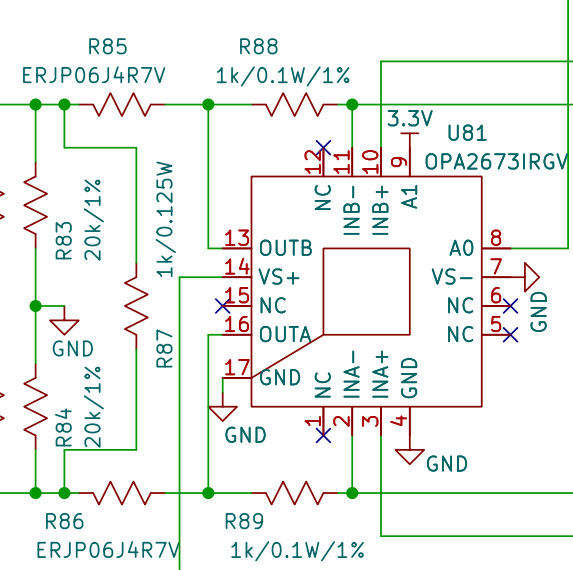
image.png

It appears as if DC line application do not cause the OPA2673IRGVT to fail, so first guess it is AC related.

Is the OPA2673IRGVT highly susceptile to input voltages of higher than 12V on the OUTA / OUTB (let's say disturbances from the AC main) and could this cause a short circuit on the VS+?


How about the absolute maximum supply voltage rating? It is said to be 13V, but recommended is again 13V? A 12V supply should be far enough from 13V or would you recommend even more safety to not damage the component?
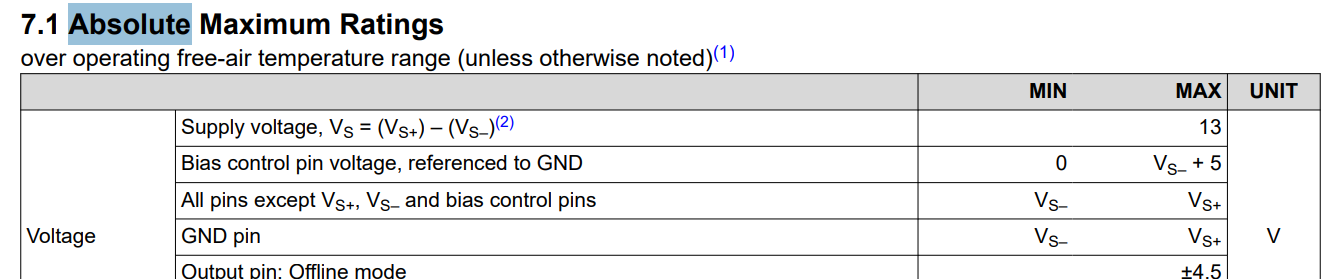
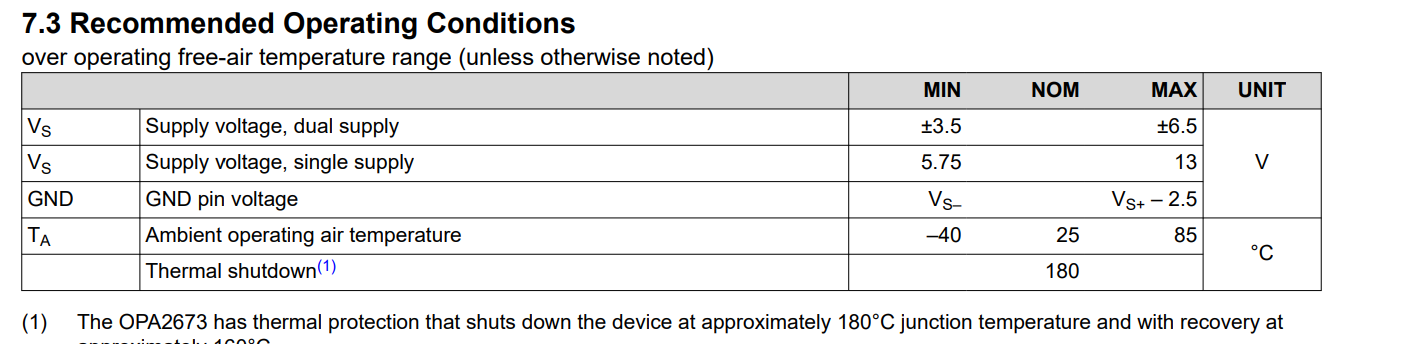
image.png

image.png

The datasheet states, the the Pins (and I guess also OUTA / OUTB) are ESD protected. Is it likely that continous spikes from the AC Line could not be handled by the ESD Diodes? To me it looks like the ESD protection circuit are 2 simple diodes to supply and GND.
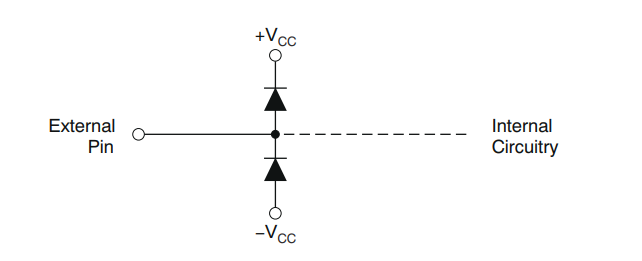
image.png

Is there a chance to send the defective chips to TI for research?

  • Hi Martin,

    Is there a way you could send us a bigger portion of the schematic or maybe provide a TINA file that shows how everything is laid out. It is hard to tell how the input is biased so having a more complete circuit to work with will be good. Regarding some of your questions. There could be a chance that disturbances can cause a device to fail as a large enough over-voltage event can lead to ESDs failing or the transistors themselves becoming damaged. A short to VS+ could occur due to an over-voltage event. 

    The abs max is set to 13V. The supply at 12V should not cause any issues and I do not think the issue is due to this. Does the device fail immediately or does the circuit function as expected and not until after some use does it fail? 

    Best Regards,

    Ignacio

  • Hi Ignacio,

    I have put together something with a bit more information. Can you check, if this is enough for you to diagnose the issue?

  • Hi Martin,

    Thank you for sharing the schematic. I was able to set this circuit up in TINA and it seems like everything is biased appropriately and functions as it should. I am curious if you had any additional information on the failure. Does this happen when the circuit is biased up but not driving a signal? Is the circuit biasing to the expected voltages at the input/output and behaving as expected? Any information on what the amplifier is doing during/prior to the failure will be good information as well.

    Best Regards,

    Ignacio

  • Hello Ignacio,


    Unfortunately there is not much more to say, because the issue happened at the customers and we received not much more information than the device was properly set up. Therefore we cannot tell exactly, when the issue happend (circuit driven or not)

    the behaviour is generally expected and also verified.

    Additional clues:
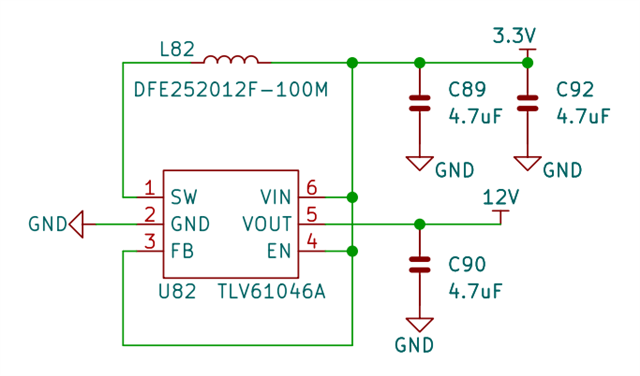
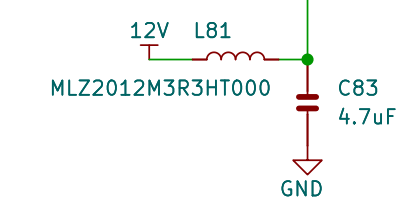
    - The power supply of for the OPA2673 is a booster from 3.3V to 12V. There is an LC filter in line to the power supply input of OPA2674. Do you see that criticial in any way:

    - How Susceptible will OUTA and OUTB be for transient voltages coming from the AC lines? as you can see in the schematic, there is only a 4.7Ohm resistor limiting current to OUTA / OUTB if an external voltage is applied to these two pins.

    Thanks

    Martin

  • Hi Martin,

    Is the failure repeatable from the customers setup? As for the booster setup I would refer to the boost converter team to look over the actual layout/implementation of the device as they are the experts and would be able to support better than I could. However, I am not sure if the series inductor would affect the booster side of the circuit. For our EVMs, we typically use a pi filter for our supplies which implements a ferrite bead (type of inductor). If the customer can recreate the failure, it would be worth probing the 12V supply at the amplifier side in case there are any spikes coming from the booster.

    As far as any transient spikes at the output, if there are spikes that force the output to be out of its voltage range, and the device is forced to source/sink excessive amounts of current any amplifier device can fail. Increasing the series resistors would help limit current due to some transient event but this would all depend on the signal at the output. Along the same lines as the supply, is there a way to probe the outputs to see if there is some kind of EOS event occurring?

    Best Regards,

    Ignacio

  • Hello Ignacio,

    We had 3 units sent to the customer, where 2 of them failed on the first shipment. Then we sent another 3 units, of which again 2 failed. Failure was not exactly the same. While the first failures showed OUTA / OUTB non functional, the second shipment showed short circuit on the supply voltage rail of the OPA2673. 
    However, we are still unable to reproduce the issue, which makes it really hard to find something to look deeper into.

    We did some probing on the 12V booster, but could not confirm, that there is excessive voltage produced or overshoot due to instability. However, we could observer the booster being set to 12.2V, which is dangerously close to the absolute maxiimum rating of 13V. But as far as I understand, 13V is stated, but the device will also sustain 14V, correct?


    Any type of probing would involve the customer doing so, because the customer is not close by.

    According to the failure mechanism described above, would you rather suspect transient events on OUTA / OUTB or rather issues on the power supply rail of the OPA2673?

    Thanks
    Martin

  • Hi Martin,

    12.2V at the supply would not cause a failure as this device can go all the way to 13V. The abs max for this device is 13V and it is also the recommended max. 12.2V is relatively far from the max so I do not think this is an issue. If the supplies are steady at the pins and there are no large glitches, I am not sure if the failure would be due to supplies. If there are transients at the lines, this could very well be the reason for the failure. Damage due to an EOS event could lead to a short condition or damage of the output pins, but it is hard to know with the limited information. Are there any other components at the outputs that are also failing or look like they are damaged that could lead to the idea that an EOS event occurred at the output?

    Best Regards,

    Ignacio

  • Hello Ignacio,

    From what I can tell it is that only the OPA2673 which fails. We replaced the OPA2673 on a failed and it went back to normal operation. So I guess nothing else is being damaged. Do you see a test scenario, where we could reproduce the issue becuase at this point we are unable to reproduce the issue? that is why it is impossible for us to test a fix for it.

  • Hi Martin,

    Let me ask the team to see if they can offer any suggestions. In the meantime, if you have any additional information on what test or signals are being sent when the failure occurs that will be valuable information for us to support you.

    Best Regards,

    Ignacio

  • Hi Martin,

    I asked my manager on what can be done, and he said it is really hard to suggest anything as we do not know the source of the failure. He said if we can probe the supplies and outputs that would be the best way to start building on understanding of what is happening and what we can try to mitigate the issue. We have seen these failures due to transient spikes at the output and enough of a spike could very well be causing the failures you are seeing.

    Best Regards,

    Ignacio